

(UroToday.com) The 2025 European Society of Medical Oncology (ESMO) Annual Congress held in Berlin, Germany, was host to the session Mini Oral session 2: GU tumours, renal & urothelial Dr. Tian Zhang discussed abstracts 2597MO, 2598MO, and 2599MO and titled her discussion: Biomarkers in clear cell kidney cancer, are we there yet?
Dr. Zhang began her discussion by emphasizing the ongoing challenges in the management of clear cell RCC. Although several first-line immunotherapy doublets are approved and routinely used in clinical practice, predictive biomarkers to guide treatment selection remain limited. She underscored the urgent need for more robust biomarkers and novel pharmacologic targets, highlighting that clinically useful biomarkers should have key features such as ease of measurement, reproducibility, and validation across studies, and ideally, be targetable with therapeutic interventions. Dr. Zhang also noted that prospective testing will be essential to confirm their predictive and prognostic value in real-world settings.
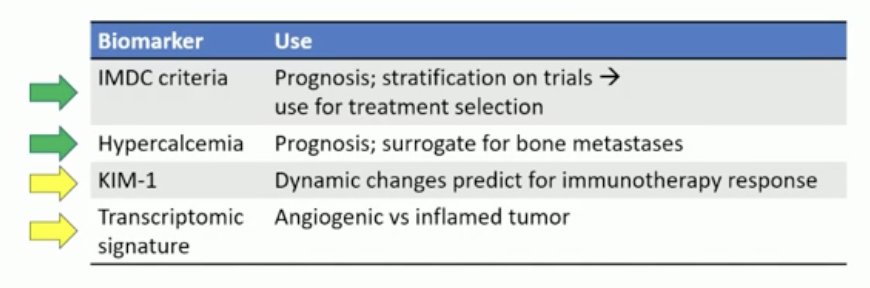
Biomarkers currently used in clinical practice for clear cell RCC are: IMDC criteria, which remain the cornerstone for prognostic assessment and stratification in clinical trials and are often used to guide treatment selection. Hypercalcemia serves primarily as a prognostic marker and may act as a surrogate indicator for bone metastases. KIM-1 has emerged as a dynamic biomarker, with changes in its levels potentially predicting response to immunotherapy. Additionally, transcriptomic signatures distinguishing angiogenic from inflamed tumor profiles offer valuable biological insights that may inform therapeutic decision-making and future biomarker-driven treatment strategies.
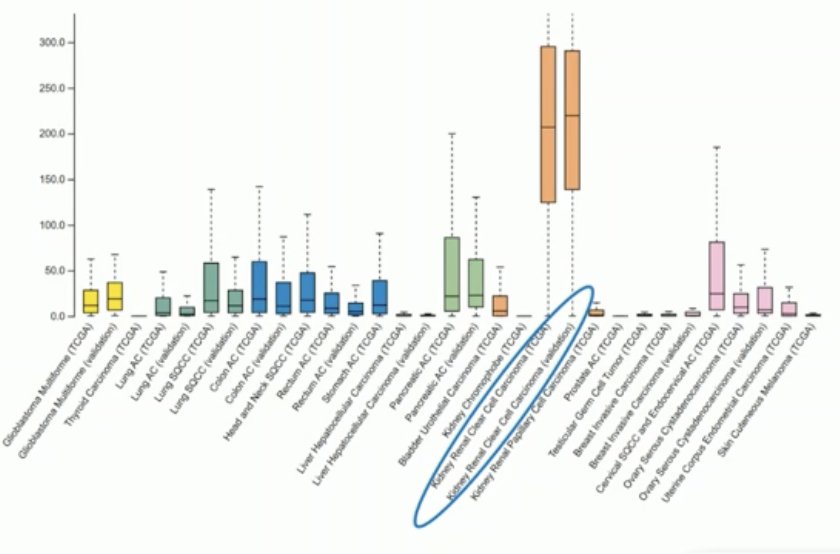
Dr. Zhang highlighted that CA-IX represents a particularly promising target for clear cell RCC imaging. It is highly expressed in ccRCC compared to other solid tumors and is already widely used in immunohistochemistry to support diagnostic confirmation of clear cell histology. As a cell surface marker, CA-IX is readily measurable and targetable, making it an attractive candidate for both molecular imaging and potential therapeutic applications.
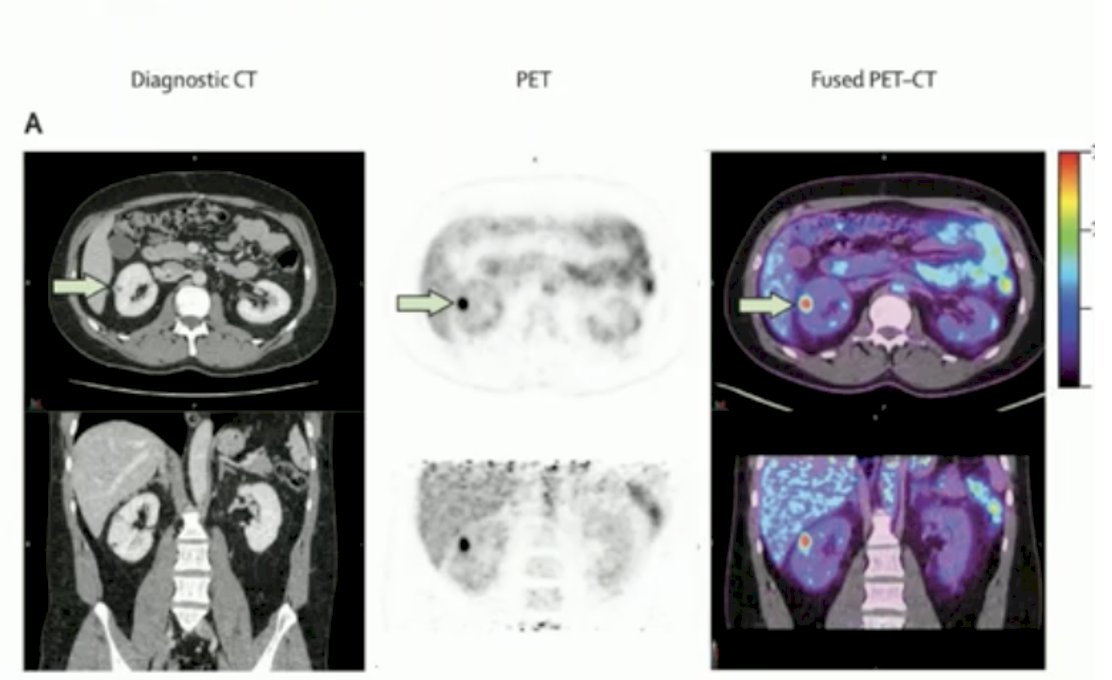
Dr. Zhang discussed the use of CA-IX PET imaging with ⁸⁹Zr-girentuximab for the diagnosis of small renal masses, highlighting data from a study of 284 patients. The imaging demonstrated strong diagnostic performance, with a sensitivity of 85.5%, specificity of 87%, and overall accuracy of 86%. (1) The procedure involves an injection on day 0, followed by a PET/CT scan on day 5 ± 2 days. This approach provides superior diagnostic accuracy for clear cell RCC compared with conventional imaging techniques, supporting its potential role in improving preoperative characterization of small renal masses.1 An example of CA-IX ⁸⁹Zr-girentuximab PET is shown below.
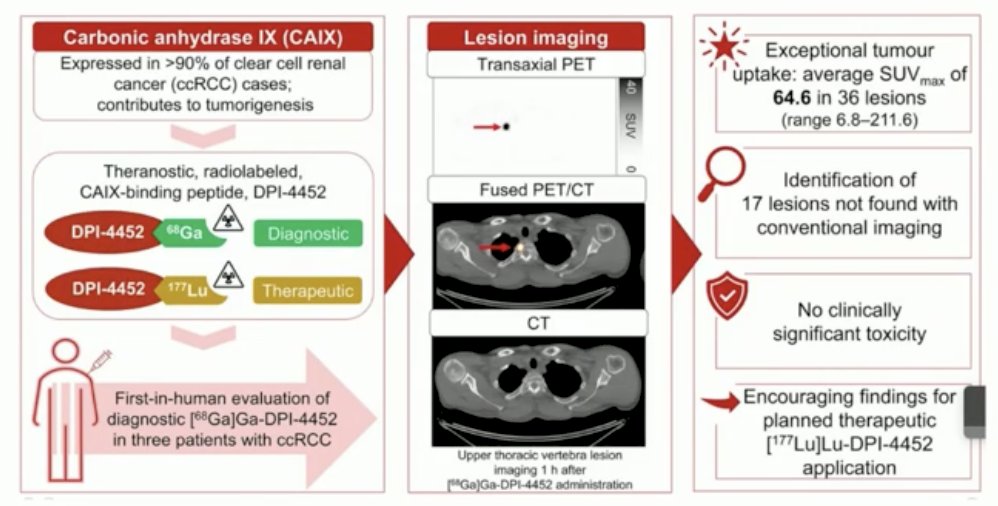
Dr. Zhang noted that CA-IX–targeted PET imaging has also shown promising results in the metastatic RCC setting. In a recent first-in-human experience using ⁶⁸Ga–DPI-4452, three patients with a total of 36 lesions were evaluated.2 Remarkably, 17 of these lesions were not detected on conventional imaging. The mean SUVmax was 64.6, and the tracer demonstrated rapid blood clearance of about 80% within one hour, as illustrated below.
Dr. Zhang acknowledged the practical challenges of measuring CA-IX expression and discussed the study presented by Dr. Küper, which expanded the experience with ⁶⁸Ga-DPI-4452 PET/CT to 25 additional patients. Notably, 60% of lesions detected by this imaging technique were missed on conventional imaging. In terms of diagnostic performance, ⁶⁸Ga–CAIX PET/CT identified 98% of evaluated lesions (45/46) compared with only 40% (18/46) by standard CT, demonstrating superior sensitivity across primary tumors, lymph nodes, visceral organs, and bone metastases. Inter-reader reproducibility was excellent, with Cohen’s kappa values of 0.91 for primary tumors, 0.75 for lymph nodes, and 0.87 for bone lesions.
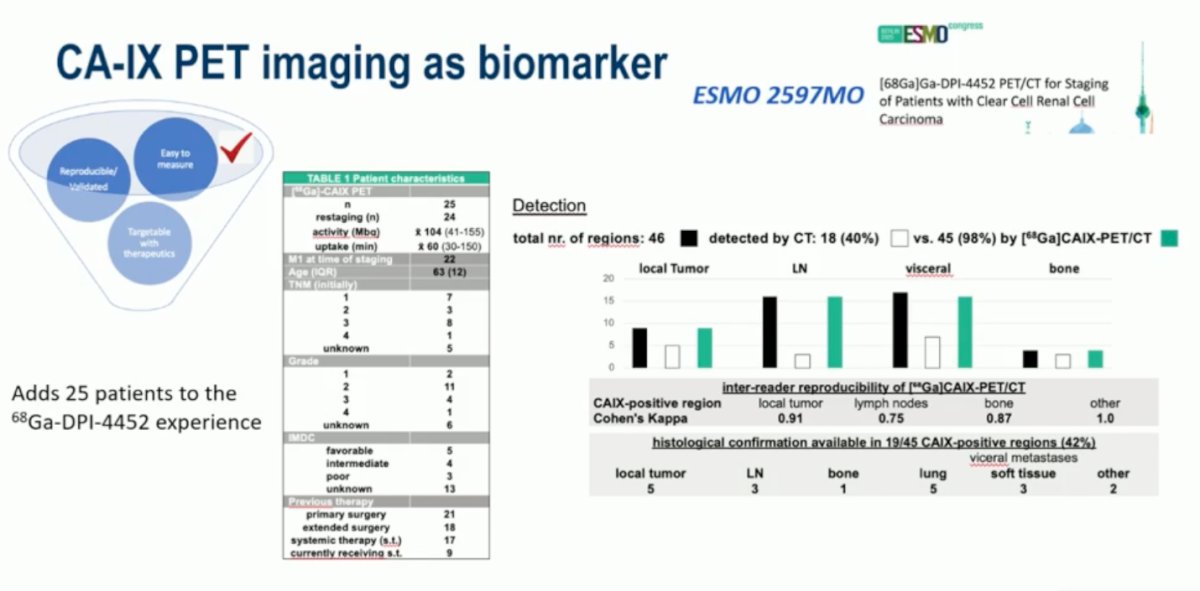
Notably, there are logistical advantages of ⁶⁸Ga-DPI-4452 imaging compared to ⁸⁹Zr-girentuximab. While girentuximab PET imaging requires tracer administration on day 0 and scanning several days later (typically day 5 ± 2), ⁶⁸Ga-DPI-4452 allows for imaging just 60 minutes post-injection, providing a more practical and time-efficient workflow. Additionally, the total scan duration is shorter approximately 50 minutes for ⁶⁸Ga-DPI-4452 versus 60 minutes for ⁸⁹Zr-girentuximab, making it a more patient-friendly and clinically feasible approach for whole-body PET evaluation in RCC.
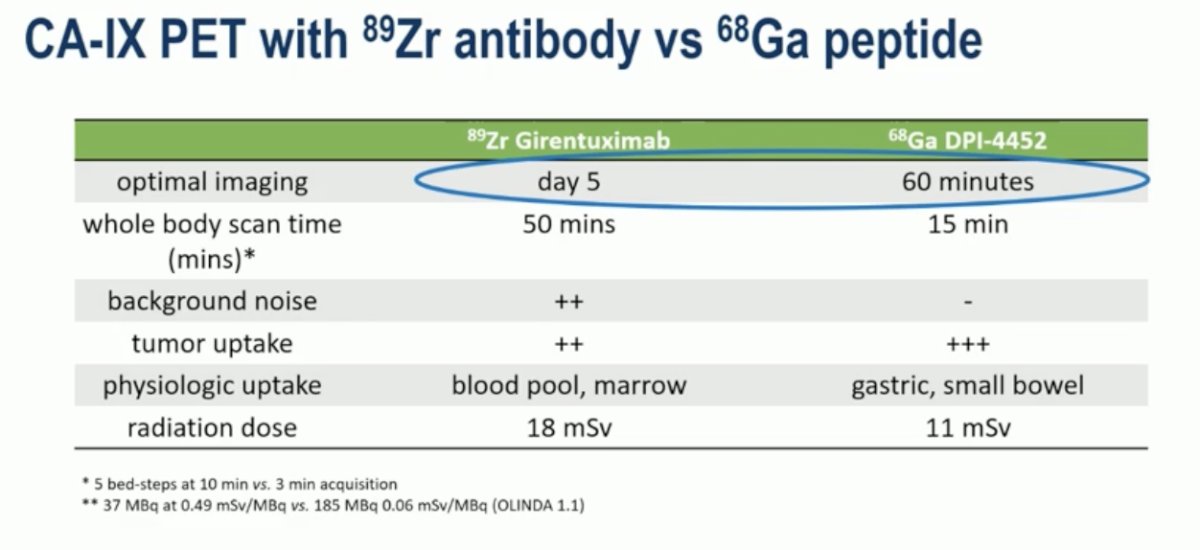
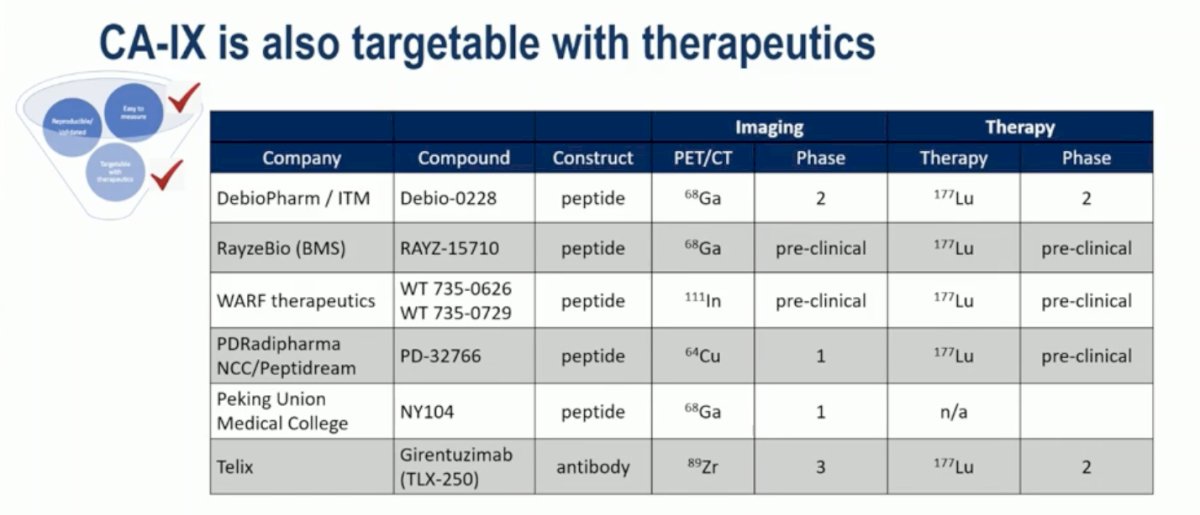
Dr. Zhang highlighted that several radiopharmaceuticals are now being developed using CA-IX as a molecular target, reflecting growing interest in exploiting this clear cell–specific marker for both diagnostic and therapeutic purposes. As summarized in the table below, these novel agents, ranging from antibody-based tracers like ⁸⁹Zr-girentuximab to smaller, more rapidly cleared compounds such as ⁶⁸Ga-DPI-4452—show promising accuracy, faster kinetics, and improved patient convenience, collectively advancing CA-IX–targeted imaging in RCC.
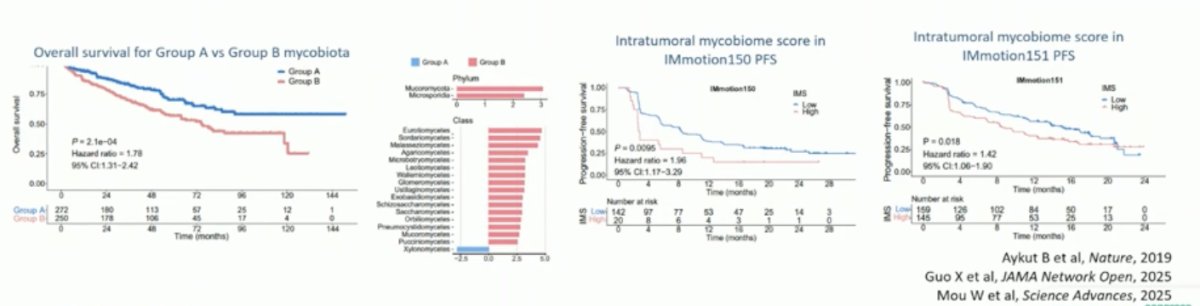
Dr Zhang highlighted that earlier this year, data on tumor microbiota in kidney cancer revealed a potential prognostic role. Several fungal species have previously been linked to solid tumors, such as Candida with esophageal cancer and Malassezia with pancreatic cancer, suggesting possible causal relationships. In RCC, analyses from the IMmotion150 and IMmotion151 trials (shown in the curves below) demonstrated that the composition of the intratumoral mycobiota correlates with patient prognosis, opening new avenues for understanding tumor microbe interactions in renal cancer.
Rhizopus delemar, a fungal species known for causing mucormycosis, was identified within DNA extracted from ccRCC tumor tissue. Experimental models showed that the presence of R. delemar accelerates tumor growth and promotes an immunosuppressive microenvironment. Mechanistically, this fungus enhances neutrophil-mediated immune suppression, contributing to ccRCC progression as discussed by Dr Ma.

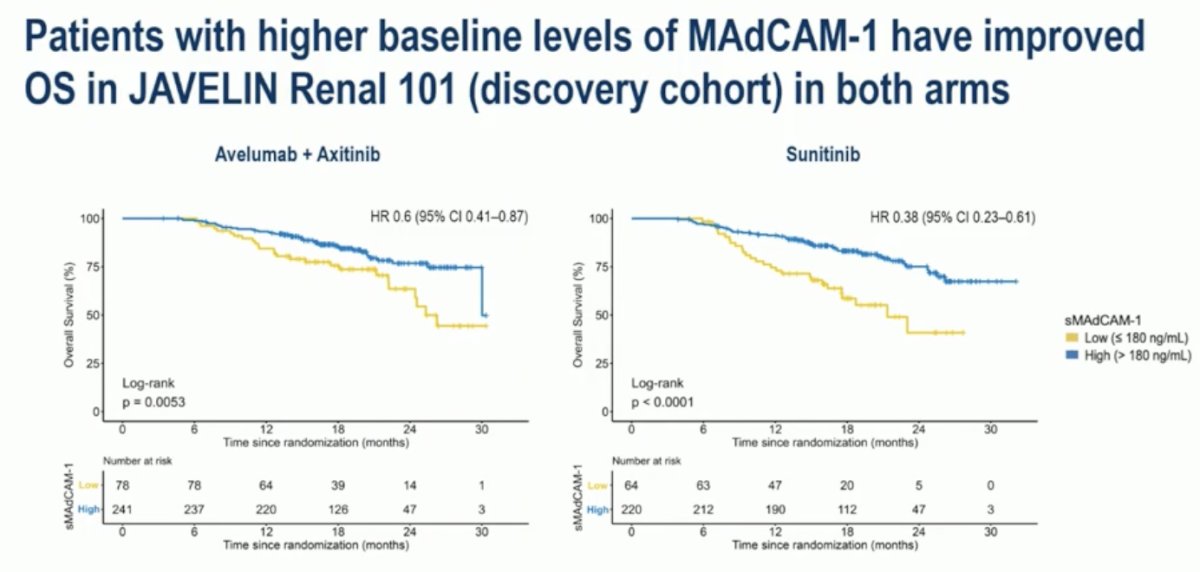
Dr. Zhang then discussed the study presented by Dr. Machaalani, beginning by emphasizing the role of circulating inflammatory markers and MAdCAM-1 in RCC. Several inflammatory cytokines such as IL-12/IL-23, MIP-1α, MIP-1β, ICAM-1, VCAM-1, IL-6, and TNF-α have been shown to correlate with treatment response. Mucosal vascular addressin cell adhesion molecule-1 (MAdCAM-1), which facilitates leukocyte trafficking and inflammatory signaling and co-localizes with VCAM-1, is particularly notable. While MAdCAM-1 is well established in inflammatory bowel disease and targeted by the therapeutic antibody ontamalimab, it has more recently been linked to improved prognosis in ccRCC, as first reported in the NIVOREN (GETUG-AFU 26) study, though the optimal cutoff remains uncertain.3
Notably, in this study, a cutoff value of 180 ng/mL for circulating MAdCAM-1 was identified as prognostic in the JAVELIN Renal 101 trial (avelumab + axitinib).4 This threshold was subsequently validated as a prognostic marker in two independent cohorts SURF (sunitinib) and NIVOREN (nivolumab) supporting its potential role as a reproducible biomarker across different therapeutic settings.3,5
Dr. Zhang concluded her discussion with the following key takeaway messages:
- Predictive biomarkers for first-line treatment selection remain elusive in metastatic clear cell RCC.
- CA-IX appears to be a promising biomarker for diagnostic imaging.
- ⁶⁸Ga-DPI-4452 demonstrates faster bioavailability and superior imaging clarity compared to ⁸⁹Zr-girentuximab for CA-IX PET.
- CA-IX–targeting therapies are currently under investigation.
- Measures of dysbiosis and tumor-associated microbes represent an emerging frontier in biomarker research for ccRCC.
- Both Rhizopus delemar and MAdCAM-1 show potential but require further mechanistic and prospective validation before clinical application.
Presented by: Tian Zhang, MD, MHS, FASCO, Associate Professor, Associate Director of Clinical Research Simmons Comprehensive Cancer Center at UT Southwestern Medical Center, Dallas, TX, USA
Written by: Julian Chavarriaga, MD – Urologic Oncologist at Cancer Treatment and Research Center (CTIC) via Society of Urologic Oncology (SUO) Fellow at The University of Toronto. @chavarriagaj on Twitter during the 2025 European Society for Medical Oncology (ESMO) Annual Congress, Berlin, Germany, October 17–21, 2025
Reference:
- Shuch B, Pantuck AJ, Bernhard JC, Morris MA, Master V, Scott AM, van Praet C, Bailly C, Önal B, Aksoy T, Merkx R, Schuster DM, Lee ST, Pandit-Taskar N, Fan AC, Allman P, Schmidt K, Tauchmanova L, Wheatcroft M, Behrenbruch C, Hayward CRW, Mulders P. [89Zr]Zr-girentuximab for PET-CT imaging of clear-cell renal cell carcinoma: a prospective, open-label, multicentre, phase 3 trial. Lancet Oncol. 2024 Oct;25(10):1277-1287. doi: 10.1016/S1470-2045(24)00402-9. Epub 2024 Sep 10. PMID: 39270701.
- Hofman MS, Tran B, Feldman DR, Pokorska-Bocci A, Pichereau S, Wessen J, Haskali MB, Sparks RB, Vlasyuk O, Galetic I. First-in-Human Safety, Imaging, and Dosimetry of a Carbonic Anhydrase IX-Targeting Peptide, [68Ga]Ga-DPI-4452, in Patients with Clear Cell Renal Cell Carcinoma. J Nucl Med. 2024 Feb 22;65(5):740–3. doi: 10.2967/jnumed.123.267175. Epub ahead of print. PMID: 38388517; PMCID: PMC11064824.
- Courcier J, Dalban C, Laguerre B, Ladoire S, Barthélémy P, Oudard S, Joly F, Gravis G, Chevreau C, Geoffrois L, Deluche É, Rolland F, Topart D, Culine S, Négrier S, Mahammedi H, Tantot F, Jamet A, Escudier B, Flippot R, Albigès L. Primary Renal Tumour Response in Patients Treated with Nivolumab for Metastatic Renal Cell Carcinoma: Results from the GETUG-AFU 26 NIVOREN Trial. Eur Urol. 2021 Sep;80(3):325-329. doi: 10.1016/j.eururo.2021.05.020. Epub 2021 Jun 5. PMID: 34103181.
- Choueiri TK, Motzer RJ, Rini BI, Haanen J, Campbell MT, Venugopal B, Kollmannsberger C, Gravis-Mescam G, Uemura M, Lee JL, Grimm MO, Gurney H, Schmidinger M, Larkin J, Atkins MB, Pal SK, Wang J, Mariani M, Krishnaswami S, Cislo P, Chudnovsky A, Fowst C, Huang B, di Pietro A, Albiges L. Updated efficacy results from the JAVELIN Renal 101 trial: first-line avelumab plus axitinib versus sunitinib in patients with advanced renal cell carcinoma. Ann Oncol. 2020 Aug;31(8):1030-1039. doi: 10.1016/j.annonc.2020.04.010. Epub 2020 Apr 25. PMID: 32339648; PMCID: PMC8436592.
- Mouillet G, Paillard MJ, Maurina T, Vernerey D, Nguyen Tan Hon T, Almotlak H, Stein U, Calcagno F, Berthod D, Robert E, Meurisse A, Thiery-Vuillemin A. Open-label, randomized multicentre phase II study to assess the efficacy and tolerability of sunitinib by dose administration regimen (dose modification or dose interruptions) in patients with advanced or metastatic renal cell carcinoma: study protocol of the SURF trial. Trials. 2018 Apr 12;19(1):221. doi: 10.1186/s13063-018-2613-8. PMID: 29650037; PMCID: PMC5898055.