

(UroToday.com) The 2025 European Society of Medical Oncology (ESMO) Annual Congress, held in Berlin, Germany, between October 17th and 21st was host to the session Mini Oral session 2: GU tumours, renal & urothelial. Dr. Kangli Ma presented abstract 2598MO - The Intratumor Mycobiome Promotes Clear Cell Renal Cell Carcinoma Progression via Neutrophil-Mediated Immune Suppression.
Dr. Ma emphasized that intratumor mycobiome dysbiosis is correlated with Clear Cell Renal Cell Carcinoma (ccRCC). He presented findings from an analysis of fungal communities in ccRCC, using fungi-enriched DNA extraction and deep shotgun metagenomic sequencing. Tumor and adjacent normal tissue samples from ccRCC patients were compared, revealing a significant reduction in fungal alpha diversity within tumor tissue (p=5.1e-08) and a distinct mycobiome composition between ccRCC and adjacent tissues (PERMANOVA F=13.923, p<0.001). These results indicate that intratumoral mycobiome dysbiosis is correlated with ccRCC, suggesting a potential role for fungi in tumor biology.

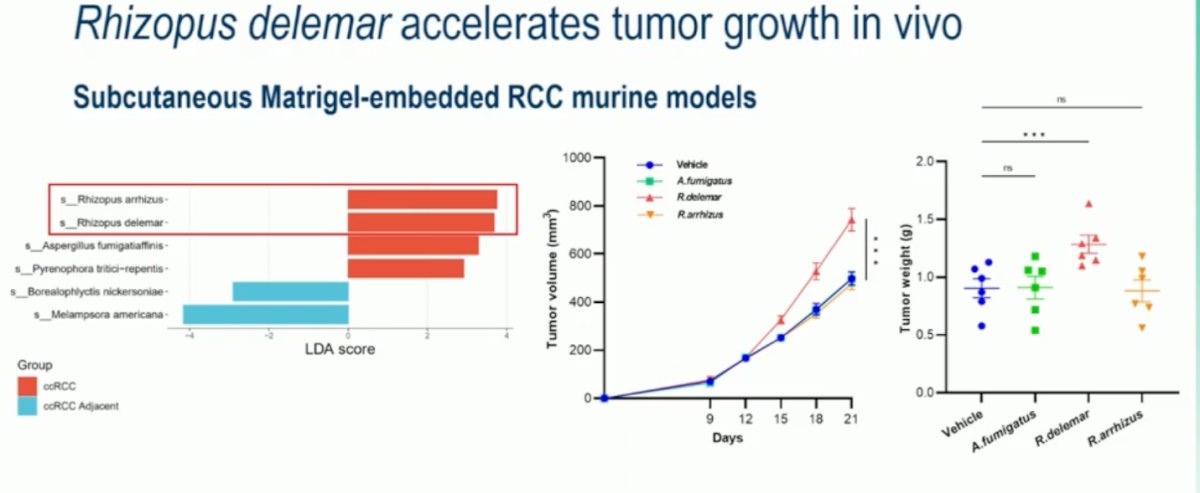
The investigators identified Rhizopus delemar as the fungal species most strongly associated with tumor progression in ccRCC. Using subcutaneous Matrigel-embedded RCC murine models, they demonstrated that R. delemar significantly accelerated tumor growth and increased tumor weight compared with controls and other fungal species, such as A. fumigatus or R. arrhizus..
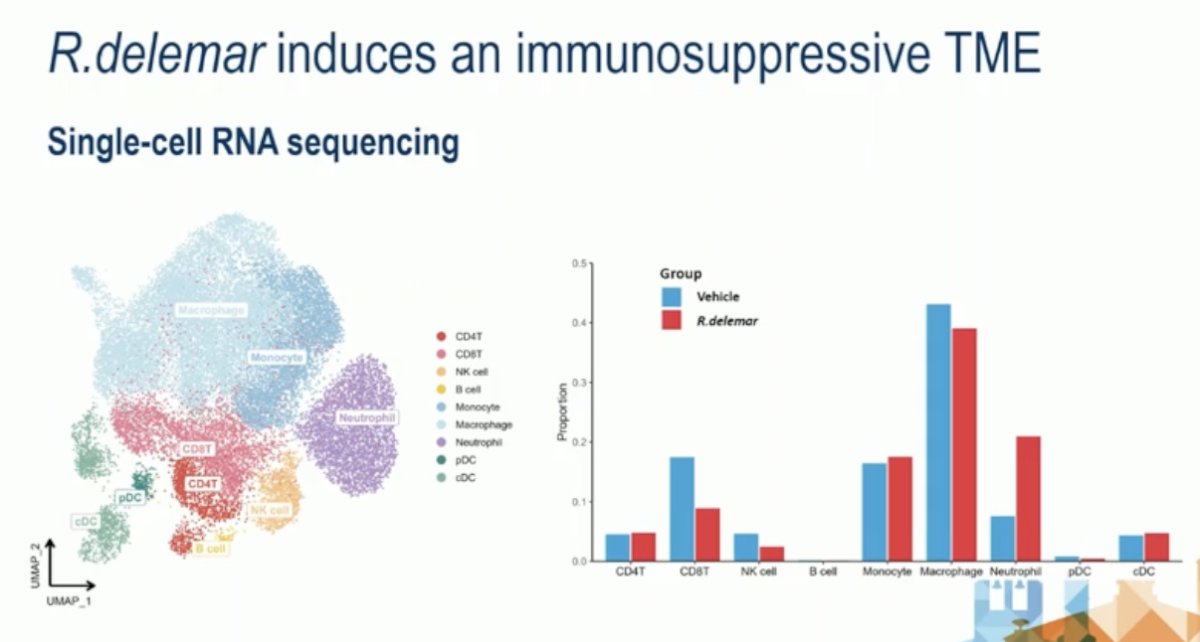
Furthermore, single-cell RNA sequencing of 45 murine RCC tumors demonstrated that R. delemar exposure led to a significant increase in macrophage and neutrophil populations within the tumor microenvironment, along with a relative reduction in CD8⁺ T cells. These changes indicate that R. delemar fosters an immunosuppressive tumor microenvironment (TME), potentially facilitating immune evasion and accelerating tumor progression.
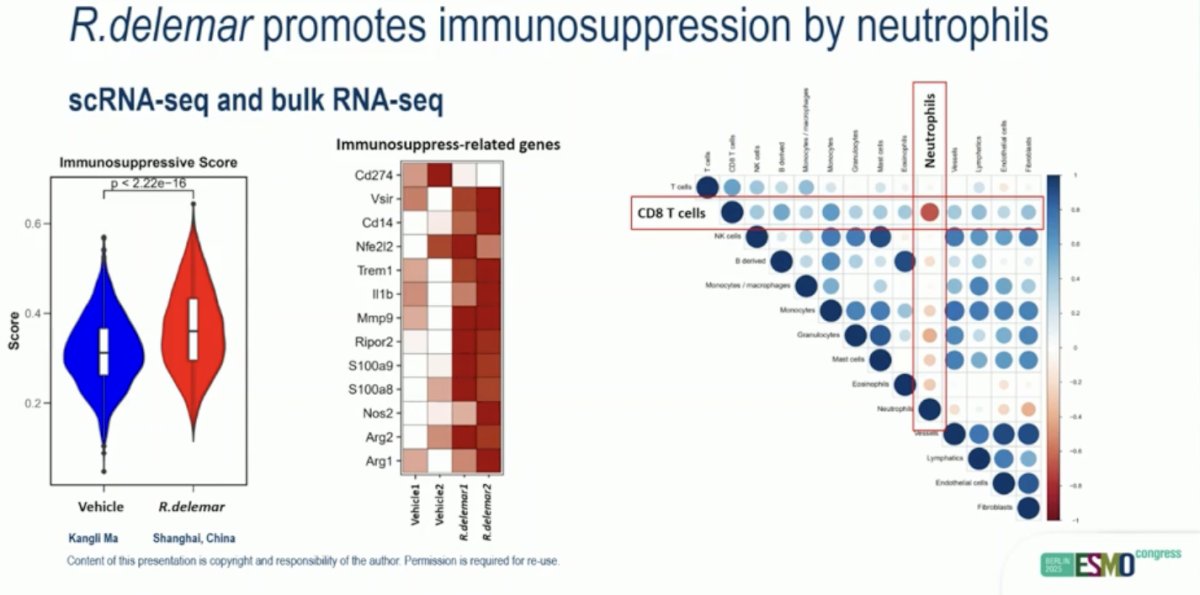
Dr. Ma highlighted that R. delemar promotes immunosuppression primarily through neutrophil activity. Both scRNA-seq and bulk RNA-seq analyses showed significantly higher immunosuppressive scores in R. delemar-treated tumors, with upregulation of genes such as Cd274, Il1b, S100a9, and Arg1. The strongest interaction was observed between neutrophils and CD8⁺ T cells, indicating that R. delemar may suppress antitumor immunity by enhancing neutrophil-driven immunosuppressive signaling within the tumor microenvironment.
They observed that R. delemar specifically expanded the Neu1 neutrophil cluster, which displayed the highest immunosuppressive score compared to other neutrophil clusters. This finding suggests that R. delemar promotes the development of a distinct neutrophil population with potent immunosuppressive activity, further contributing to an immune-exhausted tumor microenvironment that facilitates ccRCC progression.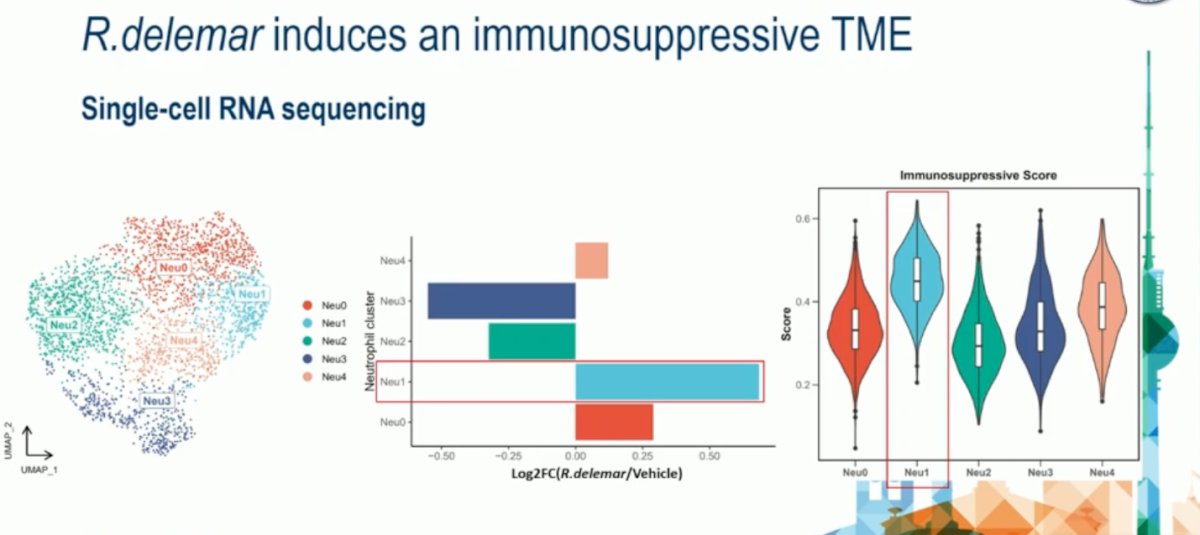
In summary, the investigators found that R. delemar enhances neutrophil activity while simultaneously suppressing functional T-cell responses, contributing to an immunosuppressive tumor environment that favors ccRCC progression. Further experiments are planned to validate this hypothesis and better define the mechanistic interplay between fungal infection, immune modulation, and tumor growth.
Presented by: Kangli Ma, Renji Hospital, Shanghai Jiao Tong University School of Medicine, Shanghai, China
Written by: Julian Chavarriaga, MD – Urologic Oncologist at Cancer Treatment and Research Center (CTIC) via Society of Urologic Oncology (SUO) Fellow at The University of Toronto. @chavarriagaj on Twitter during the 2025 European Society of Medical Oncology (ESMO) Annual Congress held in Berlin, Germany, between October 17th and 21st.