

(UroToday.com) The 2025 European Society of Medical Oncology (ESMO) Annual Congress held in Berlin, Germany between October 17th and 21st was host to the session Mini Oral session 2: GU tumours, renal & urothelial. Dr. Marc Machaalani presented abstract 2599MO - Soluble MAdCAM-1 predicts outcomes in patients with metastatic renal cell carcinoma: results from three independent clinical trials.
Dr. Machaalani began by highlighting that under normal physiological conditions, MAdCAM-1 is expressed in endothelial cells of high endothelial venules within the gut, where it interacts with the α4β7 integrin on T cells. This MAdCAM-1/α4β7 axis plays a key role in maintaining gut immune homeostasis by regulating T-cell trafficking and immune balance in the intestinal mucosa. Through this mechanism, the gut environment supports controlled immune surveillance and prevents excessive inflammation, contributing to a stable antitumor immune setting.
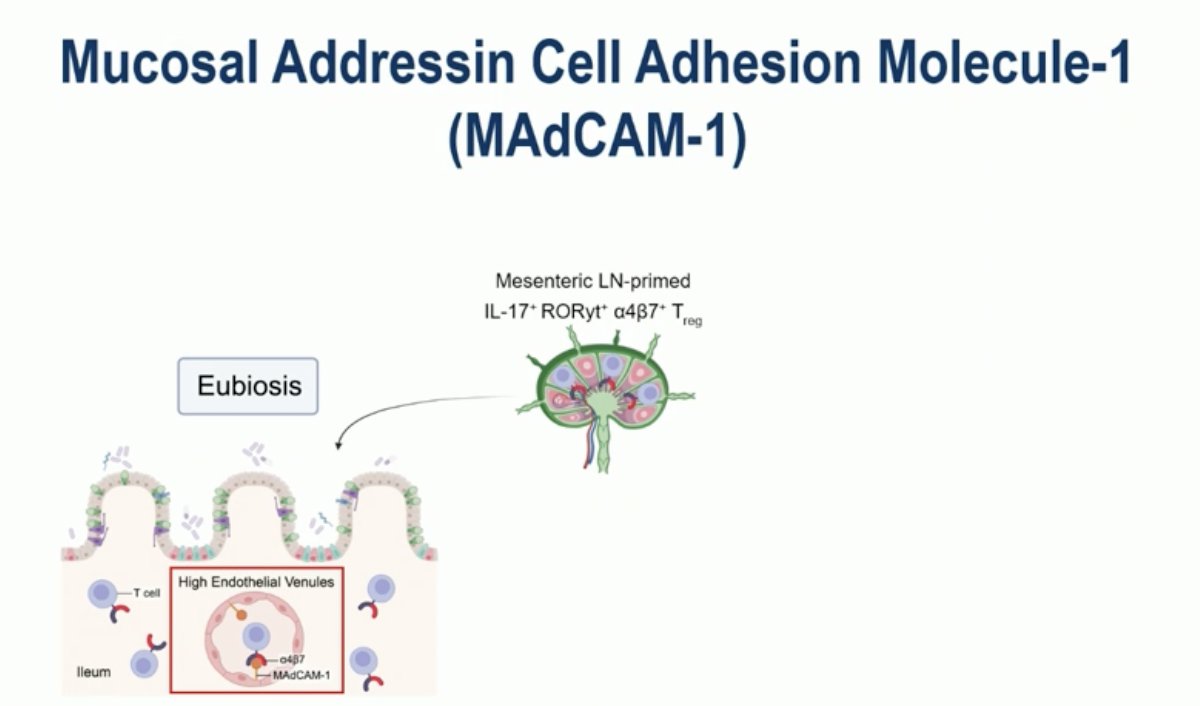
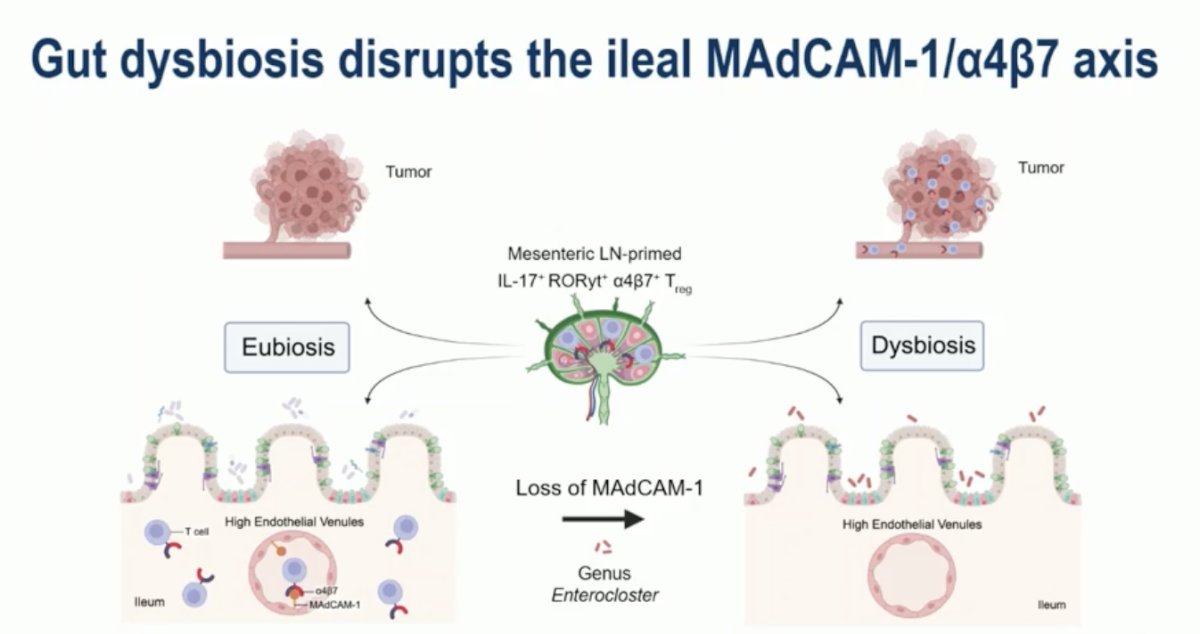
However, Dr. Machaalani explained that MAdCAM-1 expression differs markedly between patients with eubiosis and those with gut dysbiosis. In eubiosis, normal MAdCAM-1/α4β7 signaling supports T-cell homing and immune regulation within the ileum. In contrast, gut dysbiosis leads to a loss of MAdCAM-1 expression, particularly influenced by the presence of the bacterial genus Enterocloster, disrupting this immune axis. This loss of signaling compromises gut-immune communication, potentially facilitating tumor growth and altering systemic immune responses.
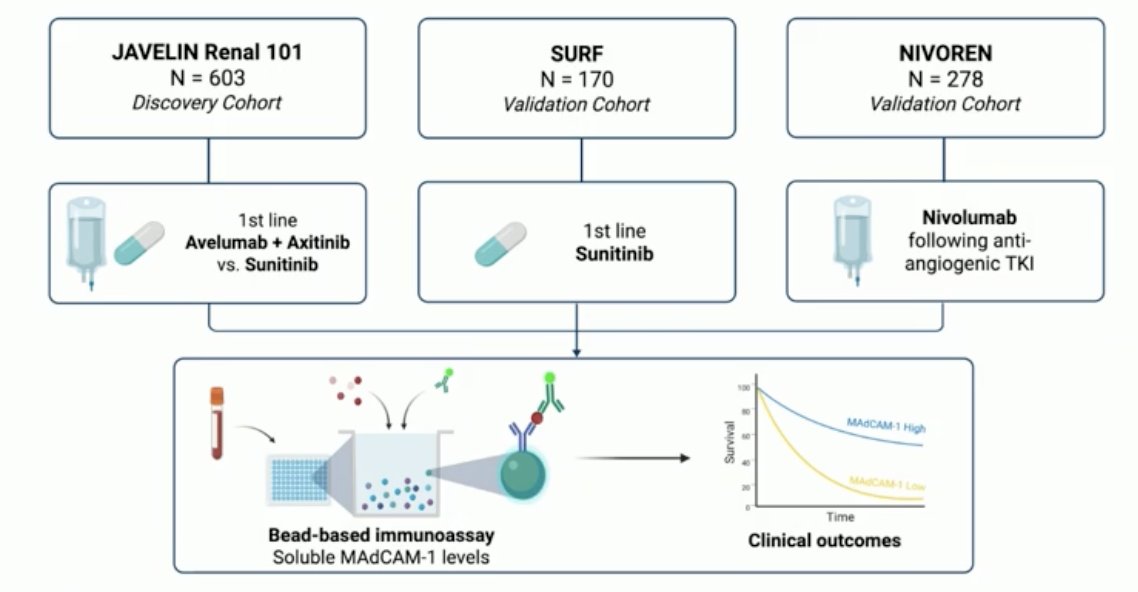
Building on these findings, Dr. Machaalani and colleagues sought to investigate whether soluble MAdCAM-1 levels could serve as a predictive biomarker for clinical outcomes in patients with metastatic RCC. To address this, they analyzed three cohorts: the discovery cohort from JAVELIN Renal 101 (n=603; avelumab + axitinib vs sunitinib) and two validation cohorts—SURF (n=170; first-line sunitinib) and NIVOREN (n=278; nivolumab following prior anti-angiogenic therapy). (1-3) Soluble MAdCAM-1 levels were quantified using a bead-based immunoassay and correlated with clinical outcomes, including survival, across all three datasets.
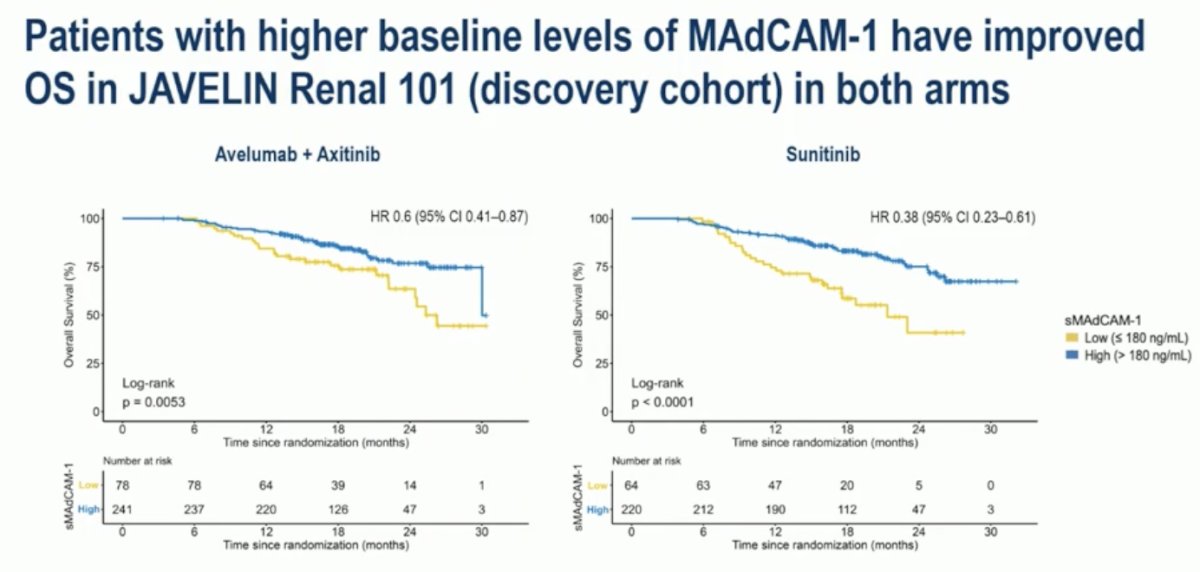
Notably, in the JAVELIN Renal 101 discovery cohort, patients with higher baseline levels of soluble MAdCAM-1 had significantly improved overall survival in both treatment arms. Among those treated with avelumab plus axitinib, high sMAdCAM-1 levels (>180 ng/mL) were associated with a hazard ratio (HR) of 0.6 (95% CI 0.41–0.87; p = 0.0053), while for patients receiving sunitinib, the benefit was even more pronounced (HR 0.38; 95% CI 0.23–0.61; p < 0.0001).
On the same note, patients with higher baseline soluble MAdCAM-1 levels also showed improved overall survival across both validation cohorts. In the SURF study (sunitinib, n=170), there was a clear trend toward better survival in the high sMAdCAM-1 group (HR 0.58; 95% CI 0.33–1.02; p=0.0586). This prognostic effect was further confirmed in the NIVOREN cohort (nivolumab, n=278), where patients with elevated sMAdCAM-1 experienced significantly longer overall survival compared to those with low levels (HR 0.43; 95% CI 0.27–0.70; p=0.0004).

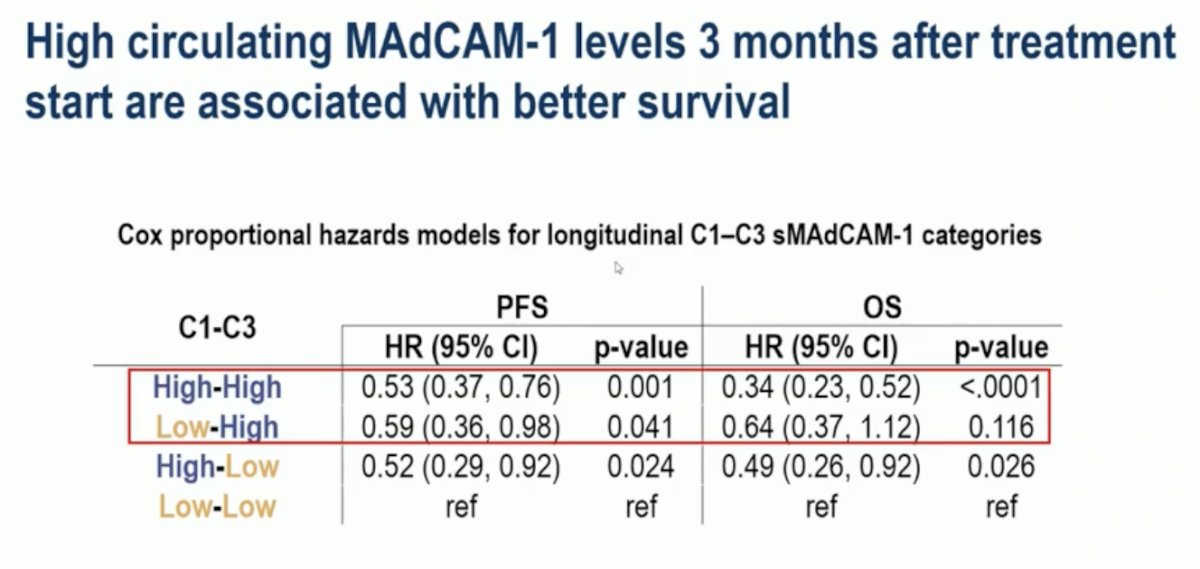
Moreover, longitudinal analysis demonstrated that persistently high soluble MAdCAM-1 levels (high–high) three months after treatment initiation were strongly associated with improved survival outcomes. Patients maintaining high sMAdCAM-1 had significantly longer PFS (HR 0.53; 95% CI 0.37–0.76; p=0.001) and OS (HR 0.34; 95% CI 0.23–0.52; p<0.0001) compared to those with persistently low levels. Interestingly, patients whose MAdCAM-1 levels rose from low to high (low–high) also showed a favorable PFS benefit (HR 0.59; p=0.041), suggesting that dynamic increases in circulating MAdCAM-1 may reflect treatment-related immune modulation and improved prognosis.
In addition, using metagenomic sequencing, the investigators found that low soluble MAdCAM-1 levels were linked to a distinct pro-inflammatory gut microbiome signature. Specifically, patients with low sMAdCAM-1 exhibited enrichment of deleterious Enterocloster species (including E. aldenensis, E. clostridioformis, and E. bolteae), which are known to promote dysbiosis and inflammation. Conversely, higher MAdCAM-1 levels correlated with the presence of potentially beneficial commensal bacteria, such as Lachnospiraceae bacterium and Blautia producta. These findings suggest a close interplay between gut microbial composition and systemic immune regulation through the MAdCAM-1 axis.

Dr. Machaalani concluded his presentation with the following key takeaways:
- Circulating MAdCAM-1 levels are prognostic in metastatic RCC, as demonstrated across three independent clinical trials.
- MAdCAM-1 serves as a dynamic biomarker for monitoring dysbiosis-driven immune dysregulation.
- The MAdCAM-1 pathway represents a potential therapeutic target for microbiota-directed interventions, particularly in treatment-resistant RCC.
Presented by: Marc Machaalani, Postdoctoral Research Fellow at Dana-Farber Cancer Institute, Boston, MA, United States of America.
Written by: Julian Chavarriaga, MD – Urologic Oncologist at Cancer Treatment and Research Center (CTIC) via Society of Urologic Oncology (SUO) Fellow at The University of Toronto. @chavarriagaj on Twitter during the 2025 European Society of Medical Oncology (ESMO) Annual Congress held in Berlin, Germany, between October 17th and 21st.
References:
- Choueiri TK, Motzer RJ, Rini BI, Haanen J, Campbell MT, Venugopal B, Kollmannsberger C, Gravis-Mescam G, Uemura M, Lee JL, Grimm MO, Gurney H, Schmidinger M, Larkin J, Atkins MB, Pal SK, Wang J, Mariani M, Krishnaswami S, Cislo P, Chudnovsky A, Fowst C, Huang B, di Pietro A, Albiges L. Updated efficacy results from the JAVELIN Renal 101 trial: first-line avelumab plus axitinib versus sunitinib in patients with advanced renal cell carcinoma. Ann Oncol. 2020 Aug;31(8):1030-1039. doi: 10.1016/j.annonc.2020.04.010. Epub 2020 Apr 25. PMID: 32339648; PMCID: PMC8436592.
- Courcier J, Dalban C, Laguerre B, Ladoire S, Barthélémy P, Oudard S, Joly F, Gravis G, Chevreau C, Geoffrois L, Deluche É, Rolland F, Topart D, Culine S, Négrier S, Mahammedi H, Tantot F, Jamet A, Escudier B, Flippot R, Albigès L. Primary Renal Tumour Response in Patients Treated with Nivolumab for Metastatic Renal Cell Carcinoma: Results from the GETUG-AFU 26 NIVOREN Trial. Eur Urol. 2021 Sep;80(3):325-329. doi: 10.1016/j.eururo.2021.05.020. Epub 2021 Jun 5. PMID: 34103181.
- Mouillet G, Paillard MJ, Maurina T, Vernerey D, Nguyen Tan Hon T, Almotlak H, Stein U, Calcagno F, Berthod D, Robert E, Meurisse A, Thiery-Vuillemin A. Open-label, randomized multicentre phase II study to assess the efficacy and tolerability of sunitinib by dose administration regimen (dose modification or dose interruptions) in patients with advanced or metastatic renal cell carcinoma: study protocol of the SURF trial. Trials. 2018 Apr 12;19(1):221. doi: 10.1186/s13063-018-2613-8. PMID: 29650037; PMCID: PMC5898055.