

(UroToday.com) The 2025 European Society of Medical Oncology (ESMO) Annual Congress held in Berlin, Germany, was host to the Poster Session. Dr. Alice Blondel presented the poster Artificial Intelligence Predicts Molecular Subtypes and Outcomes in Muscle-Invasive Bladder Cancer from Whole Slide Images.
Dr. Blondel started by explaining that muscle-invasive bladder cancer (MIBC) is an aggressive and heterogeneous disease defined by distinct molecular subtypes that influence both prognosis and treatment response. The Consensus Molecular Classification identifies robust molecular subtypes of MIBC with prognostic significance; however, RNA sequencing, the current gold standard for subtype identification, is expensive, time-consuming, and challenging to implement in daily practice. Moreover, intratumoral heterogeneity further limits the predictive power of bulk transcriptomic analyses.
In this context, artificial intelligence (AI)–based approaches applied to digital pathology may offer a promising alternative to extract molecular information directly from hematoxylin–eosin (H&E) slides. The study presented by the investigators introduces a deep learning framework designed to predict the expression of hundreds of subtype-associated genes from routine histopathology and to map molecular subtypes spatially within tumors, offering a scalable and cost-effective solution for patient stratification and prognostic assessment in MIBC.
Dr. Blondel explained that bulk RNA-seq cohorts were used to define molecular subtypes, which then served as the foundation for training an AI model on whole-slide histopathology images. The model successfully reproduced gene expression–based classifications directly from digital pathology, enabling the spatial mapping of molecular heterogeneity within tumors, as illustrated below.
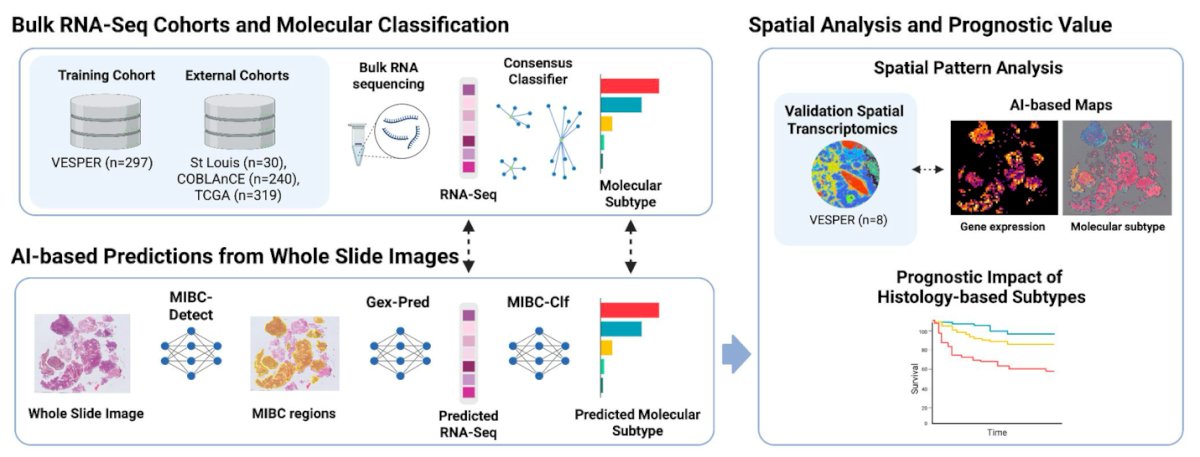
This AI-driven approach was validated using spatial transcriptomics from the VESPER cohort, demonstrating that histology-based molecular subtype predictions correlate with patient prognosis.
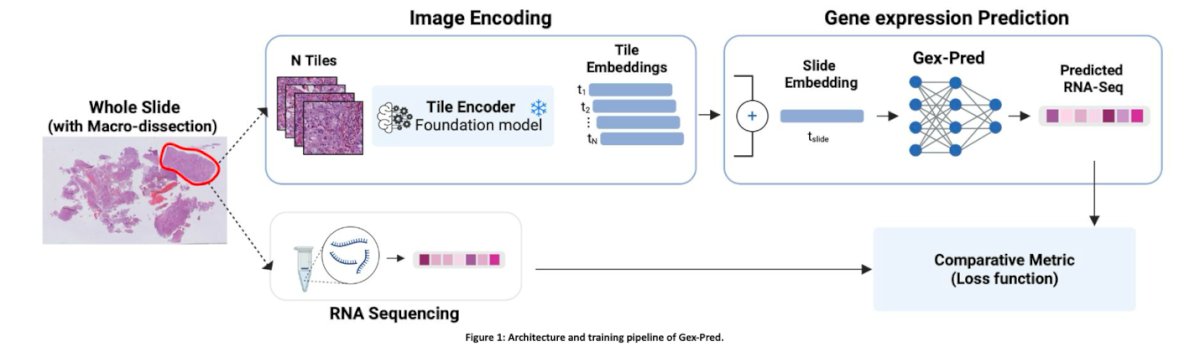
Whole-slide images were divided into 112 μm tiles and processed using H-OptimUS-1, a large transformer-based model pretrained on over one million histology slides. The model, named Gex-Pred, employed a multiple instance learning approach trained on the VESPER cohort to predict the expression of 848 subtype-associated genes in MIBC.
Each macro-dissected tumor region was treated as a collection of tiles, whose embeddings were aggregated through an attention-based mechanism into a slide-level representation. This representation was then fed into a neural network to predict the bulk RNA-seq expression profile, allowing for accurate inference of molecular data from standard H&E slides. The methodology for predicting gene expression profile is illustrated below.
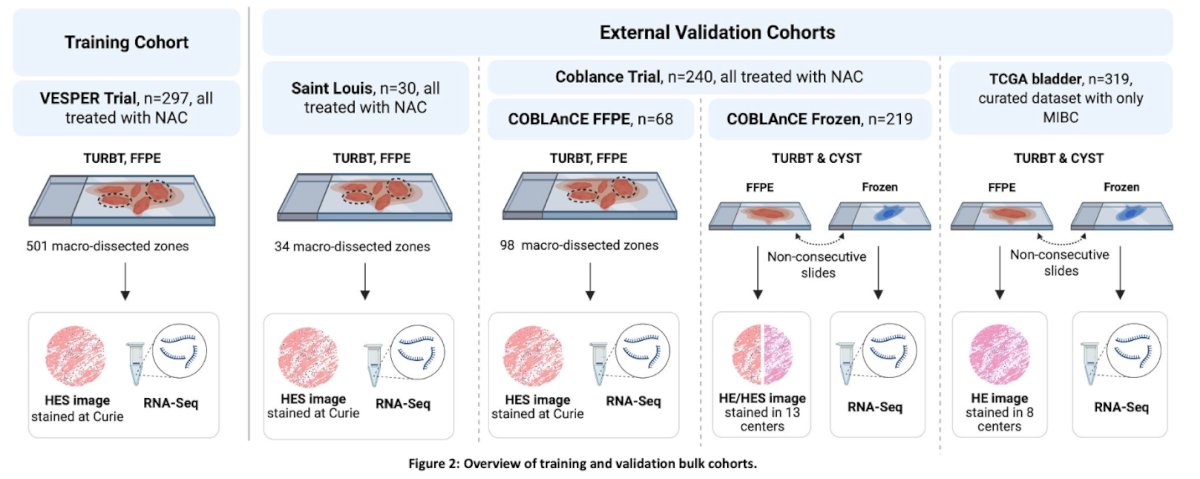
Dr. Blondel explained that the model was trained using the VESPER clinical trial cohort (n=297), which included patients with MIBC treated with neoadjuvant chemotherapy (NAC).1 Validation was performed across three independent external datasets: COBLAnCE (n=240), Saint-Louis (n=30), and TCGA (n=319), representing diverse staining protocols, scanners, and clinical settings.
The training cohort included 501 macro-dissected tumor regions, while validation cohorts incorporated both FFPE and frozen samples from transurethral resection and cystectomy specimens. This multi-cohort design ensured robust evaluation of model generalizability across real-world variations in sample preparation and imaging.
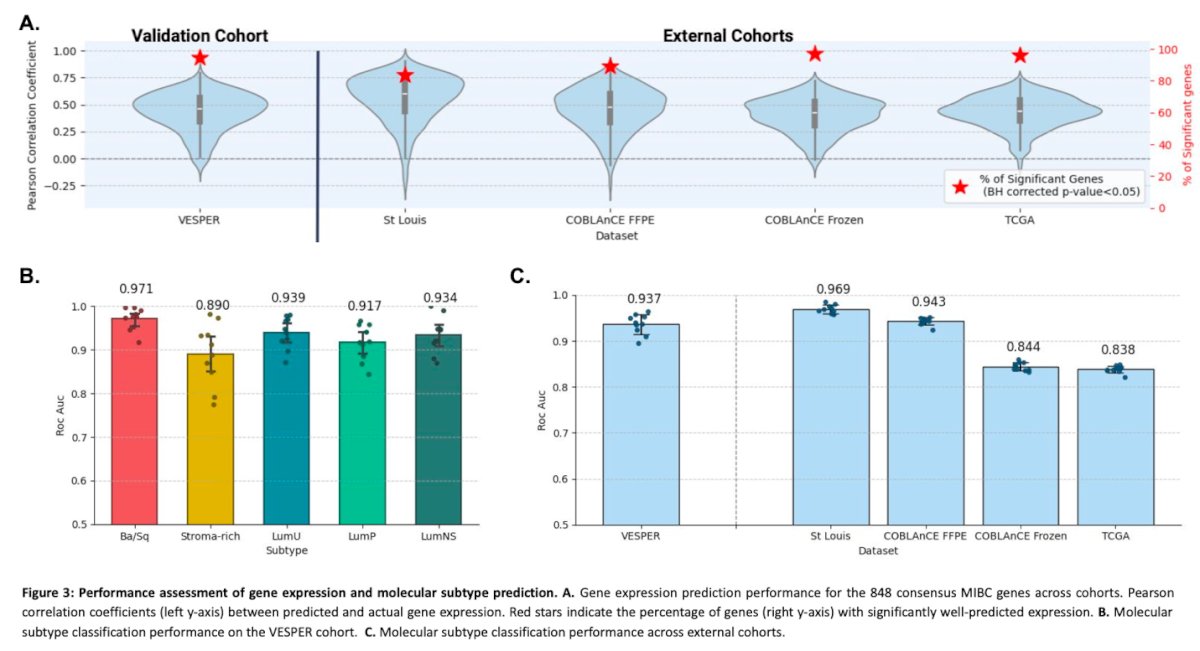
The investigators found that the model accurately predicted gene expression profiles, achieving a median Pearson correlation coefficient of 0.46 in the VESPER cohort, with over 95% of genes significantly predicted. Comparable predictive performance was observed across external validation cohorts. Molecular subtype classification achieved an area under the ROC curve (AUC) of 0.94 in the VESPER cohort (as shown below), maintaining high accuracy across independent datasets. These findings demonstrate the model’s robustness and generalizability for predicting transcriptomic features and molecular subtypes directly from histopathology.
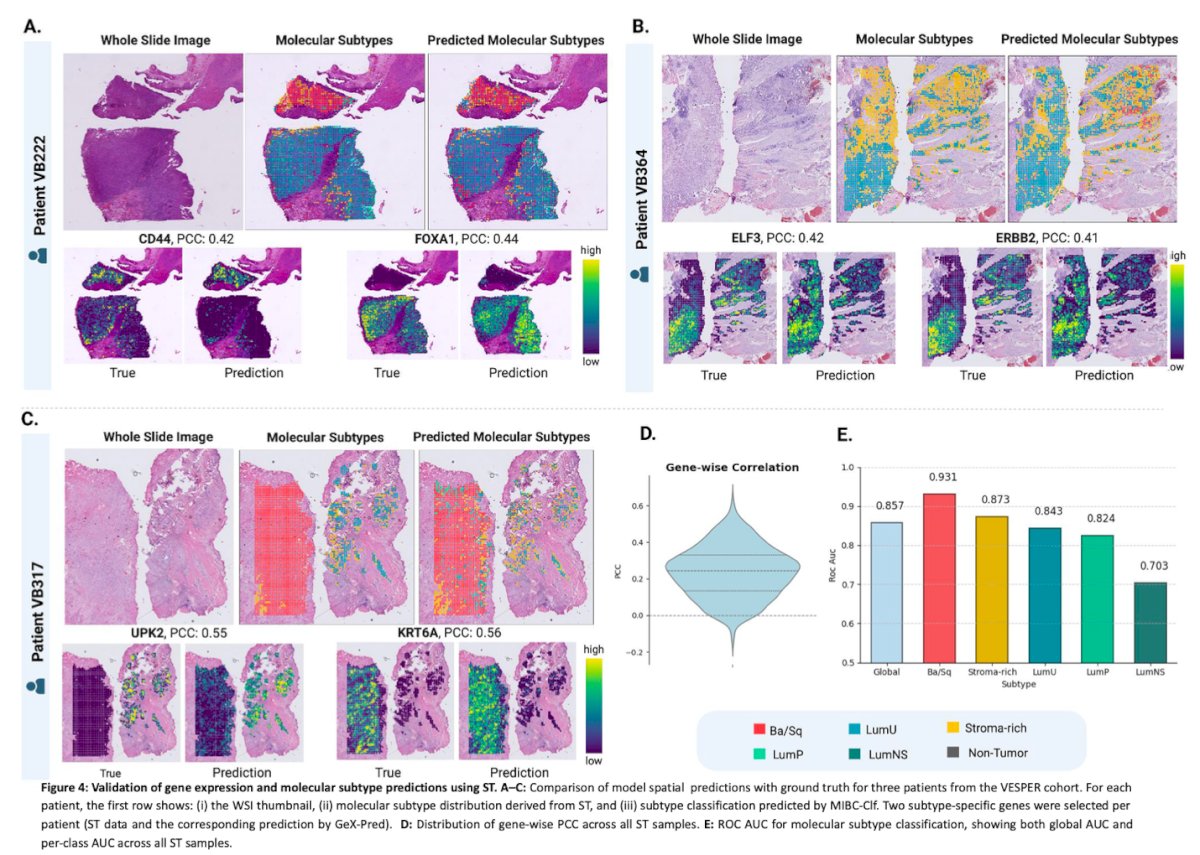
The investigators used spatial transcriptomics to validate the biological accuracy of the AI model’s spatial predictions. By aggregating VisiumHD measurements into 100-µm patches to match the tile resolution of AI-derived expression maps, they demonstrated strong concordance between predicted and observed gene expression and molecular subtype distributions across tumor regions. The predicted expression patterns for genes such as CD44, FOXA1, ELF3, ERBB2, UPK2, and KRT6A aligned closely with ground truth data, with Pearson correlation coefficients ranging from 0.41 to 0.56.
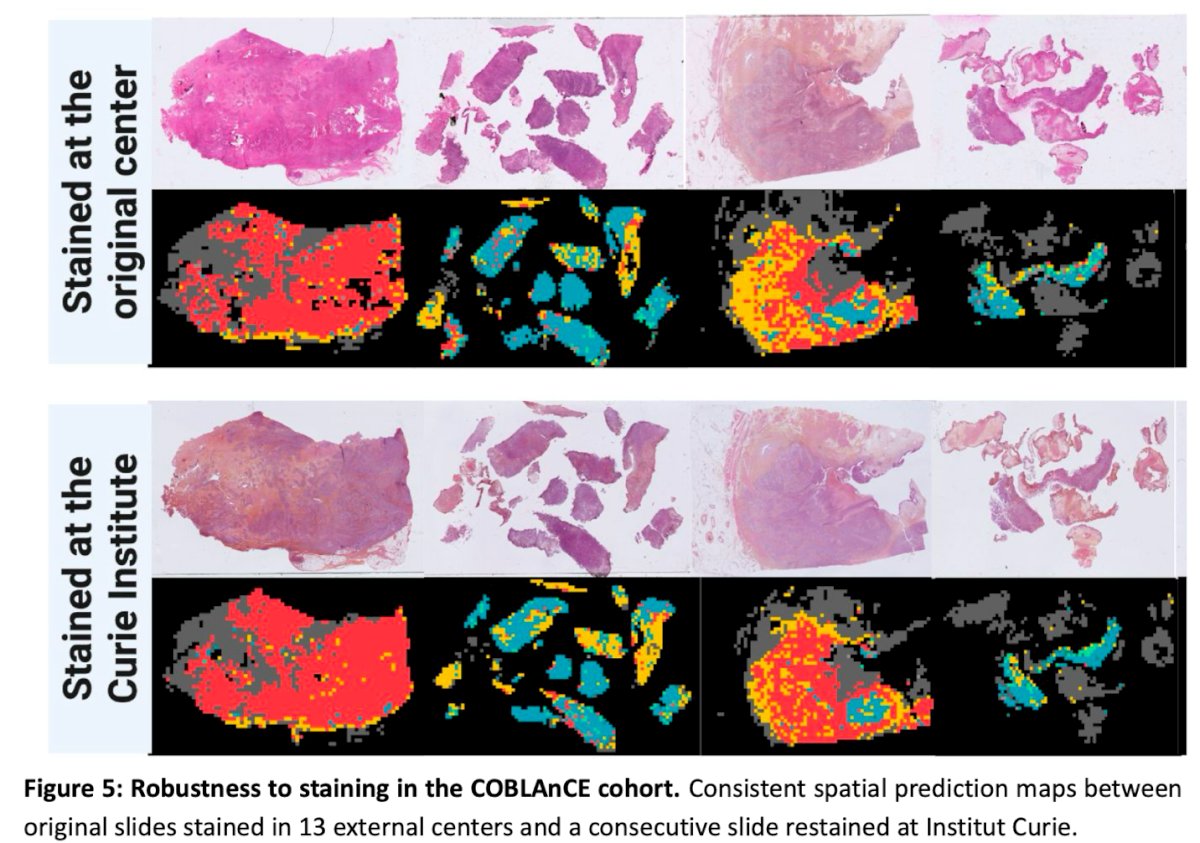
Furthermore, the model demonstrated strong robustness to staining variability across centers. In the COBLAnCE cohort, molecular subtype predictions remained highly consistent on consecutive slides stained at different institutions. Subtype tile compositions showed a strong correlation between matched slides (Pearson r = 0.954, n = 142), confirming that differences in staining protocols had minimal impact on prediction accuracy.
The investigators assessed the prognostic relevance of AI-derived molecular subtype predictions and intratumoral heterogeneity in the VESPER cohort. Tumors exhibiting mixed molecular features, particularly those containing a basal/squamous (Ba/Sq) component, were associated with significantly worse progression-free survival (p = 0.006) and overall survival (p = 0.026). These findings suggest that the presence of a Ba/Sq component within heterogeneous tumors drives poor outcomes, highlighting the prognostic value of AI-based histologic subtyping in identifying aggressive disease biology.

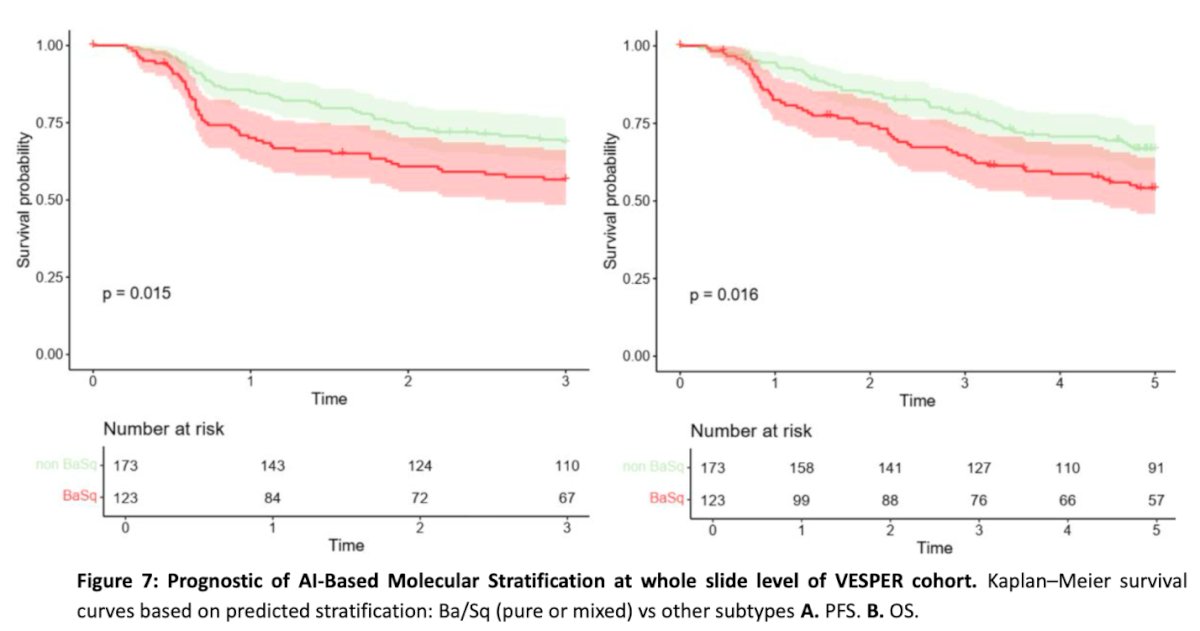
Lastly, the investigators demonstrated that their deep learning tool can be effectively applied in a clinical setting by generating whole-slide predictions. Patients whose tumors exhibited basal/squamous (Ba/Sq) molecular features had significantly worse progression-free survival (p = 0.015) and overall survival (p = 0.016), underscoring the prognostic value of AI-inferred molecular profiles in MIBC as shown in the Kaplan Meier curves below.
Dr Blondel concluded her presentation with the following key takeaways:
- This work demonstrates that deep learning can accurately infer gene expression and molecular subtypes of MIBC from standard histological slides, without the need for RNA sequencing.
- Such an approach could enable molecular stratification and prognostic assessment directly from routine diagnostics, paving the way for more personalized and cost-efficient patient management.
Presented by: Alice Blondel, PHD Student in Computational Biology · Mines Paris (Paris, France)
Written by: Julian Chavarriaga, MD – Urologic Oncologist at Cancer Treatment and Research Center (CTIC) via Society of Urologic Oncology (SUO) Fellow at The University of Toronto. @chavarriagaj on Twitter during the 2025 European Society for Medical Oncology (ESMO) Annual Congress, Berlin, Germany, October 17–21, 2025
Reference: