

The ERAS Framework in Urology
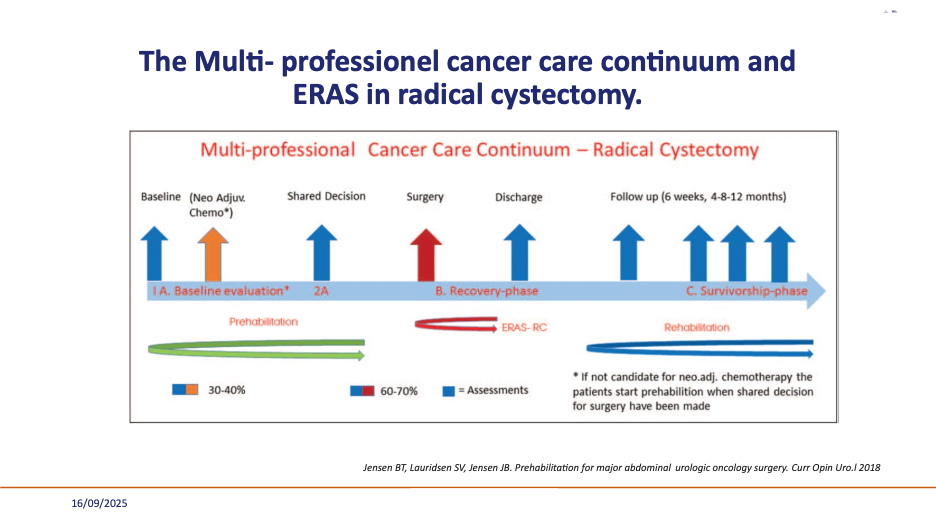
They presented ERAS as part of a comprehensive multi-professional cancer care continuum, particularly for radical cystectomy patients. This continuum spans from baseline evaluation through prehabilitation, surgery, and into long-term survivorship phases. The integration demonstrates how ERAS protocols fit within broader cancer care pathways, with 30-40% of the journey occurring preoperatively and 60-70% postoperatively.
Key Nursing Interventions
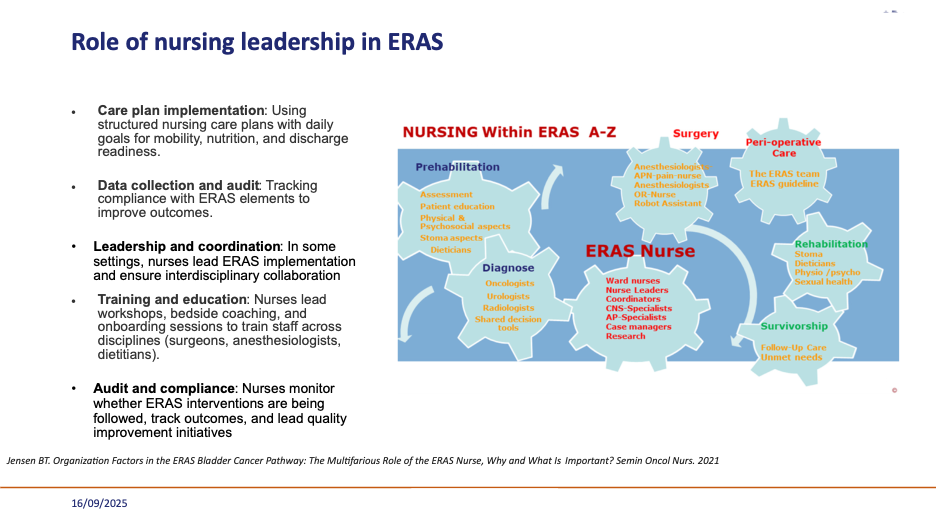
They outlined specific nursing interventions across the perioperative spectrum. Preoperatively, nurses lead patient education and engagement, providing tailored information about procedures, recovery expectations, and self-care strategies. They support prehabilitation efforts by encouraging physical activity, nutritional optimization, and lifestyle modifications. Psychosocial preparation addresses anxiety and emotional readiness, while comprehensive discharge planning coordinates multidisciplinary care.
Postoperatively, nursing interventions focus on early mobilization, helping patients out of bed within hours of surgery while tracking mobility goals. Pain management involves administering multimodal analgesia and monitoring effectiveness. Nutrition support facilitates early oral intake, while specialized stoma care utilizes validated education scales to evaluate patient self-care skills. Vigilant monitoring for complications includes watching for signs of ileus, infection, or thromboembolism.
Evidence-Based Benefits and Nursing Leadership Role
They emphasized proven benefits of ERAS implementation: shorter hospital stays, fewer complications and readmissions, improved patient satisfaction and outcomes, and lower healthcare costs. Nursing leadership proves essential through structured care plan implementation using daily goals for mobility, nutrition, and discharge readiness. Nurses lead data collection and audit processes, tracking compliance with ERAS elements to improve outcomes.
The presentation highlights nursing leadership in training and education, with nurses conducting workshops, bedside coaching, and onboarding sessions across disciplines, including surgeons, anesthesiologists, and dietitians. They monitor ERAS intervention compliance, track outcomes, and lead quality improvement initiatives.
Implementation Framework: RE-AIM Model
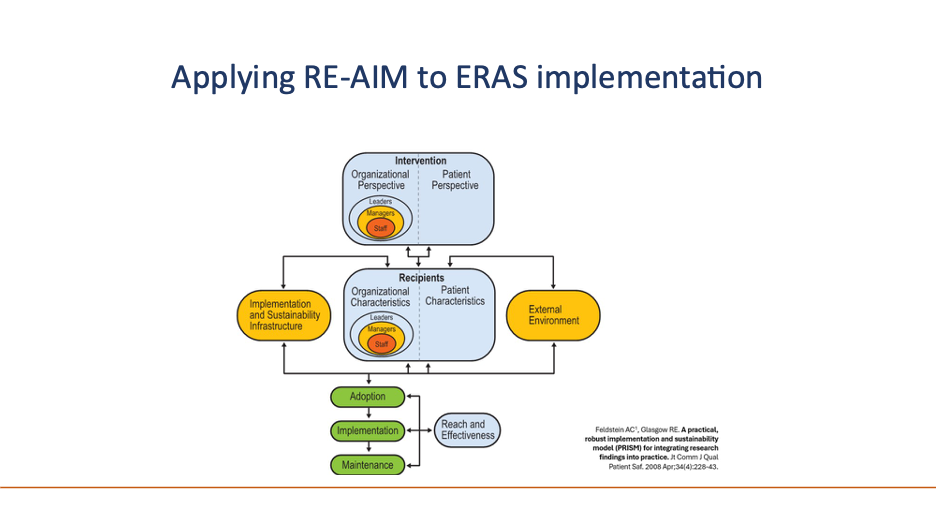
They apply the RE-AIM framework (Reach, Effectiveness, Adoption, Implementation, Maintenance) to ERAS implementation, providing practical structure for translating research into practice. They present two detailed case studies demonstrating this approach: implementing prehabilitation seminars before radical cystectomy and reintroducing ERAS guidelines for colorectal cancer patients.
Bridging Research and Practice
A significant portion addresses the challenge of translating research into clinical practice, noting that traditional knowledge dissemination often takes 17 years to move from research to practice. The authors advocate for contextual adaptation without compromising core evidence-based components, positioning nursing leadership as essential bridge-builders between scientific foundation and practical implementation.
Conclusion and Future Directions
They concluded with Henrik Kehlet's observation that we need fewer studies on ERAS protocol effectiveness and more focus on implementing well-established core elements. The emphasis shifts toward understanding why postoperative ERAS components may fail implementation, highlighting the critical role of nursing leadership in successful translation. This comprehensive approach demonstrates how nursing leadership serves as the crucial link between research evidence and successful clinical implementation, ensuring that proven ERAS protocols translate into improved patient outcomes across urology departments.

Presented by: Susanne Vahr Lauridsen, Senior Researcher, Bente Thoft Jensen, Aarhus University, Aarhus, Denmark
Written by: Stephen B. Williams, MD, MBA, MS, FACS, FACHE @SWilliams_MD on Twitter during the 11th Enhanced Recovery After Surgery (ERAS®) World Congress, September 17-19, 2025, Turin, Italy