

When looking only at European countries and the adoption of RALP, this is over 90% in most western European countries, but around 50% in Germany and France (Figure 1). When assessing robotic partial nephrectomy, the percentages are lower, but most impressively, in Denmark and Switzerland, the adoption rate of robotic procedures is over 90% (Figure 2).
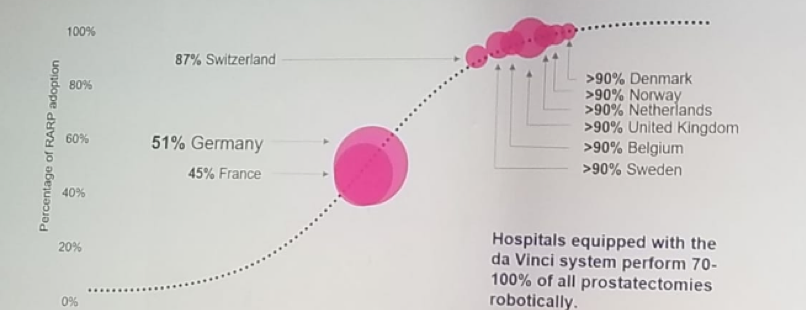
Figure 1 –Adoption of robotic radical prostatectomy in European countries:
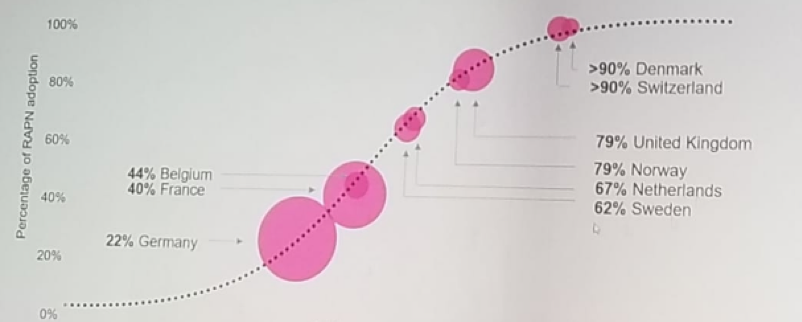
Figure 2 – Adoption of robotic partial nephrectomies in European countries:
One might suggest that the reason for this discrepancy in the utilization of robotic surgery could stem from a difference in the money allocated to the health systems in these countries. But surprisingly, this is quite similar across these countries, ranging from 10-11% (Figure 3). It also does not stem from the different amounts of money allocated per capita, as these are similar as well in these countries.

Figure 3 – Percent for the health-related spending of gross domestic product (GDP):
What was found to be different between these countries and could explain the discrepancy of adoption of robotic procedures, is the reimbursement rates for hospitals. As seen in figure 4, countries with a high adoption rate of robotic procedures, also have a high reimbursement rate.
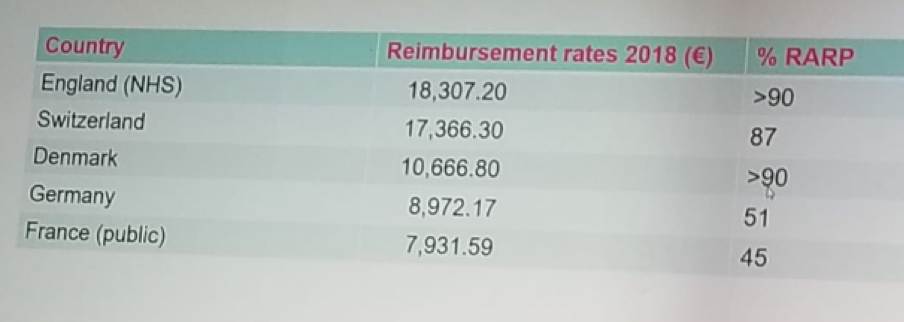
Figure 4 – Reimbursement rates for hospital across various European countries:
Other factors that could add to the differences in the adoption rate of robotic surgeries seen in various countries include the insurance system (private vs. government funded), the multipayer system (as in Germany, The Netherlands, and Switzerland) vs. Single payer system (as in England and Canada). Another factor that is different among the countries is the regulations/incentives. For instance, in England, a higher volume of cases, with more training results in additional payment to the hospital. In contrast, in Germany, a higher volume of cases results in less money being paid to the hospital for each case.
Dr. Witt summarized a talk stating again that several factors are responsible for the varying rate of adoption of robotic surgeries across the countries. These include the insurance system, regulation and incentives, and most importantly is the different reimbursement rates for the hospitals. Therefore, to equalize the adoption rate of robotic technology, the reimbursement rates should be appropriate.
Presented by: J. Witt, Gronau, Germany
Written by: Hanan Goldberg, MD, Urologic Oncology Fellow (SUO), University of Toronto, Princess Margaret Cancer Centre, Twitter:@GoldbergHanan at the EAU Robotic Urology Section (ERUS) Meeting - September 5 - 7, 2018 - Marseille, France