

(UroToday.com) The 2023 EAU annual meeting included a session on the misconception of informed consent in locally advanced bladder cancer, featuring a presentation by Dr. Christian Schulz-Quach discussing psycho-oncological counselling in the context of locally advanced bladder cancer. Dr. Schulz-Quach started by highlighting that a recent review article from Grobet-Jeandin et al.1 assessed health-related quality of life after curative treatment for muscle-invasive bladder cancer. This article notes that a considerable amount of data on health-related quality of life after radical cystectomy is available, but conflicting results have been reported regarding the effect of type of urinary diversion and surgical approach (open or robotic surgery) on patient quality of life. However, data on health-related quality of life after trimodal therapy are scarce, and additional comparative studies including patients receiving radical cystectomy are needed.
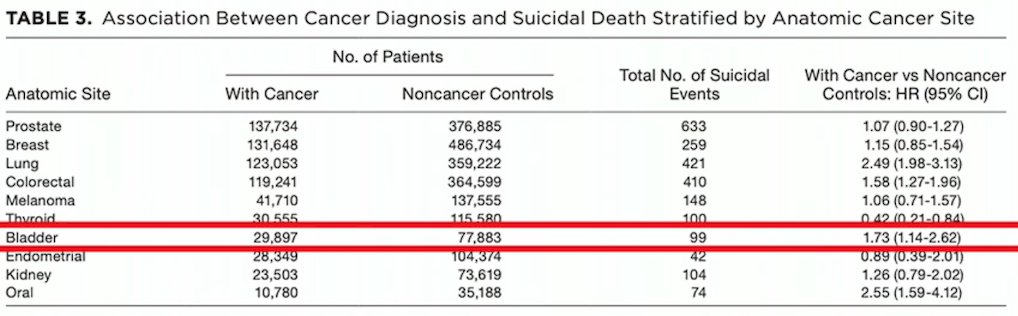
Dr. Schulz-Quach also emphasized that psychological assessment of bladder cancer patients is important given that the psychiatric comorbidities associated with the disease are prevalent and may even lead to suicidal death. Work from Ontario, Canada by Klaassen et al.2 showed that after adjusting for pre-diagnosis psychiatric comorbidities, bladder cancer patients were at increased risk of suicidal death (HR 1.73, 95%CI 1.14-2.62):
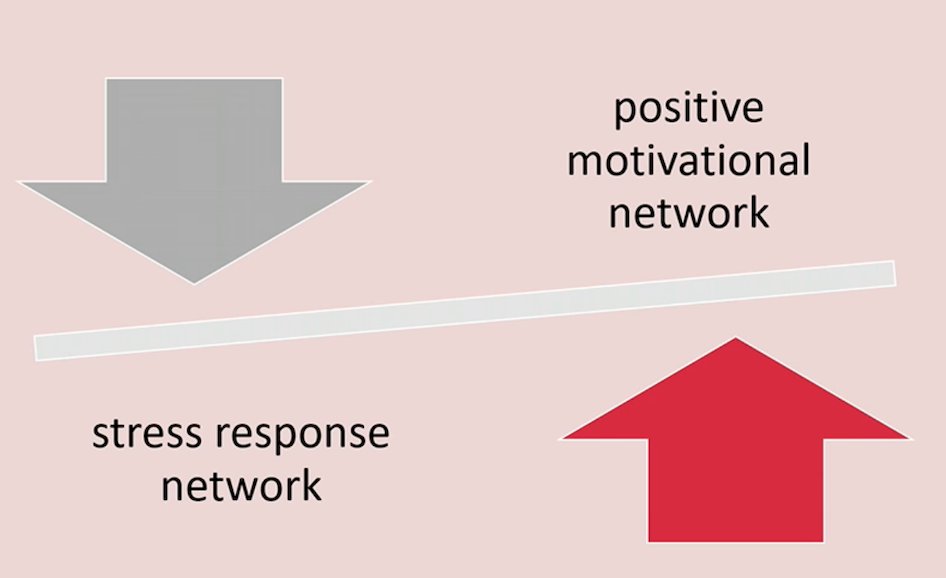
Dr. Schulz-Quach notes that in his opinion, quality of life follows the common pathway theory, as highlighted below:
There are several forms of anxiety for bladder cancer patients, including (i) situation anxiety (stressful life events, complications), (ii) psychiatric anxiety (phobias, panic, general anxiety disorder, obsessive compulsive disease, PTSD), (iii) organic anxiety (pain, hypercalcemia, steroids, opioids, hormone therapy), and (iv) existential anxiety. Arguably, the most prevalent form of anxiety is fear of recurrence, which is most common after treatment for cancer. This is defined as “fear, worry, or concern relating to the possibility that cancer will come back or progress.” Additional forms of anxiety include “scanxiety” (anxiety around the timing of follow-up imaging) and survivor’s guilt.
Fear of cancer recurrence is associated with:
- High levels of preoccupation
- High levels of worry
- Persistence over time
- Hypervigilance to bodily symptoms
- Does not decrease over time without intervention for most patients
Importantly, fear of cancer recurrence leads to anxiety that can negatively impact quality of life and psychological well-being. Low quality of life and low psychological well-being is highly associated with depression, despair, and hopelessness. Additionally, fear of cancer recurrence negatively influences screening, health behaviors, mood, and coping behaviors. Depression and low quality of life are associated with worse health outcomes in cancer care, including life expectancy.
Dr. Schulz-Quach concluded this presentation discussing psycho-oncological counselling of bladder cancer patients with the following treatment options for fear of cancer recurrence:
- Psychological interventions based on cognitive behavioral therapy are efficacious in managing fear of cancer recurrence, especially at post-treatment:
- Group settings
- Traditional cognitive behavioral therapy
- Contemporary cognitive behavioral therapy (mindfulness, acceptance, and commitment therapy)
- Emotion-focused psychotherapy
- Existential psychoanalysis (emotional phenomenology, emotional dwelling)
Presented by: Christian Schulz-Quach, MD MSc MA FHEA MRCPsych, University Health Network, University of Toronto, Toronto, Canada
Written by: Zachary Klaassen, MD, MSc – Urologic Oncologist, Assistant Professor of Urology, Georgia Cancer Center, Augusta University/Medical College of Georgia, @zklaassen_md on Twitter during the 2023 European Association of Urology (EAU) Annual Meeting, Milan, IT, Fri, Mar 10 – Mon, Mar 13, 2023.
References:
- Grobet-Jeandin E, Pinar U, Parra J, et al. Health-related quality of life after curative treatment for muscle-invasive bladder cancer. Nat Rev Urol. 2023 Jan 18 [Epub ahead of print].
- Klaassen Z, Wallis CJD, Chandrasekar T, et al. Cancer diagnosis and risk of suicide after accounting for prediagnosis psychiatric care: A matched-cohort study of patients with incident solid-organ malignancies. Cancer 2019 Aug 15;125(16):2886-2895.