

(UroToday.com) The 2026 European Association of Urology (EAU) annual meeting featured an advancements in upper tract urothelial carcinoma session and a presentation by Dr. Savio Domenico Pandolfo discussing the IMPACT UTUC project, an international Delphi consensus on upper tract urothelial carcinoma management. Upper tract urothelial carcinoma makes up 5-10% of urothelial carcinomas, with 17% of tumors occurring concurrently with bladder urothelial carcinoma. However, there remains limited level I evidence to help guide management, resulting in significant practice heterogeneity. The objective of the IMPACT UTUC (International Multidisciplinary Delphi Consensus on Advanced Practice in Upper Tract Urothelial Cancer) project was to develop multidisciplinary consensus statements addressing key areas of uncertainty across the diagnostic, surgical, and perioperative management spectrum.
A steering committee (n = 8) developed statements covering diagnostic evaluation, risk stratification, indications for kidney-sparing approaches, radical nephroureterectomy, and perioperative systemic therapy. Statements were assessed by an international expert panel (n = 74) using a 1–9 Likert scale (1–3 disagree, 4–6 equivocal, 7–9 agree). Consensus was predefined as ≥70% agreement with ≤15% disagreement. In Round 1, 40 statements were evaluated. Statements not meeting criteria were revised based on expert comments, subdivided when necessary, and reassessed in Round 2. The expert panel included 35 experts from Europe, 31 from the Americas, and 8 from Asia. Overall, 88% were urologists, and 12% were medical oncologists:
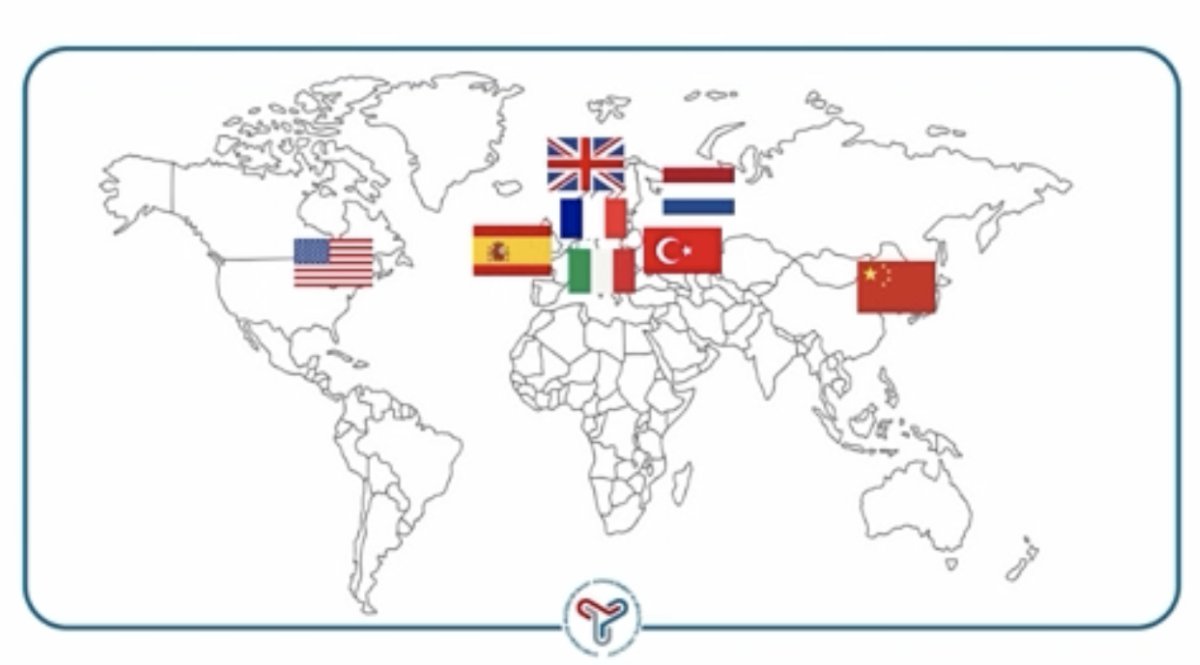
In Round 1, 55/74 (74%) completed Delphi round 1, with 24 of 40 statements (60%) achieving consensus, while 16 (40%) did not. These 16 were refined into 18 items for Round 2. In Round 2, 50/74 (67%) completed Delphi round 2, with 8 of 18 statements (44%) reaching consensus. Overall consensus was reached for 32/40 statements (76%) across both Delphi rounds.
Key consensus domains included the following:
- CT urography was confirmed as the first line imaging modality, with FDG-PET/CT being used selectively for metastatic staging
- Cystoscopy and urinary cytology are recommended in the diagnostic work-up
- Selective use of diagnostic ureteroscopy, but not mandatory in all patients
- Risk stratification
- High-risk disease defined by tumor size >2 cm, high-grade pathology/cytology, multifocality, and radiologic invasion
- Kidney-sparing strategies
- Preferred first line approach for low risk upper tract urothelial carcinoma
- Second-look ureteroscopy within 1–3 months recommended after endoscopic treatment
- Radical nephroureterectomy
- Remains standard treatment for high risk upper tract urothelial carcinoma
- Minimally invasive approaches considered oncologically safe when principles are respected
- Template-based lymph node dissection recommended in high risk disease
- Perioperative systemic therapy
- Neoadjuvant cisplatin based chemotherapy for selected high risk patients
- Adjuvant platinum-based chemotherapy in advanced pathological stage
- Adjuvant nivolumab in select patients
- Molecular testing
- MMR testing recommended to identify Lynch syndrome
- FGFR2/3 testing recommended in locally advanced or node positive disease

Dr. Pandolfo concluded his presentation discussing the IMPACT UTUC project with the following take-home points:
- Consensus was achieved for 32/40 statements (76%), covering key steps of the upper tract urothelial carcinoma management pathway
- The consensus provides pragmatic guidance in areas with limited evidence, supporting more harmonized clinical practice
- Experts supported risk-adapted management, integrating diagnosis work-up, surgical strategy and systemic therapy
- The project identifies key clinical grey zones and priorities for future prospective research
Presented by: Savio Domenico Pandolfo, MD, University of L’Aquila, L’Aquila, Italy
Written by: Zachary Klaassen, MD, MSc – Urologic Oncologist, Associate Professor of Urology, Georgia Cancer Center, Wellstar MCG Health, @zklaassen_md on Twitter during the 2026 European Association of Urology (EAU) Annual Meeting, London, United Kingdom, Fri, Mar 13 – Mon, Mar 16, 2026.