

(UroToday.com) The 2026 European Association of Urology (EAU) annual meeting featured a surgical and non-surgical treatment of non-muscle invasive bladder cancer session and a presentation by Dr. Evanguelos Xylinas discussing the SunRISe-1 trial and peri-procedural prophylactic antibiotic use with gemcitabine intravesical system monotherapy. Gemcitabine intravesical system, previously TAR-200, is a first in class intravesical drug-releasing system designed to provide sustained delivery of gemcitabine in the bladder. Gemcitabine intravesical system was recently approved for BCG-unresponsive high risk non muscle invasive bladder cancer with CIS with or without papillary tumors based on the phase 2b SunRISe-1 study.1 Gemcitabine intravesical system is inserted via urinary placement catheter and removed from the bladder via cystoscopy, with removal and new insertion often completed during the same visit. In this analysis of data from SunRISe-1, Dr. Xylinas and colleagues examined the rate of peri-procedural prophylactic antibiotic use and the rate of infectious adverse events in patients who received gemcitabine intravesical system monotherapy.
Patients with BCG-unresponsive CIS with or without papillary disease (Cohort 2) or BCG-unresponsive papillary-only high risk non muscle invasive bladder cancer (Cohort 4) who were treated with gemcitabine intravesical system monotherapy were analyzed:
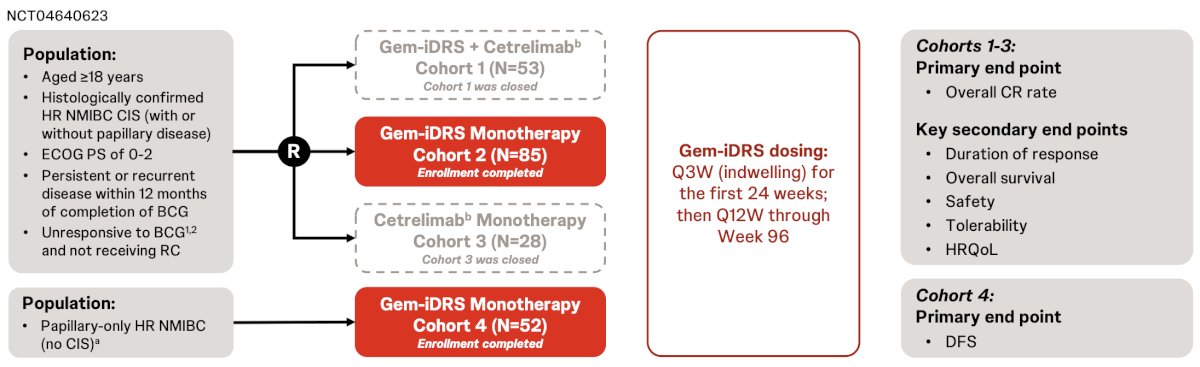
Peri-procedural prophylactic antibiotic use was defined as antibiotics administered ≤2 days before or after a gemcitabine intravesical system insertion or removal procedure. Infectious adverse events were defined as any urinary tract infection, cystitis, or other plausibly related infections occurring ≤14 days after an insertion or removal procedure.
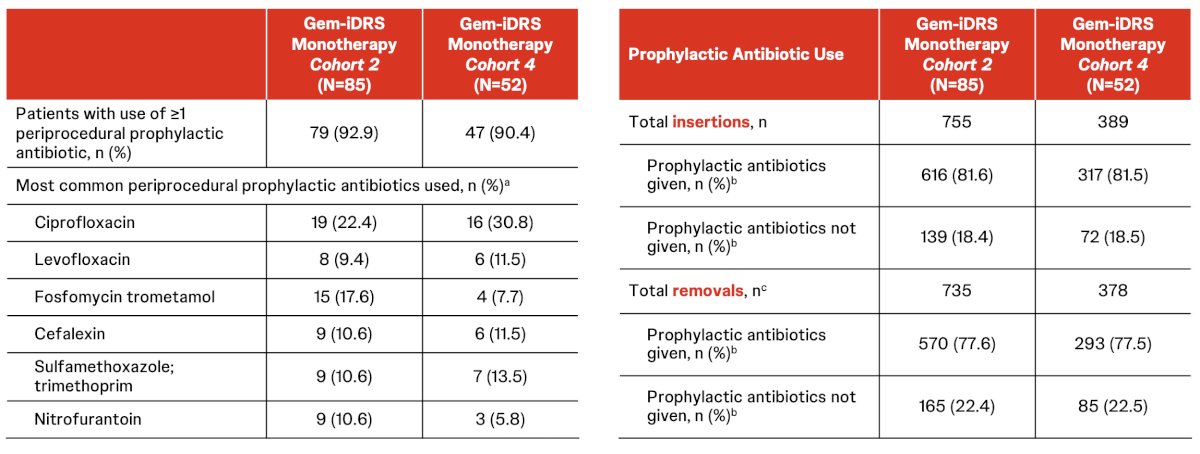
A total of 137 patients (Cohort 2: 85; Cohort 4: 52) with BCG-unresponsive high risk non muscle invasive bladder cancer who received gemcitabine intravesical system monotherapy were included in this analysis. Peri-procedural prophylactic antibiotics were used in 933/1,144 insertions (81.6%) and 863/1113 removals (77.5%):
Infectious adverse events occurred following 64/933 (6.9%) insertion procedures with prophylactic antibiotics and 14/211 (6.6%) insertions without antibiotics. Infectious adverse events occurred following 46/863 (5.3%) removal procedures with prophylactic antibiotics and 19/250 (7.6%) removals without antibiotics. Most infectious adverse events following insertions and removals were grade 1-2, and most were managed per institutional standard of care and resolved. In Cohort 2, 97.8% of infectious adverse events resolved after a median of 1.9 weeks, and in Cohort 4, 100% resolved after a median of 1.7 weeks:
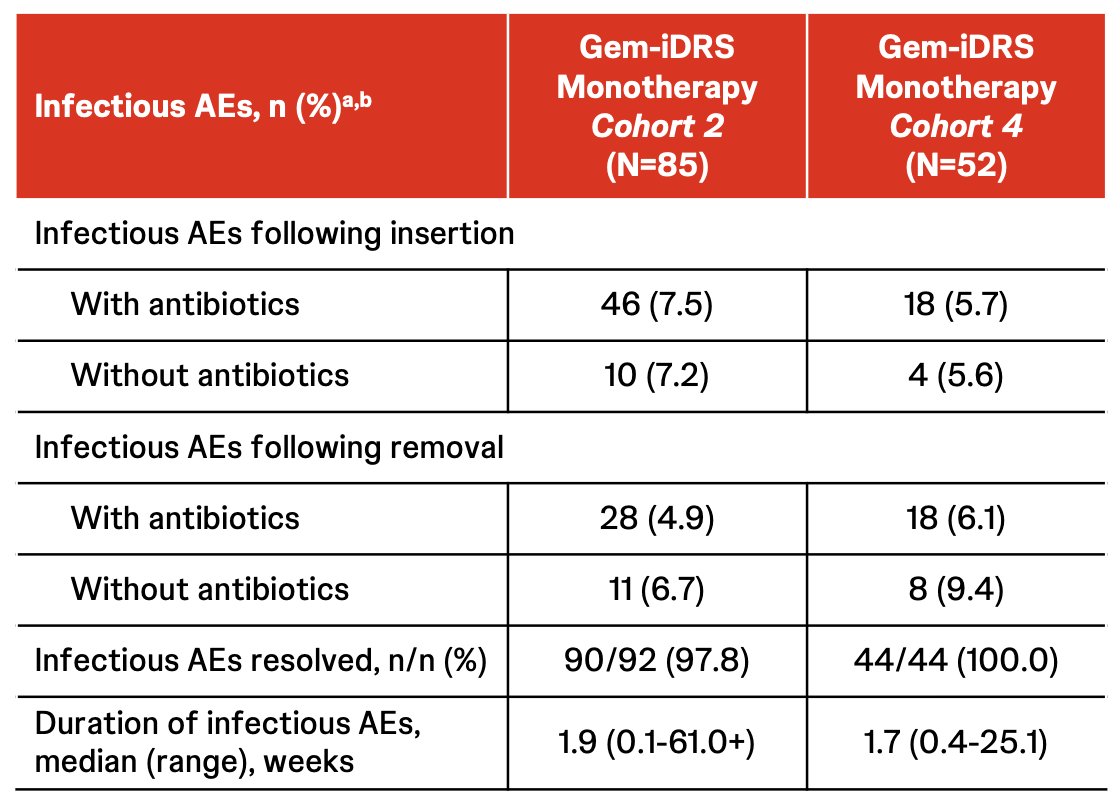
Rates of infectious adverse events were consistent with those typically observed with urethral catheterization (~9%).
Dr. Xylinas concluded this presentation discussing the SunRISe-1 trial and peri-procedural prophylactic antibiotic use with gemcitabine intravesical system monotherapy with the following take-home points:
- In SunRISe-1, infectious adverse event rates following insertion or removal of gemcitabine intravesical system were low and similar to rates reported with conventional urethral catheterization or cystoscopy procedures
- The use of peri-procedural prophylactic antibiotics was not associated with a difference in rates of infectious adverse events following gemcitabine intravesical system insertion or removal
- Overall, the observed low rate of infectious adverse events supports adherence to current urologic best practice recommendations regarding selective use of peri-procedural prophylactic antibiotics for catheterization and cystoscopy procedures.2
Presented by: Evanguelos N. Xylinas, MD, MS, Bichat-Claude Bernard Hospital, Paris, France
Written by: Zachary Klaassen, MD, MSc – Urologic Oncologist, Associate Professor of Urology, Georgia Cancer Center, Wellstar MCG Health, @zklaassen_md on Twitter during the 2026 European Association of Urology (EAU) Annual Meeting, London, United Kingdom, Fri, Mar 13 – Mon, Mar 16, 2026.
References:
- Daneshmand S, Van der Heijden MS, Jacob JM, et al. TAR-200 for Bacillus Calmette-Guerin-Unresponsive High-Risk Non-Muscle-Invasive Bladder Cancer: Results from the Phase IIb SunRISe-1 Study. J Clin Oncol. 2025 Nov 20;43(33):3578-3588.
- Lightner DJ, Wymer K, Sanchez J, et al. Best practice statement on urological procedures and antimicrobial prophylaxis. J Urol. 2020 Feb;203(2):351-356.
Phase III SunRISe-2 Trial Compares Gem-iDRS and Cetrelimab to Chemoradiation for MIBC Bladder Preservation - Andrea Necchi (Video)
ASCO GU 2026: Gemcitabine Intravesical System in Combination with Cetrelimab Versus Chemoradiotherapy in MIBC: SunRISe-2 Final Results