

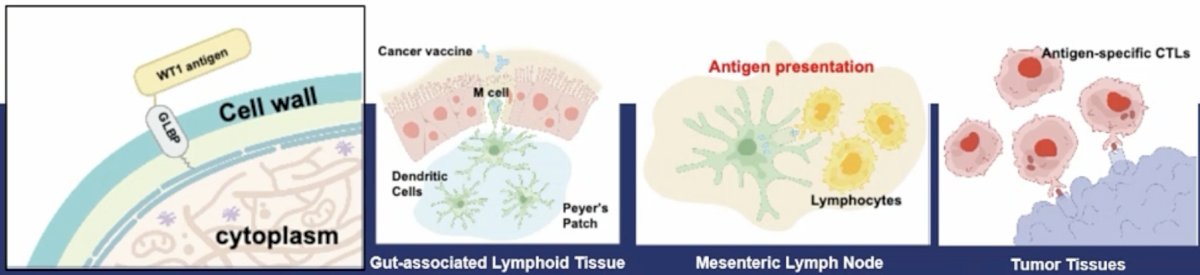
(UroToday.com) The 2026 European Association of Urology (EAU) annual meeting featured a metastatic urothelial carcinoma session and a presentation by Dr. Hideto Ueki discussing a phase 1 study of B440 in patients with metastatic urothelial cancer. B440 is an innovative oral cancer vaccine consisting of a recombinant Bifidobacterium engineered to express the human WT1 tumor-associated antigen. By delivering the WT1 antigen protein to dendritic cells in gut-associated lymphoid tissue, B440 is designed to induce a robust tumor-specific cellular immune response:
This phase 1 study evaluated safety, immunogenicity, and preliminary efficacy of B440 in heavily pretreated metastatic urothelial cancer patients.
A total of 12 patients were enrolled in two dose cohorts (n = 6 each). Patients received oral B440 once daily for five consecutive days per week over four weeks:
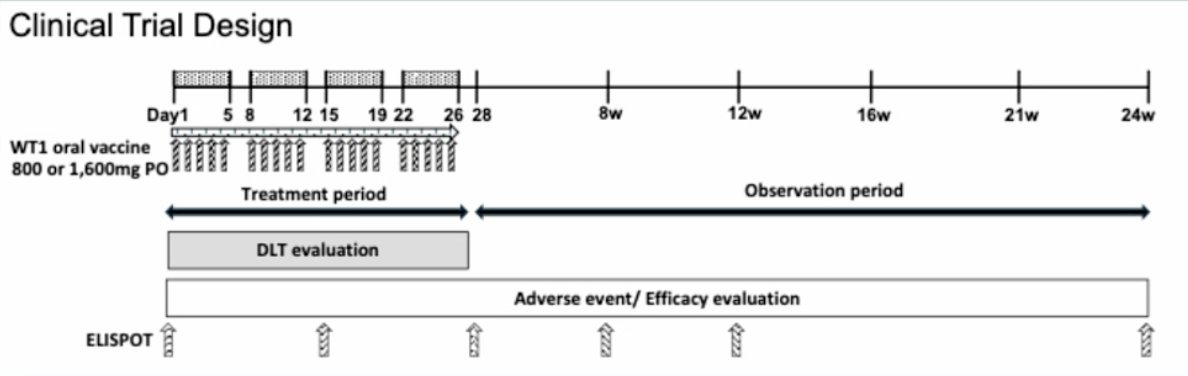
The primary endpoint was dose limiting toxicity, and secondary endpoints included safety and efficacy, evaluated by best overall response, and progression free survival. WT1-specific immune responses were assessed via enzyme-linked immunosorbent spot (ELISPOT) assays to detect interferon-gamma-producing T cells.
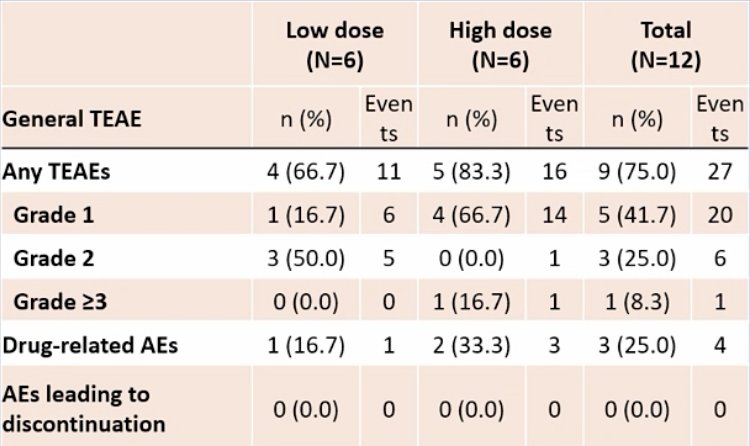
All 12 patients completed the 4-week course of treatment: six in the 800 mg cohort and six in the 1,600 mg cohort. The median age was 74.5 years (range: 39–81), and primary tumor sites included the bladder (n = 5), renal pelvis (n = 4), and ureter (n = 3). No dose limiting toxicities were observed in either dose cohort. Treatment related adverse events were generally mild (grade 1), with the most common events being transient IL-6 elevations (n = 3) and cold-like symptoms (n = 3):
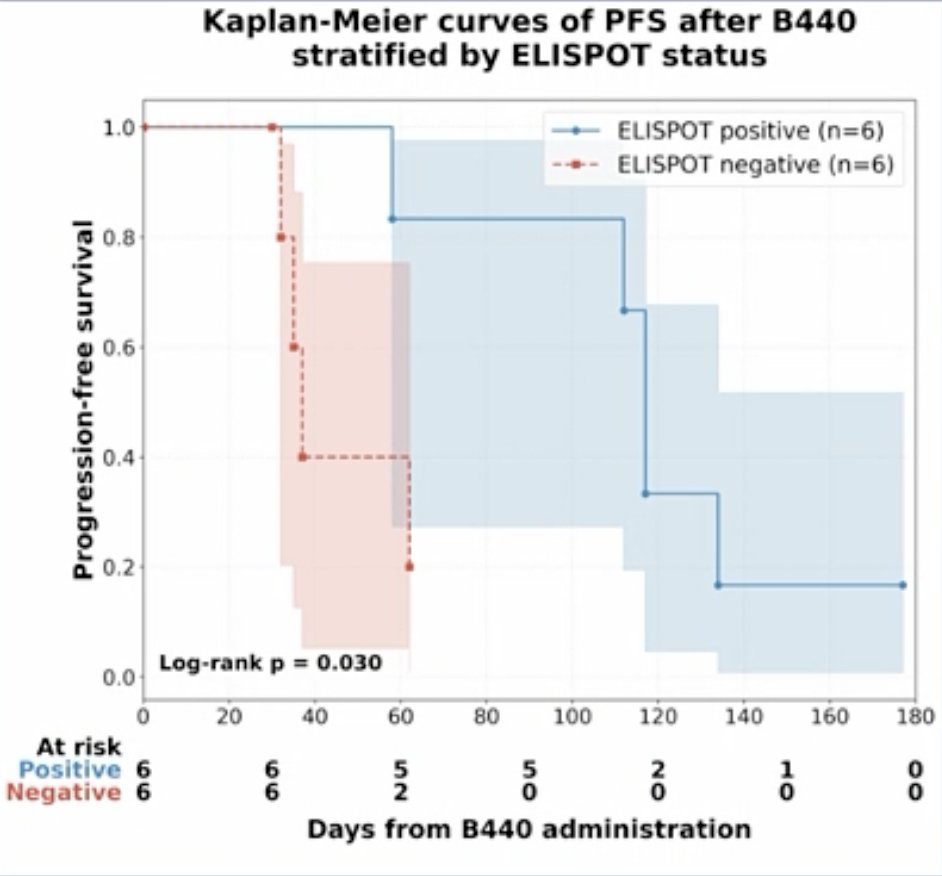
The disease control rate was 50%, as six patients achieved stable disease as their best overall response. Six patients also demonstrated robust WT1-specific T-cell induction, confirmed by ELISPOT analysis. ELISPOT-positive patients had a significantly longer progression free survival compared to ELISPOT-negative patients (median progression free survival: 113 days versus 57 days; p = 0.03):
Although not part of the study protocol, six patients subsequently underwent pembrolizumab rechallenge at the discretion of their treating physicians. Of these, three achieved clinical responses (one complete response and two partial responses).
Additionally, ELISPOT-positive patients showed significantly prolonged progression free survival during pembrolizumab rechallenge compared to ELISPOT-negative patients (median progression free survival: not reached versus 57 days; p = 0.0389). Notably, all ELISPOT-positive patients achieved objective responses upon rechallenge.
Dr. Ueki concluded this presentation discussing a phase 1 study of B440 in patients with metastatic urothelial cancer with the following take-home points:
- B440 exhibited a favorable safety profile and demonstrated no dose limiting toxicities up to 1,600 mg in this phase 1 study
- The induction of WT1-specific cellular immunity correlated with improved progression free survival during both B440 therapy and subsequent pembrolizumab rechallenge
- These findings suggest that B440 may enhance the immunogenicity of urothelial tumors, offering a potential avenue for durable disease control
Presented by: Hideto Ueki, MD, PhD, Kobe University Graduate School of Medicine, Kobe, Japan
Written by: Zachary Klaassen, MD, MSc – Urologic Oncologist, Associate Professor of Urology, Georgia Cancer Center, Wellstar MCG Health, @zklaassen_md on Twitter during the 2026 European Association of Urology (EAU) Annual Meeting, London, United Kingdom, Fri, Mar 13 – Mon, Mar 16, 2026.