

(UroToday.com) The 2025 European Association of Urology (EAU) Annual Congress held in Madrid, Spain between March 21st and 24th 2025, was host to a thematic session on hot topics in the management of renal cell carcinoma (RCC) patients. Dr. Teele Kuusk delivered a state-of-the-art lecture on how, when, and who to screen in RCC, highlighting the Yorkshire Kidney Screening Trial.
Dr. Kuusk began her talk by noting that the incidence of kidney cancer is rapidly increasing worldwide, with 34% of incident cases considered preventable.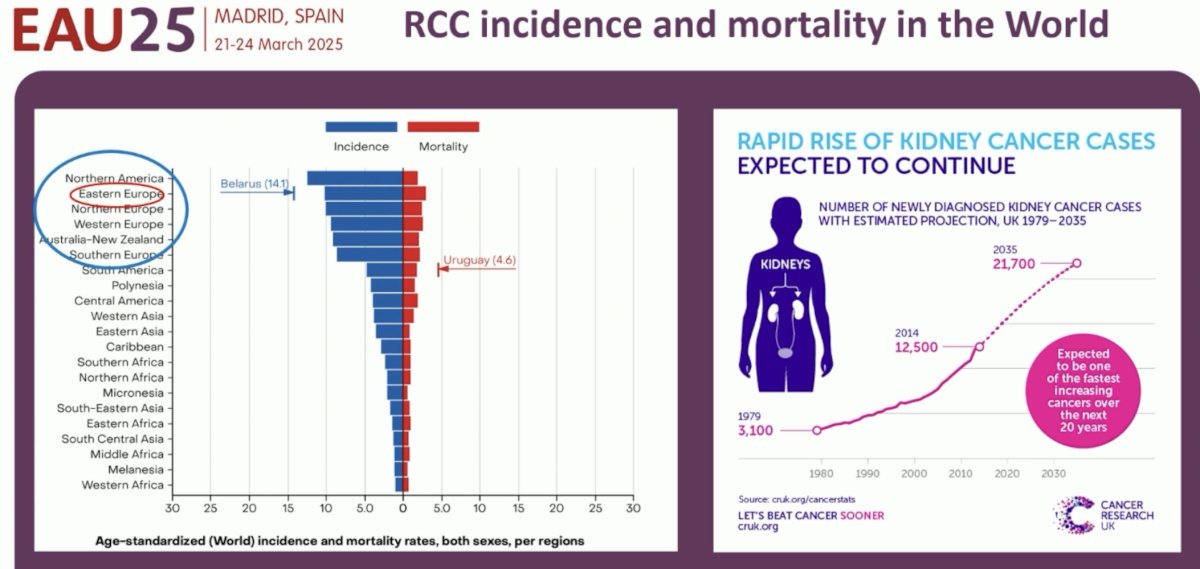
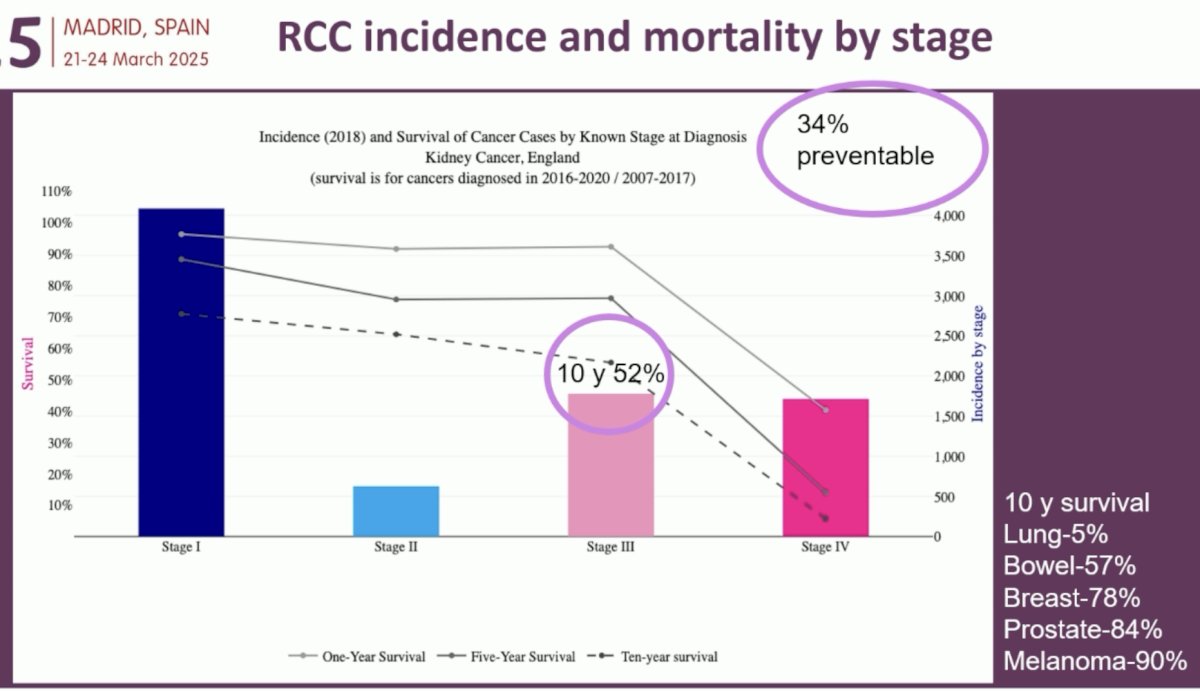
RCC tends to be ‘silent’ with only 2% of patients presenting with gross hematuria having underlying RCC, with a corresponding figure of 0.58% for patients with microscopic hematuria.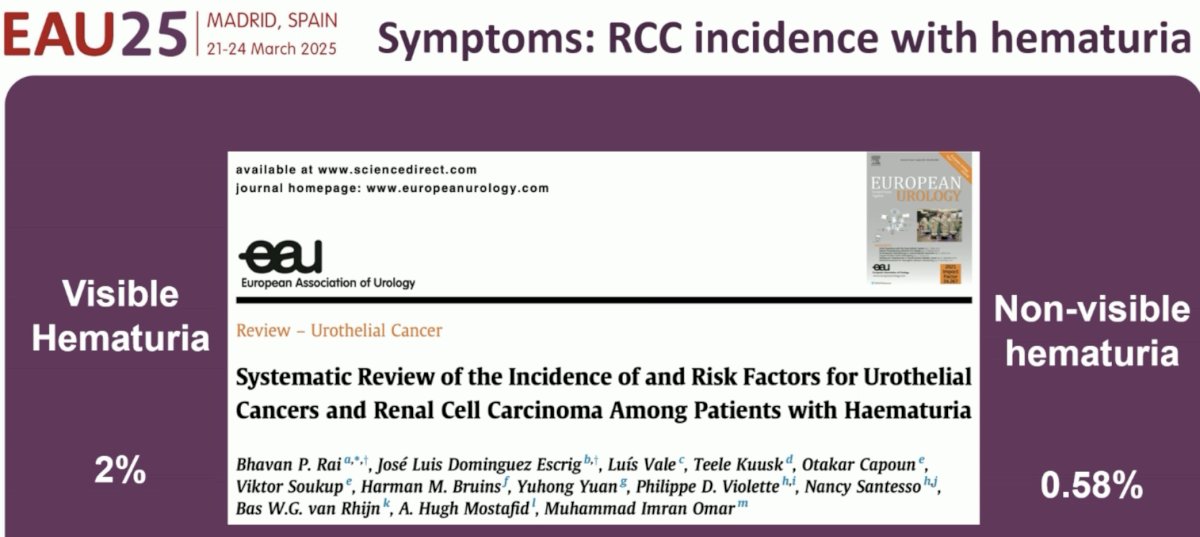
Smoking has been established as a risk factor for RCC, with smokers having a 1.31-fold increased relative risk of developing RCC. As such, the high prevalence of RCC, combined with its generally silent nature and increased risk among smokers suggests that there is an opportunity to intervene to detect these lesions.at an early stage in smokers.
In 2024, Stewart et al. published the results of the Yorkshire Kidney Screening Trial, which assessed abdominal non-contrast CT scanning to screen for kidney cancer and other abdominal pathology within community-based CT screening for lung cancer.1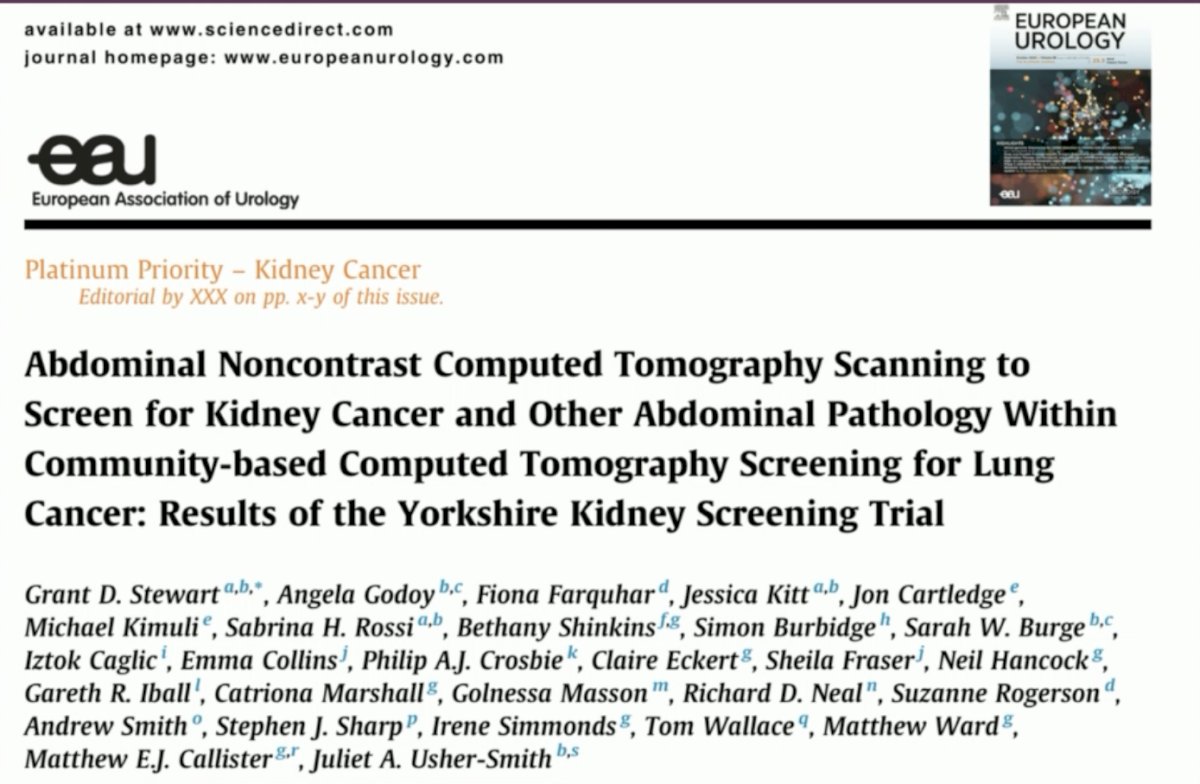
In this study, current or former smokers aged 55–80 years were invited to a lung cancer CT screening program. Overall, 4,438 people attended, and all were offered the additional option of undergoing a non-contrast CT of the abdomen. Overall, 4,019 of the 4,438 attendees consented to enrollment in this trial.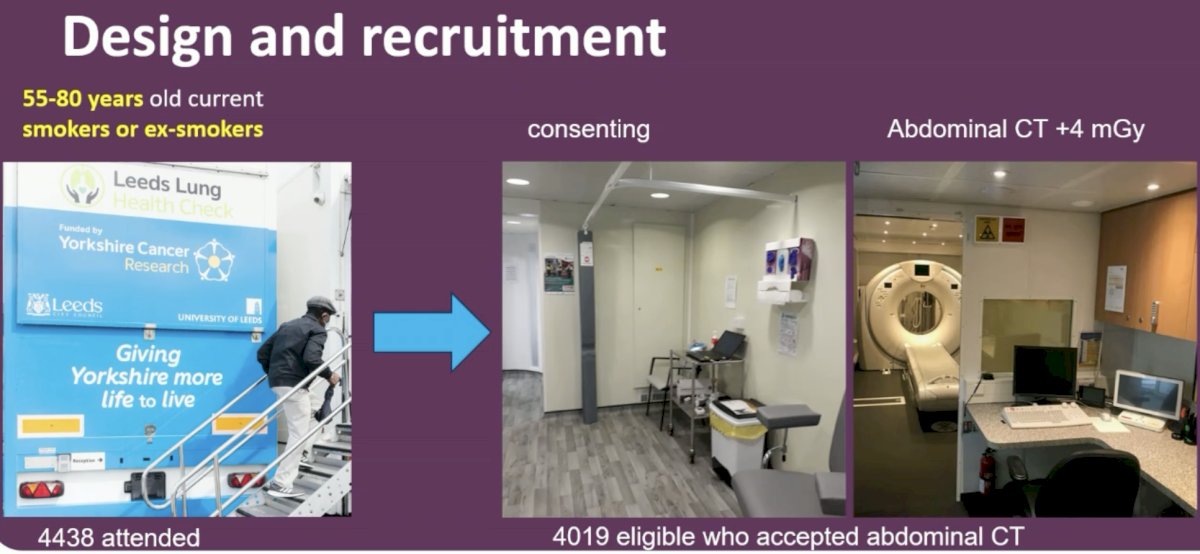
The primary study endpoints were feasibility and acceptability by patients. The secondary endpoints were detection rates of:
- RCC
- Other renal findings
- Abdominal non-renal findings
Overall, 4,019 eligible participants enrolled in the trial. Subjects who were older, women, and current smokers were more likely to decline participation in this trial.
What were the results?
- 93% accepted having the abdominal CT scan performed
- 96% did not regret participation
- 93% were satisfied with participation
- The mean added time was 13.3 minutes
- The abdominal CT radiation dose was 4 mGy
Of the 4,019 participants, 2,586 (64.3%) received a normal result letter, and the remaining 1,433 (35.7%) were subject to an imaging review meeting: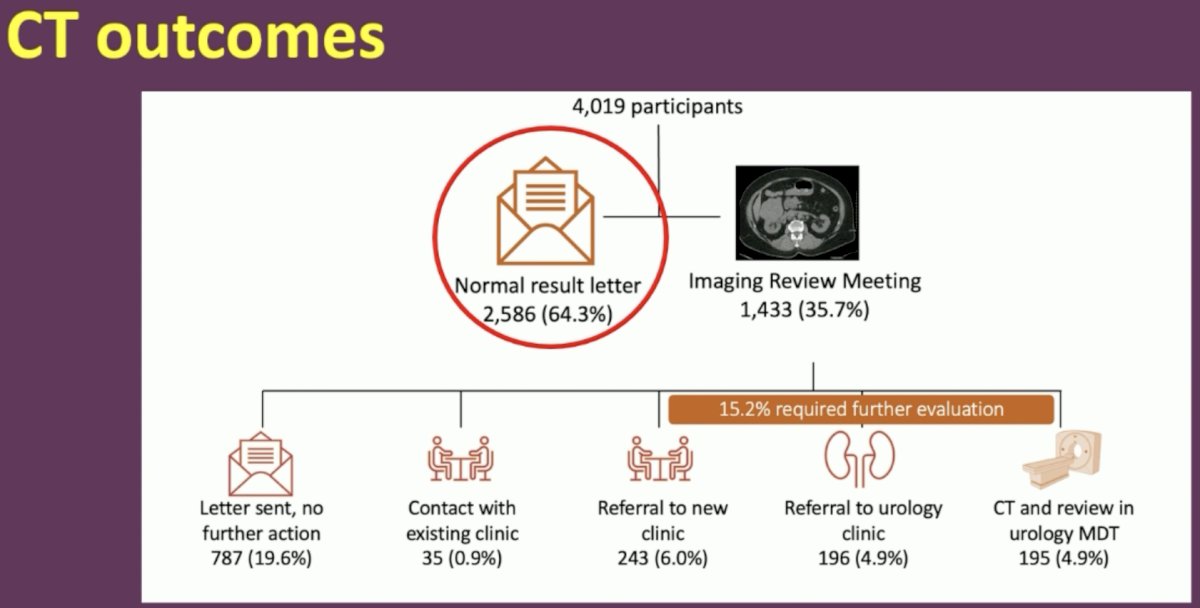
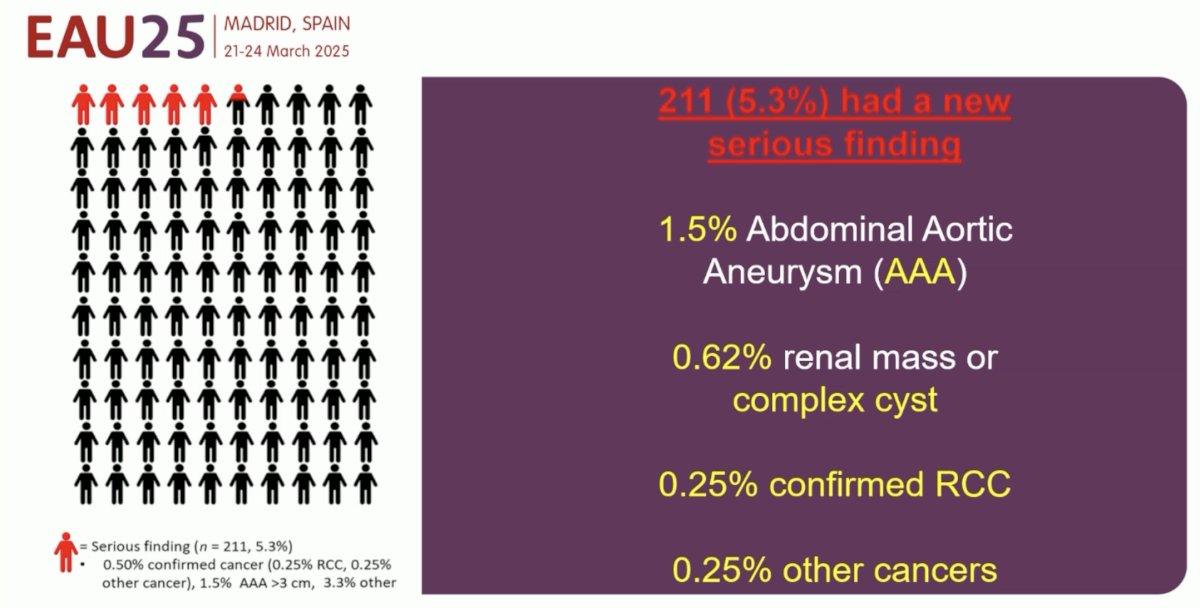
What were the CT scan findings? 211 (5.3%) had a new serious finding:
- Abdominal aortic aneurysm: 1.5%
- Renal mass of complex cyst: 0.62%
- Confirmed RCC: 0.25%
- Other cancers: 0.25%
These findings are comparable to those seen with other screening trials:
Any serious kidney finding was detected in 3.1% of patients, namely:
- Kidney stone ≥5 mm: 2.3%
- Bosniak IIF, III, or IV cyst: 0.37%
- Histologically proven renal cancer: 0.25%
Overall, 25 patients (0.62%) underwent treatment with curative intent. 25% were found to have non-serious findings requiring further tests (e.g., renal cysts).
Overall, 402 non-contrast abdominal CT scan were required to detect 1 histologically proven renal cancer, 93 to detect 1 suspicious renal lesion, and 18 to detect 1 serious abdominal finding:
Dr. Kuusk concluded her presentation of the Yorkshire Kidney Screening Trial as follows: 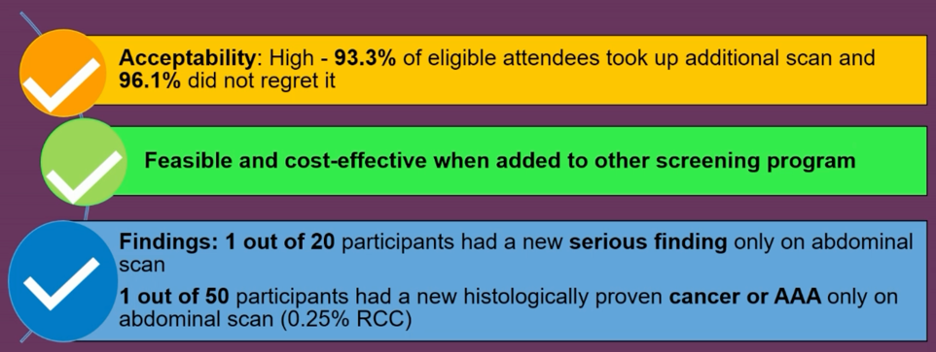
Presented by: Teele Kuusk, MD, Kidney Cancer Fellow, Cambridge University Hospitals NHS Foundation Trust, Cambridge, UK
Written by: Rashid K. Sayyid, MD, MSc – Robotic Urologic Oncology Fellow at The University of Southern California, @rksayyid on Twitter during the 2025 European Association of Urology (EAU) Annual Congress held in Madrid, Spain between March 21st and 24th, 2025
References:
- Stewart GD, Godoy A, Farquhar F, et al. Abdominal Noncontrast Computed Tomography Scanning to Screen for Kidney Cancer and Other Abdominal Pathology Within Community-based Computed Tomography Screening for Lung Cancer: Results of the Yorkshire Kidney Screening Trial. Eur Urol. 2024; S0302-2838(24)02567-3.