

(UroToday.com) The 2025 European Association of Urology (EAU) Annual Meeting held in Madrid, Spain was host to the Biomarkers to guide peri-operative management in Uro-oncology Plenary Session. Dr. Nazli Dizman discussed the potential role of Microbiome as biomarkers to guide peri-operative management in kidney cancer.
Dr. Dizman began her presentation by sharing the case of a 69-year-old female patient who, after undergoing partial nephrectomy for a 9.2 cm renal mass, sought guidance on treatment options. The decision regarding adjuvant therapy requires balancing its risks and benefits. Additionally, the patient would likely want to understand whether this treatment could effectively reduce the risk of cancer recurrence.

Recently, there has been growing momentum for modifiable host factors as markers and actionable targets. These factors include:
- Diet
- Lifestyle
- Microbiome
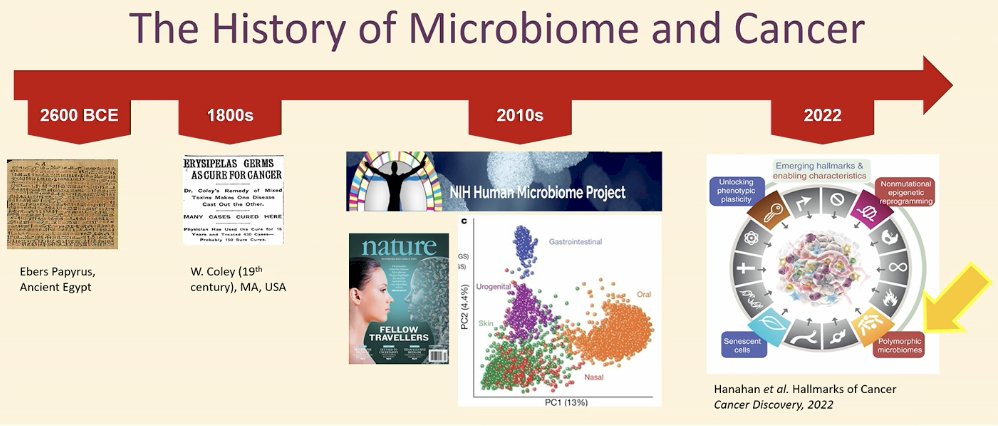
The history of the microbiome dates back to 2,600 BCE in Ancient Egypt. But it wasn’t until Dr. Coley at MGH in Boston started its clinical use in the 1800s, and in 2022, the microbiome was recognized as one of the landmarks of cancer.
Several mechanisms have been proposed for how the microbiome influences immuno-oncology, including:
- Microbial metabolites: Short-chain fatty acids, bile acids, and amino acids can modulate immune responses.
- Damage to the epithelium from therapies can allow microbes to enter circulation, influencing immune activation.
- Intra-tumoral microbes: Certain bacteria within tumors can directly impact anti-tumor immunity.
- Molecular mimicry: Microbial antigens can resemble cancer neoantigens, potentially shaping immune recognition and response.
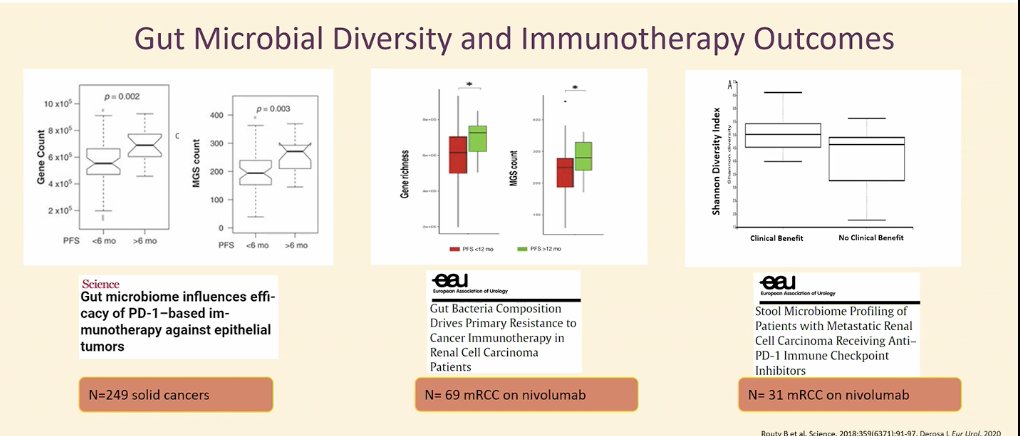
Dr. Dizman highlighted the potential of microbial features in predicting outcomes in renal cell carcinoma (RCC), emphasizing that several studies suggest a role of the gut microbiome in modulating response to immune checkpoint inhibitors (IO). Data from solid tumors and metastatic RCC patients treated with IO therapy indicate that gut microbiome composition is linked to treatment efficacy, with certain microbial profiles associated with improved outcomes. This growing body of evidence suggests that microbiome profiling could serve as a biomarker to better stratify patients and optimize treatment strategies.
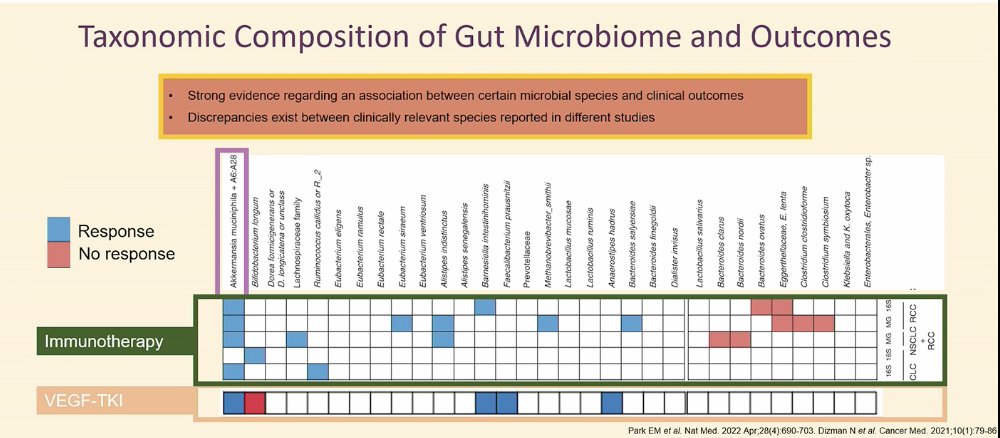
Several microbial species and gut microbial taxonomy may influence immunotherapy outcomes. Many species have been associated with clinical outcomes, though there are discrepancies among specific microbial species. Notably, microbial taxonomy alone may not fully capture functional redundancies among different species, as distinct bacteria can share overlapping biological functions. Additionally, the harmony and collaboration within a bacterial community, rather than the presence of individual species, may be a key determinant of clinical outcomes in patients receiving immunotherapy.
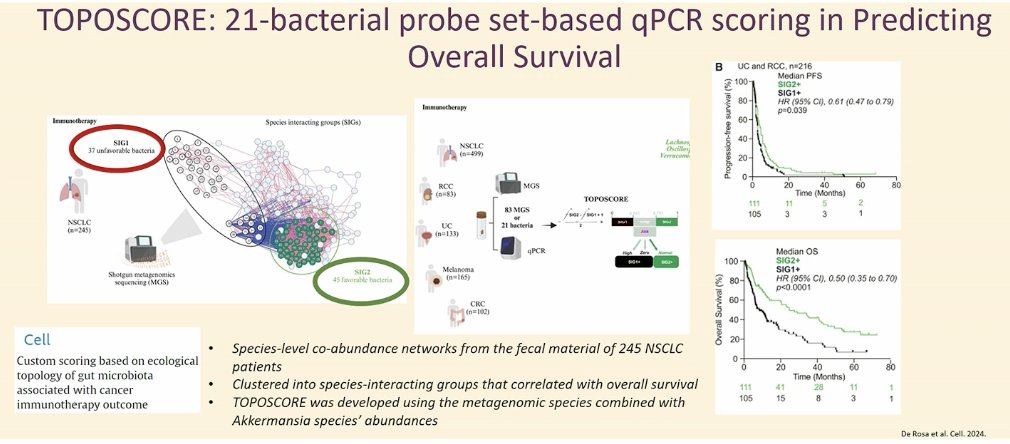
A recently developed TOPOSCORE system utilizes 21 bacterial species to predict overall survival (OS) in patients receiving immunotherapy (IO) for various solid tumors. This system was derived from species-level co-abundance networks in fecal samples from 245 non-small cell lung cancer (NSCLC) patients, which were clustered into species-interacting groups that correlated with OS. Reinforcing the idea that the microbiome should be considered as a community rather than focusing on individual species.1
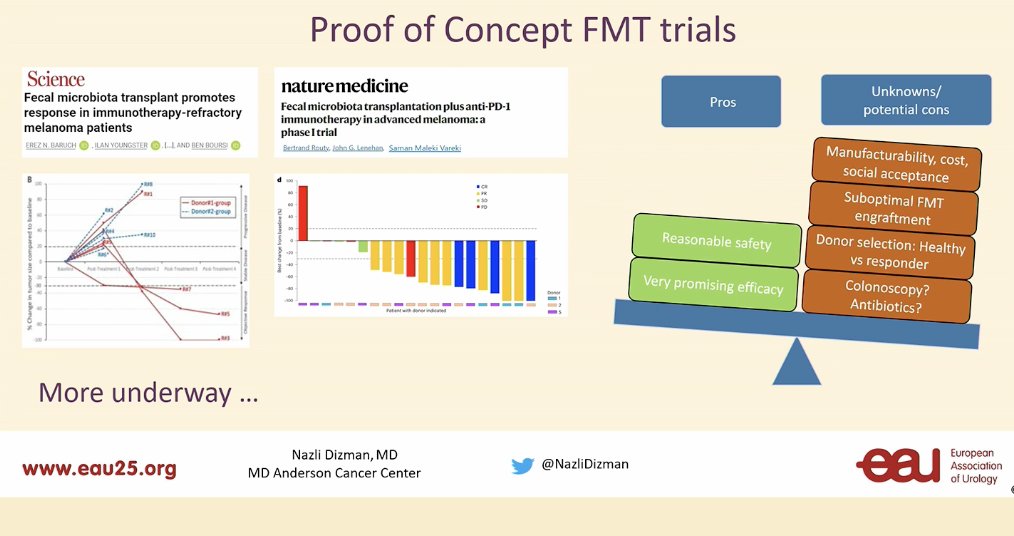
The proof of concept for fecal microbiota transplant (FMT) has demonstrated that it is both safe and potentially effective in modulating the gut microbiome to improve outcomes in RCC. However, several challenges remain, including manufacturing complexities, social acceptance, and ensuring successful microbial engraftment. Despite these hurdles, ongoing advancements may help overcome these obstacles in the coming years, making microbiome modulation a viable strategy for enhancing treatment responses in RCC.
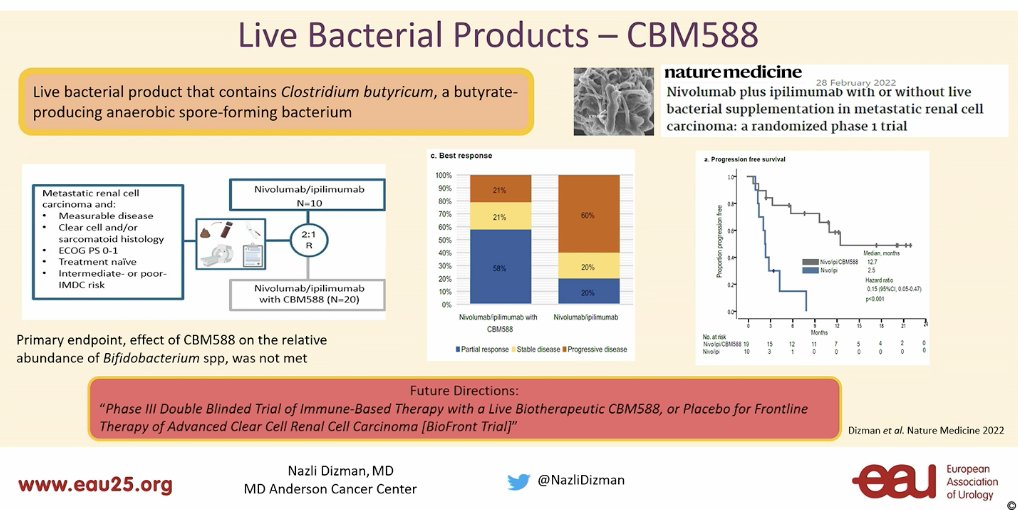
At City of Hope, Dr. Dizman and colleagues are investigating a live bacterial product containing Clostridium butyricum, a butyrate-producing anaerobic spore-forming bacterium. Their research has shown improvements in both immunotherapy response and microbial composition as shown below. A Phase 3 study is currently enrolling patients in the metastatic RCC space to further evaluate its efficacy and potential role in treatment optimization.2
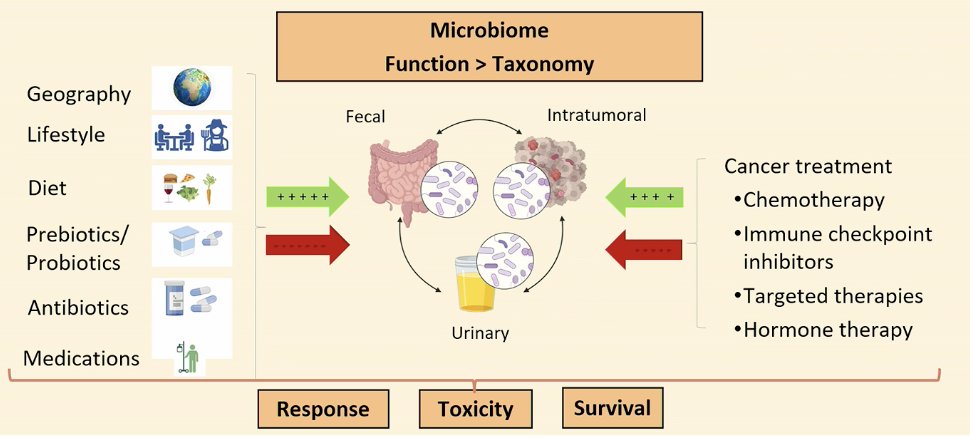
Lastly, we need to consider factors such as patient location, lifestyle, diet, prebiotics, antibiotics, and other medications, as these can influence the gut microbiome. Additionally, fecal microbial taxonomy may differ from intratumoral microbiota, highlighting the complexity of microbiome interactions in cancer outcomes.
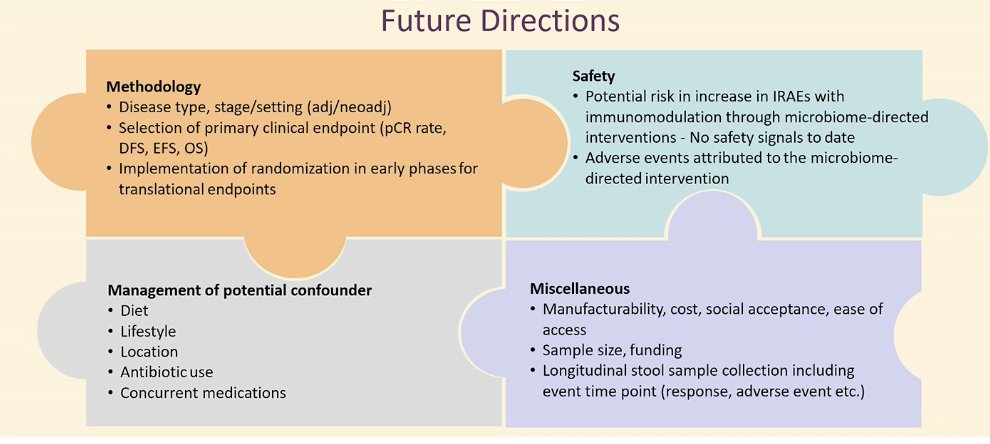
Most of the data on the microbiome’s role in renal cell carcinoma comes from studies in mRCC, presenting a potential opportunity to investigate its impact in the neoadjuvant or adjuvant setting. The microbiome is not just a biomarker but also a potential therapeutic target. Dr. Dizman concluded her presentation by highlighting potential avenues for improvement and future directions for microbiome research in RCC
Written by: Julian Chavarriaga, MD – Urologic Oncologist at Cancer Treatment and Research Center (CTIC) via Society of Urologic Oncology (SUO) Fellow at The University of Toronto. @chavarriagaj on Twitter during the European Association of Urology (EAU) 2025 Annual Meeting, Madrid, Spain, Fri, Mar 21 – Mon, Mar 24, 2025.
References:- Derosa L, Iebba V, Silva CAC, Piccinno G, Wu G, Lordello L, Routy B, Zhao N, Thelemaque C, Birebent R, Marmorino F, Fidelle M, Messaoudene M, Thomas AM, Zalcman G, Friard S, Mazieres J, Audigier-Valette C, Sibilot DM, Goldwasser F, Scherpereel A, Pegliasco H, Ghiringhelli F, Bouchard N, Sow C, Darik I, Zoppi S, Ly P, Reni A, Daillère R, Deutsch E, Lee KA, Bolte LA, Björk JR, Weersma RK, Barlesi F, Padilha L, Finzel A, Isaksen ML, Escudier B, Albiges L, Planchard D, André F, Cremolini C, Martinez S, Besse B, Zhao L, Segata N, Wojcik J, Kroemer G, Zitvogel L. Custom scoring based on ecological topology of gut microbiota associated with cancer immunotherapy outcome. Cell. 2024 Jun 20;187(13):3373-3389.e16. doi: 10.1016/j.cell.2024.05.029. PMID: 38906102.
- Dizman N, Meza L, Bergerot P, Alcantara M, Dorff T, Lyou Y, Frankel P, Cui Y, Mira V, Llamas M, Hsu J, Zengin Z, Salgia N, Salgia S, Malhotra J, Chawla N, Chehrazi-Raffle A, Muddasani R, Gillece J, Reining L, Trent J, Takahashi M, Oka K, Higashi S, Kortylewski M, Highlander SK, Pal SK. Nivolumab plus ipilimumab with or without live bacterial supplementation in metastatic renal cell carcinoma: a randomized phase 1 trial. Nat Med. 2022 Apr;28(4):704-712. doi: 10.1038/s41591-022-01694-6. Epub 2022 Feb 28. PMID: 35228755; PMCID: PMC9018425.