

(UroToday.com) The 2025 EAU annual meeting featured a non muscle invasive bladder cancer session and a presentation by Dr. Paul Anderson discussing a first-in-human study of RAG-01, a novel small activating RNA therapeutic in BCG failure non muscle invasive bladder cancer patients. Targeting the p21WAF1/CIP1 (p21) gene represents a promising yet challenging therapeutic strategy in cancer treatment. p21, a critical cell cycle inhibitor with significant tumor suppressive potential, has remained largely "undruggable" for conventional modalities. RAG-01 introduces a novel approach using small activating RNA technology to directly upregulate p21 gene expression at the transcriptional level via the RNA activating mechanism:
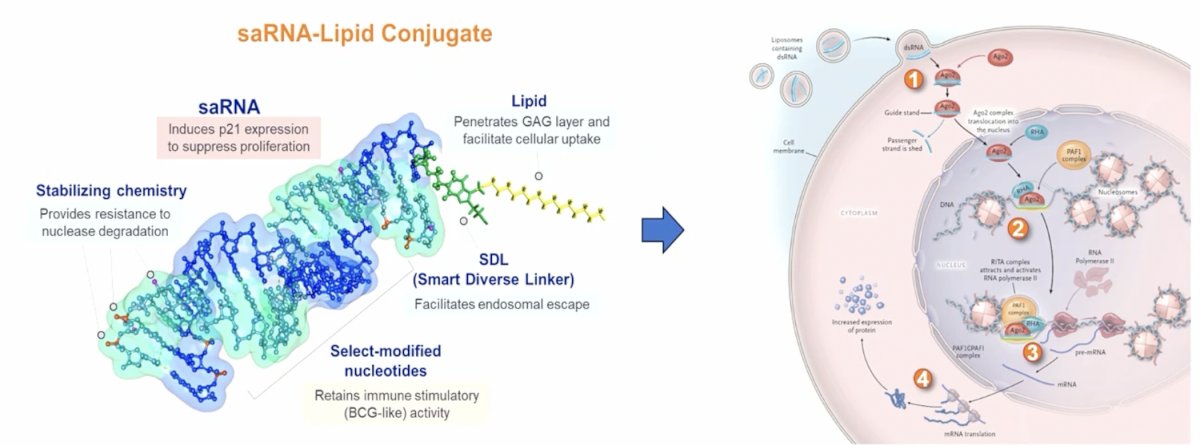
This is a first-in-human clinical trial of a small activating RNA targeting p21, in patients with non muscle invasive bladder cancer to establish a potential novel therapeutic paradigm in cancer treatment by activating tumor suppressor genes. This open-label, multicenter, phase I study (NCT06351904) is designed to evaluate the safety, tolerability, pharmacokinetics, pharmacodynamics, and preliminary efficacy of intravesical RAG-01 in patients with non muscle invasive bladder cancer who have failed BCG therapy.
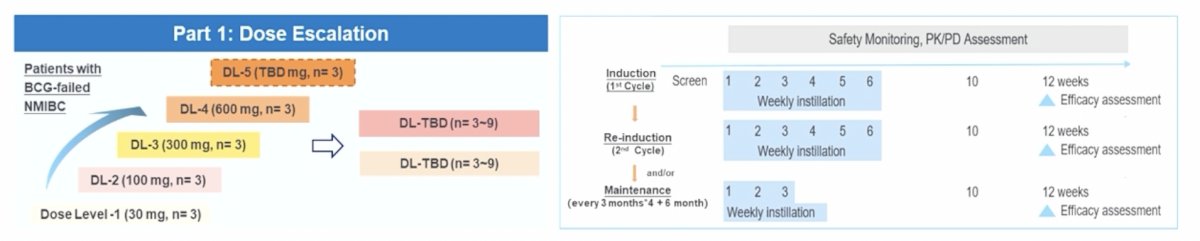
BCG failure patients will receive RAG-01 at escalating doses (30 mg, 100 mg, 300 mg, and 600 mg). For dose expansion, BCG-unresponsive patients will be randomized in a 1:1 ratio into 2 groups to receive 2 dose levels selected based on the data from dose escalation. RAG-01 treatment consists of a 6-week induction course (weekly instillations) followed by maintenance of 3 weekly instillations at weeks 12, 24, 36, 48, and 72. Patients with persistent CIS or high-grade Ta at 12 weeks may receive a 6-week re-induction. Assessments of response include cystoscopy every 12 weeks with biopsy of suspicious lesions or mandatory bladder mapping for CIS, urine cytology, and imaging. p21 protein induction will be assessed via IHC in urothelial cells and tumor tissues. The trial design is as follows:
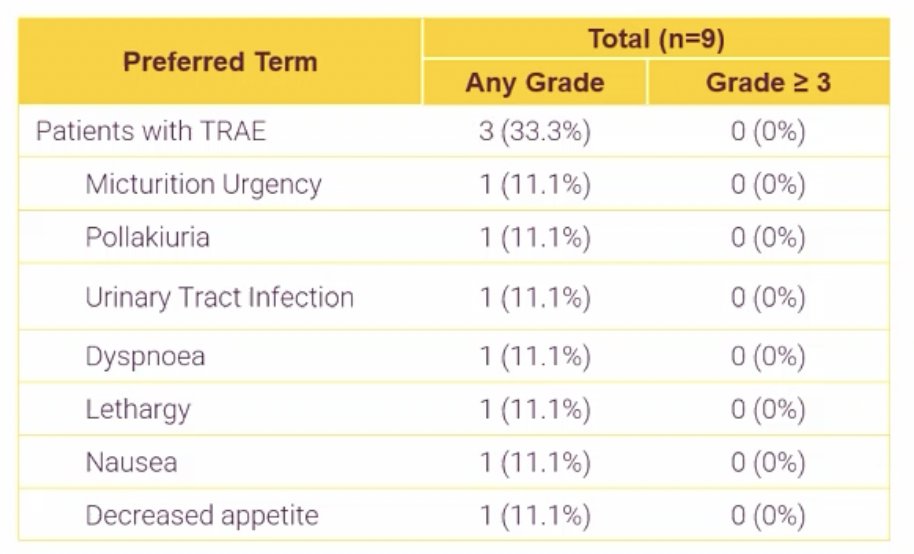
As of Dec 15, 2024, 9 patients were enrolled across 3 dose-escalation cohorts (30-300 mg). Dose escalation is ongoing, and no dose-limiting toxicities have occurred. Adverse events, all grade ≤2, were reported in 8 patients (88.9%, 8/9). The most frequently reported adverse events included urinary urgency (11.1%, 1/9), increased urinary frequency (11.1%), urinary tract infection (11.1%), dyspnea (11.1%), lethargy (11.1%), nausea (11.1%), and decreased appetite (11.1%):
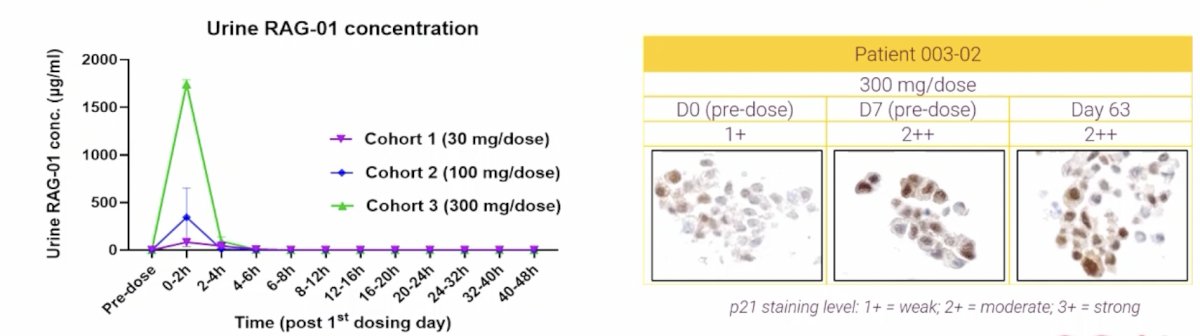
RAG-01 showed minimal systemic exposure with a dose-dependent maximum urine concentration (83.3-1,820 µg/ml at 2 hours) and urine AUC0-24h. A dose-dependent increase in p21-positive urothelial cells was observed:
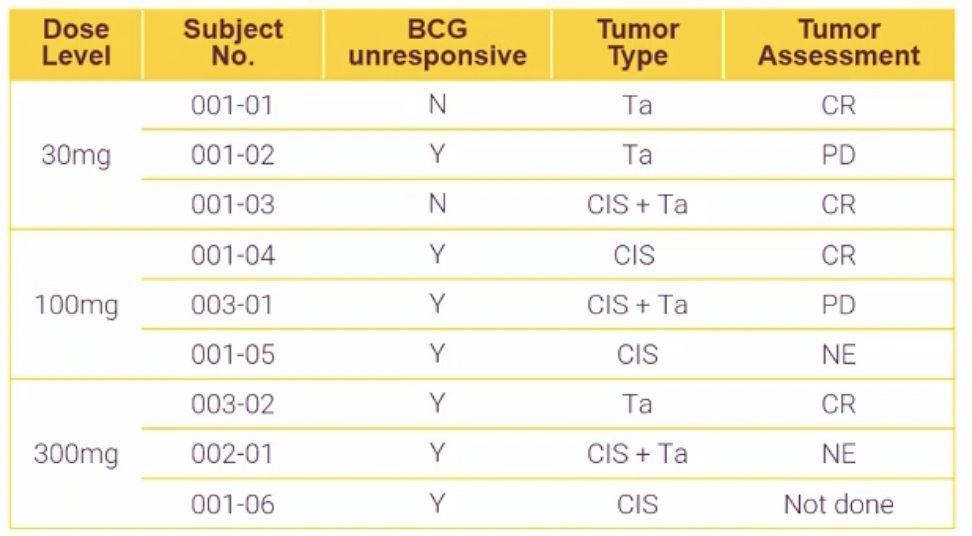
Preliminary efficacy analysis revealed a 66.7% (2/3) complete response rate for CIS at any time and a 66.7% (2/3) disease-free survival rate for papillary tumors at 3 months:
Dr. Anderson concluded his presentation by discussing a first-in-human study of RAG-01 in BCG failure non muscle invasive bladder cancer patients with the following take home points:
- Complete responses were observed across all dose cohorts, including in patients with BCG-unresponsive CIS
- Intravesical administration of RAG-01 demonstrated a highly favorable safety profile, supporting further investigation in diverse patient populations and in combination with other therapies
- RAG-01 exhibited a dose-dependent increase in urine Cmax, with minimal systemic exposure following intravesical instillation
- Dose-dependent p21 protein induction in urothelial cells confirmed successful target engagement
Written by: Zachary Klaassen, MD, MSc – Urologic Oncologist, Associate Professor of Urology, Georgia Cancer Center, Wellstar MCG Health, @zklaassen_md on Twitter during the 2025 European Association of Urology (EAU) Annual Meeting held in Madrid, Spain between March 21st and 24th 2025