

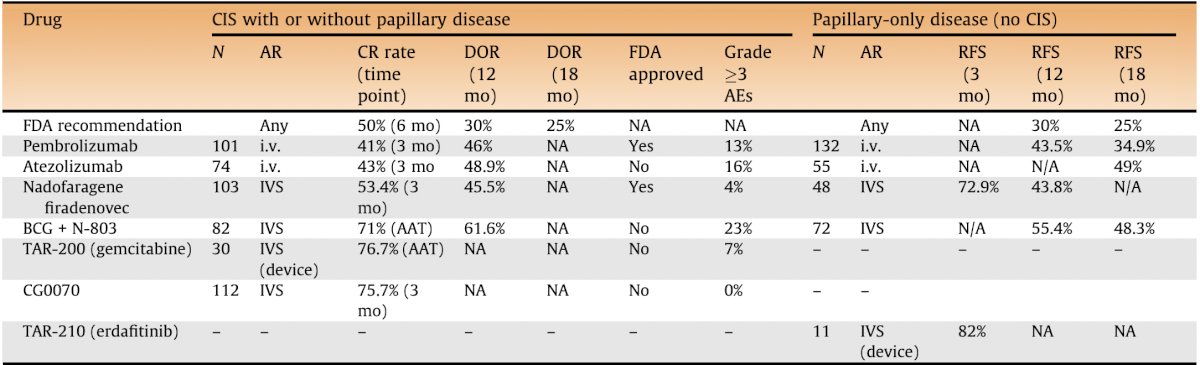
The 2025 EAU annual meeting featured a session on intravesical therapy for bladder cancer and a presentation by Dr. Antoni Vilaseca discussing that it is unnecessary for device-assisted drug delivery when we have viruses and vaccines. Dr. Vilaseca started his presentation by summarizing the most relevant drugs for BCG unresponsive non muscle invasive bladder cancer for which results have been reported:1
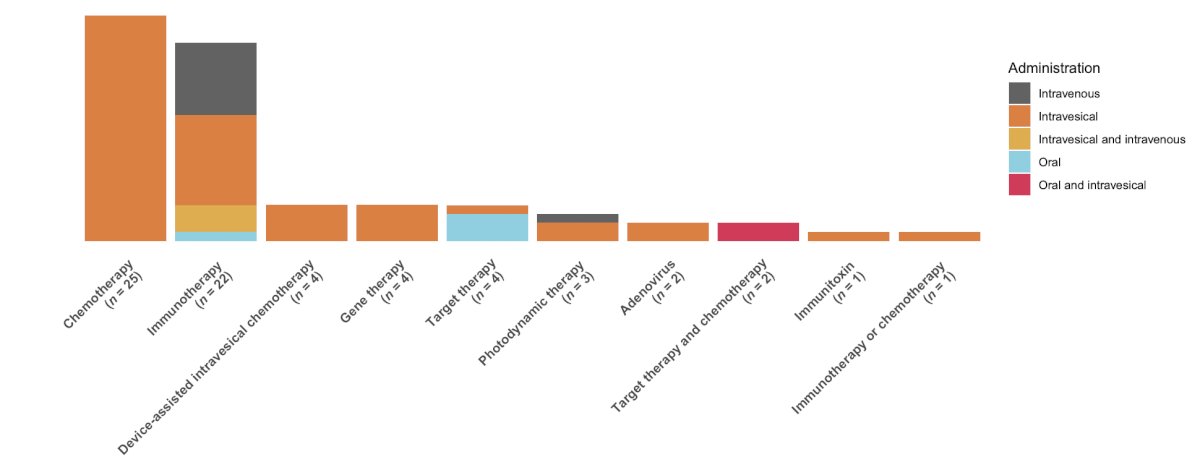
Dr. Vilaseca also highlighted a recent 2025 systematic review from the International Bladder Cancer Group,2 highlighting the number of study arms by drug class and administration:
There are several approaches for the use of cancer vaccines in the treatment of urothelial carcinoma, with the following mechanism of action:3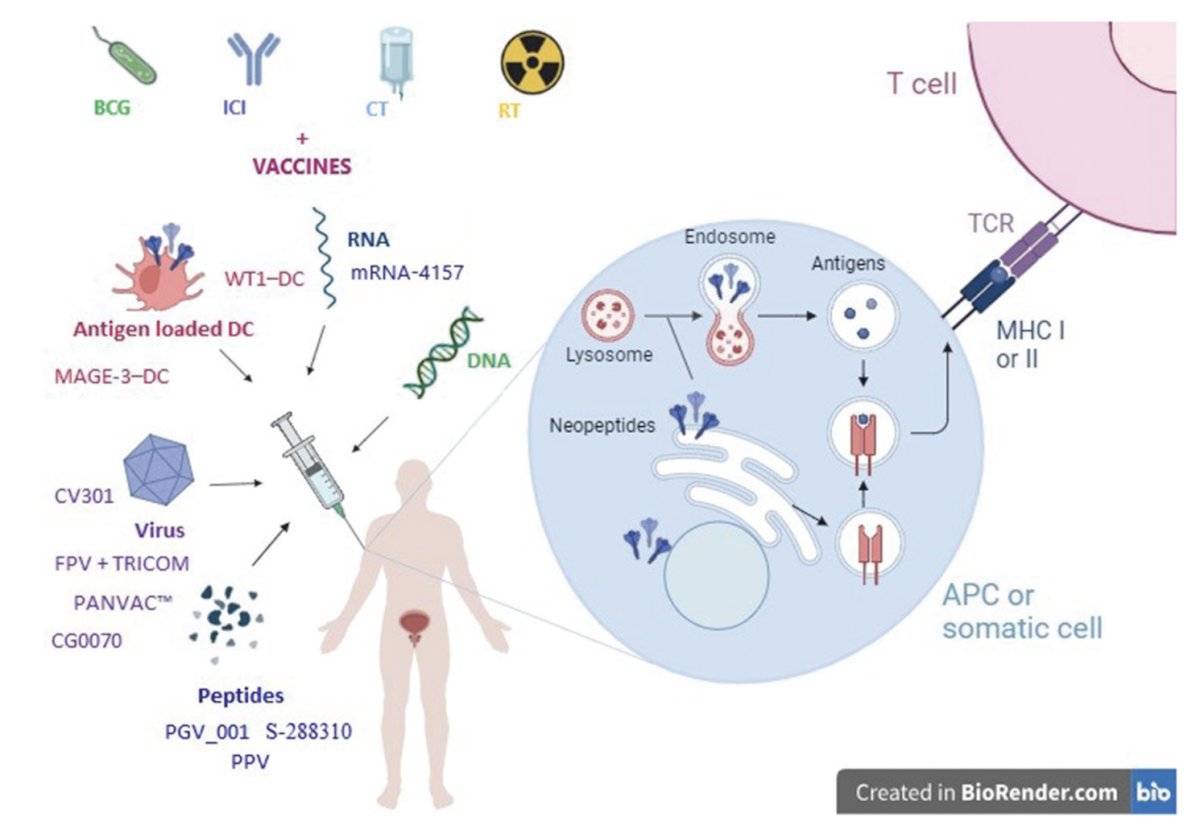
Dr. Vilaseca then discussed nadofaragene firadenovec, with a proposed mechanism of action underlying its efficacy likely due to the pleiotropic nature of interferon-α and its direct and indirect antitumor activities:4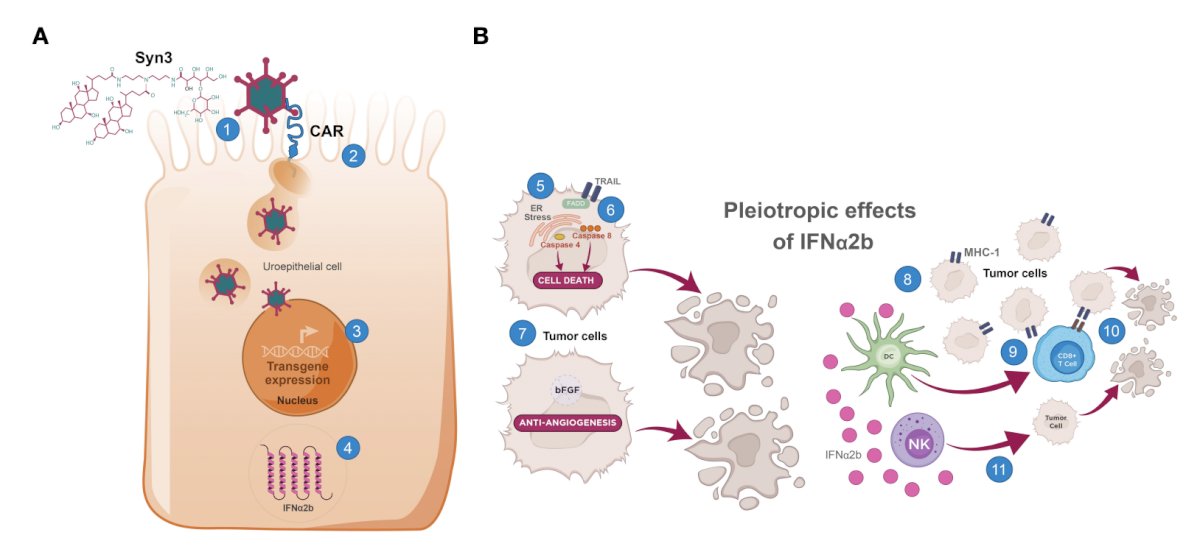
In December 2022, the FDA approved nadofaragene firadenovec based on phase 3 results that showed a complete response rate at 3 months of 53%, and 24% at 12 months.5 In the real world setting, data presented at ASCO GU 2025, showed that among 24 evaluable patients with CIS +/- papillary disease, 79% had a complete response at 3 months and the median duration of response was not reached. At a median follow-up of 7.3 months, 84% (16/19) of responders still had complete responses. The Kaplan-Meier estimate of duration of response at 6 and 9 months was 100% and 75%, respectively. Of the patients with papillary only disease, 68% (13/19) were recurrence free at 3 months, with 77% (10/13) remaining recurrence free at a median follow-up of 8.9 months: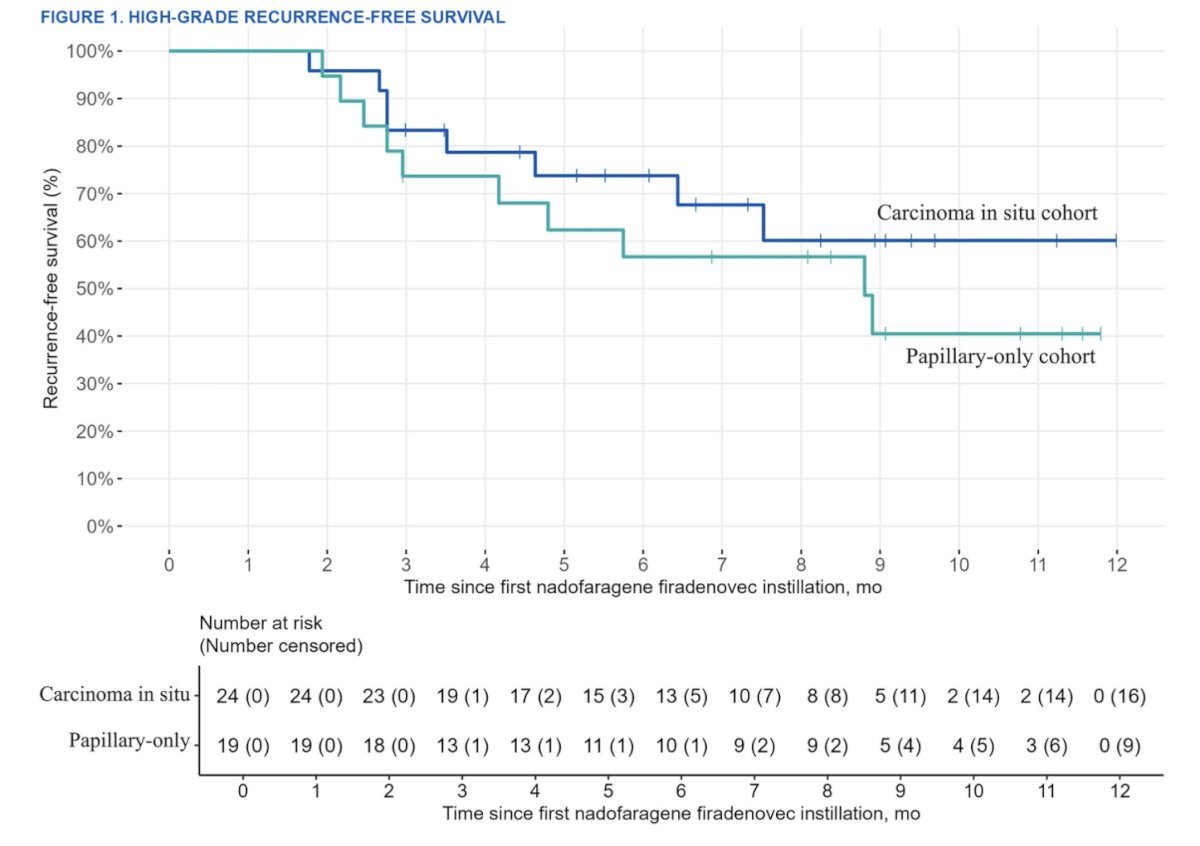
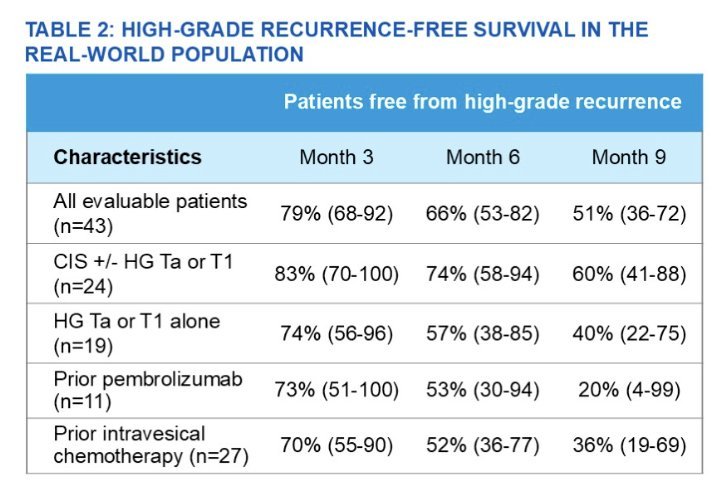
The most common adverse events were grade 1-2 bladder spasms (61%) and failure to retain nadofaragene firadenovec for the full hour (33%). Four patients experienced grade 3 events, there were no grade 4-5 events, and no patients discontinued therapy due to adverse events.
With regards to N-803 + BCG, among 72 patients, the 12 month recurrence free survival rate was 55.4%, and at 18 months was 48.3%. Moreover, the cystectomy rate was 7%, and 86% of patients had adverse events (23% grade 3+) [6].
Finally, Dr. Vilaseca discussed cretostimogene grenadenorepvec, which is an oncolytic immunotherapy with a dual mechanism of action. It selectively replicates in and lyses bladder cancer cells with Retinoblastoma-E2F pathway alterations. The subsequent release of virus- and tumor-specific antigens initiates anti-tumor immune activation which is further amplified by the GM-CSF transgene, a potent cytokine:

In BOND-3, cretostimogene grenadenorepvec (n = 110; re-induction allowed) led to a 74.5% complete response rate at 3 or 6 months, with a Kaplan Meier estimated 50% complete response rate at 12 months.
Dr. Vilaseca concluded his presentation discussing that it is unnecessary for device-assisted drug delivery when we have viruses and vaccines with the following take home points:
- There are effective new treatments for BCG unresponsive disease
- Gene therapy has effects beyond the superficial layer of the bladder
- Immune responses lead to late antitumor activity
- These agents have less frequent dosing regimens
Presented by: Antoni Vilaseca, MD, Hospital Clinic de Barcelona, Barcelona, Spain
Written by: Zachary Klaassen, MD, MSc – Urologic Oncologist, Associate Professor of Urology, Georgia Cancer Center, Wellstar MCG Health, @zklaassen_md on Twitter during the European Association of Urology (EAU) 2025 Annual Meeting, Madrid, Spain, Fri, Mar 21 – Mon, Mar 24, 2025.
References:
- Guerrero-Ramos F, Boormans JL, Daneshmand S, et al. Novel Delivery Systems and pharmacotherapeutic approaches for the treatment of non-muscle-invasive bladder cancer. Eur Urol Oncol. 2024 Dec;7(6):1267-1279.
- D’Andrea D, Mostafid H, Gontero P, et al. Unmet need in non-muscle-invasive bladder cancer failing Bacillus Calmette-Guerin therapy: A systematic review and cost-effectiveness analyses from the International Bladder Cancer Group. Eur Urol Oncol. 2025 Feb;8(1):216-229.
- Giudice GC, Sonpavde GP. Vaccine approaches to treat urothelial cancer. Hum Vaccin Immunother. 2024 Dec 31;20(1):2379086.
- Narayan VM, Meeks JJ, Jakobsen JS, et al. Mechanism of action of nadofaragene firadenovec-vncg. Front Oncol. 2024 Mar 15:14:1359725.
- Boorjian SA, Alemozaffar M, Konety BR, et al. Intravesical nadofaragene firadenovec gene therapy for BCG-unresponsive non-muscle-invasive bladder cancer: A single-arm, open-label, repeat-dose clinical trial. Lancet Oncol. 2021 Jan;22(1):107-117.
- Chamie K, Chang SS, Kramolowsky E, et al. IL-15 Superagonist NAI in BCG-Unresponsive Non-Muscle-Invasive Bladder Cancer. NEJM Evid 2022; 2(1)