

(UroToday.com) The 2025 European Association of Urology (EAU) Annual Congress held in Madrid, Spain was host to an abstract session on the latest advances in the diagnosis and follow-up of non-muscle invasive bladder cancer (NMIBC). Dr. Morgan Rouprêt presented the results of a real-world evidence study evaluating the prevalence of FGFR alterations (FGFRalt) in patients with intermediate risk NMIBC, as defined by the International Bladder Cancer Group (IBCG).
Dr. Rouprêt noted that bladder cancer remains one of the most common cancers worldwide, ranking ninth globally with a rising incidence. FGFRalt may be potent oncogenic drivers in NMIBC, and there are currently novel FGFR-targeted therapeutics being developed.
While approximately 75% of patients present with NMIBC at diagnosis, assessing the real-world burden of NMIBC by risk categories using the recently updated IBCG guidelines remains challenging, as key variables (tumor size, lesion count, grade, and recurrence history) are often missing in real-world datasets.
Limited data exist on the prevalence of FGFRalt by IBCG risk strata in the NMIBC population. To address this data gap, a real-world dataset of NMIBC patients was analyzed.
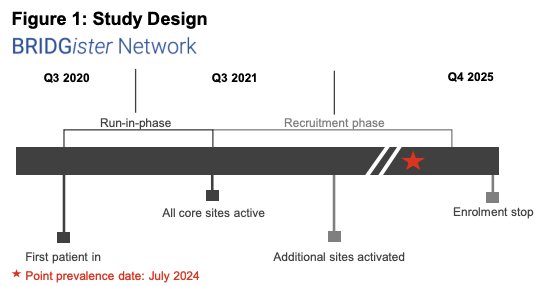
Dr. Rouprêt and colleagues utilized the Germany-based BRIDGE Clinical Routine Register (BRIDGister), a longitudinal clinical research platform that documents data on the molecular testing, treatment, and disease course of bladder cancer patients.
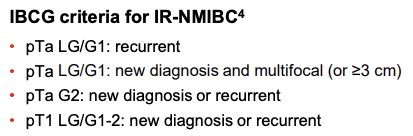
The study investigators applied the recently updated 2022 IBCG guidelines to this dataset. Intermediate-risk disease was defined as follows:
FGFRalt results from tumor tissue were generated using the therascreen FGFR RGQ RT-PCR assay™ for FGFR2 and FGFR3 alterations, and via the Uromonitor reverse transcriptase-polymerase chain reaction (RT-PCR) kit for the detection of FGFR3 hotspot mutations.
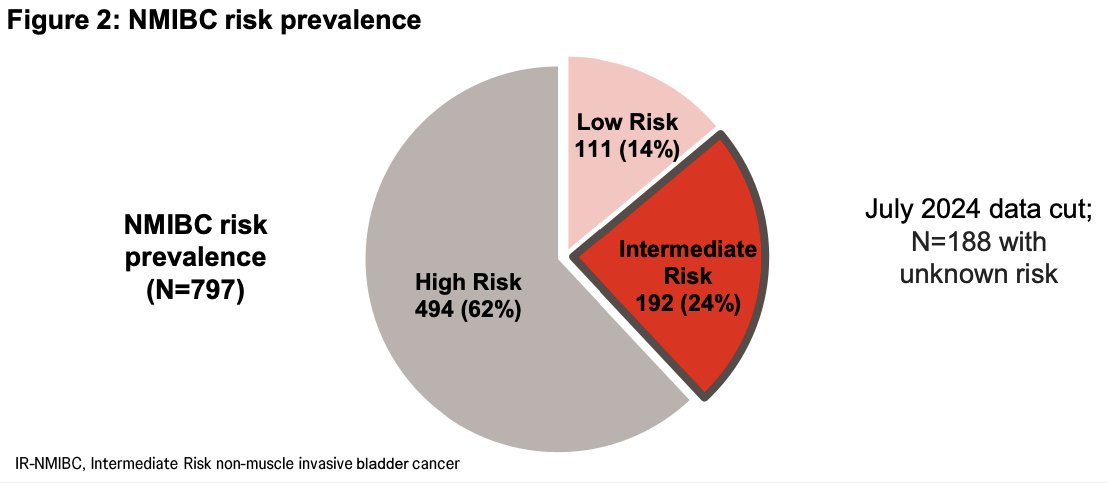
The study sample included a total of 719 NMIBC samples, of which 192 (24%) were IBCG intermediate risk.
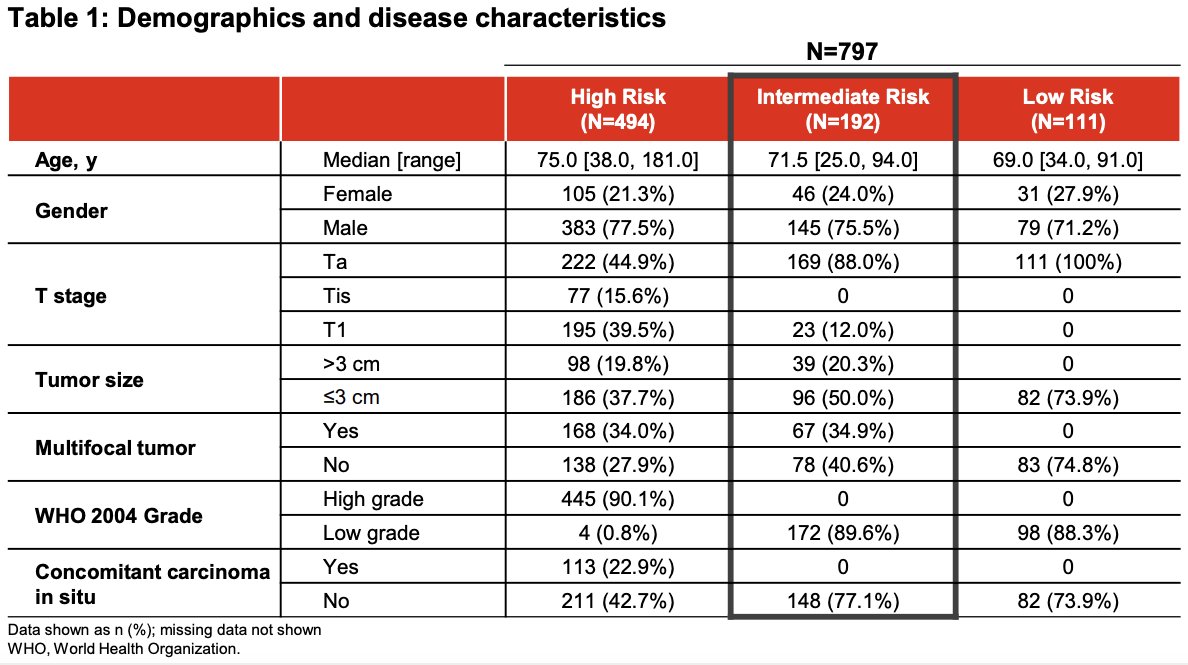
The demographic and disease characteristics are summarized below. Among the intermediate risk subgroup, 68% had TaG2 disease, 80% had a tumor size ≥3 cm, and 65% had multifocal disease.
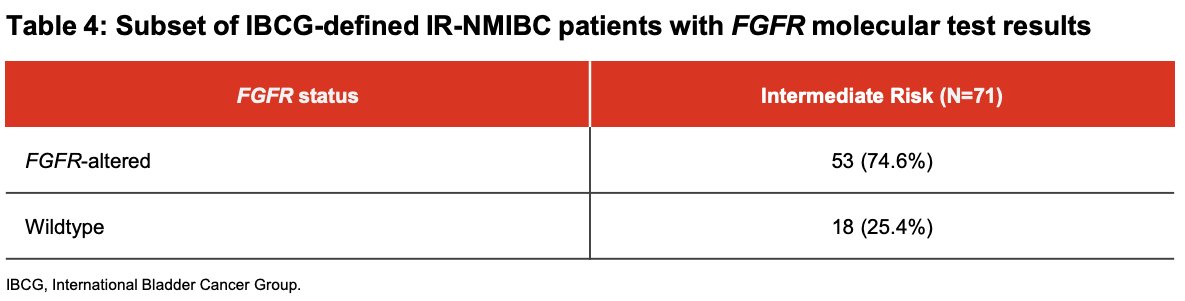
Of the 71/192 patients with evaluable tissue results, 53 (75%) samples harbored an FGFRalt.
Dr. Rouprêt concluded his poster presentation as follows:
- When applying the 2022 IBCG risk stratification system to a longitudinal dataset of German NMIBC patients, the study investigators demonstrated that 14%, 24%, and 62% of patients had low-, intermediate-, and high-risk disease, respectively.
- The prevalence of FGFRalt among IBCG intermediate risk patients is 75%
- Results from this large real-world cohort identified a high prevalence of FGFRalt in patients with intermediate-risk NMIBC by IBCG criteria. Such a population may benefit from FGFR inhibitor treatment, such as TAR-210 (intravesical erdafitinib releasing system).
Presented by: Morgan Rouprêt, MD, PhD, Professor of Urology, Sorbonne Université, Paris (UPMC), ESOU chairman, Paris, France
Written by: Rashid K. Sayyid, MD, MSc – Robotic Urologic Oncology Fellow at The University of Southern California, @rksayyid on Twitter during the 2025 European Association of Urology (EAU) Annual Meeting held in Madrid, Spain between March 21st and 24th 2025