

(UroToday.com) HugoTM robotic-assisted surgery (RAS) system is a new robotic device developed by Medtronic. With the recent introduction of this robotic platform, there is certainly interest and questions regarding its feasibility, ergonomics, and capabilities. One area of interest concerns the utilization of this RAS system for extraperitoneal robot-assisted radical prostatectomy (eRARP); however, research into its use for RARP is currently lacking. As such, Dr. Giovanni Filomena presented his prospective, single-center study on the perioperative, functional, and ergonomic outcomes of eRARPs using the HugoTM RAS system up to a 1-year follow-up.
Dr. Filomena and his team enrolled 100 consecutive patients (divided into the first 50 cases and last 50 cases) who had undergone eRARP using the HugoTM RAS system and performed 3, 6, and 12 months follow-ups on them. During his presentation, he explains how his team measured the following operative metrics: operative time, console time, estimated blood loss (EBL), major complications (Clavien-Dino score ≥ 3), and positive surgical margin (PSM). Furthermore, they also looked at the functional aspects (prostate-specific antigen (PSA) levels, social continence, and potency recovery) of these patients during their 1-year follow-up. A cumulative sum control chart (CUSUM) assessed the learning curve using the measured console times.
He stated that their study measured a median operative time of 252.5 minutes, console time of 180 minutes, and EBL of 224 mL. Additionally, major complications were low at 2% with a PSM rate of 40%. Undetectable PSA, social continence, and potency recovery were found in 80%, 87%, and 51%, respectively, of these patients at a 1-year follow-up. Dr. Filomena highlights how ERARP with the HugoTM RAS system is safe based on these measured metrics. In a comparison between the first and last 50 cases, Dr. Filomena reveals how operative time, console time, overall complications, clinically significant PSM, and undetectable PSA at a follow-up of 1 year significantly decreased (Figure 1). He accentuates how surgeons performed better over time after the learning curve, becoming faster without sacrificing safety. Furthermore, the CUSUM analysis found that the peak proficiency for two robot-naive surgeons was 18 (Figure 2) and 19 (Figure 3) cases, at which they started becoming more proficient with using the platform; therefore, reinforcing the ease in the reproducibility and teachability of the platform.
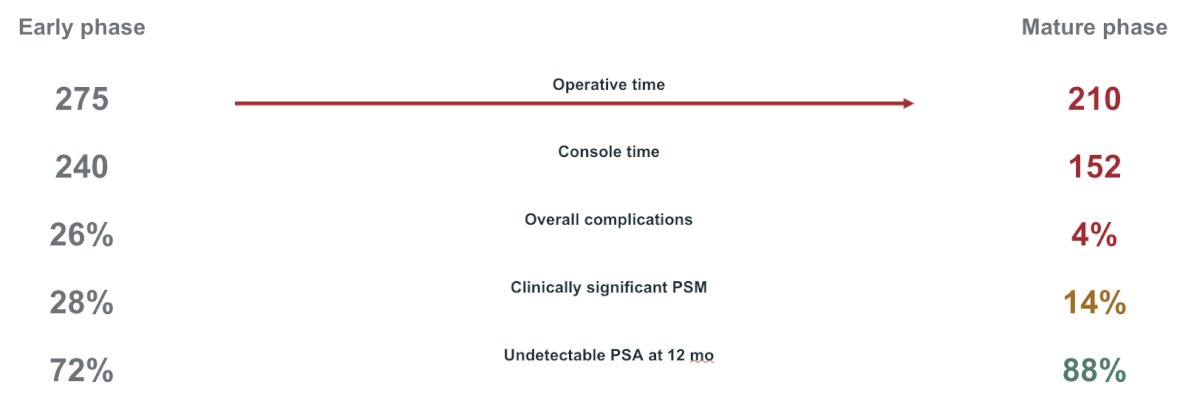
Figure 1. Comparison of change in operative and oncological metrics between the first and last 50 eRARP cases.
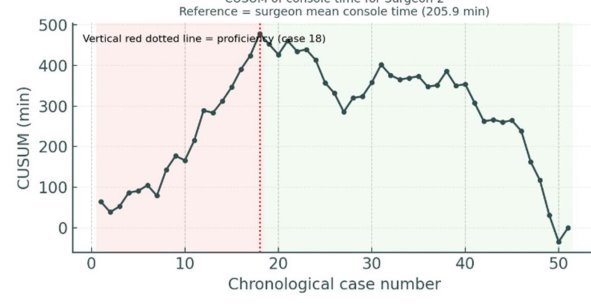
Figure 2. CUSUM of surgeon one with peak proficiency at 18 cases
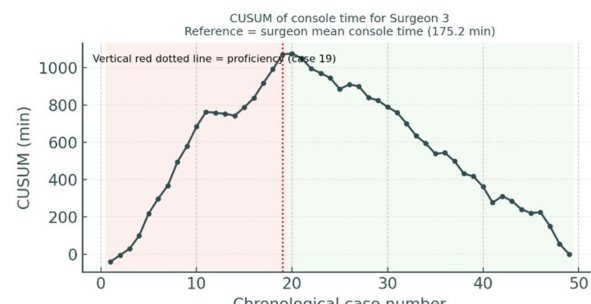
Figure 3. CUSUM of surgeon two with peak proficiency at 19 cases
Dr. Filomena ended his presentation succinctly with a strong emphasis on how eRARP with the HugoTM RAS system is a safe and feasible robotics platform. As this platform is still new, he suggested that longer follow-ups with more multi-center case studies would benefit its adoption for eRARP.
Presented by: Giovanni Filomena, MD, Università Cattolica del Sacro Cuore, Milan, Italy
Written by: Victor Pham, B.S., University of California Irvine, @victorpham01 on X during the 2026 American Urological Association (AUA) Annual Meeting, May 15 – May 18, 2026, Washington, D.C.