

(UroToday.com) At the 2026 American Urological Association (AUA) Annual Meeting, Dr. Shannon Cannon presented a study evaluating the role of volumetric stone assessment in predicting treatment success and guiding surgical planning in pediatric patients with urolithiasis. The study explored whether stone volume may provide a more clinically meaningful measure of stone burden, as compared to traditional maximum linear diameter measurements, in pediatric patients.
The authors conducted a retrospective cohort study of 72 (39 male and 33 female) pediatric patients between 1 and 17 years of age, who underwent ultrasound-guided extracorporeal shockwave lithotripsy (ESWL) (first-line treatment) or semirigid/flexible ureteroscopy (URS) (second-line treatment) for single urinary tract stones between January 2023 and June 2025. Patients were grouped into three volumetric categories: Group I (≤100 mm³), Group II (101–200 mm³), and Group III (201–370 mm³), as measured using the 3D Slicer software. All stones measured less than 20 mm by maximum linear measurement, and treatment success was evaluated using stone-free rates determined by ultrasound, three months following intervention.
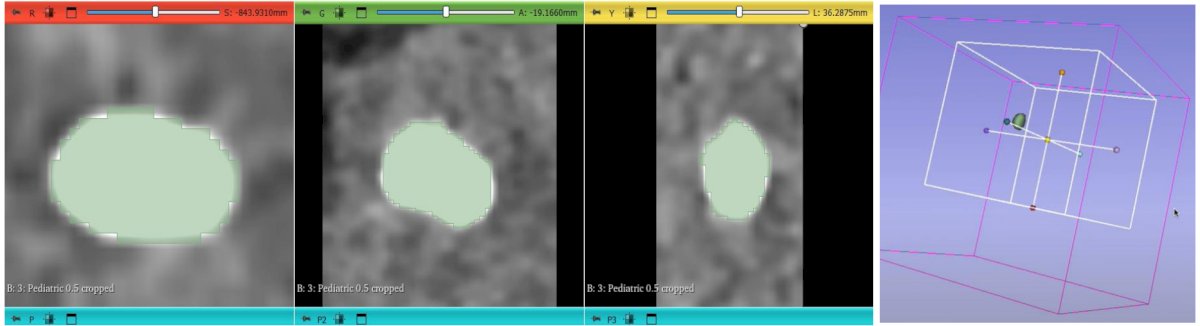
Figure 1. Volumetric measurement using 3D Slicer.
Overall stone-free rate reached 93.1%. By volumetric groupings, patients in Group I achieved a 100% stone-free rate following treatment, while Groups II and III demonstrated progressively lower success rates of 90.5% and 78.6%, respectively. Similarly, the need for secondary intervention increased with stone volume, with URS reintervention being required in nearly half of Group II patients (47.6%) and more than half of Group III patients (57.1%). Moreover, rates of successful single intervention, need for re-intervention, and residual stone fragments were different across volume groupings.
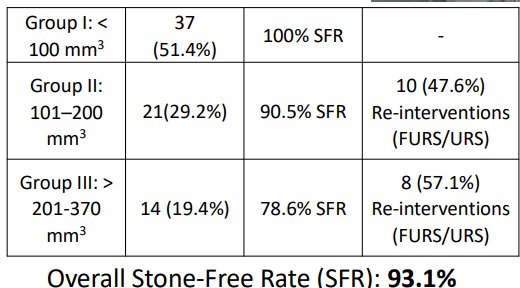
Figure 2. Stone volume stratification, post-operative stone-free rate, and re-intervention rates.
Dr. Cannon concluded that stone volume predicts treatment success in pediatric urolithiasis and is directly correlated with reintervention rate. Additionally, ESWL demonstrated greatest efficacy when used to treat stones measuring ≤100 mm³, while increasing stone volume substantially reduced the probability of achieving stone-free status after a single intervention.
The presentation generated discussion surrounding the growing role of volumetric stone assessment in endourology and whether volume-based thresholds should be integrated into treatment algorithms, in addition to maximum diameter. Additionally, given that ultrasound imaging is more commonly used for pre-operative planning than computed tomography within the scope of pediatric endourology, Dr. Cannon suggested that working toward acquiring stone volumes through ultrasound may be a promising avenue of future study.
Presented by: Shannon Cannon, MD, UW Health American Family Children's Hospital Pediatric Urology Clinic, Shorewood Hills, WIWritten by: Julian Chavarriaga, MD, Clinical Assistant Professor, Urologic Oncologist, Department of Urology at Penn State Health @chavarriagaj on Twitter during the American Urological Association's 2025 Annual Meeting, between May 15 – May 18, 2026, in Washington, D.C