

(UroToday.com) The 2026 AUA annual meeting featured a health services research session and a presentation by Dr. Ali Nasrallah discussing costs of care and oncologic outcomes associated with blue light cystoscopy from the BRAVO study. Bladder cancer is the sixth most prevalent malignancy in the United States and is associated with high treatment and lifetime costs. Non muscle invasive bladder cancer recurrence is a significant contributor to costs of care, with the cost of management of recurrent non muscle invasive bladder cancer over one year estimated at $31,3752. Blue light cystoscopy improves tumor detection and helps reduce recurrence rates. The aim of this study, presented at AUA 2026, was to compare the healthcare costs and oncologic outcomes associated with blue light cystoscopy exposure versus white light cystoscopy only in non muscle invasive bladder cancer.
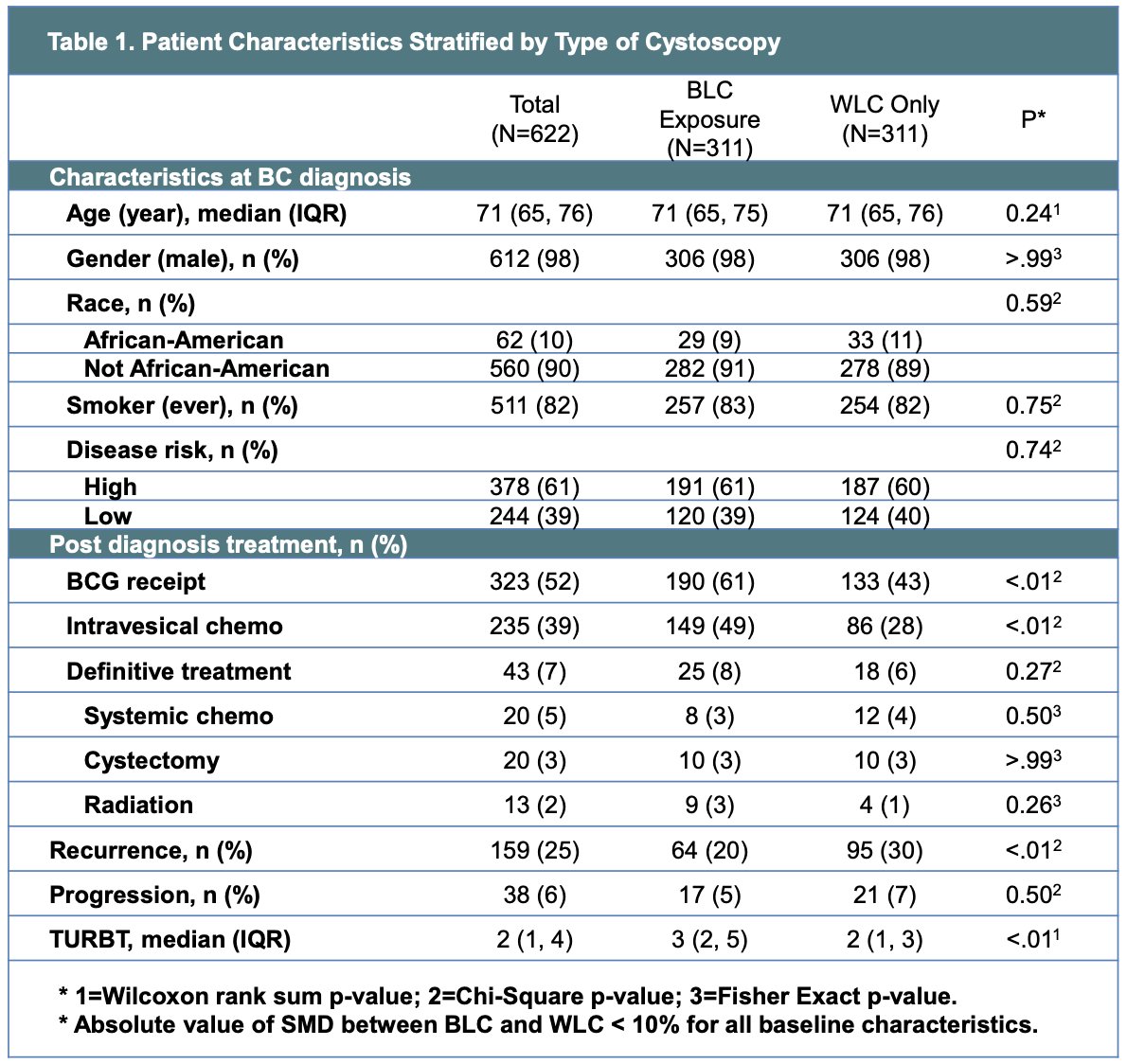
For this study, patients were included if diagnosed with non muscle invasive bladder cancer between 1997-2021 in the Veterans Affairs Healthcare System. Cohort 1 included those patients exposed to blue light cystoscopy, and cohort 2 included those undergoing white light cystoscopy only. Propensity score matching was performed, accounting for demographic and clinical variables, which included 622 matched patients (311 blue light cystoscopy, 311 white light cystoscopy). The primary analysis was the difference in healthcare costs over 1, 2, and 5-year intervals in line with oncologic outcomes. A cost-offset analysis was performed utilizing recurrence avoidance estimated cost savings, and recurrence avoidance baselines were derived from a published economic model by Clark et al.1
The patient characteristics stratified by type of cystoscopy are highlighted in the following table:
Blue light cystoscopy had a lower recurrence rate (20% versus 30%; p < 0.01), fewer inpatient visits (0.8 versus 1.2 PPPY; p = 0.05), and fewer emergency room visits (1.4 versus 2.2 PPPY; p < 0.01). Blue light cystoscopy had higher 5-year total costs ($108,411 versus $66,734; p<0.01):
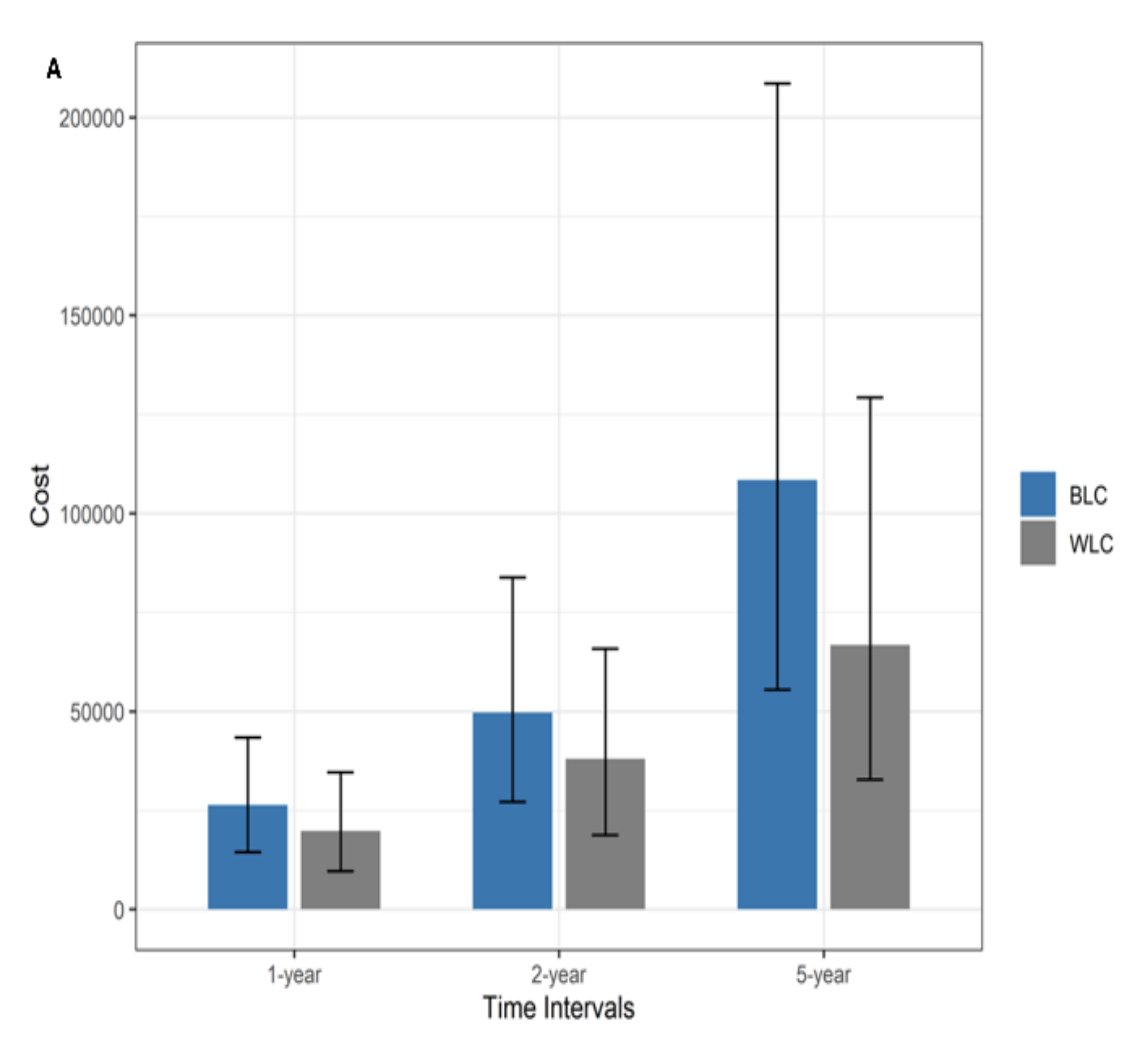
These higher costs were driven by higher outpatient costs ($90,788 versus $55,529, p < 0.01):

In a cost-offset analysis, the 5-year adjusted blue light cystoscopy exposure cost was $67,445, and the 5-year adjusted blue light cystoscopy versus white light cystoscopy cost difference was $721.
Dr. Nasrallah concluded his presentation discussing costs of care and oncologic outcomes associated with blue light cystoscopy from the BRAVO study with the following take home points:
- In a real world equal access setting, blue light cystoscopy use was associated with lower non muscle invasive bladder cancer recurrence
- Blue light cystoscopy use is associated with increased total costs over 5 years
- Increased outpatient costs are the main driver (more intravesical therapy, closer surveillance)
- Accounting for recurrence cost offset and healthcare utilization savings, blue light cystoscopy use approached cost-neutrality after 5 years
Presented by: Ali Nasrallah, MD, UT Galveston Medical Center, Galveston, TX
Written by: Zachary Klaassen, MD, MSc – Urologic Oncologist, Associate Professor of Urology, Georgia Cancer Center, Wellstar MCG Health, @zklaassen_md on Twitter during the American Urological Association (AUA) 2026 Annual Meeting, Washington, DC, Fri, May 15 – Mon, May 18, 2026.
References: