

(UroToday.com) At the 2026 American Urological Association Annual Meeting, Eric A. Klein delivered the prestigious Willet F. Whitmore Jr. Lectureship, titled “Life Lessons Learned.” Rather than focusing on a single scientific topic, Dr. Klein offered a deeply personal and reflective presentation that traced the arc of his career—from trainee to internationally recognized urologic oncologist, surgeon-scientist, mentor, entrepreneur, and leader.
The lecture blended humor, humility, historical perspective, and practical wisdom. Through stories from his training, seminal scientific discoveries, and experiences in leadership and innovation, Dr. Klein distilled lessons that resonated with surgeons at every stage of their careers.
Standing on the Shoulders of Giants
Dr. Klein began by honoring Willet F. Whitmore Jr., one of the founding giants of urologic oncology at Memorial Sloan Kettering Cancer Center. A photograph of Dr. Whitmore was accompanied by one of his enduring pieces of advice:
“Learn from other people’s mistakes; you don’t have time to make them all yourself.”
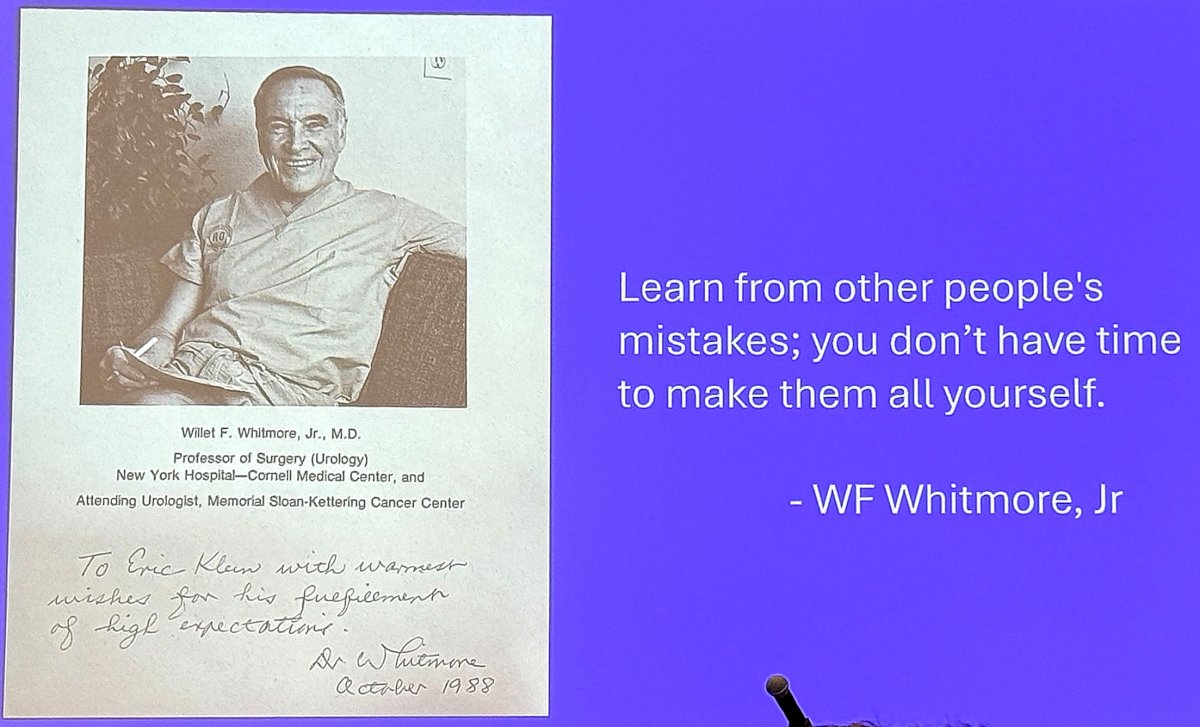
This quotation served as the central theme of the lecture and underscored the importance of mentorship, observation, and humility.
Dr. Klein reflected on his own formative relationship with Eric A. Klein’s mentor, Willet F. Whitmore Jr., and how this guidance shaped his approach to patient care, scientific inquiry, and leadership.
The First Scientific Breakthrough: Early Continence After Radical ProstatectomyDr. Klein then revisited one of his earliest influential publications:
Klein EA. Early continence after radical prostatectomy. J Urol. 1992;148:92.

This study demonstrated that incorporating the fascial plate posterior to the urethra into the vesicourethral anastomosis markedly accelerated continence recovery following radical prostatectomy.
Among 60 consecutive patients:
- 85% achieved continence after catheter removal
- 10% had stress incontinence
- 5% had total incontinence
- 55% were dry at 1 week
- 83% were dry by 3 months
Dr. Klein humorously juxtaposed the slide with a photograph of his dog, Opus, illustrating that even landmark scientific discoveries can emerge alongside the ordinary moments of life.
Leadership: Becoming Important by AccidentTransitioning to leadership, Dr. Klein displayed a humorous coffee mug reading:
“I accidentally became important at work, and it’s ruining my life.”

He noted that leadership often evolves unexpectedly and can bring substantial administrative burdens, competing priorities, and difficult decisions.
Another slide simply stated: “On Leadership”, followed by the memorable challenge: “You Want Me to Do What?!”
Dr. Klein described how assuming major leadership roles often feels overwhelming initially, but growth occurs by accepting responsibilities outside one’s comfort zone.
Leadership Philosophy: Hire Smart Creatives and Get Out of Their WayOne of Dr. Klein’s core management principles came from the book How Google Works by Eric Schmidt and Jonathan Rosenberg.
The central lesson: “Hire smart creatives and get out of their way.”
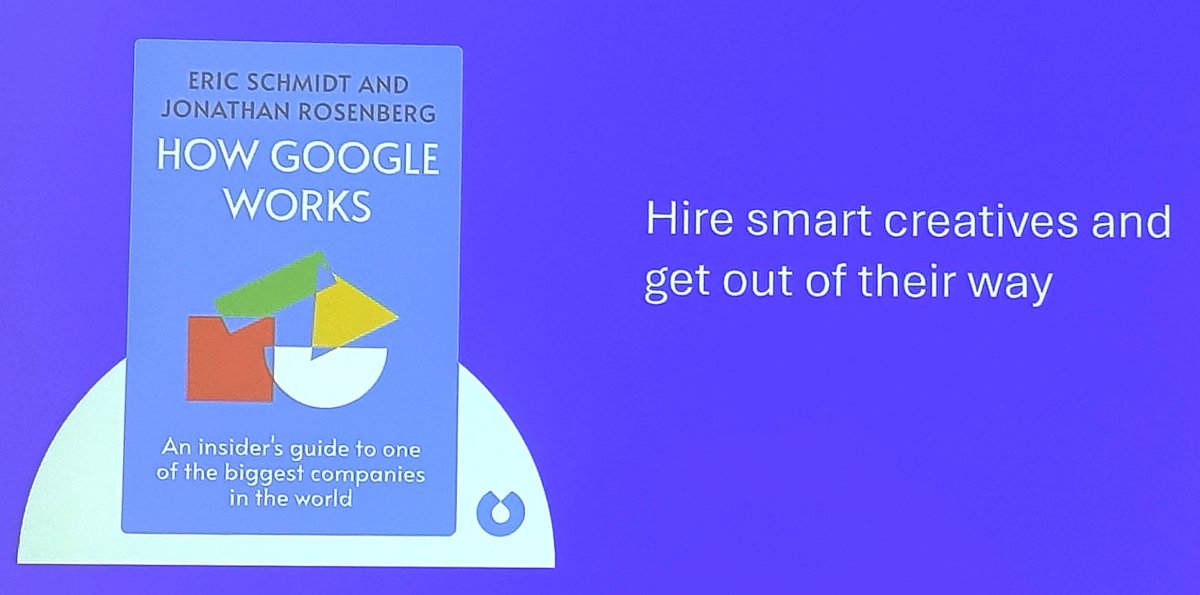
Dr. Klein emphasized that effective leaders recruit exceptionally talented people, empower them with autonomy, and avoid micromanagement. Innovation flourishes when gifted individuals are trusted to pursue ideas independently.
This philosophy has been foundational to his work in building high-performing clinical and research teams.
The Challenge of Leadership: Pleasing Everyone Is Impossible
Another slide featured a tongue-in-cheek coffee mug: “Pleasing everyone is impossible. Pissing everyone off is really fun and easy.”
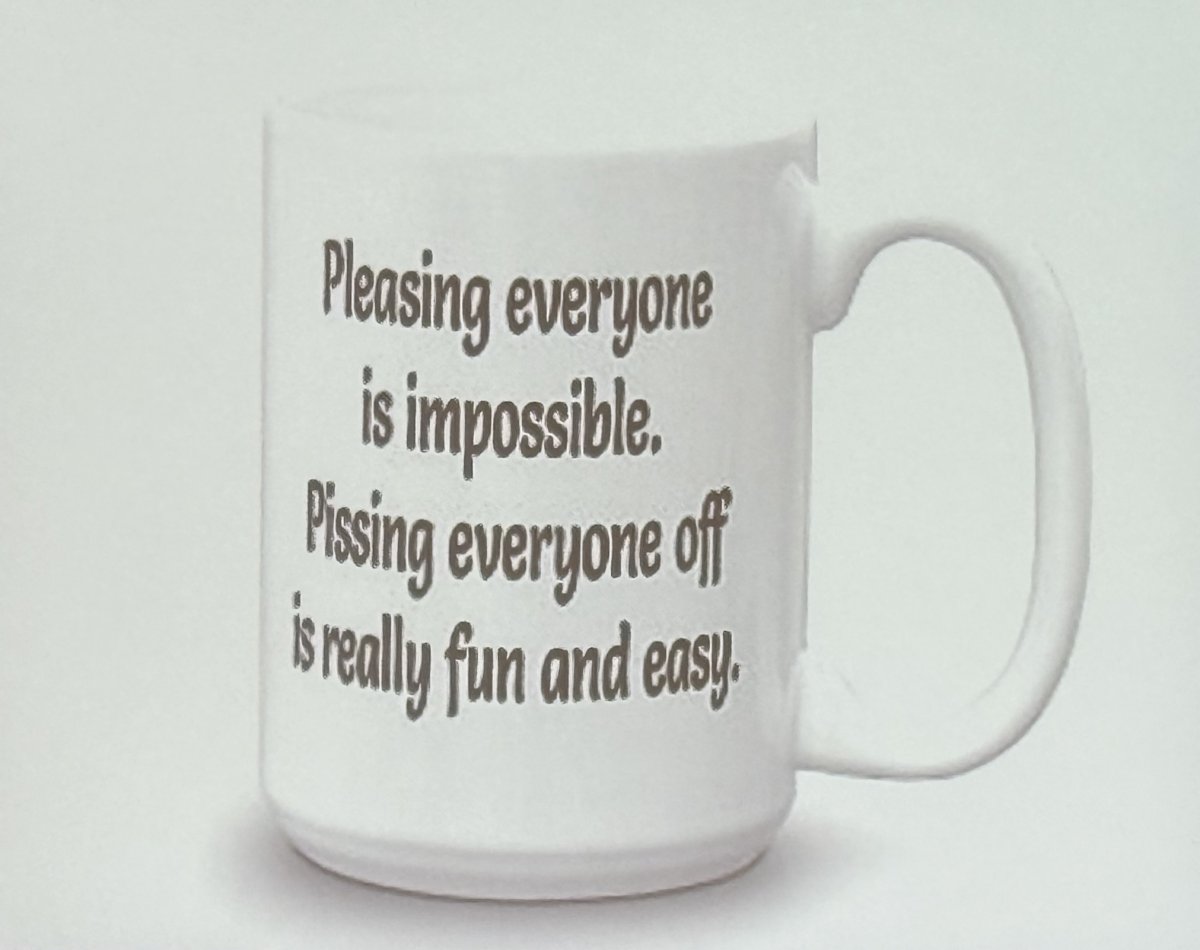
The humor underscored a critical truth of leadership: difficult decisions inevitably disappoint some stakeholders. Leaders must make principled choices based on mission and long-term value rather than seeking universal approval.
The “Sneaky T” Story: Scientific Curiosity and DiscoveryDr. Klein next recounted one of the most fascinating translational discoveries of his career, which he called “The Sneaky T Story.”
The work culminated in a 2023 publication in the Journal of Clinical Investigation.1

The study demonstrated that a subset of men harbors markedly elevated testosterone concentrations within the periprostatic dorsal venous complex despite normal peripheral serum testosterone levels. The key findings included:
- Approximately 20% of men exhibited local testosterone levels at least twofold higher than peripheral concentrations
- Elevated dorsal venous testosterone was associated with significantly worse progression-free survival after radical prostatectomy
- In a cohort of 196 patients, those with a dorsal/peripheral testosterone ratio >2 had substantially higher recurrence rates (P = 0.003)
Dr. Klein explained that this “Sneaky T” phenomenon suggests a previously underrecognized mechanism of localized androgen exposure that may contribute to more aggressive prostate cancer biology.
From Discovery to Innovation and EntrepreneurshipThe implications of the Sneaky T findings extended beyond academic insight. Dr. Klein showed a photograph of the team receiving the Startup Prize for Vivifi Medical, which was awarded $100,000 to advance commercialization efforts.
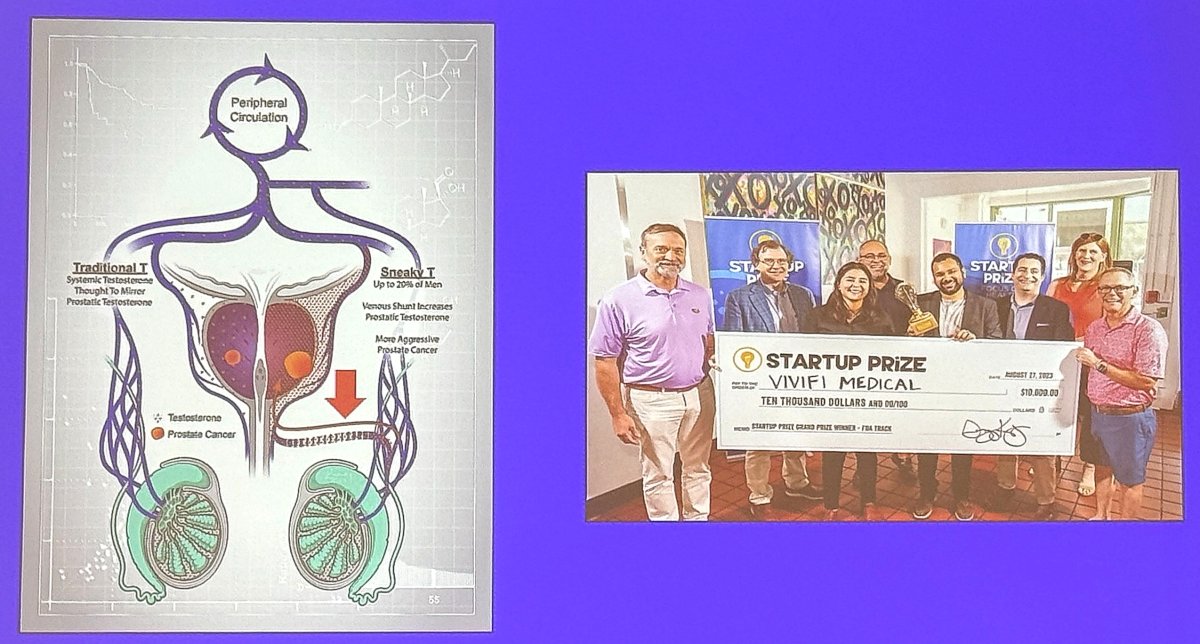
This portion of the lecture highlighted an important lesson: clinically meaningful scientific discoveries can and should be translated into practical technologies that improve patient care.
Going to the Dark Side
With characteristic humor, Dr. Klein introduced the next section with a slide titled: “Going to the Dark Side”, followed by an image of Darth Vader and the caption: “You underestimate the power of the Dark Side.”
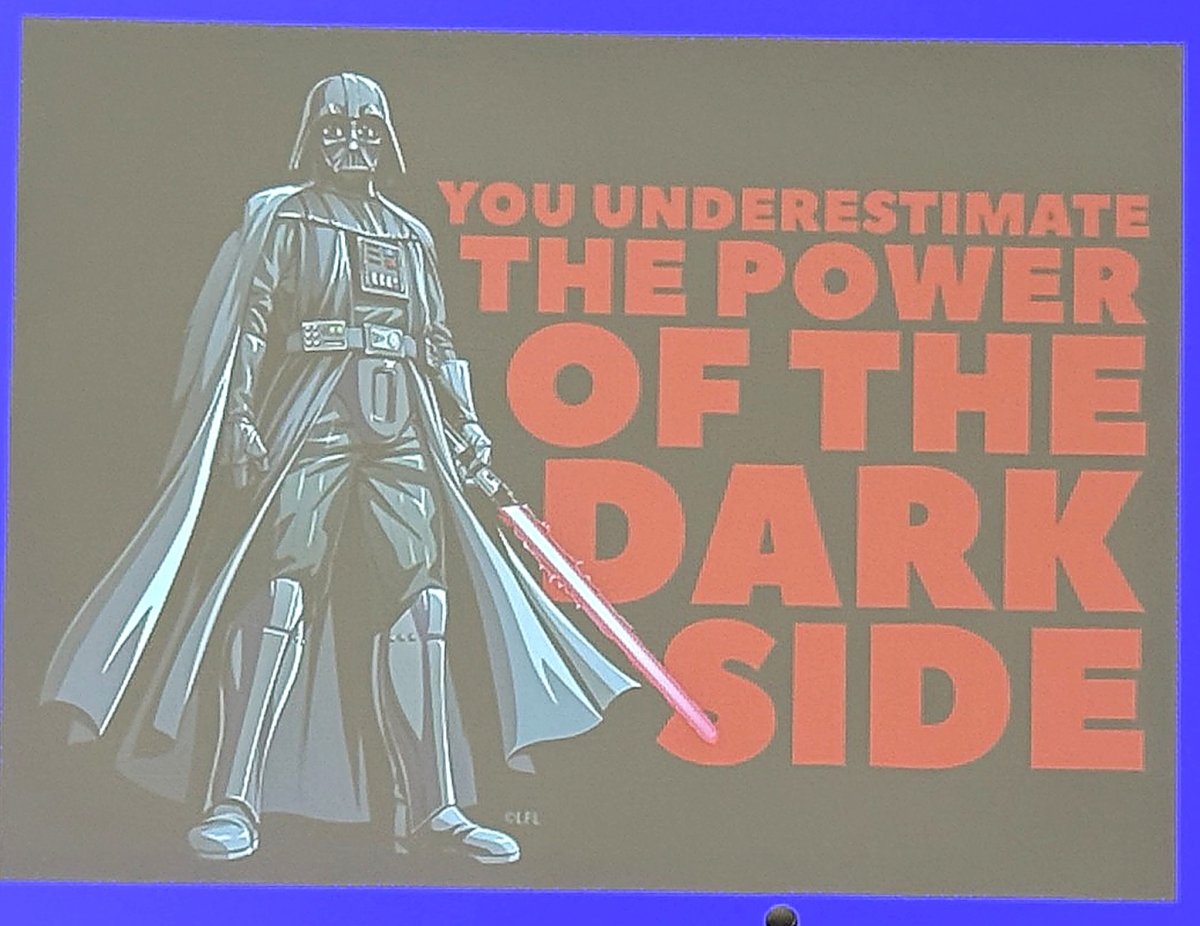
The “dark side” referred to entrepreneurship, commercialization, and engagement with industry. Dr. Klein argued that physician-scientists should not fear these arenas when the goal is to bring beneficial innovations to patients.
He emphasized that translating ideas into products requires stepping beyond traditional academic boundaries and embracing new skill sets.
Reflections on Career and Legacy
Throughout the lecture, Dr. Klein conveyed several overarching themes:
- The Importance of Mentorship: Great careers are built on lessons learned from exceptional mentors and by observing both successes and failures.
- Scientific Curiosity Matters: Transformative discoveries often begin with simple questions that challenge accepted assumptions.
- Leadership Is Unexpected and Demanding: Leadership may arrive unintentionally, but effective leaders empower talented colleagues and accept difficult decisions.
- Innovation Requires Risk: Meaningful advances often require venturing beyond conventional academic roles into entrepreneurship and commercialization.
- Humor and Perspective Sustain a Career: Maintaining humility and a sense of humor is essential to navigating the inevitable challenges of medicine and leadership.
Presented by: Eric Klein, MD, Distinguished Scientist, GRAIL, Former Fellow, Stanford Distinguished Careers Institute, & Emeritus Professor and Chairman, Glickman Urological and Kidney Institute at Cleveland Clinic
Written by: Rashid K. Sayyid, MD, MSc, Assistant Professor, Urologic Oncologist, Department of Urology at The University of Arizona and Banner University Medical Center, Tucson, AZ – @rksayyid on X during the American Urological Association (AUA) 2026 Annual Meeting, Washington, DC, Fri, May 15 – Mon, May 18, 2026.
Reference:
- Alayman M, Michael P, Hettel D, et al. Elevated Periprostatic Venous Testosterone Correlates With Prostate Cancer Progression After Radical Prostatectomy. J Clin Invest. 2023;133(17):e171117.