

(UroToday.com) Dr. Eman Dadashian from the Cedars-Sinai Transgender Surgery and Health Program presented the first study to systematically assess erectile function and related psychological distress in transgender women (TW) undergoing gender-affirming hormone therapy (GAHT), with or without prior bilateral orchiectomy (GABO), prior to vaginoplasty. Dr. Dadashian emphasized that although GAHT and orchiectomy are known to reduce gender dysphoria and eliminate the need for antiandrogens, many transgender women continue to experience erections, which can be a persistent and distressing source of dysphoria.
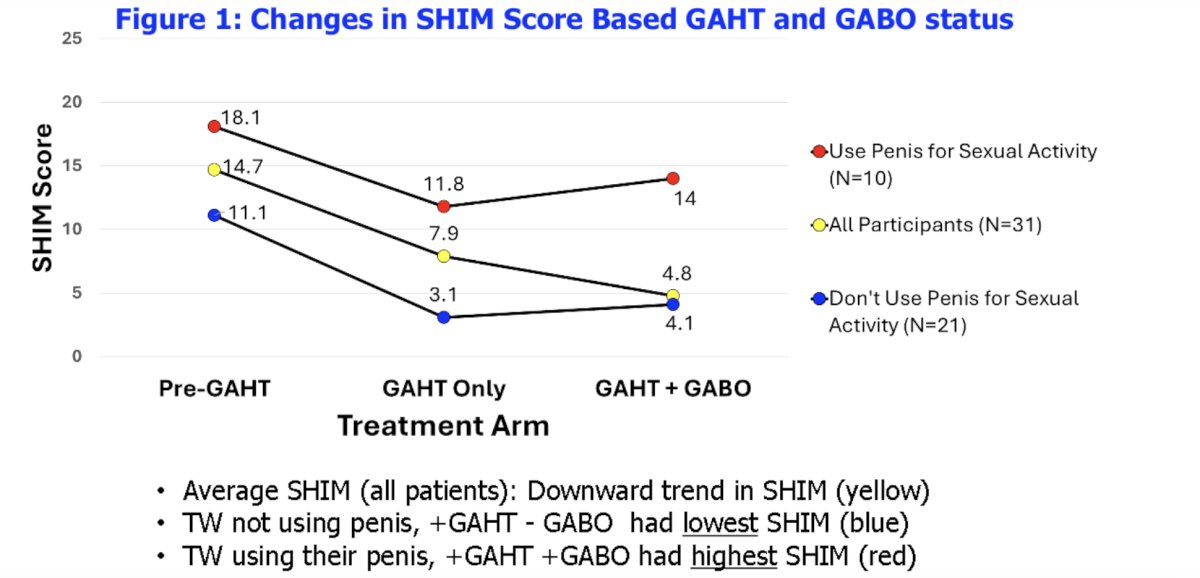
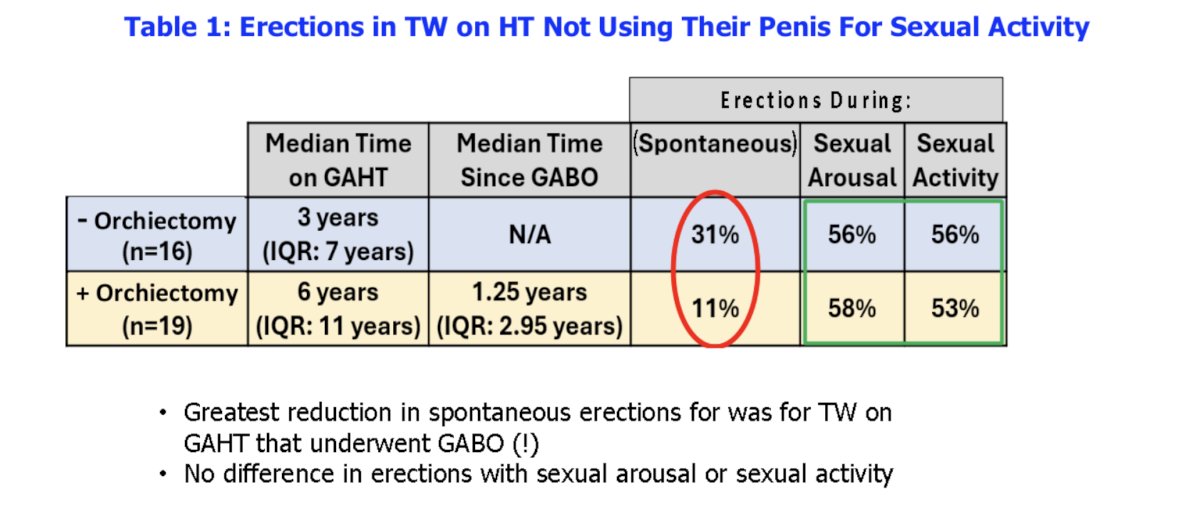
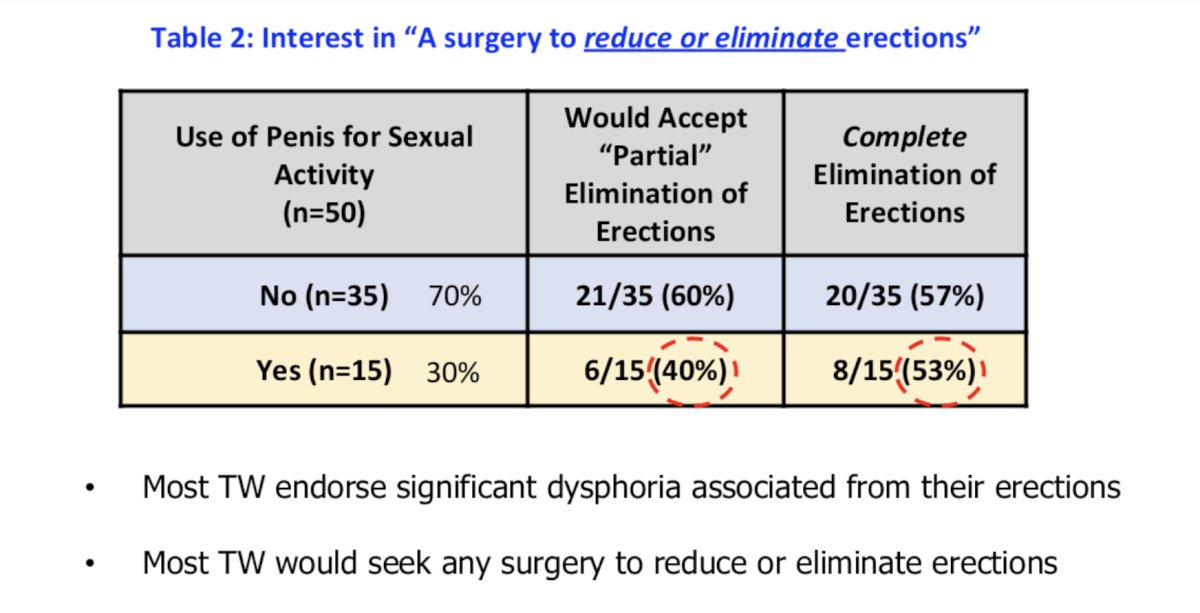
The study surveyed 50 TW currently awaiting vaginoplasty. Participants were grouped by orchiectomy status and assessed using the Sexual Health Inventory for Men (SHIM) at three distinct timepoints: prior to GAHT, after more than six months on GAHT, and more than six months post-GABO (Figure 1). Additional questions addressed the context in which erections occurred—spontaneous, mentally induced, or physically stimulated—as well as participants’ interest in procedures aimed at reducing or eliminating erections (Table 1,2).
The results demonstrated a significant decline in SHIM scores following GAHT, with the lowest scores reported among participants who did not use their penis for sexual activity. Orchiectomy was associated with a further reduction in spontaneous erections; however, neither GAHT nor GABO significantly reduced erections caused by sexual arousal or physical stimulation. Notably, 70% of participants reported they did not use their penis for sex, and a majority—regardless of orchiectomy status—expressed interest in procedures to eliminate erections due to the dysphoria they caused.
Dr. Dadashian shared that their team has developed a novel surgical technique—bilateral cavernosal artery ligation—designed to address this specific issue, with a forthcoming publication detailing the procedure. He also invited suggestions from the audience regarding potential biomarkers to examine in tissue samples associated with this work.
During the discussion, moderators praised the thoughtful design of the study and inquired about the counseling process offered to patients. Dr. Dadashian explained that patients were informed they could undergo a procedure to reduce erections while awaiting vaginoplasty, and many elected to proceed, often achieving loss of erections.
An audience member posed a question about how the starting age of hormone therapy might affect the prevalence of spontaneous erections. Dr. Maurice Garcia, senior author on the project, responded by noting that both age and duration of GAHT play a role in modulating the frequency of erections. He further elaborated that these findings may not change clinical care for this population, as most patients in the cohort were not seeking to preserve erectile function. However, he highlighted the opportunity to analyze penile tissue post-removal to better understand the histologic changes that occur in this context.
Another audience comment raised the possibility of using penile tissue from these cases to study the effects of androgen deprivation on fibrosis and tissue degeneration, similar to what is observed in prostate cancer patients undergoing androgen-deprivation therapy. The speaker suggested that such research could offer valuable insights into the mechanisms of testosterone deficiency and the reversibility of its effects on penile architecture.
Presented by: Eman Dadashian, MD, Urology Resident at Cedars-Sinai, during the 2025 American Urological Association (AUA) Annual Meeting on April 28, 2025, Las Vegas, Nevada
Written by: Harel C. Sims, B.S., University of California Irvine, @SimsHarel on X, during the 2025 American Urological Association (AUA) annual meeting held in Las Vegas, NV, Saturday, April 26 - Tuesday, April 29, 2025