

(UroToday.com) The 2025 AUA annual meeting featured an advanced prostate cancer session and a presentation by Dr. Neal Shore discussing data from the PRECISION platform assessing real-world treatment patterns and outcomes in patients with mCRPC treated in community urology centers in the United States.
Prostate cancer is the second most common cancer in men, with approximately 300,000 new cases of prostate cancer diagnosed in 2024 in the United States. Metastatic castration resistant prostate cancer (mCRPC) is the most advanced form of prostate cancer, with a short median survival of ~2 years. Importantly, urologists play a pivotal role in the management of men with prostate cancer in the US. However, many real world studies predominantly use data from medical oncology clinics. This study describes the patient characteristics, treatment patterns, and outcomes among patients with mCRPC treated in US community urology clinics.
This was a retrospective, non-interventional, real world study using data from the PRECISION data platform, a harmonized dataset of patients with advanced prostate cancer in the US from diverse clinical settings. The study population included adult patients with mCRPC who had been treated within community urology practices from December 14, 2018 to December 14, 2023: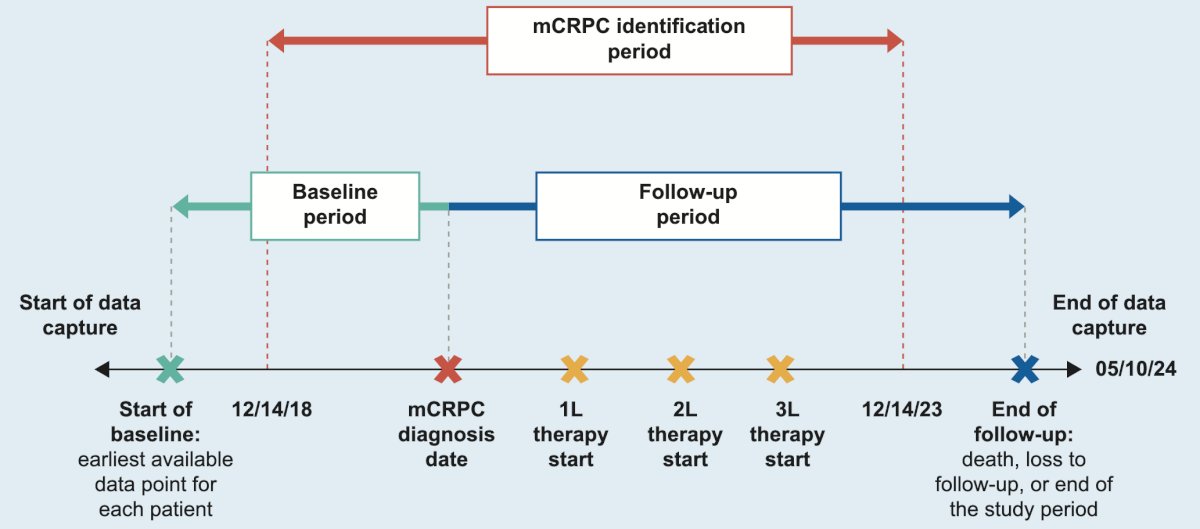
The study evaluated patient characteristics, type of treatment, time to treatment initiation, PSA responses, and overall survival. Patient characteristics and type of treatment were analyzed descriptively, and time to treatment initiation and overall survival were assessed using time-to-event analysis.
A total of 12,203 patients with mCRPC were included in the final study population, with a median age at mCRPC diagnosis of 77 years (IQR 70-83). In this cohort, 61% of patients were white, 14% were Black, and approximately 50% of patients were based in the South. Overall, 60% of patients had Medicare insurance coverage. Among patients with available data, the median PSA level at mCRPC diagnosis was 0.0032 ng/mL (IQR 0.0007-0.0138):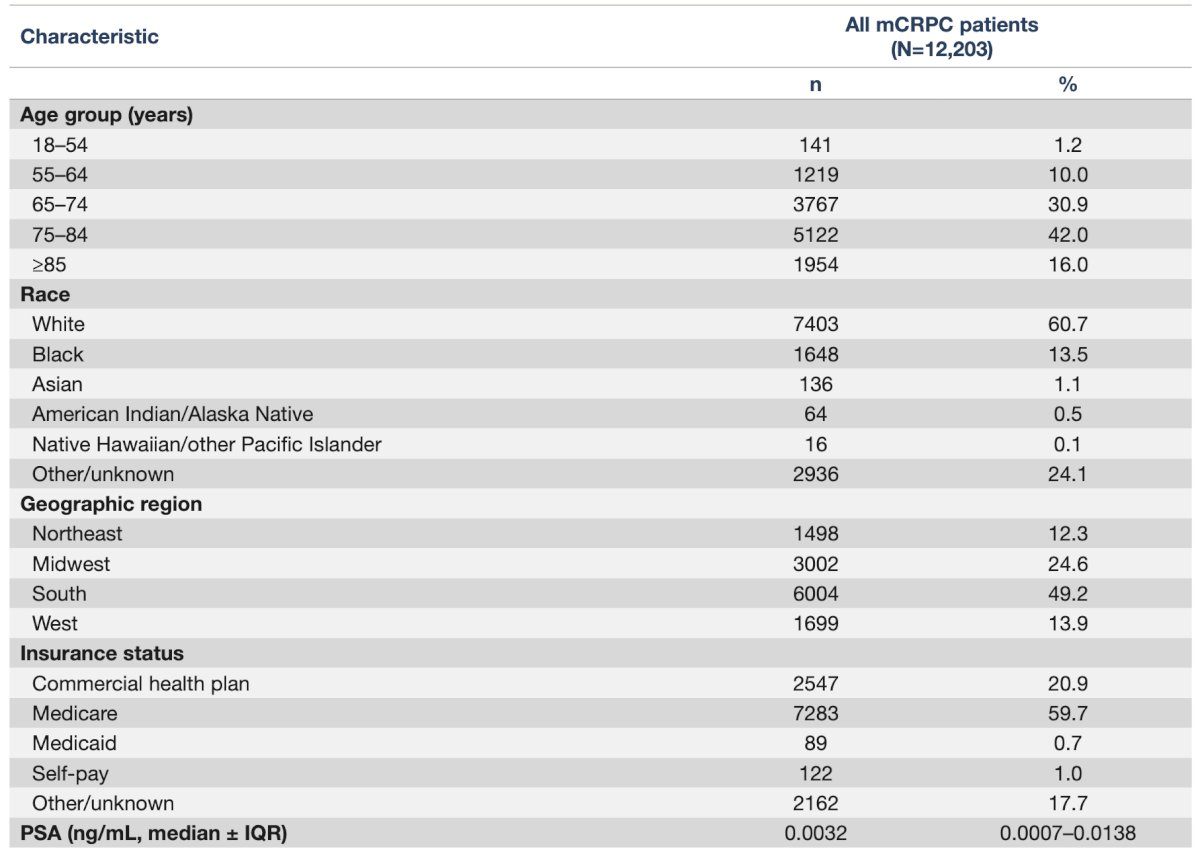
The median follow-up duration was 395 days (IQR 165-769 days). Overall, 8,496 (70%) patients initiated a first line therapy on or after mCRPC diagnosis, and at all lines of treatment, the androgen receptor pathway inhibitor was the dominant treatment choice, accounting for over 40% of the treatments used in the first line, second line, and third line of therapy. Of the androgen receptor pathway inhibitors used, enzalutamide was the most common, accounting for 37% of first line, 27% of second line, and 26% of third line treatment:
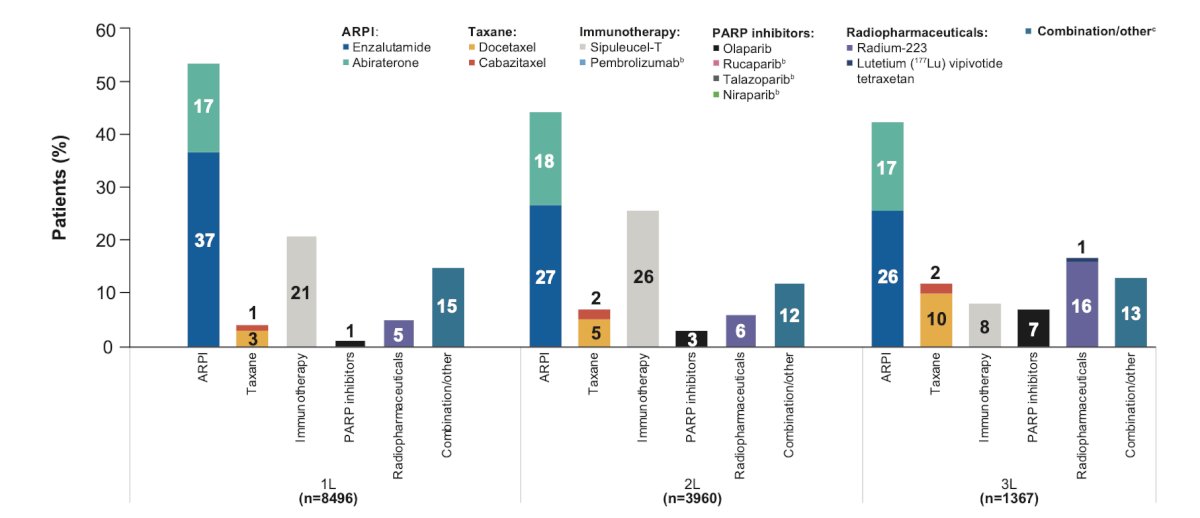
Taxane use was low, but increased from the first line to third line, with docetaxel accounting for the majority of taxane use. Immunotherapy (most commonly sipuleucel-T) was the second most commonly used treatment in the first line and second line, with radiopharmaceuticals (mainly radium-223) taking this place in the third line setting. Treatment sequences are shown in the following figure: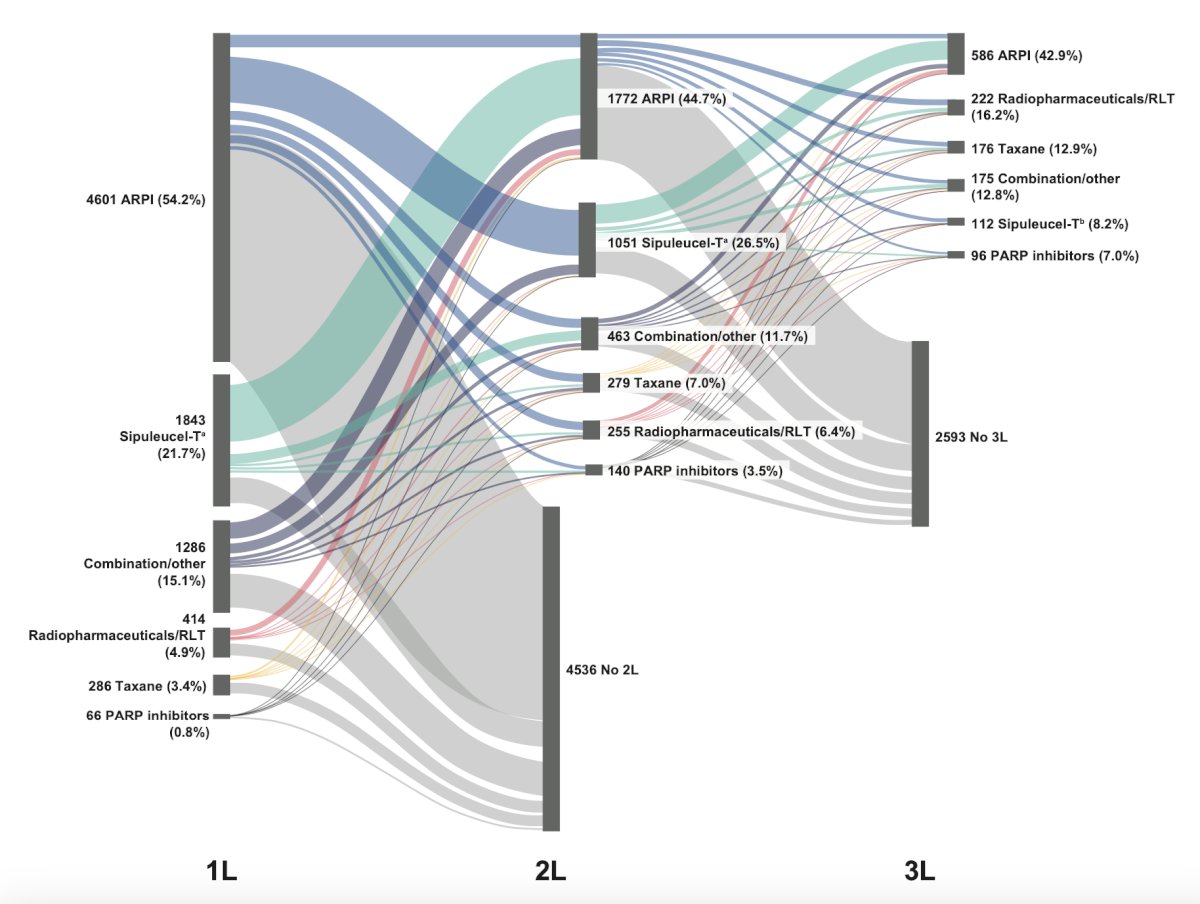
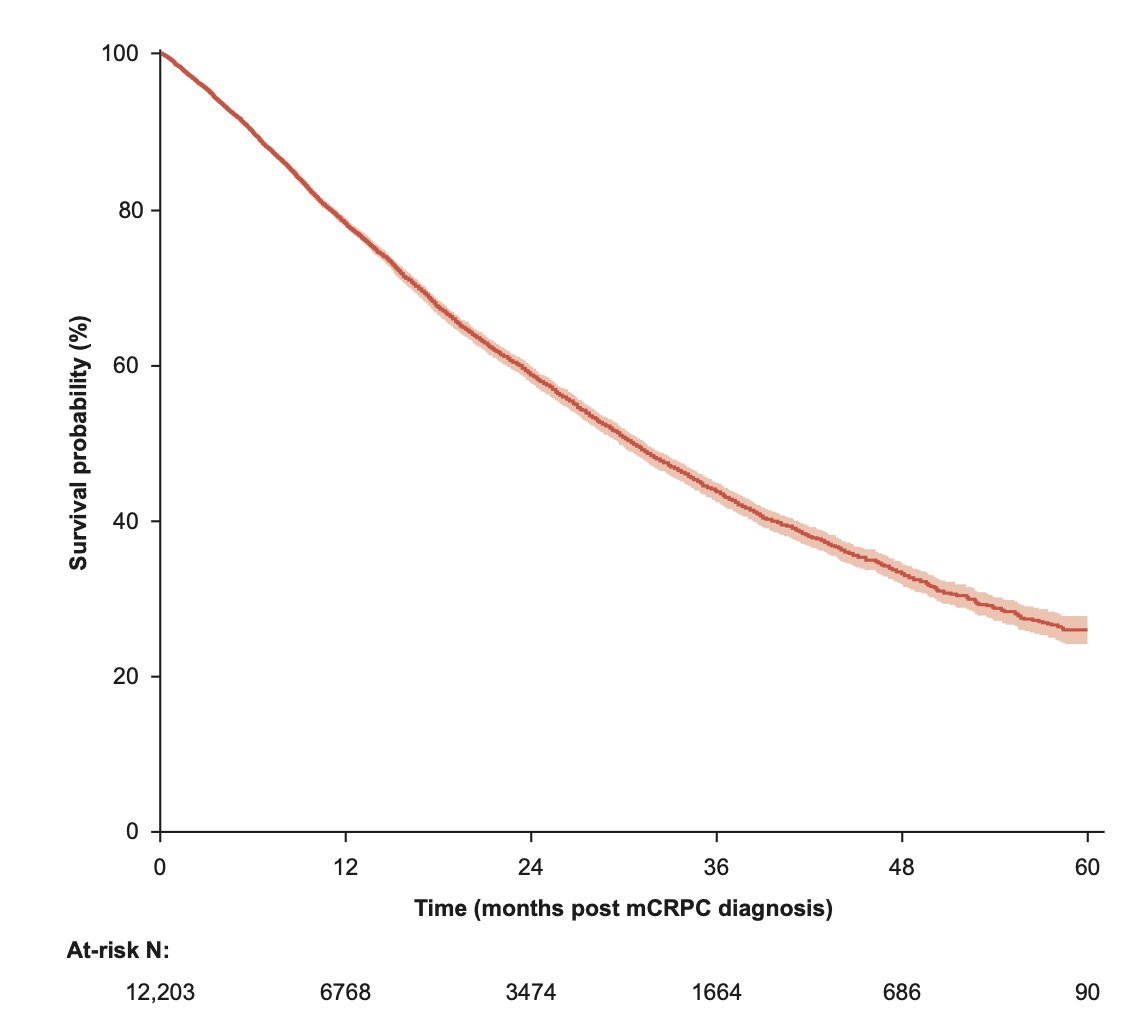
The most common sequences were first line androgen receptor pathway inhibitor followed by second line sipuleucel-T, and first line sipuleucel-T followed by second line androgen receptor pathway inhibitor. In the time to event analysis, among patients still alive, 74%, 80%, 83%, 84%, and 85% had initiated first line therapy by 12, 24, 36, 48, and 60 months, respectively. The median time to treatment initiation from mCRPC diagnosis to first line initiation was 2.4 months (95% CI 2.3-2.5 months). The median overall survival from time of mCRPC diagnosis was 30.5 months (95% CI 29.7-31.4 months), and the 5-year overall survival rate was 25.9% (95% CI 24.1-27.7%):
Dr. Shore concluded his presentation discussing data from the PRECISION platform assessing real-world treatment patterns and outcomes in patients with mCRPC treated in community urology centers in the United States with the following take home points:
- This is one of the first studies to describe the characteristics, treatment patterns, and outcomes of mCRPC patients treated in the community urology setting
- At all lines of treatment, most patients received an androgen receptor pathway inhibitor (enzalutamide or abiraterone), though >20% of patients received immunotherapy with sipuleucel-T either for first line or second line therapy. The use of taxanes (docetaxel and cabazitaxel) was uncommon, but increased from first line to third line.
- Common treatment sequences from first line to second line were immunotherapy to androgen receptor pathway inhibitor and androgen receptor pathway inhibitor to immunotherapy
- Overall, the median time to treatment initiation from mCRPC diagnosis to first line treatment was 2.4 months, and the median overall survival from time of mCRPC diagnosis was ~30 months
- Future studies using the PRECISION data platform will provide additional insights into this understudied population
Written by: Zachary Klaassen, MD, MSc – Urologic Oncologist, Associate Professor of Urology, Georgia Cancer Center, Wellstar MCG Health, @zklaassen_md on Twitter during the American Urological Association's 2025 Annual Meeting, between April 26 – 29, 2025 in Las Vegas, NV.
Related content: PRECISION Data Platform Reveals mCRPC Treatment Outcomes in Urology Practices - Neal Shore