

(UroToday.com) Historically PSMA-RGS has primarily been reported as a method of identifying lymph node invasion. Dr. Zaurito and team present their exciting findings on the use of PSMA-RGS to identify prostatic tumors. Specifically, they investigated the intraoperative accuracy of prostate-specific membrane antigen-radio guided surgery (PSMA-RGS) for index lesion (IL) targeting, and local staging of extra prostatic extension (EPE) and positive surgical margins (PSM) during robot-assisted radical prostatectomy.
The study, conducted between 2021 and 2024, reports an interim analysis on 45 cN0cM0 PCa patients of the 80 total patients recruited under the protocol, each with an LNI risk greater than 5%.
All patients underwent preoperative prostate-specific membrane antigen positron emission tomography (PSMA-PET) imaging. To further enhance intraoperative accuracy, patients were administered the radiotracer 99mTc-PSMA I&S the day before undergoing robot-assisted radical prostatectomy (RARP) combined with extended pelvic lymph node dissection (ePNLD).
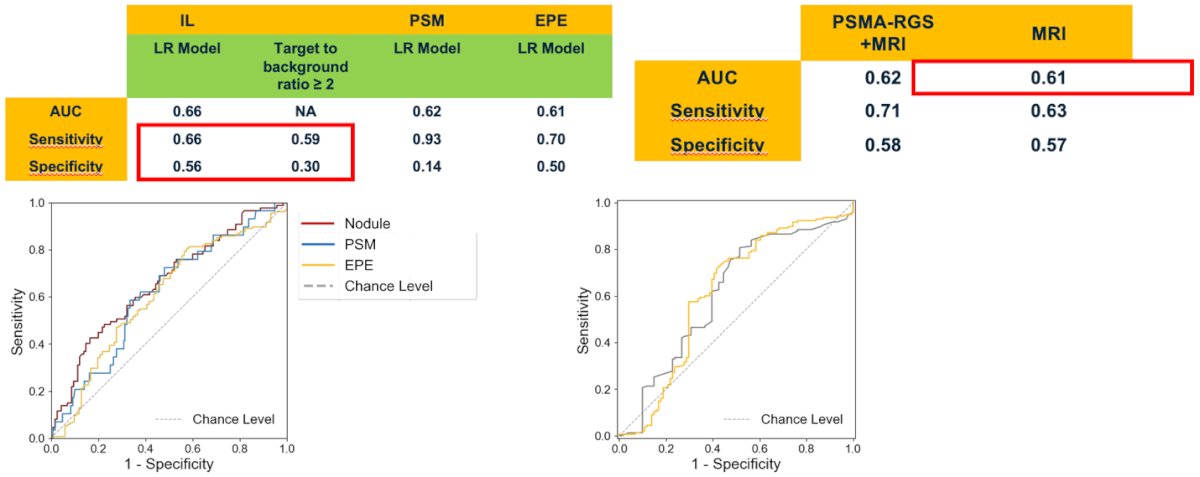
A key innovation in the study was the use of a drop-in gamma probe, which enabled real-time in vivo and ex vivo gamma measurements during surgery. Surgeons identified and excised lesions that demonstrated a target-to-background ratio of 2 or greater, marking them as PSMA-positive for suspected metastasis.
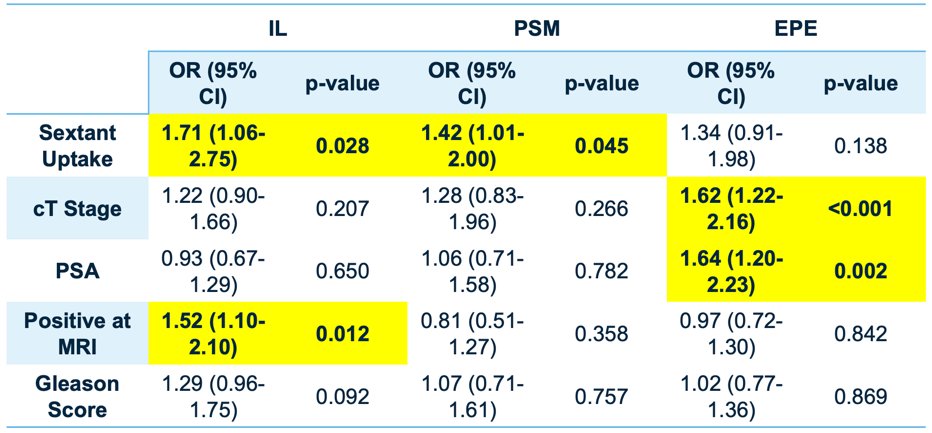
For outcomes, the correlation between sextant-based ex vivo gamma probe uptake values and key pathological was evaluated. Specifically, intraprostatic lesions (IL), extraprostatic extension (EPE), and positive surgical margins (PSM) were mapped according to the sextant uptake detected post-surgery.
To assess predictive value, the team conducted both univariable (UVA) and multivariable (MVA) correlation and sensitivity analyses for each outcome, with associated logistic regression (LR) models incorporating covariates found to be significant.
To evaluate the impact of PSMA-RGS on predictive performance beyond standard imaging, researchers employed leave-one-out cross-validation (LOO-CV) to compare two predictive models: one using clinical and MRI data alone, and another integrating sextant-level PSMA uptake data. This approach allowed the team to isolate the added diagnostic value of PSMA-RGS in predicting EPE, a critical factor in treatment planning and prognosis.
For results, 20% of patients had uptake of PSMA-PET, and the LR model outperformed the count rate. Additionally, sextant uptake was significantly associated with IL location and PSM but not with EPE, as displayed in the tables and figures. These findings support the use of PSMA-RGS in addition to MRI as a useful tool for local tumor staging in robot-assisted radical prostatectomy.
Dr. Zaurito commented on the future of PSMA-PET, describing it as an added benefit when included in models that can predict unfavorable pathological outcomes. This ultimately can assist surgeons in making more targeted tumor resections and preserving healthy tissue.
During the discussion, audience members questioned Dr. Zaurito on how he approached lymph node dissection in patients with PSMA negative margins. Dr. Zaurito responded that it depends on the risk of disease in the specific patient, citing how PSMA-PET has a low negative predictive value, making it an unreliable test in this specific population. There seemed to be audience consensus that this is still an ongoing issue and area of future investigation for PSMA-PET technology in prostate cancer.
Presented by: Paolo Zaurito, MD, Urology Resident, IRCSS Ospedale San Raffaele, Milan, Italy
Written by: Tyler Lunow-Luke, Medical Student Year 3, University of California Irvine, during the 2025 American Urological Association (AUA) annual meeting held in Las Vegas, NV, Saturday, April 26 - Tuesday, April 29, 2025
References:
- Zaurito P, Quarta L, Barletta F, Scuderi S, Stabile A, Mazzone E, et al. PD30-08 The Role Of Psma-Radioguided Surgery In Identifying Tumor Location And Local Staging In Prostate Cancer Patients Undergoing Radical Prostatectomy And Extended Lymph Node Dissection. Interim Analysis Of Phase 2 Study. Journal of Urology [Internet]. 2025 May 1 [cited 2025 Apr 28];213(5S):e1052. Available from: https://doi.org/10.1097/01.JU.0001110088.16260.ae.08