

(UroToday.com) The American Urological Association (AUA) 2025 Annual Meeting, held in Las Vegas, NV, was host to an advanced prostate cancer moderated poster session. Dr. Alex Qinyang Liu presented real-world data from the PIONEER+ Big Data Consortium for prostate cancer, evaluating systemic treatment prescription and switch patterns in metastatic hormone-sensitive prostate cancer (mHSPC) patients.
Ten European and US databases of electronic medical records, insurance claims, primary care databases, and cancer registries were included. The source data was harmonised in accordance with the European Common Data Model (OMOP-CDM). This study included two cohorts:
- Cohort 1: Patients diagnosed with mHSPC who had not undergone a prior orchiectomy.
- Cohort 2: Patients started on ADT, as a surrogate measure of mHSPC disease, applicable in both metachronous and synchronous disease settings.
The study investigators analysed and compared the prescription and switch patterns of patients initially started on:
- ADT alone
- ADT + chemotherapy,
- ADT + androgen receptor target antagonist (ARTA; i.e., abiraterone, enzalutamide, apalutamide)
- Triplet therapy.
Starting with an initial sample size of >100,000,000 adults, 111,606 mHSPC patients were identified. The initial treatment patterns were as follows:
- ADT alone: 44.4%
- ADT + ARTA: 9.9%
- ADT + chemotherapy: 9.2%
- Triplet therapy: 1%
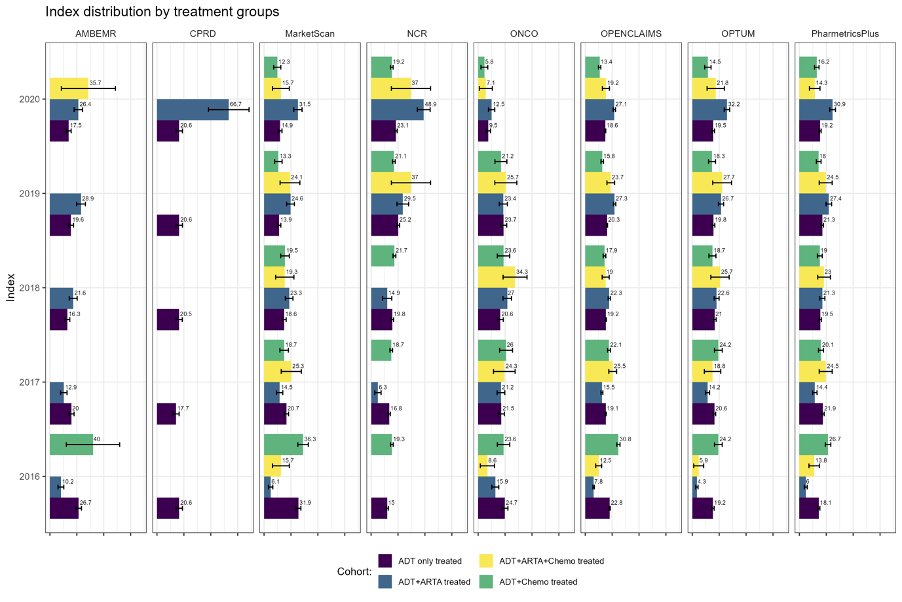
Figure 1 illustrates the Sankey Diagram, which visualises the flow of patients through different stages, focusing on treatment switches:
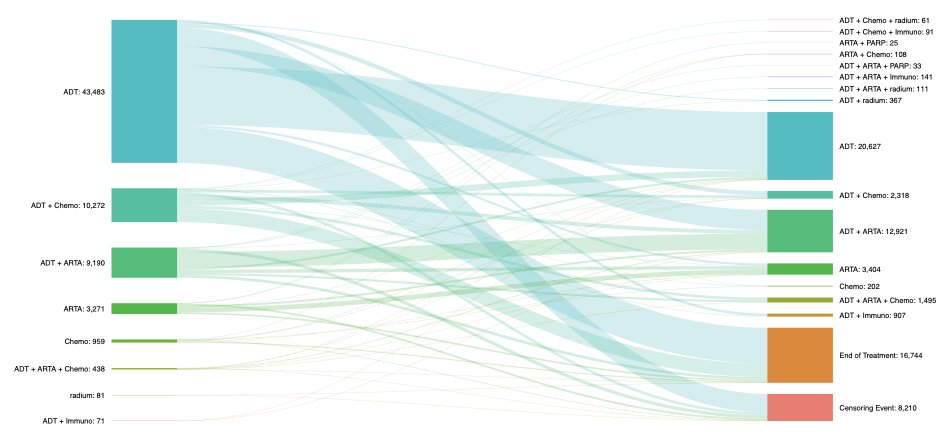
Among patients initially treated with ADT alone, 46.3% persisted with their initial treatment, while 17.1% intensified to a doublet regimen. In contrast, 19% of patients receiving ADT + chemotherapy switched to ARTA combinations.
In the group initially receiving ADT + an ARTA, 53.8% persisted, with only 21.2% de-intensifying their treatment. The weighted average median time-to-switch was as follows:
- ADT + ARTA: 1,632 days
- ADT alone: 999 days
- ADT + chemotherapy: 970 days
Dr. Liu concluded that in this largest-to-date study on mHSPC systemic treatment patterns, the majority of patients initiated with and persisted on ADT monotherapy, despite evidence from numerous trials demonstrating overall survival benefits for doublet and triplet systemic therapy intensification. Patient initially started on an ADT + ARTA had the highest treatment persistence and the longest time-to-switch, significantly longer than those initially started on ADT + chemotherapy. He emphasized that this analysis, facilitated by PIONEER’s harmonised data platform, underscores the importance of real-world data for guiding personalised mHSPC treatment strategies.
Presented by: Alex Qinyang Liu, Prince of Wales Hospital, The Chinese University of Hong Kong, Hong Kong, China
Written by: Rashid K. Sayyid, MD, MSc – Robotic Urologic Oncology Fellow at The University of Southern California, @rksayyid on Twitter during the 2025 American Urological Association (AUA) annual meeting held in Las Vegas, NV, Saturday, April 26 - Tuesday, April 29, 2025