

(UroToday.com) The American Urological Association (AUA) 2025 Annual Meeting held in Las Vegas, NV, was host to an advanced prostate cancer moderated poster session. Dr. Takaki Ichiyama presented the results of a multicenter, retrospective study evaluating the impact of the discrepancy between the CHAARTED and LATITUDE risk categories on prognosis in patients with metastatic hormone-sensitive prostate cancer (mHSPC) in clinical practice.
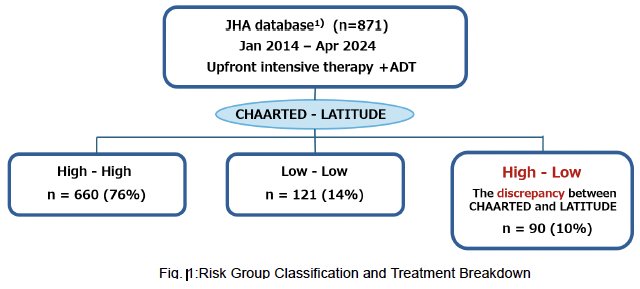
They included 871 patients who were treated with upfront doublet or triplet systemic therapy regimens from the JHA database (Jikei University, Hirosaki University, and Akita University) between January 2014 and April 2024. Patients were divided into 3 groups:
- Low-Low (CHAARTED low-volume and LATITUDE low-risk)
- High-High (CHAARTED high-volume and LATITUDE high-risk)
- High-Low (Discrepancy between CHAARTED and LATITUDE risk categories) groups
They compared castration-resistant prostate cancer (CRPC)-free survival and overall survival to assess the impact of the classification on prognosis.
The number of patients in the Low-Low, High-High, and High-Low groups was 121 (14%), 660 (76%), and 90 (10%), respectively.
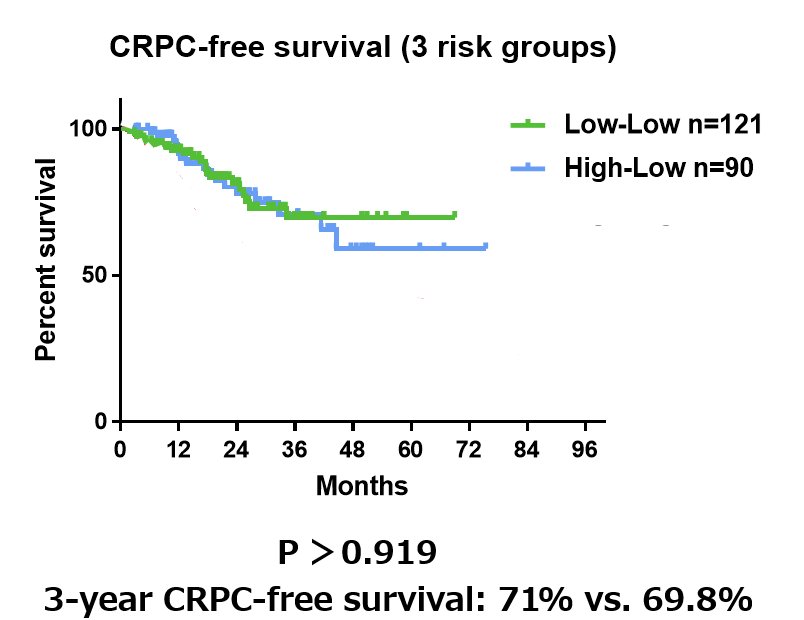
For the comparison of High-Low versus Low-Low patients, there was no significant difference between the two groups for CRPC-free survival (3-year: 71% for High-Low versus 68% for Low-Low; p=0.92) and overall survival (p=0.27).


For the comparison of High-Low versus High-High, patients in the High-Low group had significantly longer CRPC-free survival (3-year: 71% versus 53%, p=0.005), but there was no difference in OS (p=0.30).
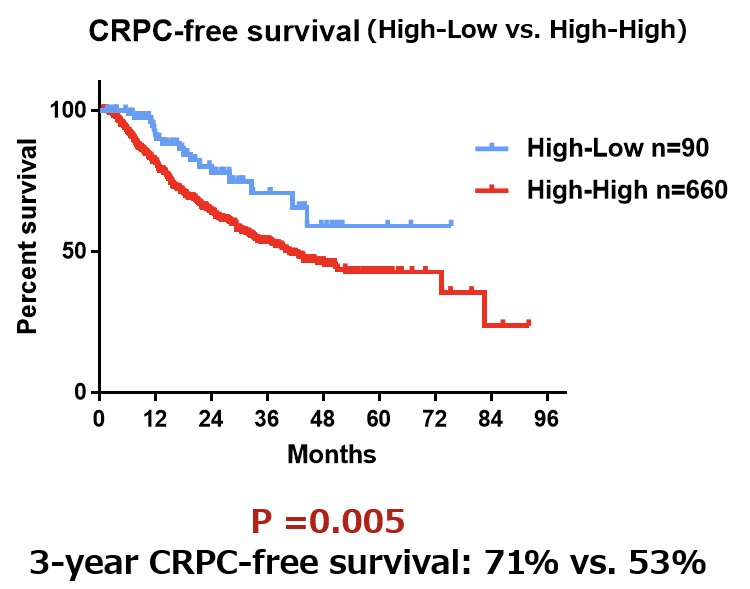
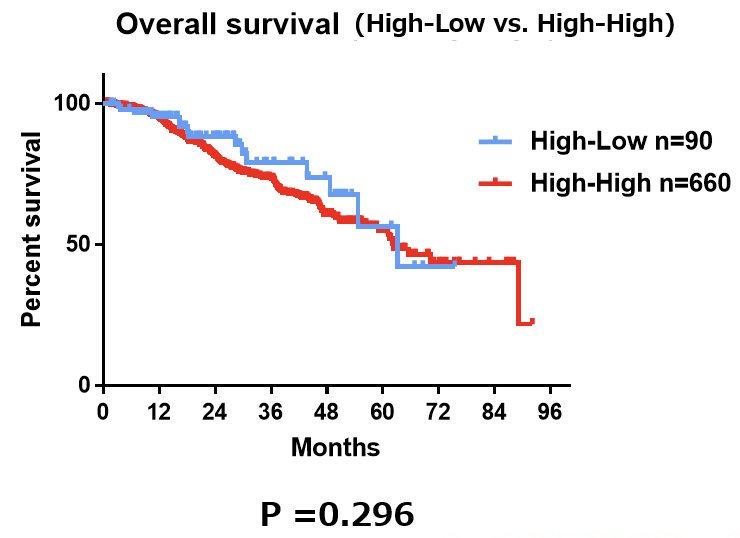

Dr. Ichiyama concluded that patients in the CHAARTED/LATITUDE High-Low group had a significantly superior CRPC-free survival compared to patients in the CHAARTED/LATITUDE High-High group, despite no differences in overall survival. He argued that further studies are needed to evaluate whether the treatment intensity needs to be modified based on this risk classification.
Presented by: Takaki Ichiyama, MD, Department of Urology, Hirosaki University Graduate School of Medicine, Hirosaki, Japan
Written by: Rashid K. Sayyid, MD, MSc – Robotic Urologic Oncology Fellow at The University of Southern California, @rksayyid on Twitter during the 2025 American Urological Association (AUA) annual meeting held in Las Vegas, NV, Saturday, April 26 - Tuesday, April 29, 2025