

(UroToday.com) The American Urological Association (AUA) 2025 Annual Meeting, held in Las Vegas, NV, was host to an advanced prostate cancer podium session. Dr. Alessandro Viti presented a study evaluating early oncologic outcomes of very high-risk prostate cancer patients, defined per the STAMPEDE trial definition, in the PSMA PET era and the implications for the selection of optimal surgical candidates.
In 2022, the pooled results of two phase III trials (STAMPEDE Arms G and J) demonstrated that the addition of abiraterone +/- enzalutamide to standard of care radiotherapy + ADT for patients with conventional imaging-defined, non-metastatic high-risk prostate cancer was associated with a significant improvement in metastasis-free survival (HR: 0.53, 95% CI: 0.44–0.64, p<0.001).1
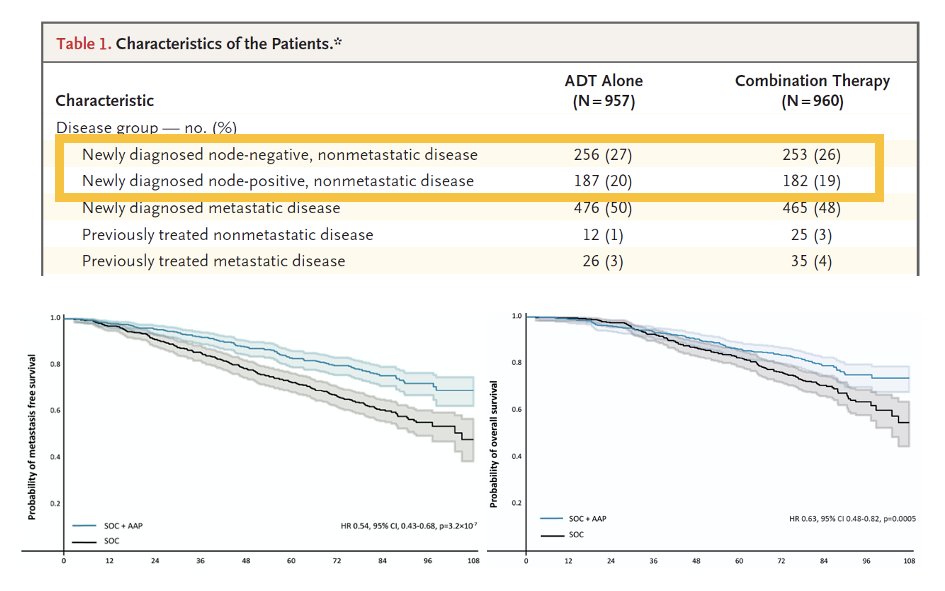
Dr. Viti noted that only 59% of patients received the full three-year course of systemic therapy, and 46% of patients experienced Grade 3–5 adverse events.1
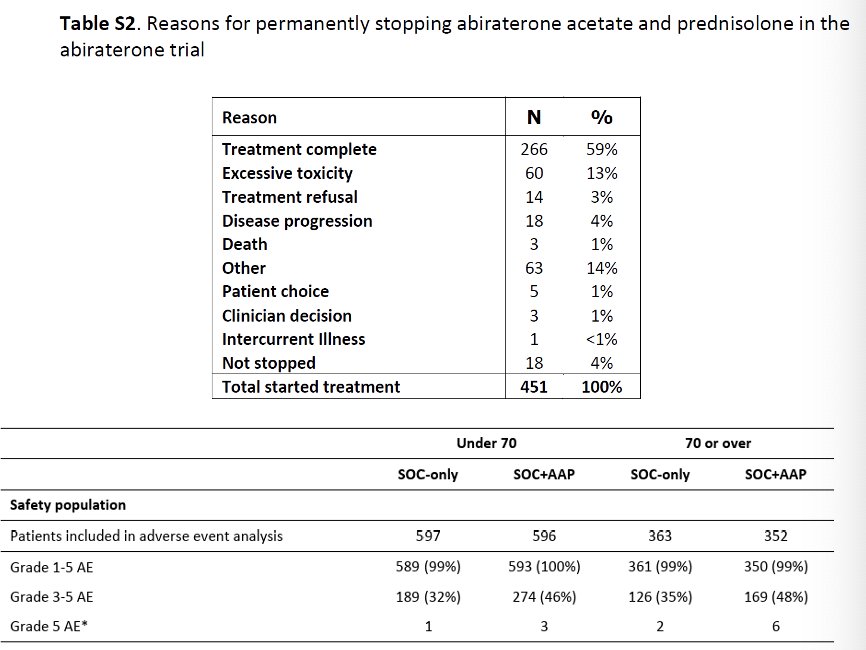
Dr. Viti highlighted that a surgical arm, namely radical prostatectomy + extended pelvic lymph node dissection, was not incorporated into this trial, and all patients were staged with conventional imaging. As such, the objective of this study was to evaluate the early outcomes of very high-risk prostate cancer patients treated with a radical prostatectomy + extended pelvic lymph node dissection in the PSMA PET era.
This was a retrospective analysis of two cohorts of prostate cancer patients treated with a radical prostatectomy + extended pelvic lymph node dissection. The 1st cohort included 4,780 men staged with conventional imaging at a single center between 2010 and 2020. The second was a multi-institutional cohort of 2,367 patients staged with PSMA PET between 2016 and 2024. Included patients were those who met the STAMPED eligibility criteria:1
- Node positive, OR
- If node negative:
- High-risk, defined by at least two of the following:
- cT3-4
- Gleason Score 8-10
- PSA ≥40 ng/mL
- High-risk, defined by at least two of the following:
Overall, 505 patients met the study inclusion criteria. The primary study outcome was early biochemical recurrence (eBCR), defined as a PSA persistence or two consecutive PSA rises within one year, and estimated using Kaplan Meier curves, with right censoring at 12 months applied to standardize the follow-up duration. Multivariable Cox regression modeling was performed to assess whether patients staged with PSMA PET were at different risk of eBCR, after adjusting for preoperative characteristics and the administration of ADT.
The baseline characteristics are summarized in the table below. There was a nearly even split between patients staged with conventional imaging (47%) versus PSMA PET (53%). The median patient age was 66 years. The median follow-up was 72 and 13 months in the conventional imaging and PSMA PET cohorts, respectively.
Overall, patients staged with conventional imaging had more adverse features. A total of 135 (57%) and 108 (40%) patients received adjuvant hormonal treatment in the conventional and PSMA-PET cohorts, respectively.
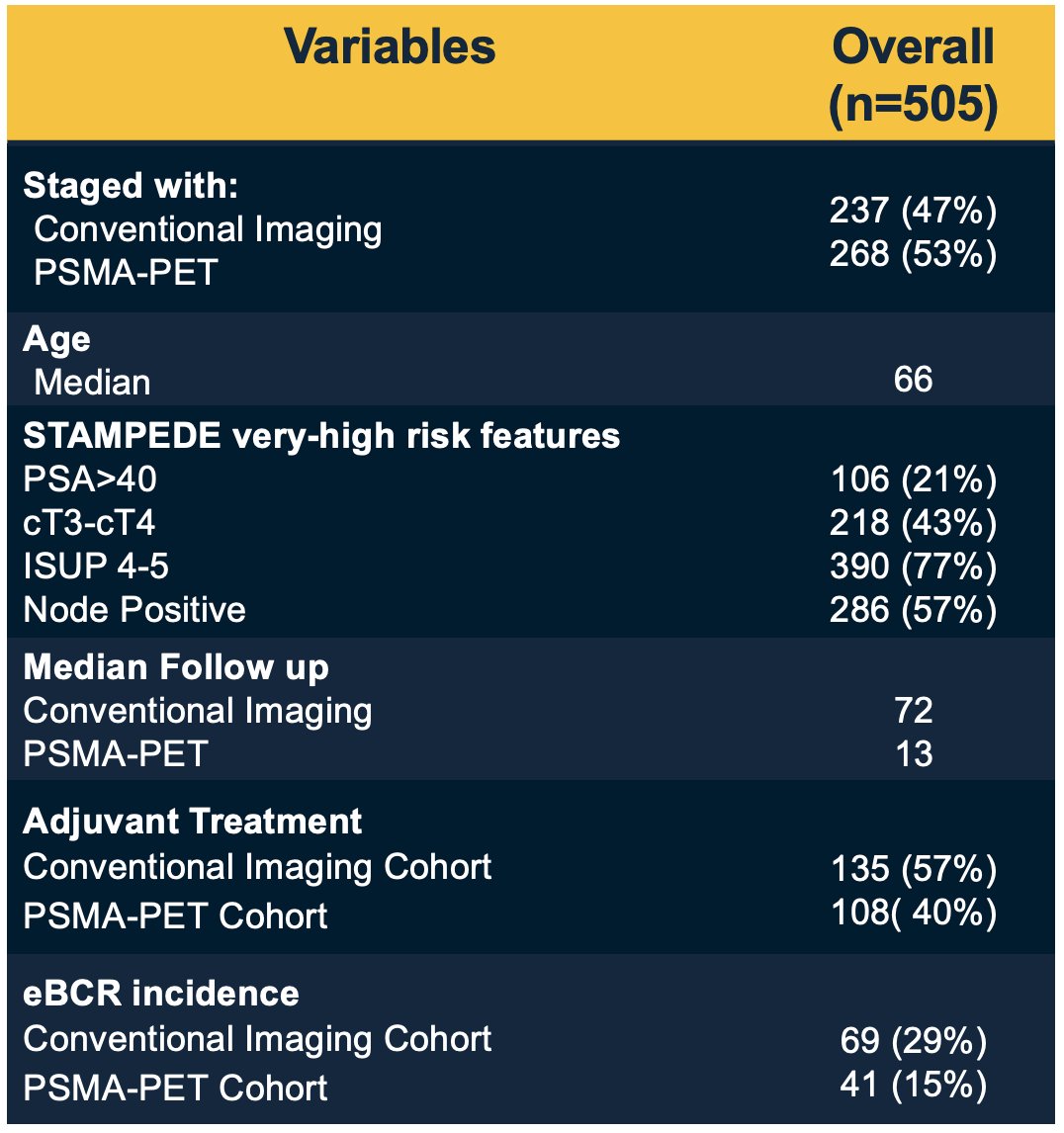
The incidence of eBCR was higher in the conventional imaging cohort (29% versus 15%). On multivariable analysis, patients staged with PSMA PET had a lower rate of eBCR (HR: 0.59, 95% CI: 0.36–0.97, p=0.04).
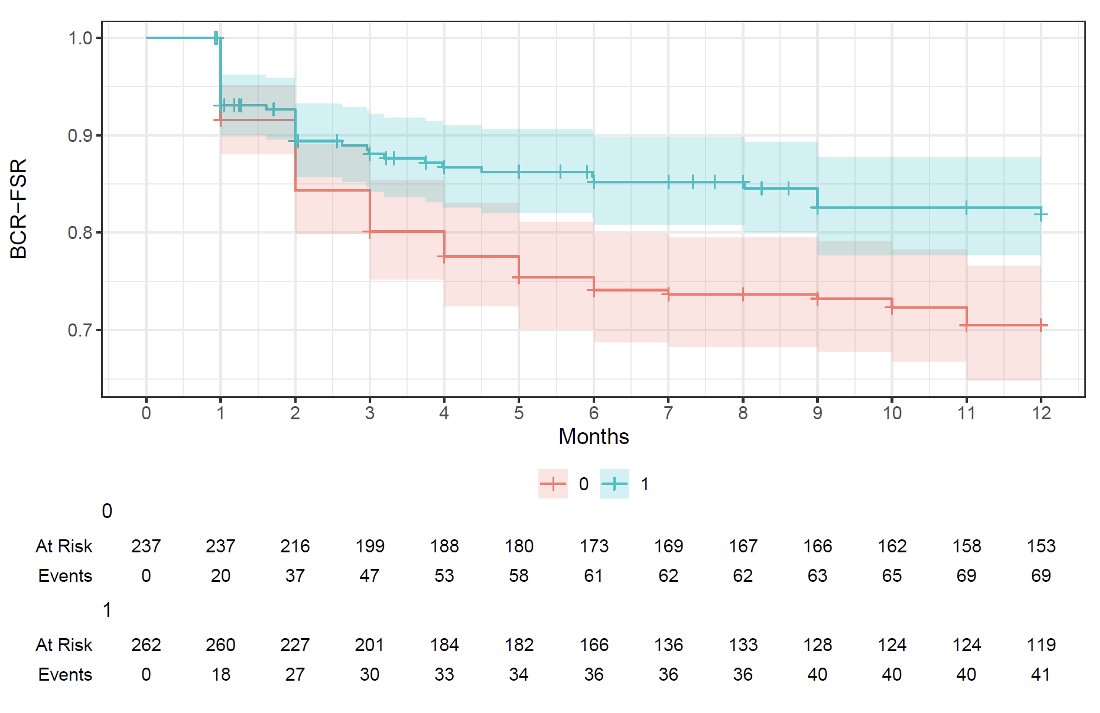
Dr. Viti concluded that men with very high-risk prostate cancer, defined by the STAMPEDE criteria and staged using PSMA-PET, demonstrated improved early oncological outcomes compared to those staged with conventional imaging. He argued that PSMA PET allows for the identification of very high-risk prostate cancer patients who may benefit from surgery.
Presented by: Alessandro Viti, MD, Resident Physician, Urology Resident, Università Vita-Salute San Raffaele, Milan, Italy
Written by: Rashid K. Sayyid, MD, MSc – Robotic Urologic Oncology Fellow at The University of Southern California, @rksayyid on Twitter during the 2025 American Urological Association (AUA) annual meeting held in Las Vegas, NV, Saturday, April 26 - Tuesday, April 29, 2025
Related content: Surgical Outcomes in High-Risk Prostate Cancer: PSMA-PET vs Conventional Imaging - Alessandro Viti
References: