

(UroToday.com) The American Urologic Association (AUA) 2025 Annual Meeting held in Las Vegas, NV between April 26th and 29th, 2025 was host to an advanced kidney cancer moderated poster session. Dr. Yoshie Mita presented a study evaluating the prognostic impact of the maximal evaluable lesion size in patients with metastatic renal cell carcinoma (mRCC) treated with combination nivolumab + ipilimumab.
Dr. Mita noted that there is evidence supporting a relationship between tumor volume and response to immune checkpoint inhibitor (ICI) therapy. The objective of this study was to evaluate the prognostic significance of the maximal evaluable lesion size (MLS) on the efficacy of nivolumab + ipilimumab in patients with mRCC.
This was a retrospective analysis of 99 mRCC patients treated with nivolumab + ipilimumab. Patients were stratified into larger MLS (≥ 35 mm) and smaller MLS (< 35 mm) groups, based on the median MLS. The objective response rate (ORR), progression-free survival (PFS), and overall survival (OS) were compared, and factors significantly predictive of PFS and OS were evaluated.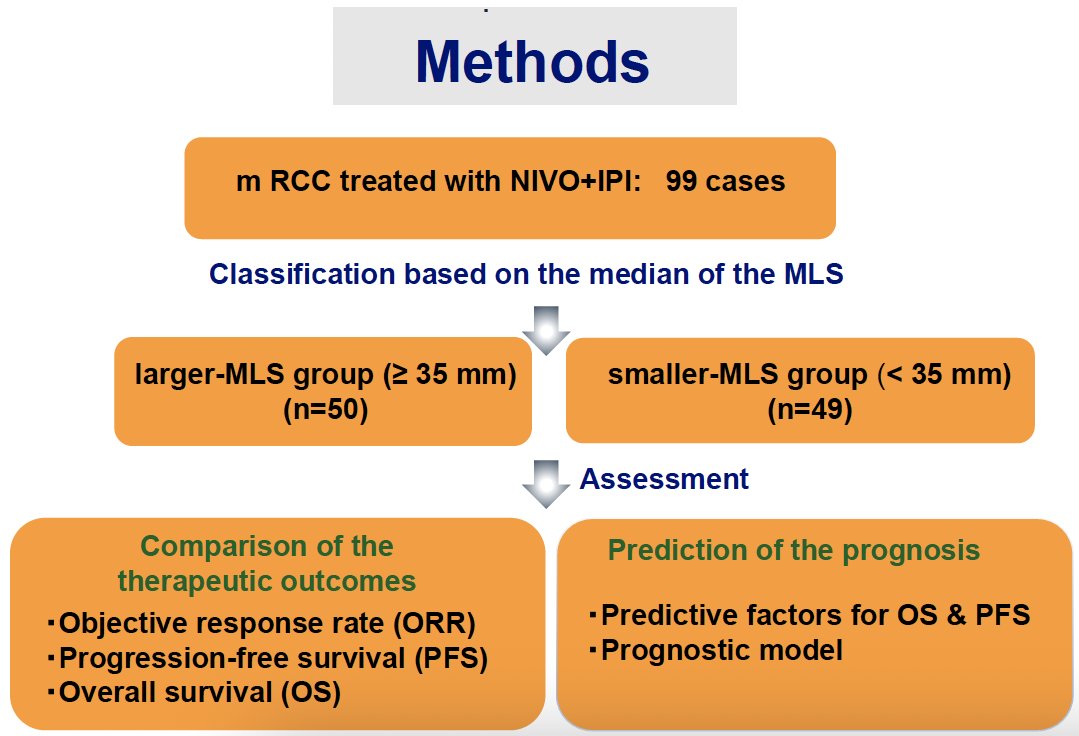
The median study follow-up was 29.5 months. In the MLS large group (50 patients), the number of patients who did not undergo cytoreductive nephrectomy, as well as the number of patients in whom the kidney, lymph node, and lung were identified as an organ of MLS origin, were significantly higher, compared to the MLS small one.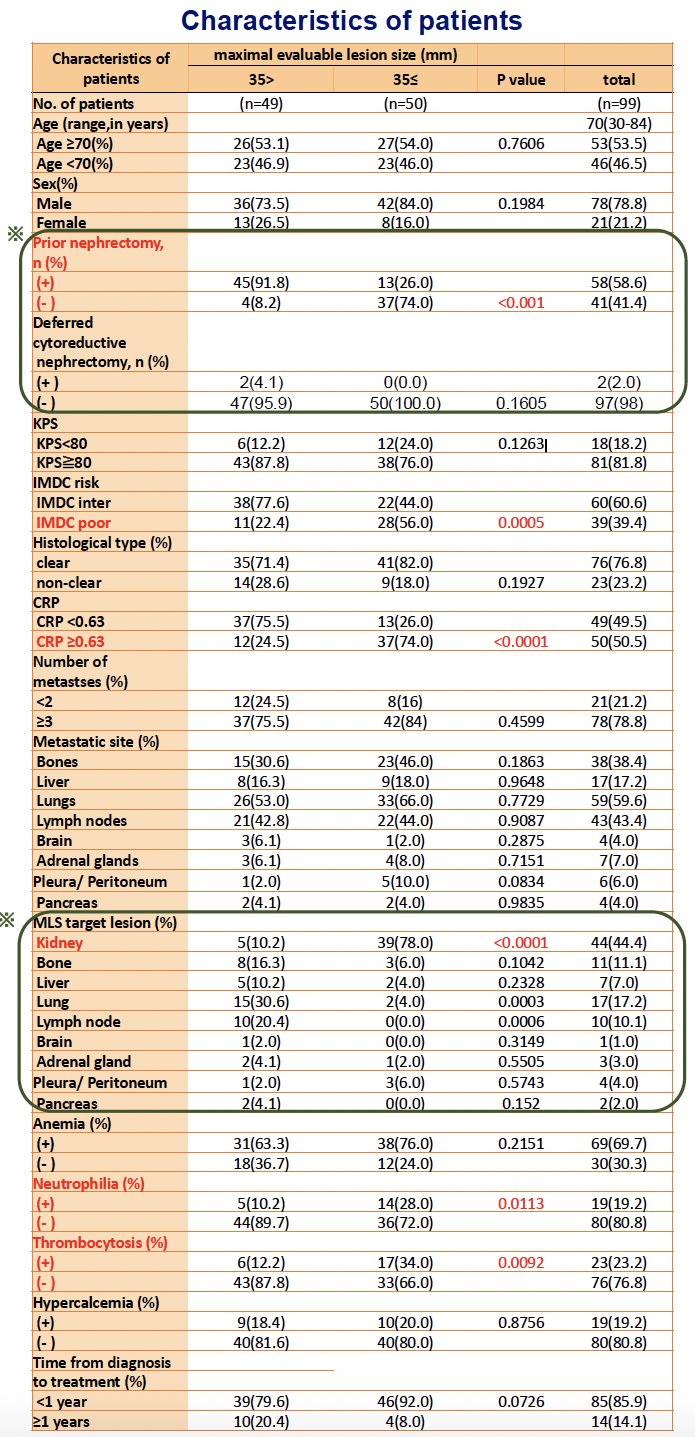
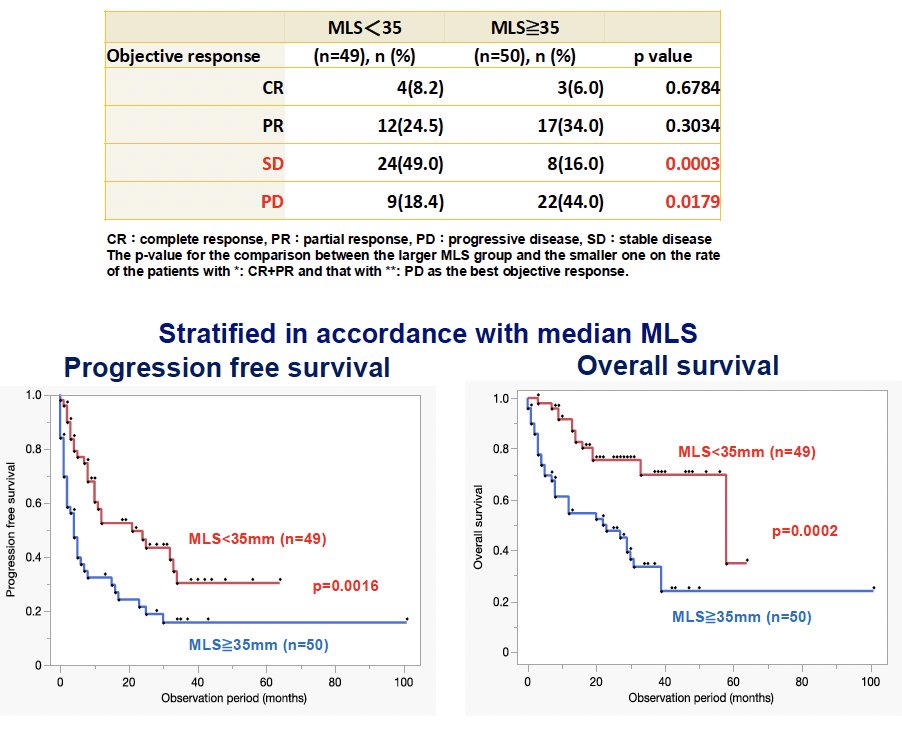
The ORR was 40% in the MLS large group and 32.7% in the MLS small group (p=0.43). However, progression-free and overall survivals were significantly worse in the MLS large group (p=0.0016 and p=0.0002, respectively).
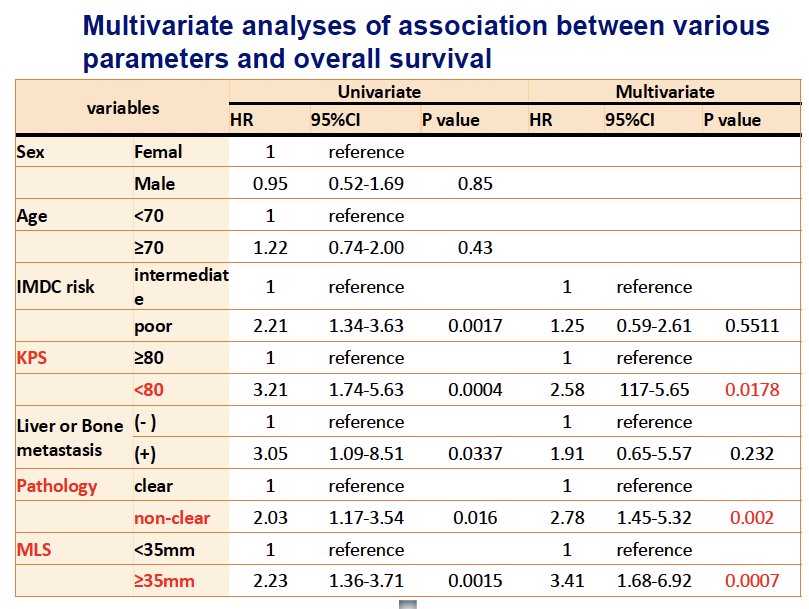
Multivariable analysis identified Karnofsky performance status (KPS) < 80%, non-clear cell histology, and larger MLS as independent predictors of worse PFS and OS.

A prognostic model integrating MLS, KPS, and histology stratified patients effectively, with ≥ 2 risk factors predicting significantly worse overall survival (p<0.0001).
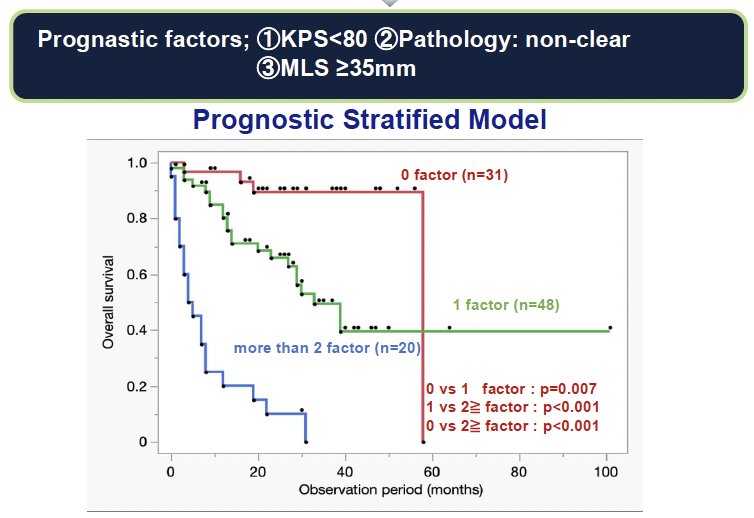
Dr. Mita concluded that the maximal evaluable lesion size is a key prognostic factor in mRCC patients treated with nivolumab + ipilimumab. A risk model incorporating the maximal evaluable lesion size, Karnofsky performance status, and histology can aid in patient risk stratification and treatment decision-making.
Presented by: Yoshie Mita, MD, Department of Urology, Kobe City Hospital Organization Kobe City Medical Center West Hospital, Kobe, Japan
Written by: Rashid K. Sayyid, MD, MSc – Robotic Urologic Oncology Fellow at The University of Southern California, @rksayyid on Twitter during the 2025 American Urological Association (AUA) annual meeting held in Las Vegas, NV, Saturday, April 26 - Tuesday, April 29, 2025