

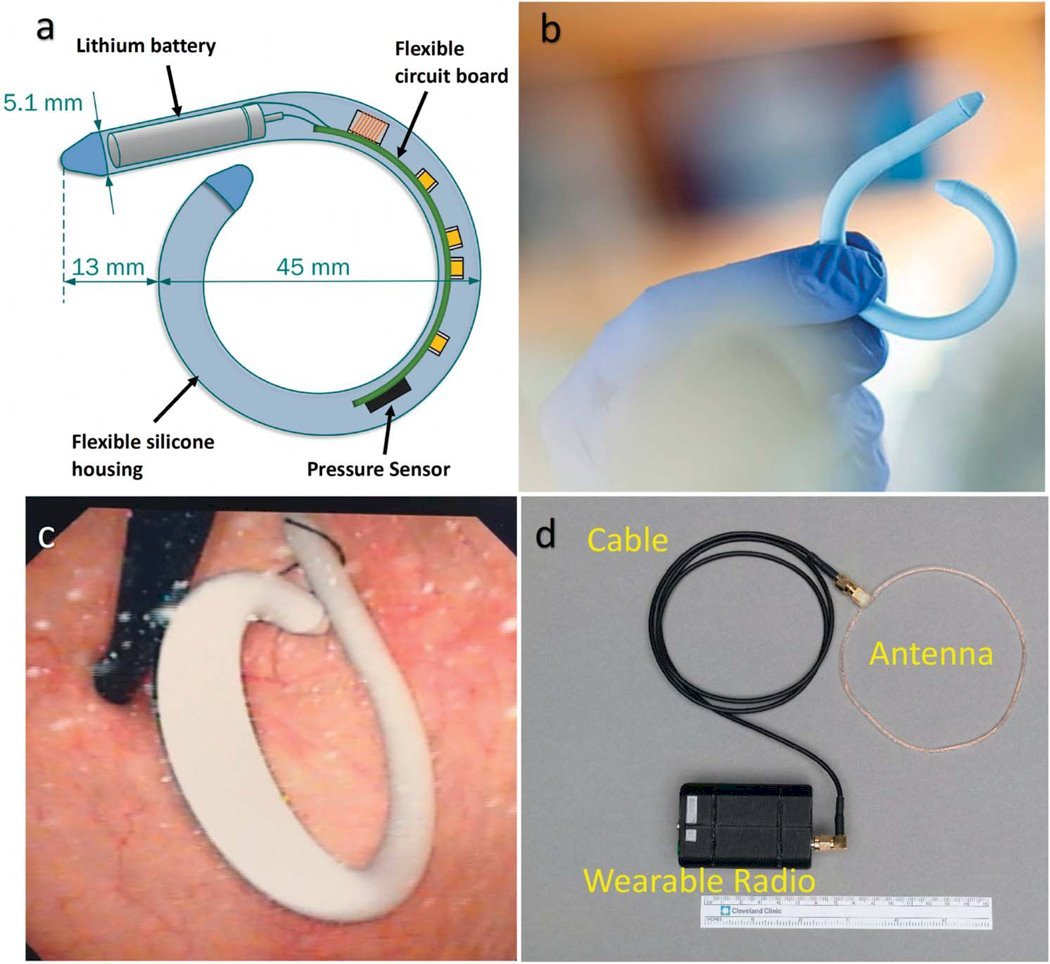
(UroToday.com) Dr. Madison Lyon presented a study on a novel wireless catheter-free ambulatory urodynamic device called UroMonitor (UM) in male patients (Figure 1). Multichannel urodynamics (UDS) is the conventional gold standard method of measuring vital lower urinary tract (LUT) functions and physiology; however, this methodology requires uncomfortable catheterization, an artificial environment from retrograde bladder filling, and a trained technologist to operate.
As such, UM was developed and introduced to improve upon these issues. The UM has been tested in female patients, but there is a lack of testing in male patients, which is why Dr. Lyon’s evaluation of the feasibility and accuracy of the UM in male patients is of great significance.
Figure 1 (below). A) A diagram of the UM and its components is detailed. B) An actual image of the UM and its relative size to a hand is shown. C) The UM is shown to be deployed in the bladder via cystoscopy visualization. D) A UM antenna and radio receiver used to collect transmitted data are depicted.
6 male patients with LUT symptoms were enrolled (2 excluded due to urethra stricture), in which baseline UDS and cystoscopy were performed, followed by placement of UM as visually confirmed through a cystoscope (Figure 2). A multichannel UDS was performed a second time and concurrently with the UM before a period of catheter-free ambulation. Patient discomfort was measured with a visual analogue pain scale.
Figure 2 (below). A) A 21F silicone tube indicated by the yellow arrow is placed in the bladder. B-C) UM is pushed through the silicone tube by the cystoscope. D) The UM is deployed in the bladder. E-F) Cystoscopy confirms an atraumatic urethra after UM deployment.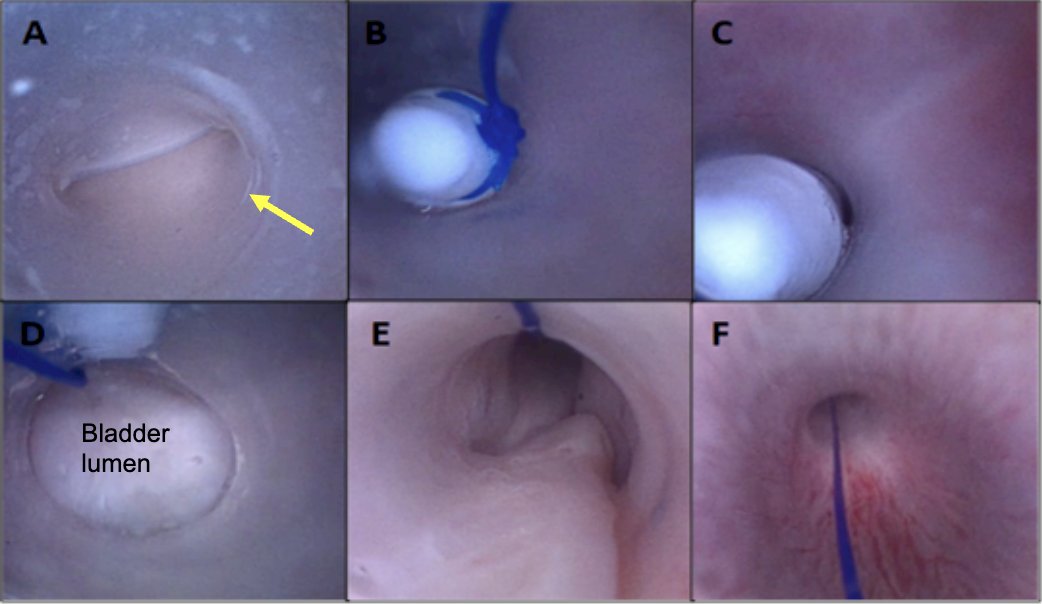
Table 1 below displays physiological UDS data collected with and without UM.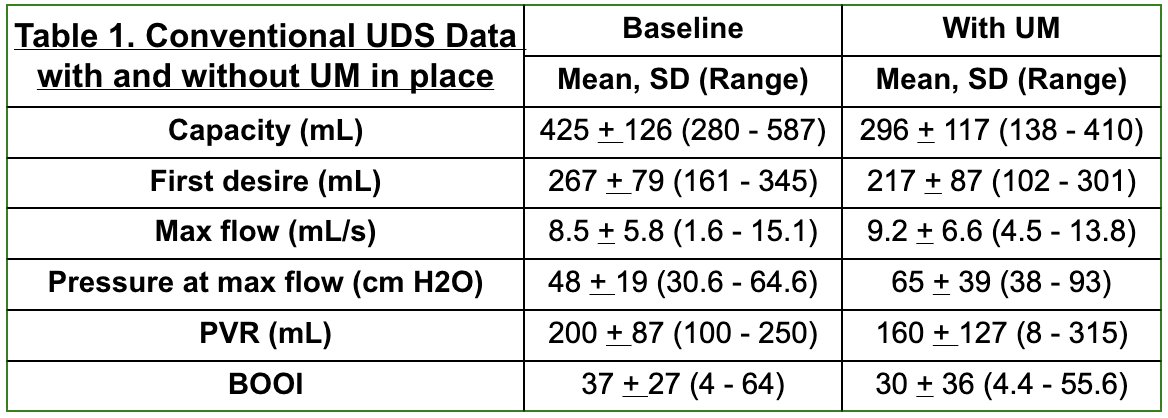
Table 2 below displays the mean patient pain scores at different time points.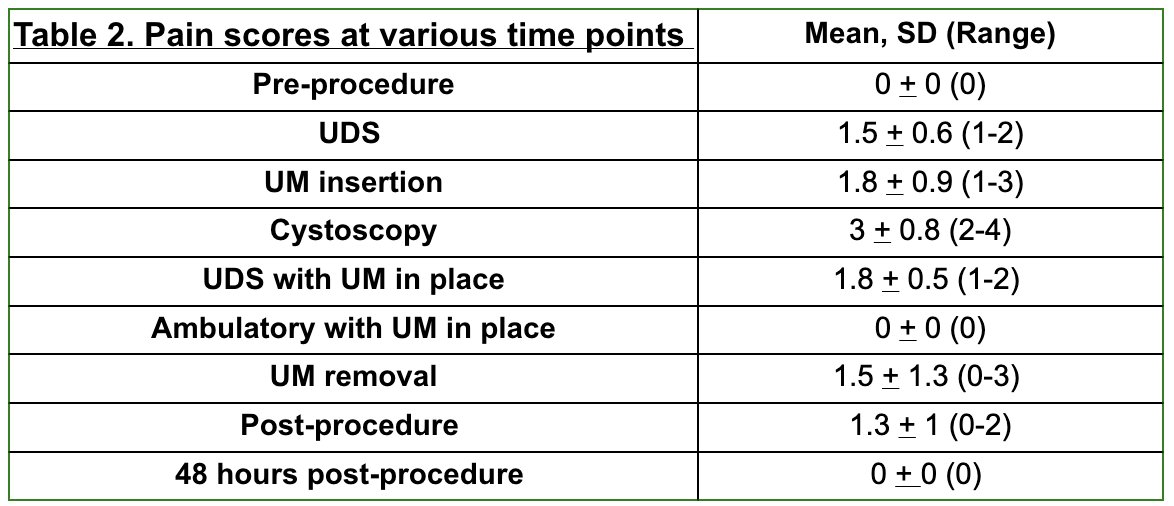
Dr. Lyon and her team found that multichannel UDS and UM had similar recordings, as demonstrated by the overlap in the data trace (Figure 3). Furthermore, the mean pain scores of UDS, UM insertion, and ambulation with UM in place were 1.5, 1.8, and 0, respectively, suggesting UM does not increase pain relative to multichannel UDS.
Figure 3 below illustrates the simultaneous recordings of the multichannel UDS and UM devices.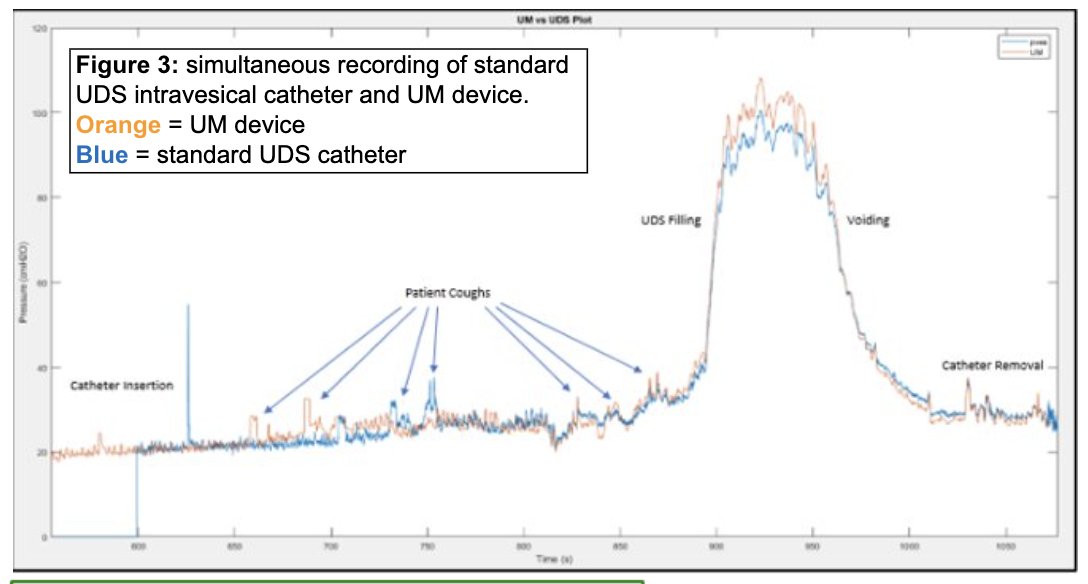
Dr. Lyon concludes that UM is a potentially feasible device that can be used to provide accurate urodynamic data with improved patient experience.
Presented by: Madison Lyon, MD, Cleveland Clinic, Cleveland, Ohio @Maddie_Lyon_MD on X during the 2025 American Urological Association (AUA) Annual Meeting, April 26 – April 29, 2025, Las Vegas, Nevada
Written by: Victor Pham, B.S., University of California, Irvine, @victorpham01 on X during the American Urological Association's 2025 Annual Meeting, between April 26 – 29, 2025, in Las Vegas, NV.
References:
- Frainey BT, Majerus SJA, Derisavifard S, Lewis KC, Williams AR, Balog BM, Butler RS, Goldman HB, Damaser MS. First in Human Subjects Testing of the UroMonitor: A Catheter-free Wireless Ambulatory Bladder Pressure Monitor. J Urol. 2023 Jul;210(1):186-195. doi: 10.1097/JU.0000000000003451. Epub 2023 Jun 9. PMID: 37293725; PMCID: PMC11675714.