

(UroToday.com) The American Urological Association's 2025 Annual Meeting, between April 26 – 29, 2025 in Las Vegas, Nevada, was host to the PD37: Bladder Cancer: Invasive III Session. Dr. Petros Grivas presented PD37-12: Avelumab first-line maintenance in advanced urothelial carcinoma: conditional survival and long-term safety in patients treated for ≥1 or ≥2 years in JAVELIN Bladder 100.
Dr. Grivas began his presentation by highlighting that the JAVELIN Bladder 100 trial demonstrated that avelumab maintenance therapy, initiated after first-line platinum-based chemotherapy, significantly prolonged overall survival (OS) and progression-free survival (PFS) compared to best supportive care (BSC) alone in patients with advanced urothelial carcinoma (UC) who had not experienced disease progression.
After a median follow-up of more than two years in the JAVELIN Bladder 100 trial, the median OS from the start of maintenance was 23.8 months with avelumab versus 15.0 months with best supportive care (BSC) alone (hazard ratio, 0.76; 95% CI, 0.63–0.91; two-sided P = 0.0036). Avelumab maintenance therapy was associated with an acceptable long-term safety profile, including a low rate of treatment-related adverse event. These findings supported the inclusion of avelumab maintenance as a recommended treatment option in updated international guidelines for patients with advanced UC who do not progress after first-line platinum-based chemotherapy.1,2
The JAVELIN Bladder 100 trial study design is shown below. Dr. Grivas reported at this presentation, the efficacy and safety outcomes from a post hoc analysis that assessed the probability of additional OS, PFS, and safety in patients treated with avelumab first-line maintenance + BSC for ≥1 or ≥2 years.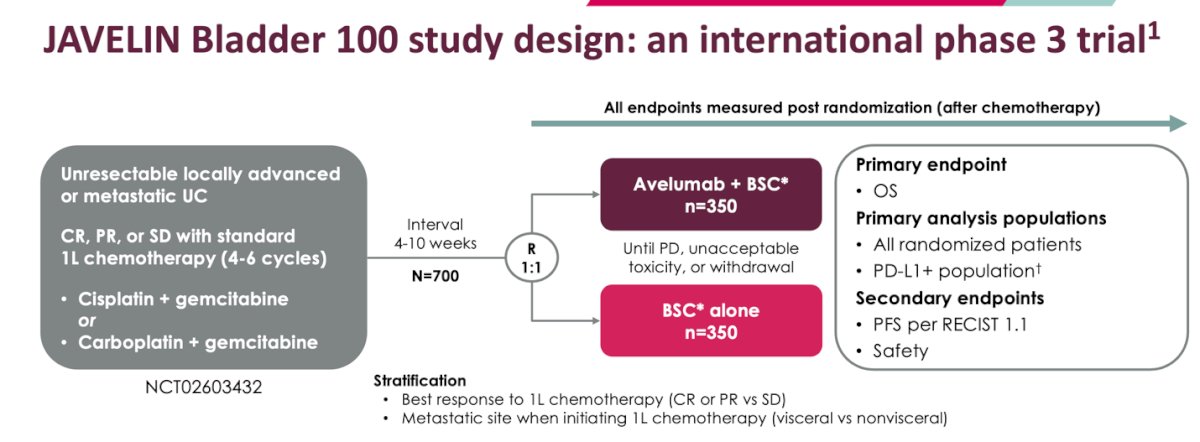
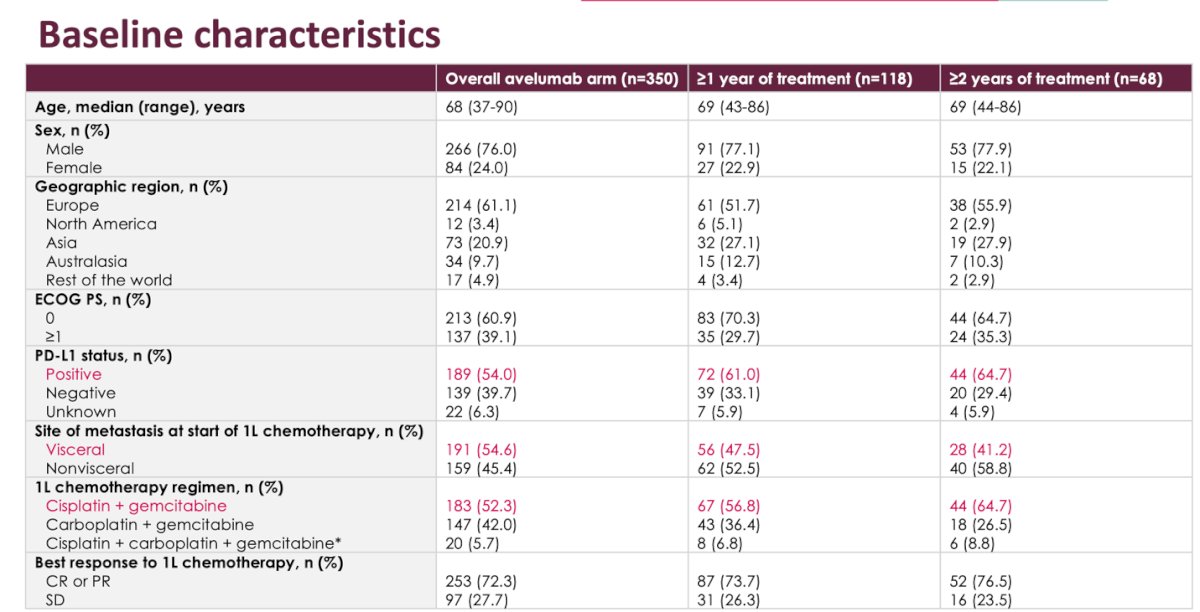
Baseline characteristics are summarized in the table below, comparing the overall avelumab plus best supportive care (BSC) group (n = 350) with patients who received ≥1 year (n = 118) and ≥2 years (n = 68) of treatment. Notably, patients in the ≥1-year and ≥2-year subgroups had higher rates of PD-L1–positive status, were more frequently treated with the cisplatin plus gemcitabine regimen and had lower rates of visceral metastases compared to the overall population.
The additional OS analysis in patients who received one or two years of avelumab treatment is presented in the survival curves below. Notably, patients who completed ≥2 years of avelumab had a 100% probability of surviving an additional 6 months, 96% at 1 year, and 90% at 1.5 years beyond the 2-year treatment mark.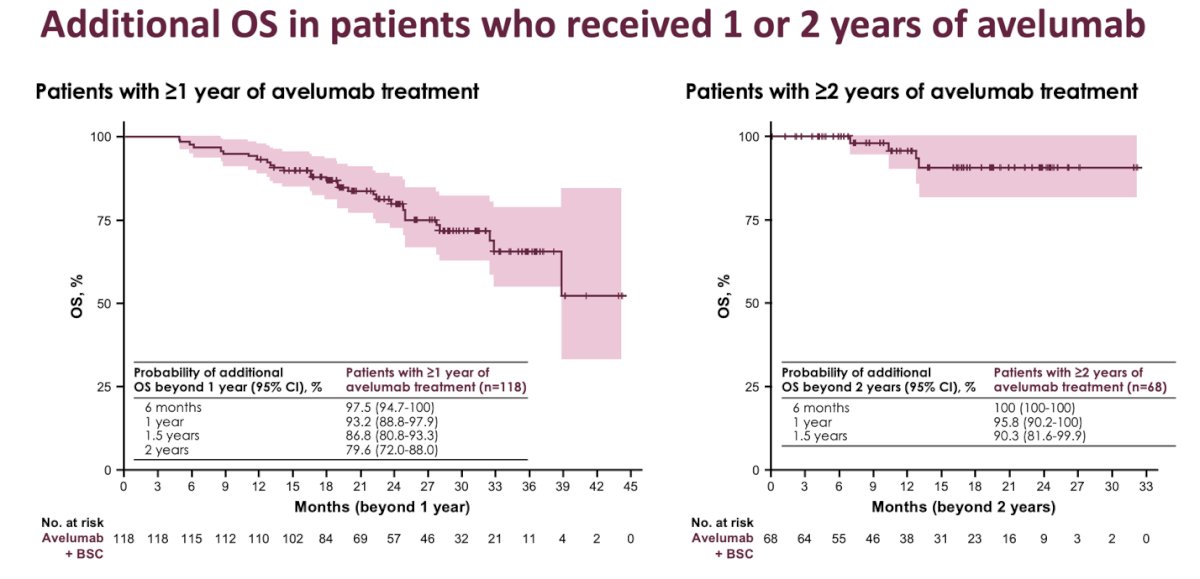
Moreover, the additional PFS analysis in patients who received one or two years of avelumab treatment is presented in the curves below. The group of patients who completed ≥2 years of avelumab had a 78% probability of PFS at 6 months, 67% at 1 year, beyond the 2-year treatment mark.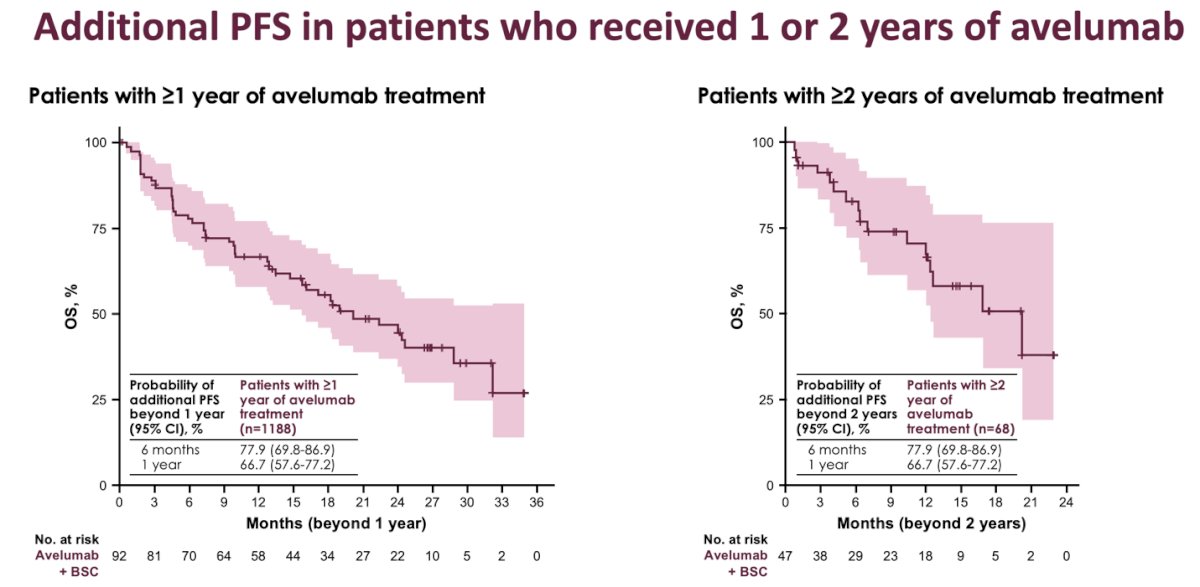
Dr. Grivas presented the safety data and highlighted that treatment-related adverse events (TRAEs), both of any grade and Grade ≥3, occurred less frequently after ≥1 year and ≥2 years of avelumab treatment, as shown in the table below.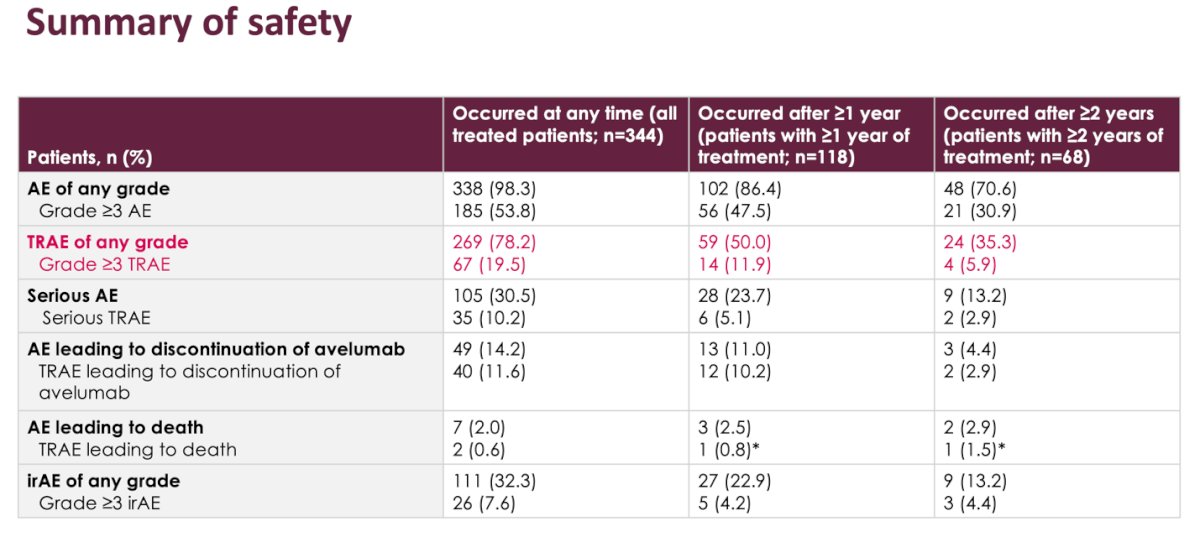
Below, there is a summary of most common TRAEs that occurred at any time or after ≥1 year and ≥2 years of avelumab treatment. Notably, the most common TRAE at any time window of treatment remains pruritus.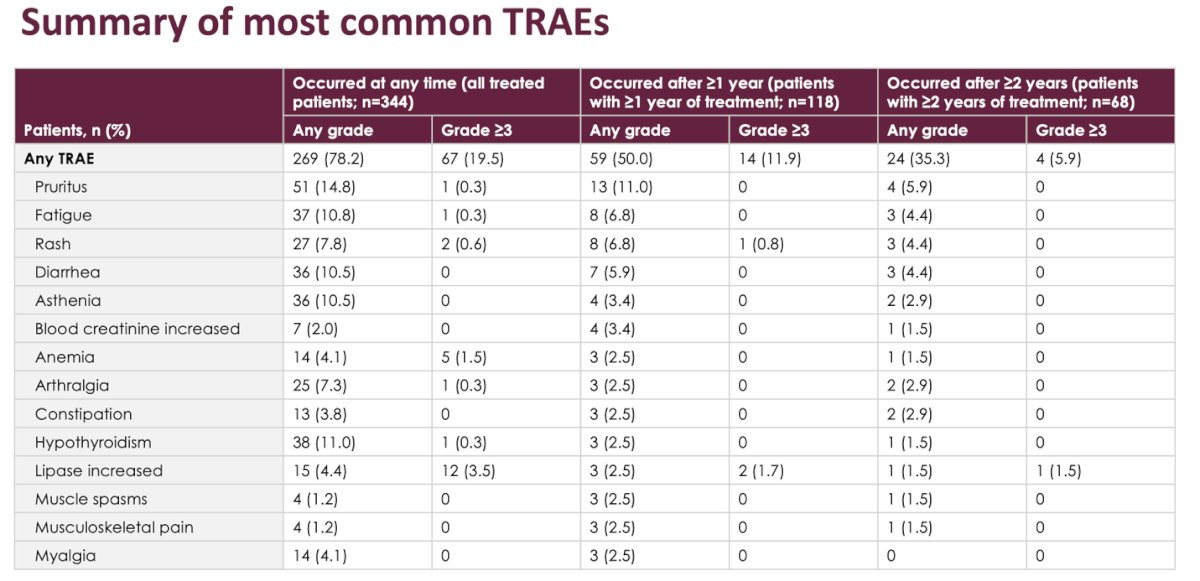
Dr. Grivas concluded his presentation with the following key messages:
- Conditional survival analyses from the JAVELIN Bladder 100 trial showed that patients with advanced urothelial carcinoma who received ≥1 year or ≥2 years of avelumab maintenance treatment (34.3% and 19.8% of treated patients, respectively) had a high probability of surviving an additional year or more.
- These patients also demonstrated a high probability of maintaining progression-free survival for an additional year after the 1-year or 2-year mark.
- The long-term safety and tolerability profile of avelumab maintenance therapy was reaffirmed, with no new safety concerns identified.
- These findings may help inform prognosis and provide further support for avelumab maintenance treatment in patients with advanced UC who have not progressed following first-line platinum-based chemotherapy.
Presented by: Petros Grivas, MD, PhD, Professor, Division of Hematology and Oncology, University of Washington, Seattle, WA, USA.
Written by: Julian Chavarriaga, MD – Urologic Oncologist at Cancer Treatment and Research Center (CTIC) via Society of Urologic Oncology (SUO) Fellow at The University of Toronto. @chavarriagaj on Twitter during the American Urological Association's 2025 Annual Meeting, between April 26 – 29, 2025, in Las Vegas, NV.
References- Powles T, Park SH, Voog E, et al. Avelumab maintenance therapy for advanced or metastatic urothelial carcinoma. N Engl J Med. 2020;383(13):1218–1230. doi:10.1056/NEJMoa2002788
- Powles T, Park SH, Sridhar SS, et al. Two-year follow-up of avelumab first-line maintenance treatment in advanced urothelial carcinoma: JAVELIN Bladder 100. J Clin Oncol. 2023;41(19):3486–3492. doi:10.1200/JCO.22.02626