

(UroToday.com) Laura Davis, presenting on behalf of Devika Nandwana, gave an informative discussion about the potential connection between plastics-processing waste release and bladder cancer (BC). There were no disclosures given. The presentation began by giving context and detailing how BC is the sixth most diagnosed malignancy in the United States and has been previously linked to chemical exposures. However, the role of microplastics and plastics-processing chemicals in bladder carcinogenesis has yet to be firmly established, and their objective was to examine the correlation.
In this study, Dr. Davis and the co-authors pulled BC incidence data from the Ohio Cancer Incidence Surveillance System (OCISS) from 2013 to 2021. They then identified chemicals used in plastics processing known or suspected to contribute to BC risk. For these chemicals, industrial waste release data were obtained from the EPA’s Risk-Screening Environmental Indicators (RSEI) Database. Interestingly, this database creates chemical-specific cancer exposure risk scores based on quantity released, carcinogenicity, persistence, human exposure, and environmental dispersion. 823 chemicals were reported, which were then divided into two categories: known bladder carcinogens and chemicals related to plastics processing.
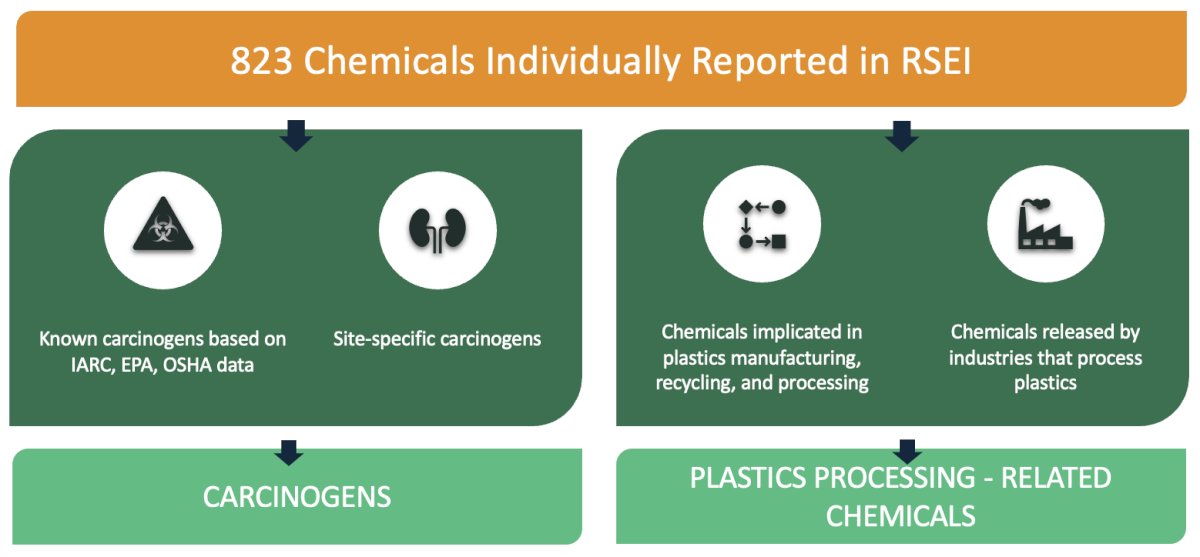
In terms of the study methods, multivariate regression was performed that controlled for known bladder carcinogens. Additionally, spatial lag and spatial error models were applied to capture potential influences for BC incidence rates and chemical RSEI scores across neighboring areas in the state of Ohio. The authors further analyzed the clusters via Bivariate Moran’s I for spatial correlation between waste release and cancer incidence, Mantel test to assess whether zip codes with similar incidence also shared similar exposures, and LISA (Local Indicators of Spatial Association) to identify spatial clusters and outliers that she equated to hotspots.
Moving on, she displayed two maps. One was a simple map of BC incidence in Ohio, and a second one entailed cluster analysis of environmental exposures in water data that had expectedly higher amounts in the more urbanized parts of the state, such as Cleveland, Columbus, and Cincinnati.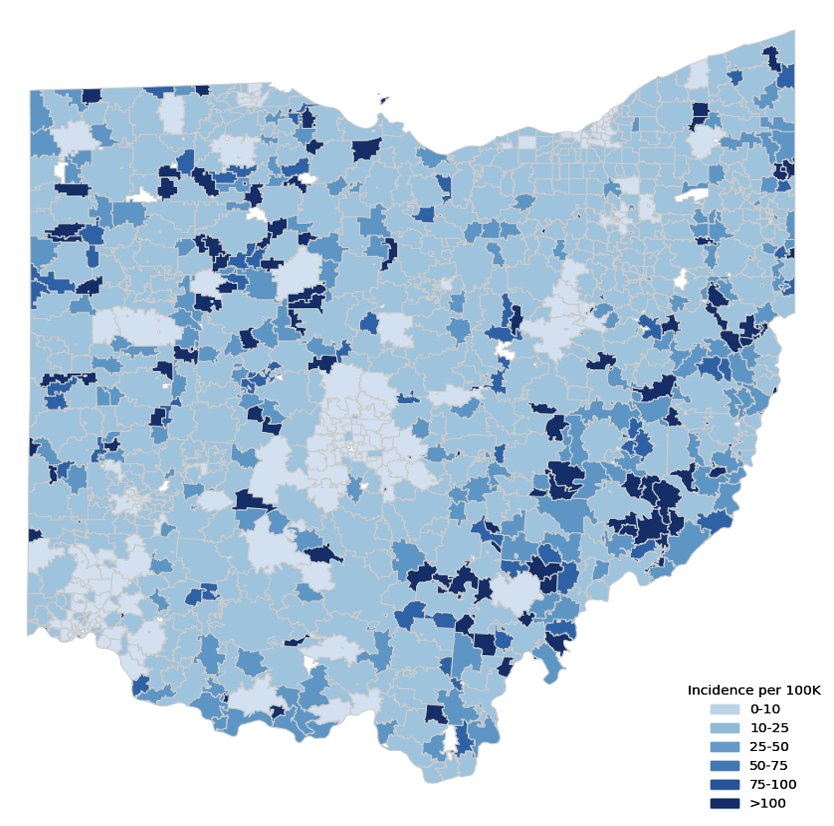
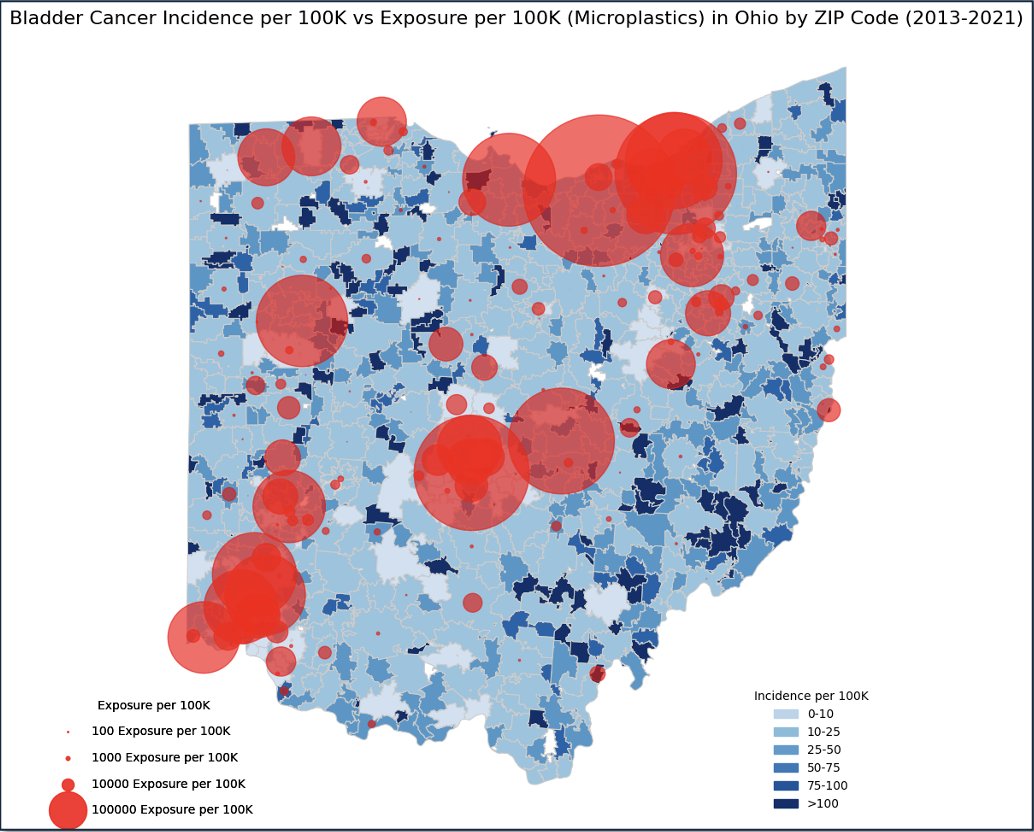
Subsequently, she proceeded to discuss the statistical aspects of the results. While BC incidence showed strong spatial autocorrelation, overall chemical exposure was not significantly autocorrelated. Through the Bivariate Moran’s I, a positive special relationship between overall exposure and cancer incidence was found, which was confirmed by the Mantel test. Then, she discussed the findings of the LISA test, which showed areas of high incidence and high exposure as potential environmental hotspots, as well as areas with low incidence and low exposure. These data from water microplastics support the idea of a potential linkage between incidence and environmental exposure. This statistical process was repeated for air microplastics, which had similar results.
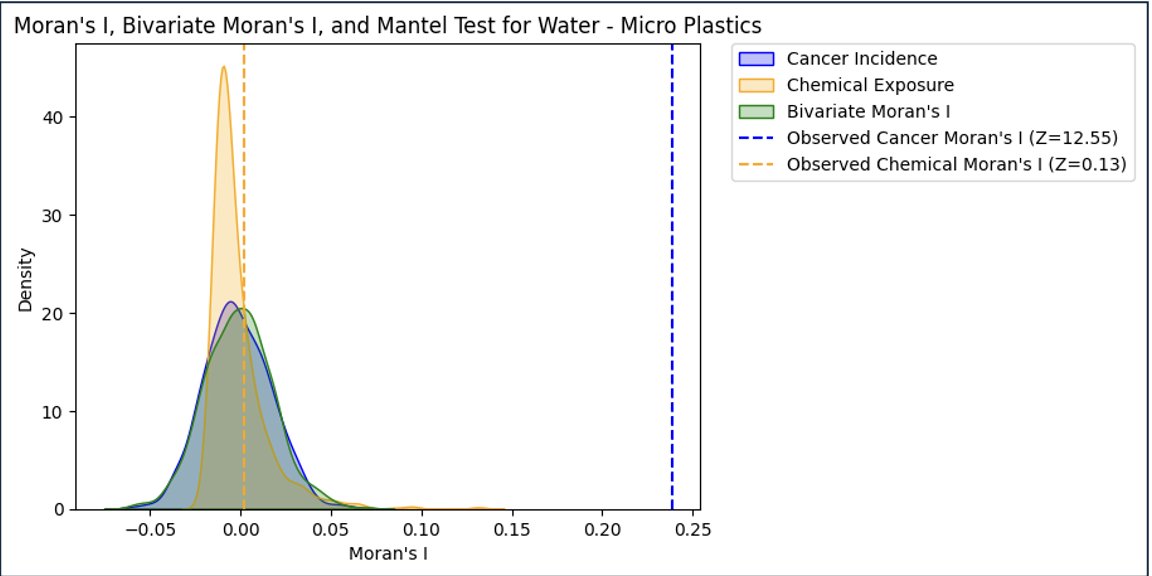
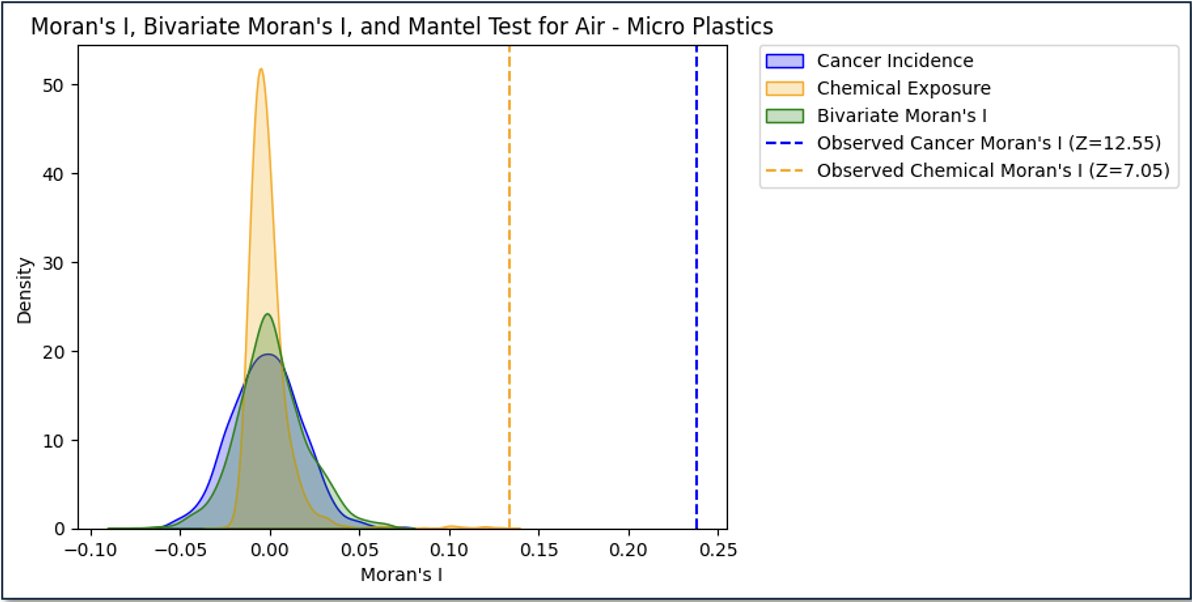
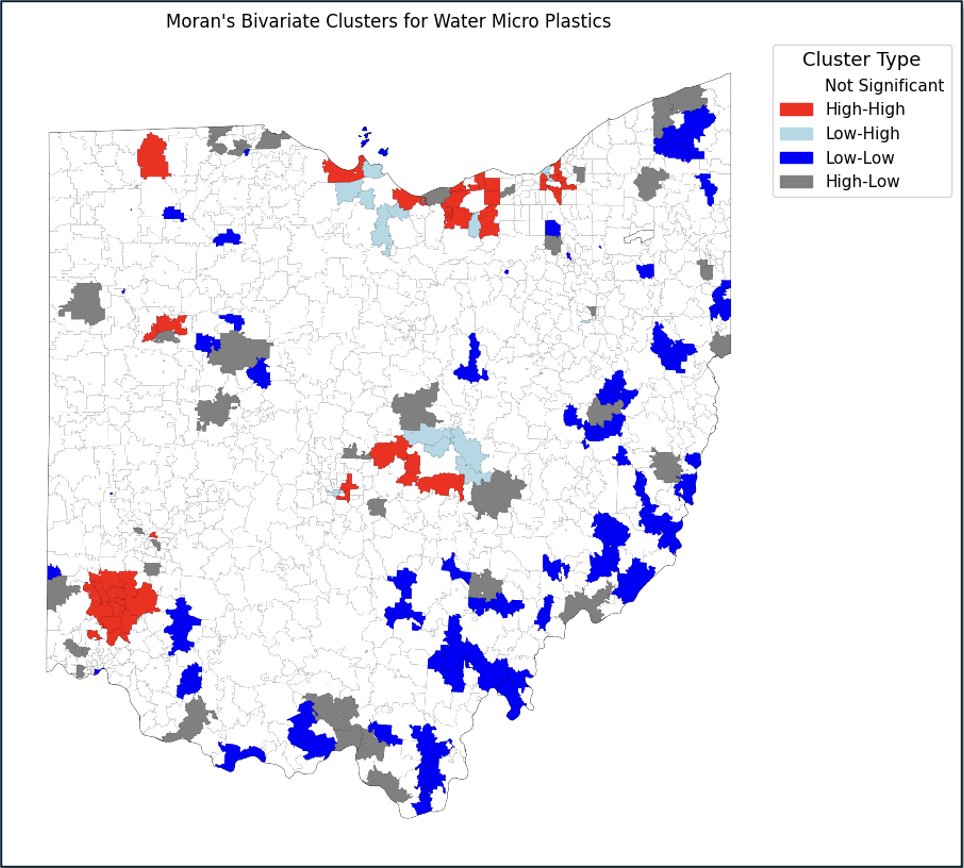

These findings revealed a significant spatial clustering of BC cases across Ohio. Higher BC incidence rates were observed in areas with elevated Chemical RSEI scores of plastic processing waste. Additionally, the spatial alignment of cancer clusters with areas of elevated chemical release raises important considerations regarding environmental justice and community health disparities. Dr. Davis concluded her presentation by pointing out how further research is necessary to assess the role of microplastics as a novel risk factor for BC.
Presented by: Laura Elizabeth Davis, MD, Department of Urology, Case Western University Hospitals, Cleveland, OH, USA.
Co-Authors: Devika Nandwana, Nima Almassi, Christopher Weight, Adam Calaway, Steven Campbell, Rececca Campbell, Betty Wang, Mohamed Eltemamy, Stephen Rhodes, Mohit Sindhani, Samuel Haywood, Zeyad Schwen, Laura Bukavina.
Written by: Yezan Hadidi, BS, Department of Urology, University of California, Irvine. @yezanhadidi on X during the American Urological Association's 2025 Annual Meeting, between April 26 – 29, 2025, in Las Vegas, NV.