

(UroToday.com) The American Urologic Association (AUA) 2025 Annual Meeting held in Las Vegas, NV between April 26th and 29th, 2025 was host to a bladder cancer clinical trials in progress session. Dr. Roger Li presented MoonRISe, a phase III study of TAR-210, an intravesical erdafitinib releasing system, versus intravesical chemotherapy in patients with FGFR-altered intermediate-risk (IR) non–muscle-invasive bladder cancer (NMIBC).
Despite available treatment options for patients with IR NMIBC, recurrence rates remain high, underscoring the need for novel effective therapies. FGFR alterations are prevalent in ~75% of IR NMIBC and may function as oncogenic drivers. Erdafitinib is a selective pan-FGFR tyrosine kinase inhibitor. Oral erdafitinib is approved in the United States to treat adults with locally advanced or metastatic urothelial carcinoma with susceptible FGFR3 alterations following progression on or after ≥1 prior systemic treatment,1 with additional approvals worldwide. Oral erdafitinib has demonstrated anti-tumor activity in IR and high-risk (HR) NMIBC populations, limited by challenging systemic toxicities.2-4
TAR-210 is a novel intravesical erdafitinib-releasing system designed for sustained local delivery of therapy over 3 months in the bladder and is inserted using a urinary placement catheter in a brief in-office procedure.
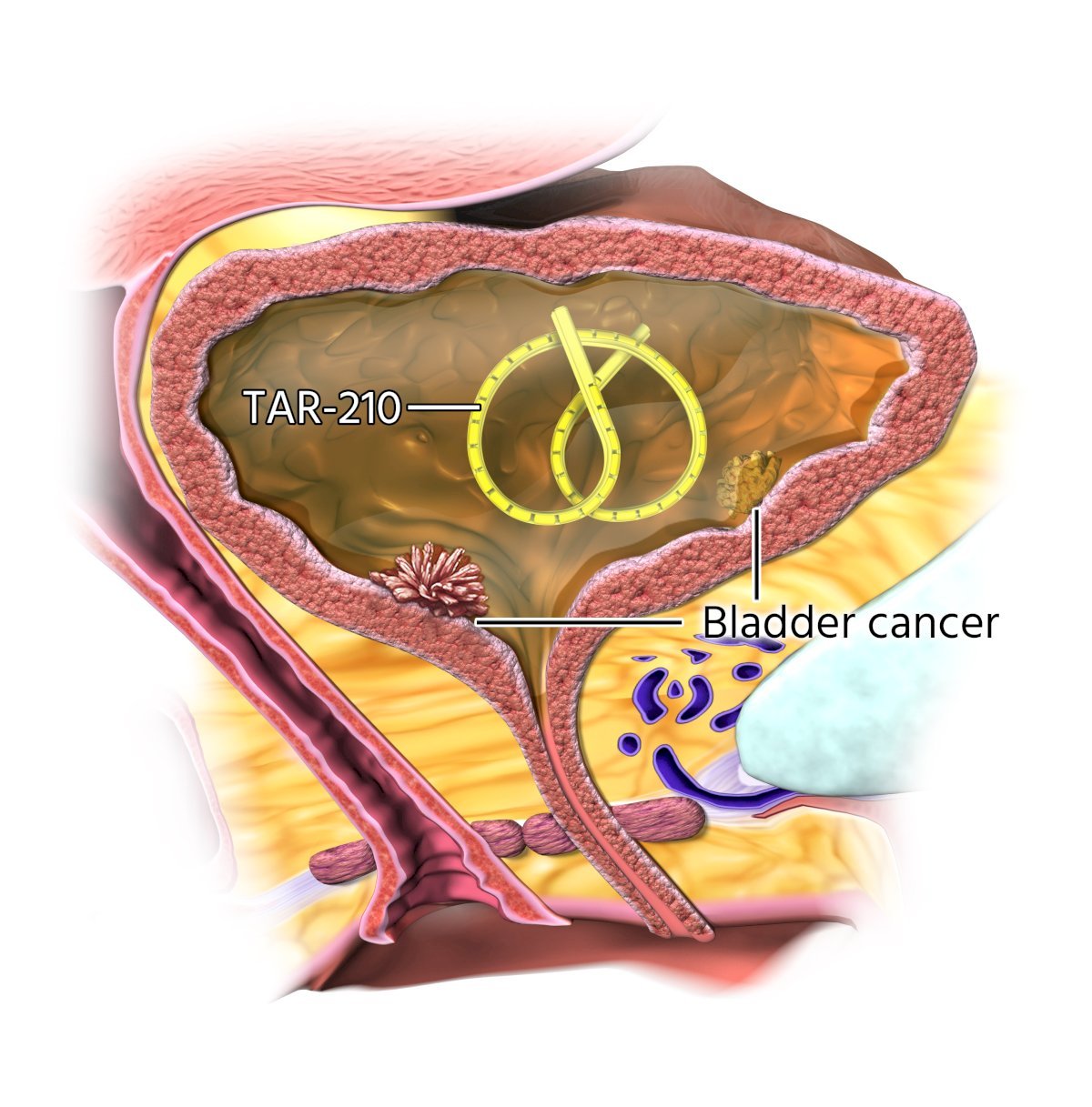
In a first-in-human study, TAR-210 was well-tolerated, with encouraging clinical activity in FGFR-altered IR NMIBC. The 12-week complete response rate was 90%, with a 9-month duration of response of 89% (95% CI: 43–98%).5,6
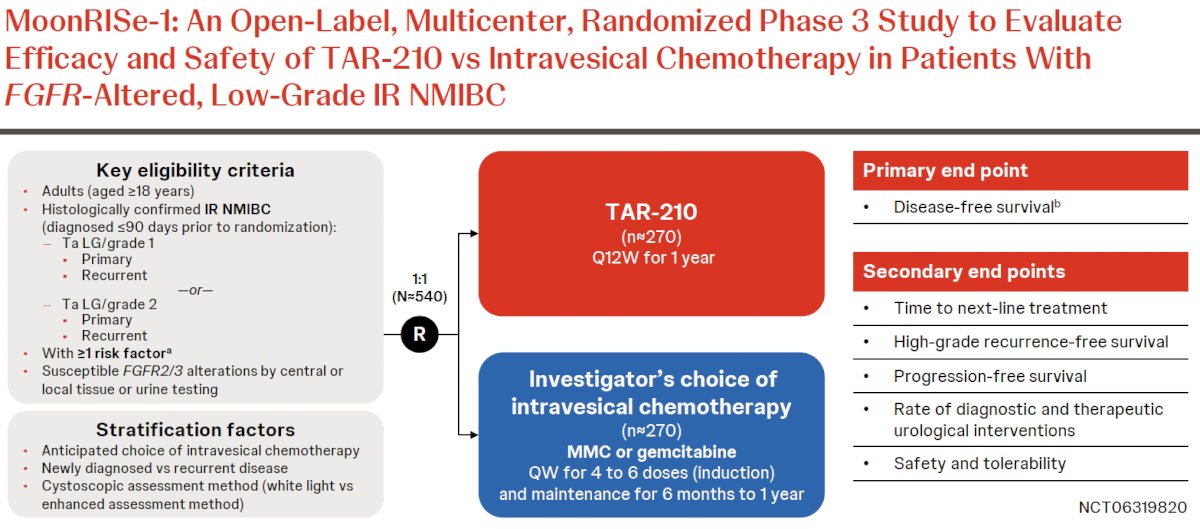
MoonRISe-1 is an open-label, multicenter, randomized phase III trial designed to evaluate the efficacy and safety of TAR-210 versus intravesical chemotherapy in patients with histologically confirmed, FGFR-altered, low-grade IR NMIBC (n=540). Evaluation of FGFR2/3 alteration status is performed using central or local tissue or urine testing.
The study design is illustrated below. Consenting, eligible patients will undergo 1:1 randomization to:
- TAR-210 every 12 weeks for 1 year
- Investigator’s choice of intravesical chemotherapy (mitomycin or gemcitabine) every week for 4–6 doses (induction), followed by maintenance for 6 months to 1 year.
The primary endpoint is disease-free survival, with secondary endpoints of:
- Time to next-line treatment
- High-grade recurrence-free survival
- Progression-free survival
- Rate of diagnostic and therapeutic urological interventions
- Safety and tolerability
All visible papillary disease must be fully resected prior to randomization. Assessments of recurrence or progression include urine cytology, cystoscopy, for-cause TURBT or biopsy of bladder lesions, ultrasound, and urography. The follow-up phase for patients meeting the primary end point is up to 5 years
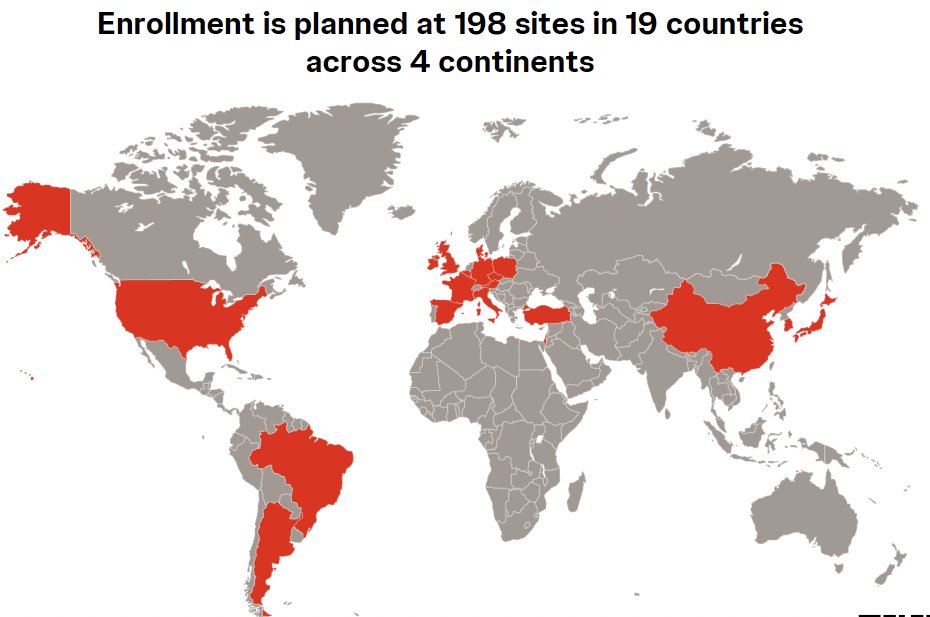
The MoonRISe-1 study opened for enrollment on April 10, 2024. The first patient was randomized on July 8, 2024. Recruitment is planned at 198 sites and is ongoing.
Presented by: Roger Li, MD, Assistant Professor of Genitourinary Oncology, Moffit Cancer Center, Tampa, FL
Written by: Rashid K. Sayyid, MD, MSc – Robotic Urologic Oncology Fellow at The University of Southern California, @rksayyid on Twitter during the 2025 American Urological Association (AUA) annual meeting held in Las Vegas, NV, Saturday, April 26 - Tuesday, April 29, 2025
Related content: MoonRISe-1 Trial: Evaluating TAR-210 for FGFR-Altered Intermediate-Risk NMIBC - Roger Li
- U.S. Food and Drug Administration. FDA approves erdafitinib for locally advanced or metastatic urothelial carcinoma. FDA. 2019. Available at: https://www.fda.gov/drugs/resources-information-approved-drugs/fda-approves-erdafitinib-locally-advanced-or-metastatic-urothelial-carcinoma. Accessed April 28, 2025.
- Daneshmand S, et al. Outcomes with erdafitinib in patients with metastatic urothelial carcinoma and FGFR alterations: results from clinical practice. J Clin Oncol. 2023;41(suppl 6):504.
- Catto JWF, et al. Real-world outcomes in FGFR-altered metastatic urothelial carcinoma treated with FGFR inhibitors. J Clin Oncol. 2023;41(suppl 6):503.
- Catto JWF, et al. Treatment patterns and outcomes in patients with FGFR-altered metastatic urothelial carcinoma: a multicenter observational study. Ann Oncol. 2024;35:98–106.
- Vilaseca A, et al. Real-world outcomes of erdafitinib in metastatic urothelial carcinoma: results from a multicenter retrospective study. Ann Oncol. 2023;34:S1343.
-
Vilaseca A, et al. Real-world use of erdafitinib in patients with metastatic urothelial carcinoma: insights from clinical practice. J Urol. 2024;211(5S):e987-8.