

(UroToday.com) The American Urological Association (AUA) 2025 Annual Meeting, held in Las Vegas, NV, between April 26th and 29th, 2025, was host to a non-invasive bladder cancer interactive poster session. Dr. Max Kates presented the Orion-BC study, a phase III, single-arm study evaluating the efficacy and safety of intravesical paclitaxel-hyaluronic acid conjugate in patients with BCG-unresponsive CIS +/- papillary disease of the bladder.
Carcinoma in situ (CIS) of the bladder is recognized as a high-grade precursor to invasive cancer. Intravesical BCG is the first-line therapy for CIS; however, over 50% of patients experience recurrence. Radical cystectomy is recommended for patients with BCG-unresponsive CIS, yet many patients prefer bladder-preserving alternatives.
Although several new drugs have been recently approved by the FDA, each of these drugs have modest efficacy, highlighting a still unmet medical need. In this context, Fidia Pharmaceuticals is developing a novel water-soluble conjugate of hyaluronic acid (HA) and paclitaxel (Oncofid-P-B) for intravesical administration.
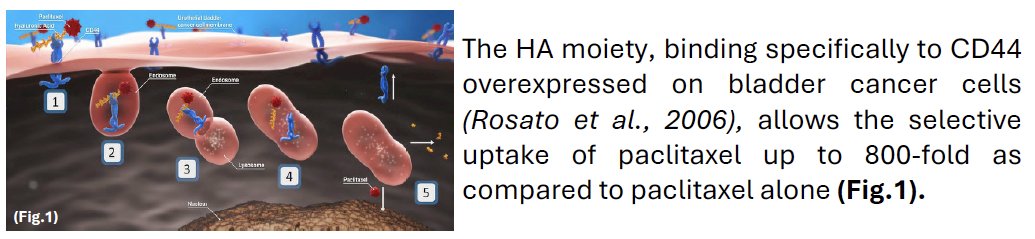
In a phase I dose escalation trial, 75% (15/20) patients experienced a complete response (CR) at the end of induction (3 months), and 40% (8/20) at the end of maintenance (15 months) (Hurle et al. 2021). Oncofid-P-B was shown to be safe, with more than 1,970 instillations performed, only 1 drug-related serious adverse event (SAE) registered, and with no study withdrawals.
Thus, the Orion-BC phase III study aims to confirm the antitumor activity, safety, and tolerability of Oncofid-P-B in BCG-unresponsive patients with histologically and cytologically confirmed CIS +/- Ta-T1 and who are unwilling or unfit to undergo a radical cystectomy (NCT05024773).
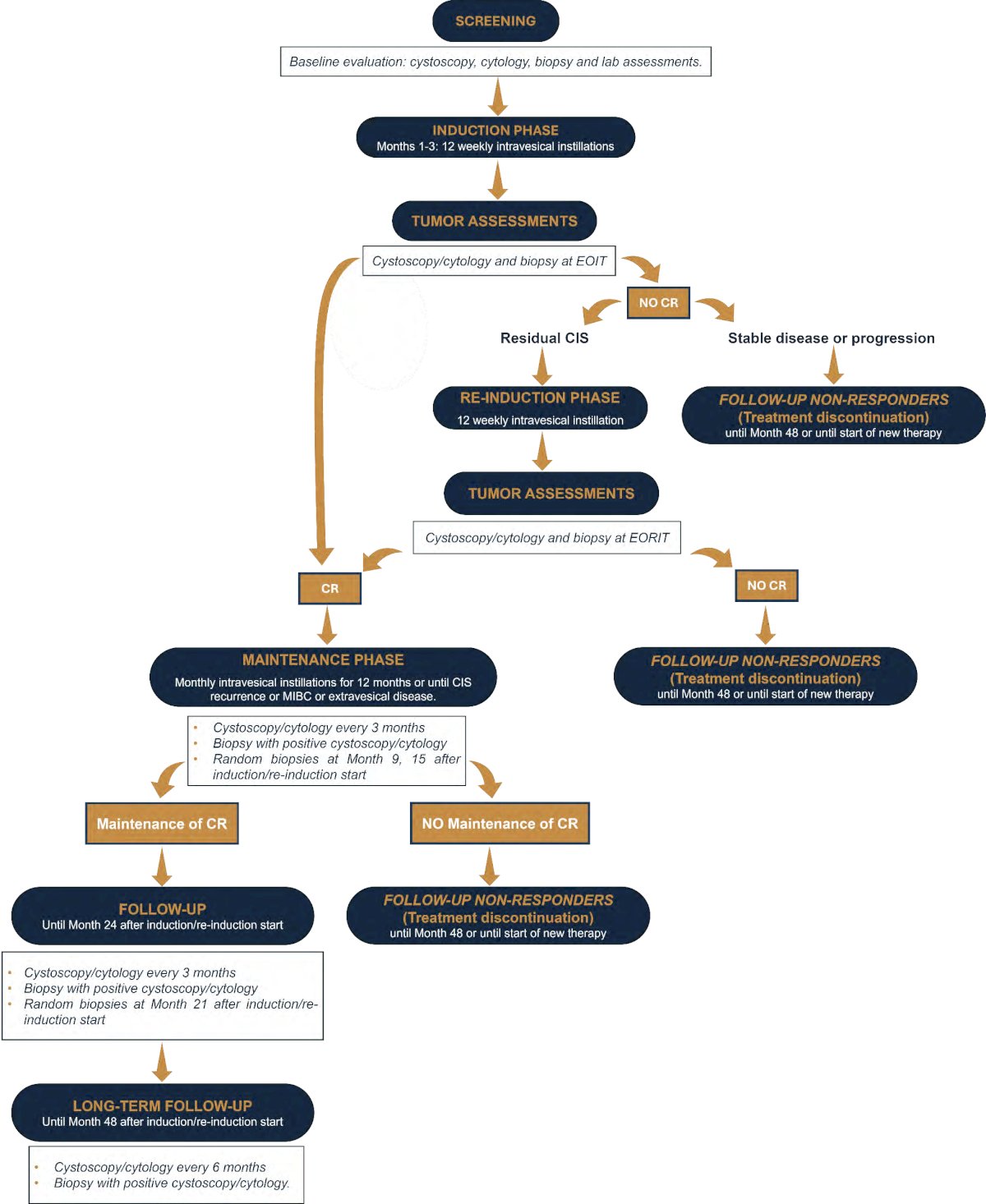
Patients initially receive 12 weekly intravesical instillations of the drug (600 mg; induction phase). Patients with residual CIS at the end of induction are eligible to enter a re-induction course of therapy (reinduction phase). Patients with stable disease by principal investigator assessment are not eligible for re-induction therapy. Patients who achieve a CR at the end of the induction/reinduction, enter the maintenance phase and receive 12 monthly intravesical instillations of Oncofid-P-B (maintenance phase).
Tumor response is evaluated by cystoscopy and cytology at the end of the induction/re-induction, every 3 months for up to 24 months during the maintenance/follow-up, and every 6 months for an additional two years (long-term follow-up). Biopsies are performed at the end of the induction/re-induction and in case of positive cystoscopy/cytology during treatment and follow-up. Random biopsies are conducted at 9, 15, and 21 months in responding patients.
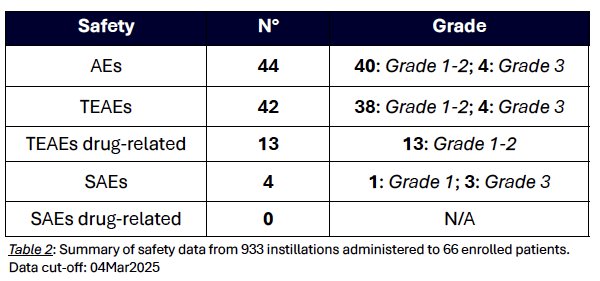
A total of 933 instillations of the drug have been administered to 66 enrolled patients. Among these, 42 treatment-emergent adverse events (TEAEs) have been reported, 13 of which were drug-related, all classified as Grade 1-2 in severity. Only 4 serious adverse events (SAEs) occurred in 4 patients, none of which were drug-related (Tab. 2). Overall, these findings confirm the excellent safety profile observed in previous clinical trials.
Presented by: Max Kates, MD, Associate Professor, Department of Urology, Johns Hopkins University, Baltimore, MD
Written by: Rashid K. Sayyid, MD, MSc – Robotic Urologic Oncology Fellow at The University of Southern California, @rksayyid on Twitter during the 2025 American Urological Association (AUA) annual meeting held in Las Vegas, NV, Saturday, April 26 - Tuesday, April 29, 2025