

(UroToday.com) The 2024 American Urological Association (AUA) Annual Meeting held in San Antonio, TX between May 3rd and 6th, 2024 was host to a prostate cancer staging podium session. Dr. Michael Leapman presented the results of a study evaluating temporal and regional patterns of prostate cancer positron emission tomography imaging among commercial insurance beneficiaries in the United States.
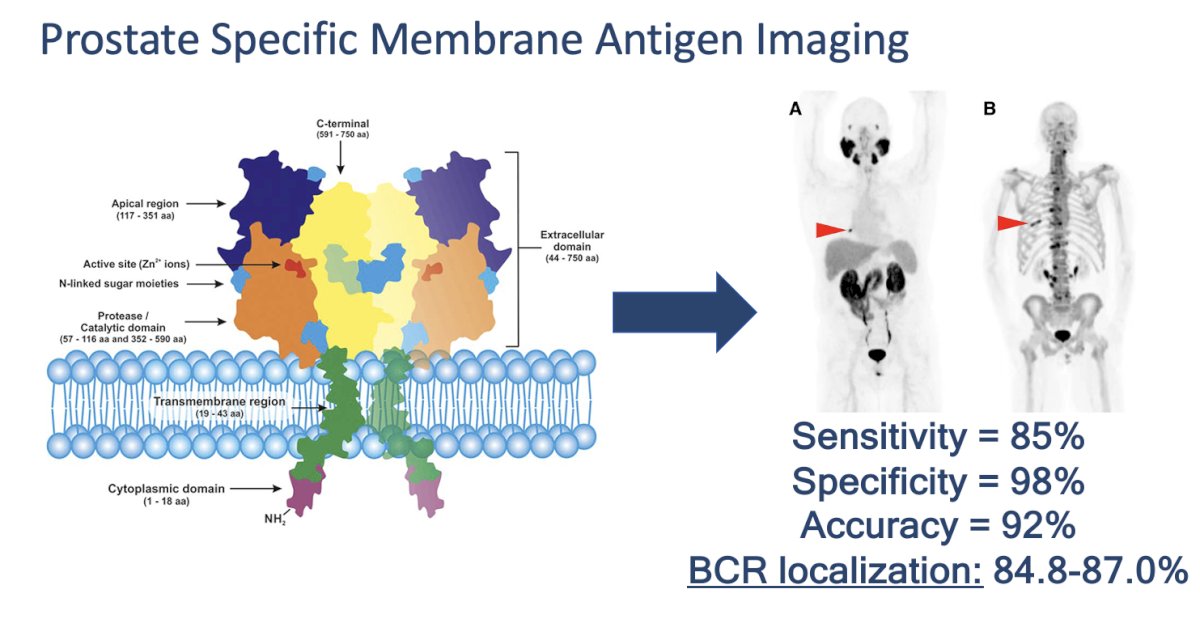
PSMA is a transmembrane protein expressed by the epithelial cells lining the proximal renal tubules, salivary glands, small bowel, as well as prostate. Expression of this transmembrane protein is upregulated in prostate cancer cells by up to 1000-fold. The PSMA gene is located on the short arm of chromosome 11 in a region that is not commonly deleted in prostate cancer, thus making it highly prevalent in all forms of prostate cancer, including some castrate-resistant forms. Importantly, the relatively poor expression of PSMA in other organs allows for enhanced targeted imaging in prostate cancer patients.2 Compared to conventional imaging, PSMA-PET/CT demonstrates superior performance characteristics in the biochemically recurrent setting:3
- Sensitivity: 85%
- Specificity: 98%
- Accuracy: 92%
- Biochemical recurrence localization: 85–87%
Illustrated below is the timeline of FDA approvals of molecular imaging agents for prostate cancer:
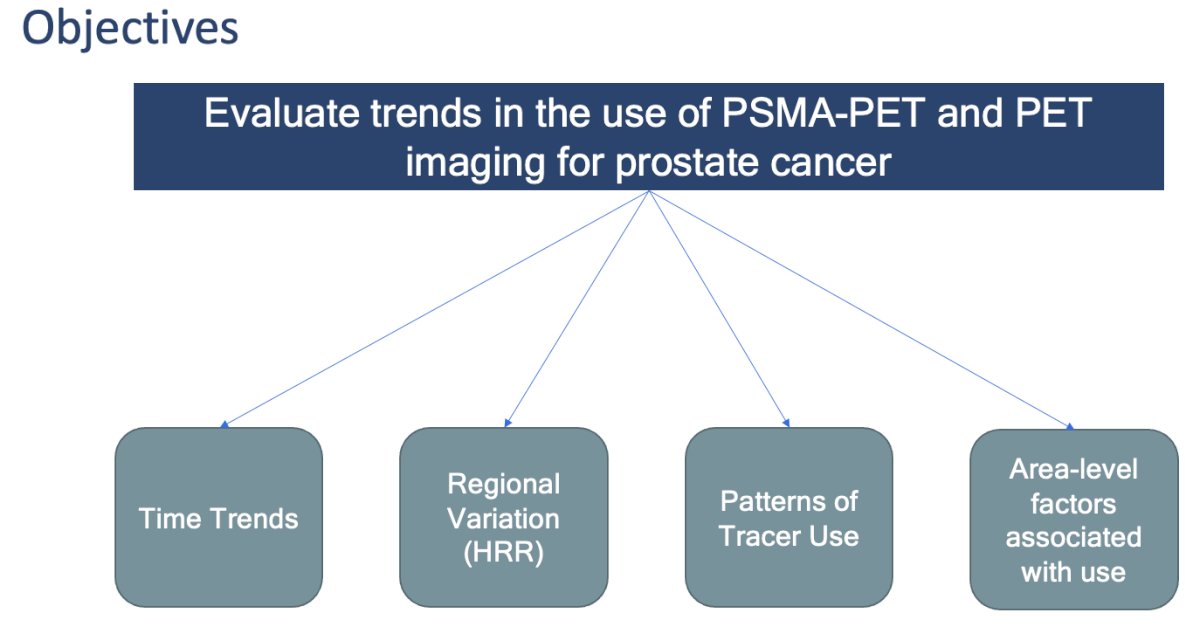
The objective of this study was to evaluate trends in the use of PSMA-PET and PET imaging for prostate cancer, including:
- Time trends
- Regional variation (hospital referral region [HRR])
- Patterns of tracer use
- Area-level factors associated with use
To this end, the study investigators conducted a dynamic cohort study to evaluate the use of PET imaging among insurance beneficiaries aged 40–89 years with a diagnosis of prostate cancer using deidentified administrative claims from Blue Cross Blue Shield Axis. They calculated the proportions of patients undergoing PET imaging in semiannual periods from January 1, 2016, through December 31, 2022, examining tracers specific to prostate cancer, including PSMA-targeted agents as well as fluciclovine, sodium fluoride, and choline tracers. Trends in the proportion of individuals receiving PET imaging over time were evaluated using the Cochran-Armitage test. They also assessed the association between regional HRR-level contextual sociodemographic and healthcare characteristics and regional use of PSMA-PET imaging in 2022 using chi-square tests.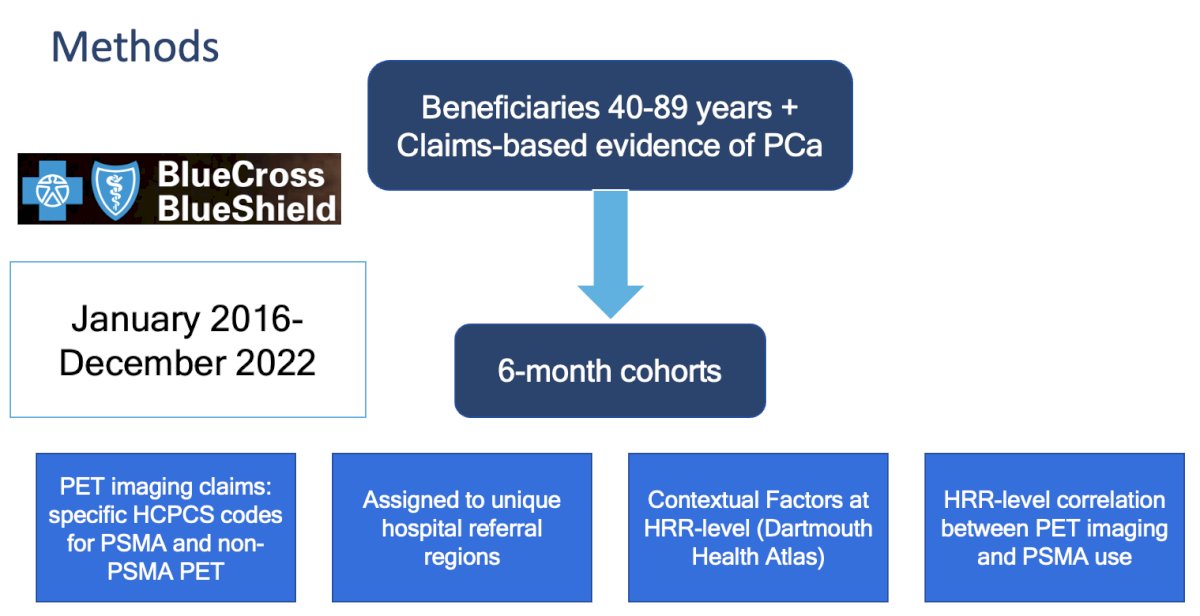
The investigators identified 410,505 beneficiaries with prostate cancer during the study period. The semiannual proportion of patients undergoing PET imaging increased from 4.5 per 1,000 in the first half of 2016 to 41.7 per 1,000 in the second half of 2022 (p<0.001).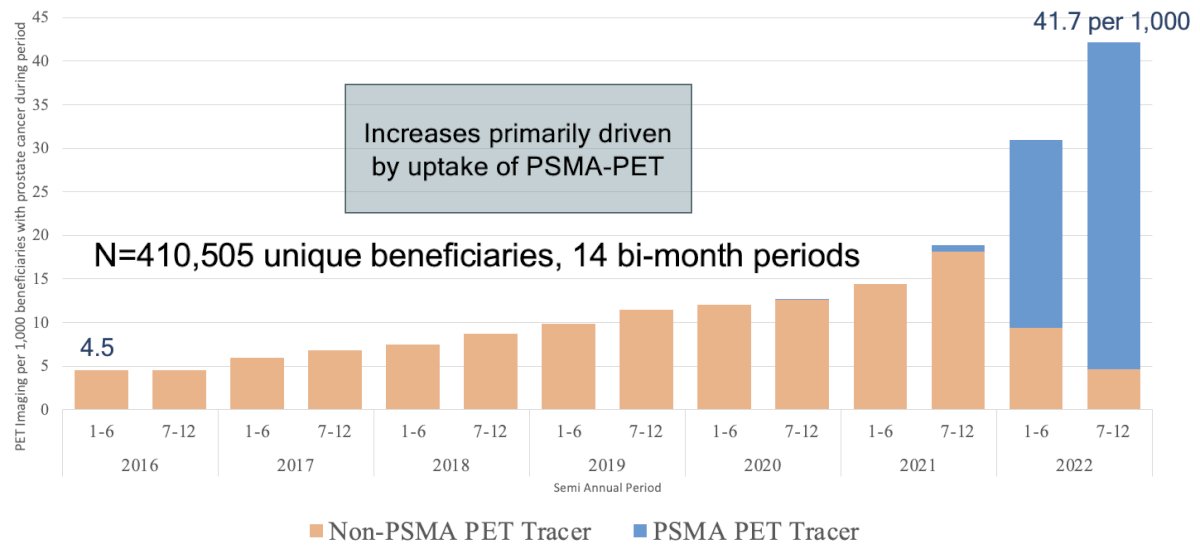
Increases in PET imaging were primarily driven by the uptake of PSMA-PET imaging, which increased from 0.7 per 1000 in the second half of 2021 to 37.5 per 1,000 in the second half of 2022 (p<0.001). Following approvals of PSMA-PET agents, other forms of PET imaging rapidly decreased – from 18.2 per 1000 in the second half of 2021 to 4.6 per 1,000 in the same period of 2022 (p<0.001).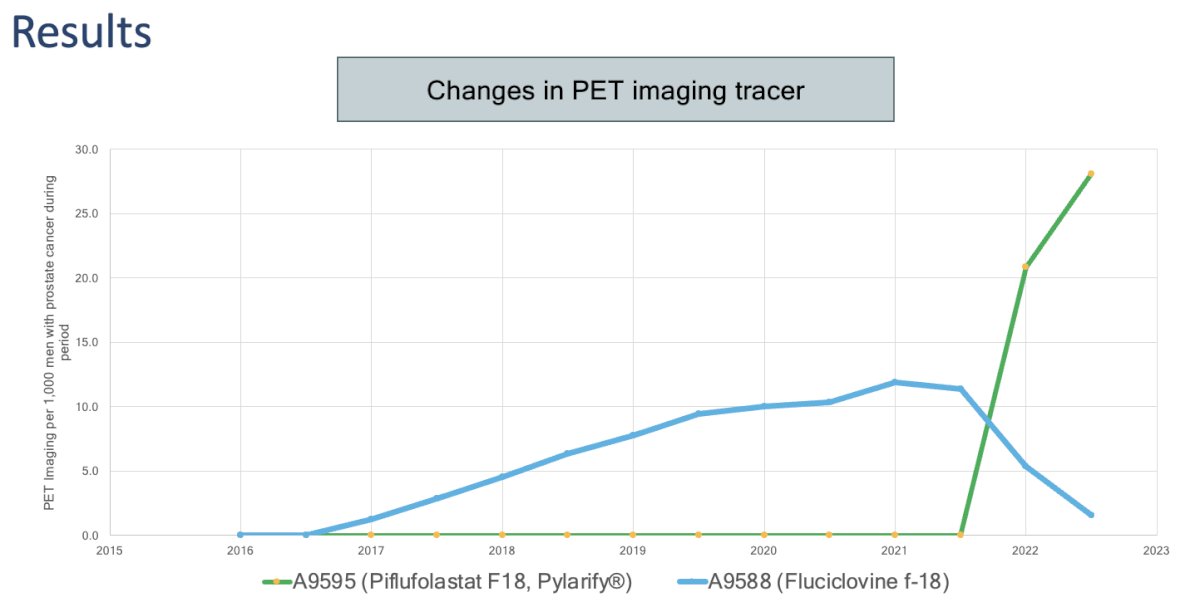
Compared to HRRs in quartile 1 (Q1), HRRs in Q4 of PSMA-PET use in 2022 had higher levels of education (25% with college education or higher in Q1 versus 29.4% in Q4, p=0.005) and median household income ($50,200 in Q1 versus $60,900 in Q4, p<0.001).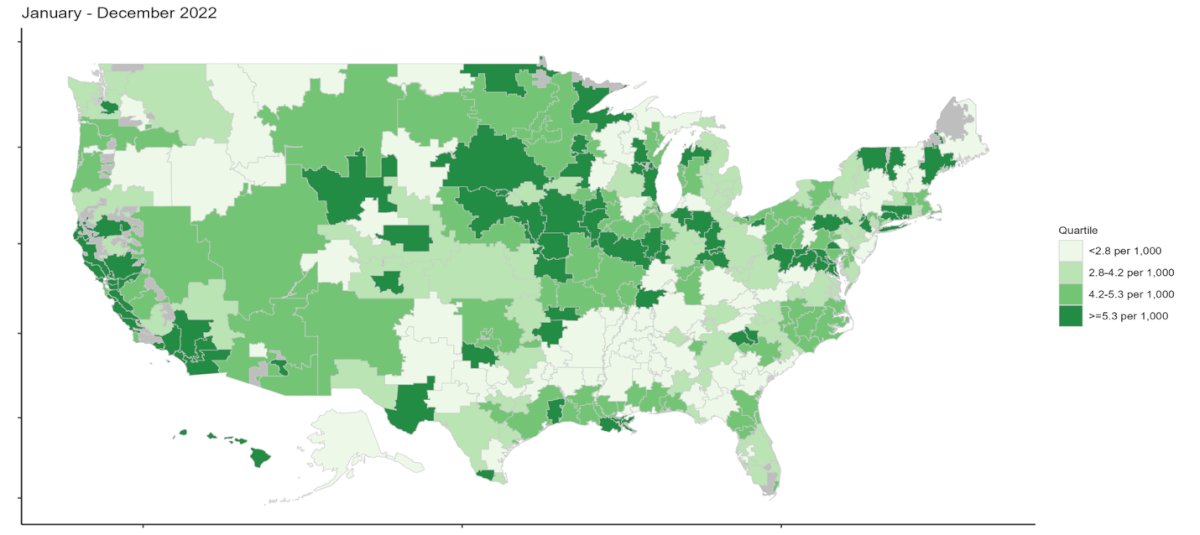

Dr. Leapman concluded his presentation as follows:
- In this study from a large commercial US health insurer, PSMA-PET has been rapidly incorporated into clinical practice and is now the dominant prostate cancer radiotracer
- However, the initial uptake of PSMA-PET has been accompanied by regional disparities in use
- There is less use of PSMA-PET in areas with lower contextual income and education measures
Presented by: Michael Leapman, MD, MHS, Associate Professor of Urology, Department of Urology, Yale School of Medicine, New Haven, CT
Written by: Rashid Sayyid, MD, MSc - Society of Urologic Oncology (SUO) Clinical Fellow at The University of Toronto, @rksayyid on Twitter during the 2024 American Urological Association (AUA) Annual Meeting, San Antonio, TX, May 3rd - 6th, 2024
Reference: