

(UroToday.com) The 2025 ASTRO annual meeting featured a biomarker breakthroughs in prostate cancer session and a presentation by Dr. Mariam Amghar discussing the predictive role of tumor fraction and copy number alteration burden in metastatic castration resistant prostate cancer (mCRPC) patients receiving tandem actinium-lutetium radionuclide therapy.
First clinical experiences employing PSMA with the alpha particle-emitting radionuclide actinium-225 exhibited astonishing responses in mCRPC patients. To address the toxicities associated with its stand-alone administration, a tandem approach combining 225Ac-PSMA-617 and 177Lu-PSMA-617 has been developed as an optimized strategy, balancing treatment efficacy while reducing adverse effects. The advantages of tandem 225Ac-PSMA-617 and 177Lu-PSMA-617 therapy include:
- Radionuclides with different particle ranges and LETs
- Synergistic action in targeting metastases of diverse size
- Dose reduction
- Lower salivary gland toxicity
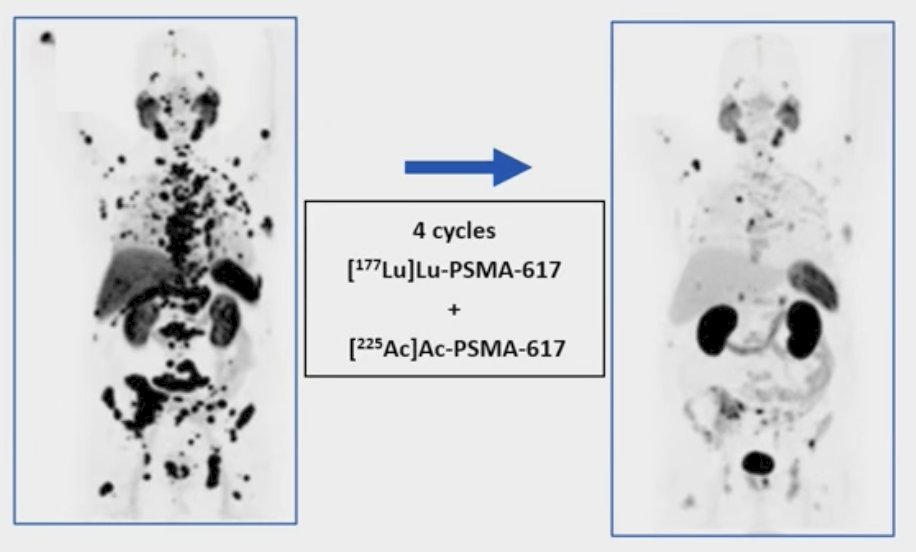
This study explores ctDNA analysis, specifically tumor fraction estimation via ichorCNA, as a biomarker to track treatment response and resistance in mCRPC patients receiving tandem 225Ac-PSMA-617 and 177Lu-PSMA-617 therapy. By integrating clinical data with whole genome sequencing, the investigators aimed to decode resistance mechanisms and relapse patterns hidden in ctDNA, paving the way for personalized treatment strategies.
This study involved collecting blood samples from mCRPC patients scheduled for bimonthly 225Ac-PSMA-617/177Lu-PSMA-617 cycles. Circulating free DNA (cfDNA) was extracted and prepared for ultra-low-pass whole genome sequencing, with a depth of 5x. The study employed ichorCNA algorithm via R (version 3.3.1) for analyzing the sequencing data, which estimates genome-wide copy number alterations and tumor fraction from the sparse sequencing data.
This study examined a cohort of 78 patients with mCRPC undergoing 225Ac-PSMA-617 and 177Lu-PSMA-617 treatment, with a median age of 75.5 years (range 55–91 years). Pairwise analysis of tumor fraction and PSA across treatment cycles revealed a strong correlation, with both markers showing significant changes during treatment: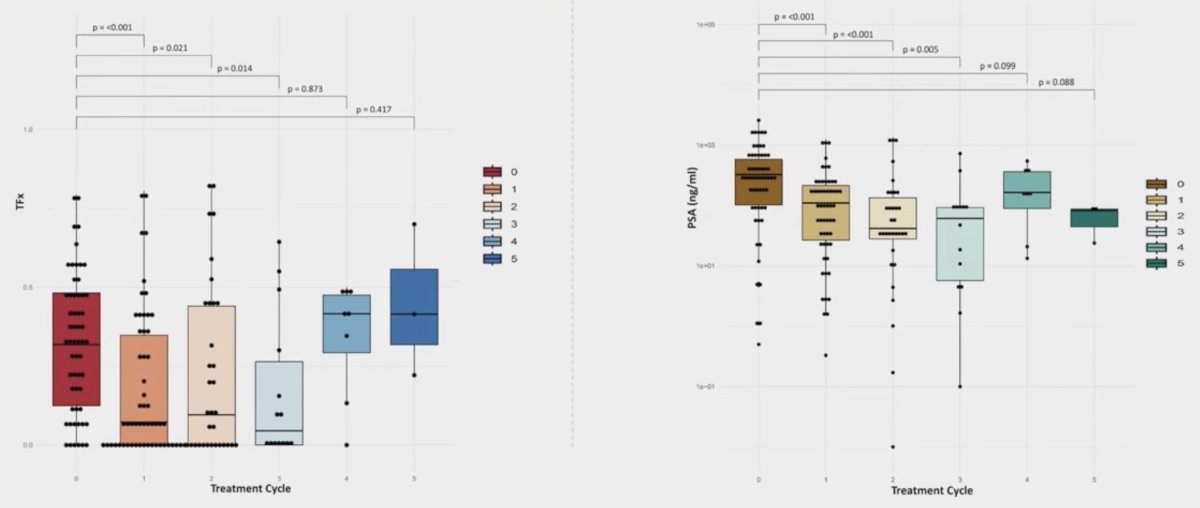
However, tumor fraction, unlike PSA, effectively distinguished between metastatic stages (p = 0.029), highlighting its potential as a more precise biomarker for disease burden: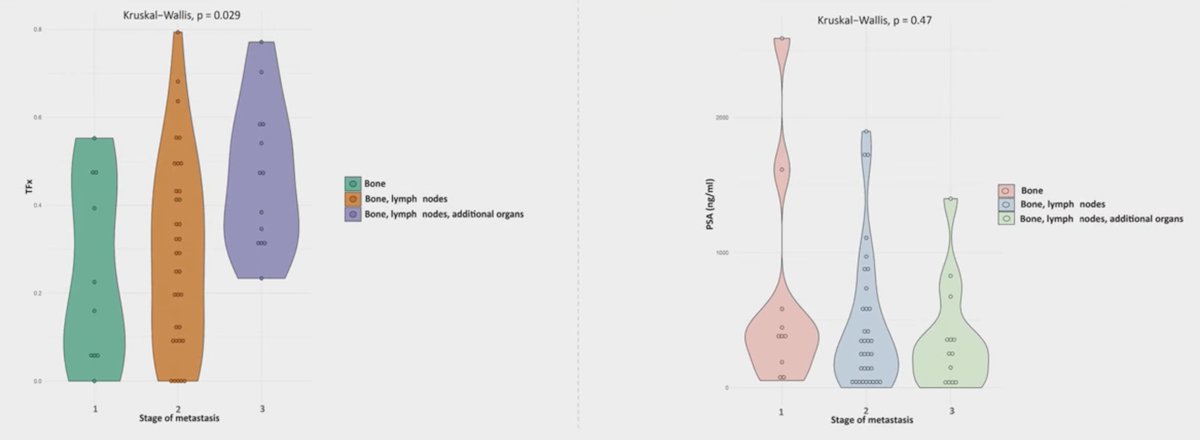
A Cox hazards model indicated that higher pre-treatment tumor fraction levels were associated with a 5-fold increased risk of relapse in the subsequent treatment cycle (p = 0.0259):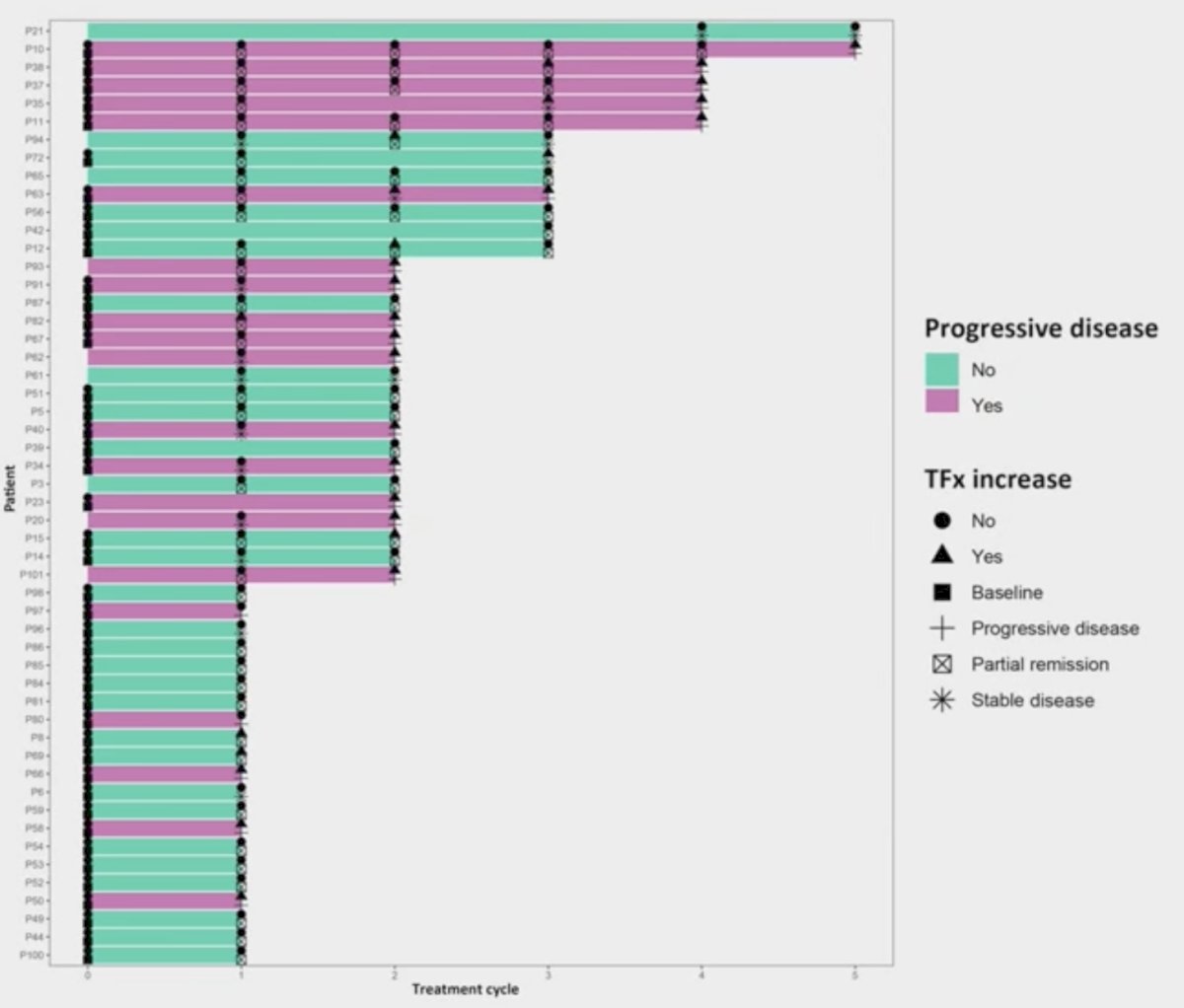
Hierarchical clustering of logR values for copy number alterations across the whole genome identified two distinct patient clusters: Cluster 1, with lower tumor fraction values and a low copy number variant burden, and Cluster 2, with higher tumor fraction values and an increased copy number variant burden (p = 8.09e-08):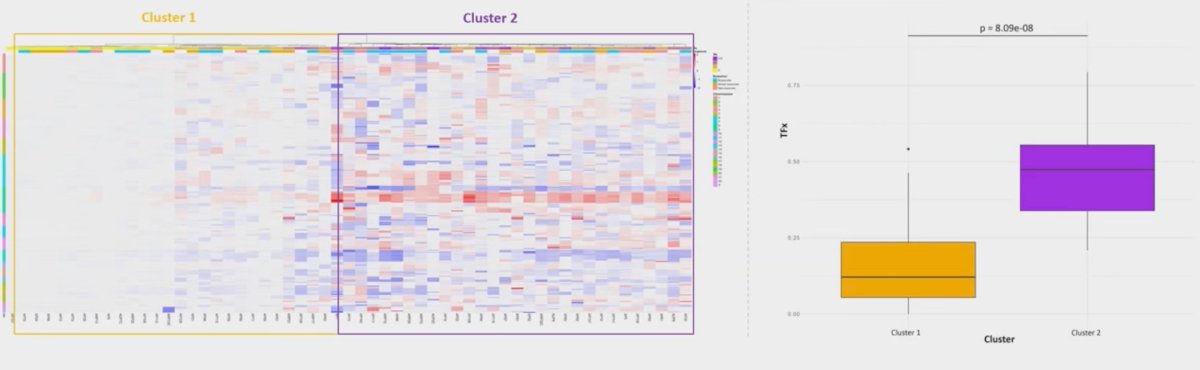
Survival analysis showed that patients with a lower copy number variant burden had a longer median survival (13.8 versus 8.3 months, log-rank p = 0.226), suggesting copy number variant burden as a potential prognostic factor in mCRPC: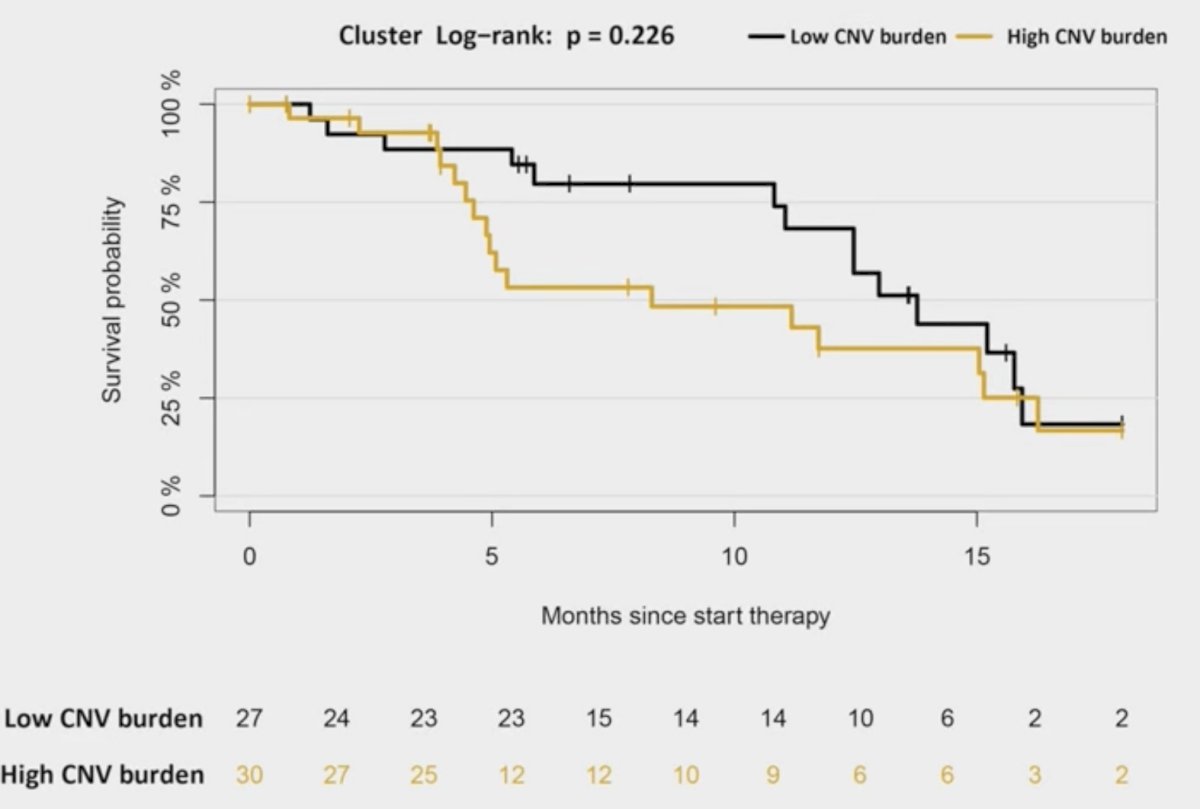
Dr. Amghar concluded her presentation discussing the predictive role of tumor fraction and copy number alteration burden in mCRPC patients receiving tandem 225Ac-PSMA-617 and 177Lu-PSMA-617 radionuclide therapy with the following take-home points:
- Tumor fraction is a valuable, non-invasive biomarker to monitor treatment response and disease progression, providing additional prognostic insights in advanced mCRPC
- Copy number variant burden correlates with tumor fraction and poorer survival, which has the potential for molecular stratification
- Early identification of non-responders enables timely treatment adaptation and better allocation of 225Ac
- Clinical application of tumor fraction and copy number variant profiling could improve patient stratification, personalize treatment decisions, and reduce healthcare costs
Presented by: Mariam Amghar, PhD, DKFZ/HIT/NCT/UKHD, Heidelberg, Baden-Württemberg, Germany
Written by: Zachary Klaassen, MD, MSc – Urologic Oncologist, Associate Professor of Urology, Georgia Cancer Center, Wellstar MCG Health, @zklaassen_md on Twitter during the 2025 American Society for Radiation Oncology (ASTRO) Annual Meeting, San Francisco, CA, Sat, Sept 27 – Wed, Oct 1, 2025.