

(UroToday.com) The 2025 ASTRO annual meeting featured a biomarker breakthroughs in prostate cancer session and a presentation by Dr. Adam Olson discussing hallmark interferon-alpha response analysis in localized prostate cancer. Risk stratification has historically relied on NCCN risk groups, and more recently, additional granularity provided by the Decipher genomic classifier. However, immunoinflammatory markers, such as type I interferon, may also play a role in risk stratification.1 Dr. Olson and colleagues hypothesized that the immunoinflammatory state of intact prostate cancer is associated with poor outcomes, and thus analyzed the hallmark interferon alpha response pathway (IFN-alpha) on biopsy samples using a commercially available transcriptomic platform.
Whole-transcriptome gene expression profiles of patient samples from NRG/RTOG 9202, 9413, 9902, 0126, and 0521 phase III trials were analyzed. NRG/RTOG 9202, 9413, and 9902 were combined into a single high-risk cohort. The performance of an IFN-alpha 97 gene set was evaluated for biochemical failure by Phoenix criteria, disease progression, distant metastasis, metastasis free survival, prostate cancer specific mortality, and overall survival by univariable and multivariable analysis. As no pre-defined cut point exists for this marker, the IFN-alpha response signature was analyzed as a continuous and dichotomized variable (split at the median). Pretreatment PSA in RTOG 9202/9413/9902 was log-transformed. Cox and Fine, and Gray models (in the presence of competing risks) were used for analysis.
There were 663 samples (RTOG 0126 n = 215, RTOG 0521 n = 183, RTOG 9202/9413/9902 n = 265) analyzed for this study:

For RTOG 0126 and RTOG 0521, no baseline characteristics were associated with IFN-alpha signature; for RTOG 9202/9413/9902, more patients with IFN-alpha (high) had Gleason score 8-10 (56% versus 34%, p = 0.007).
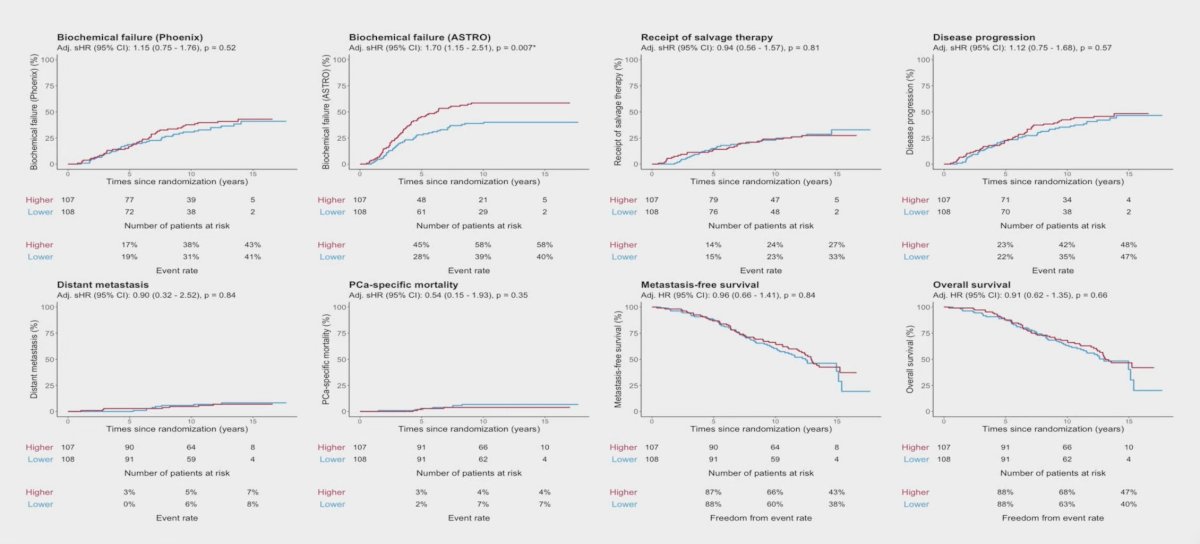
In RTOG 0126, multivariable analysis was adjusted for Gleason score, PSA, and radiotherapy modality. Patients with higher IFN-alpha signature had improved outcomes from radiotherapy dose escalation with respect to biochemical failure (sHR 1.70, 95% CI 1.15-2.51):
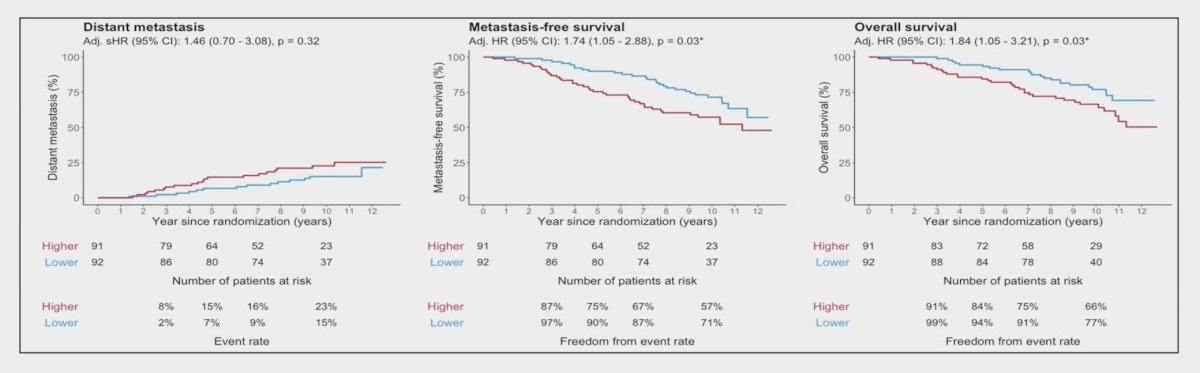
In RTOG 0521, multivariable analysis was adjusted for risk group, treatment arm, and age. IFN-alpha (high) was significantly associated with metastasis free survival (high versus low sHR 1.74, 95% CI 1.05-2.88, p = 0.03) and overall survival (sHR 1.84, 95% CI 1.05-3.21, p = 0.03). No significant treatment interactions were observed:
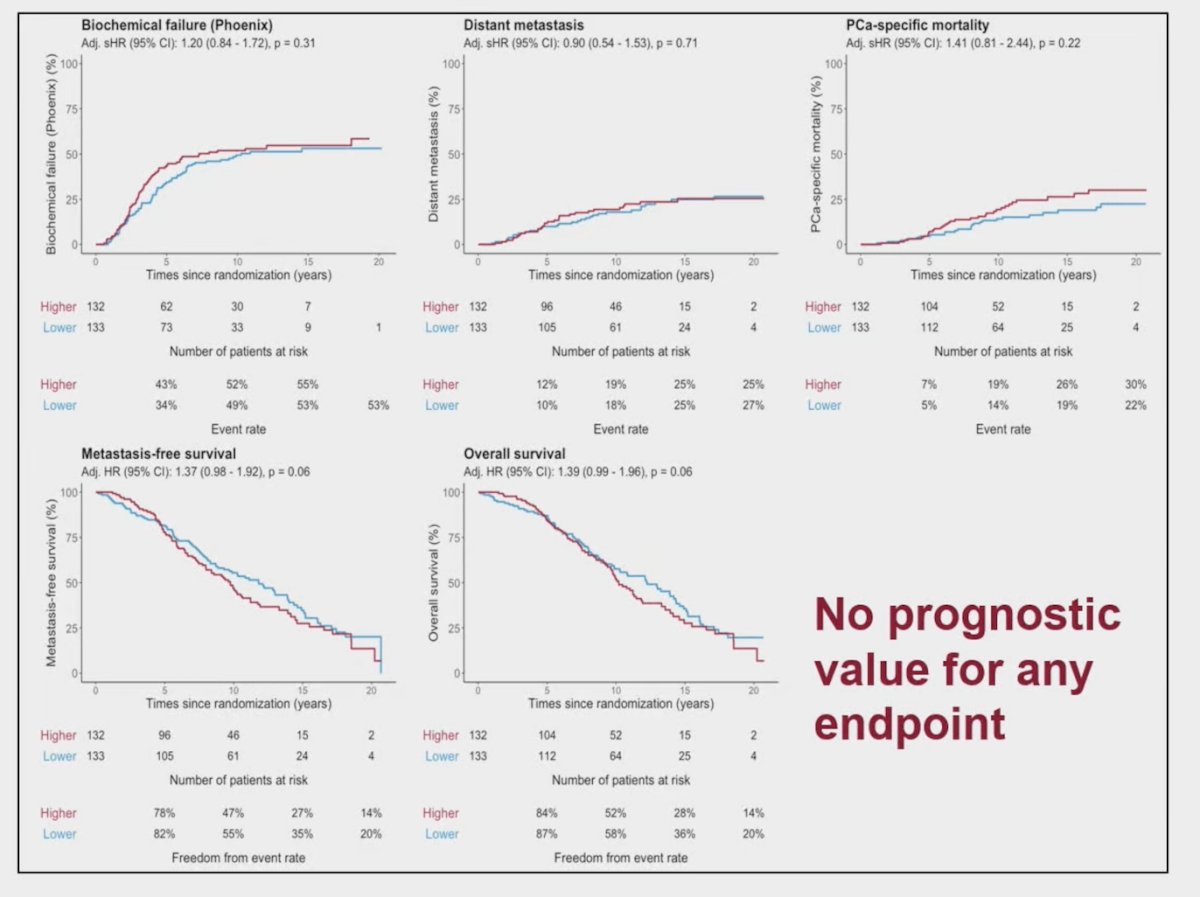
In RTOG 9202/9413/9902, multivariable analysis was adjusted for age, log(pretreatment PSA), T stage, and Gleason score. Patients with IFN-alpha (high) had no prognostic value for any endpoint:
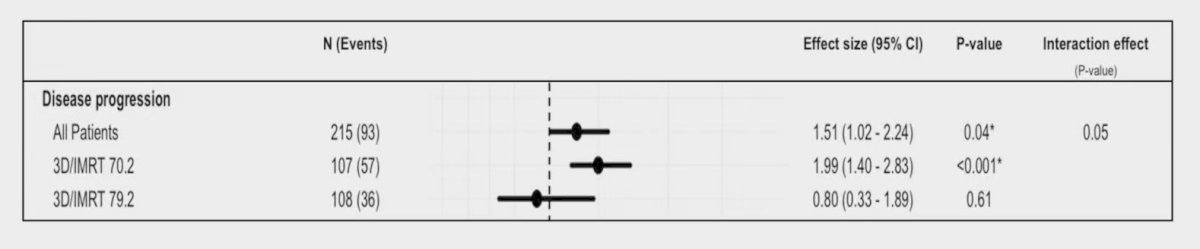
For predictive biomarkers, in RTOG 0126 for disease progression, 70.2 Gy IMRT was associated with worse outcomes (HR 1.99, 95% CI 1.40-2.83):
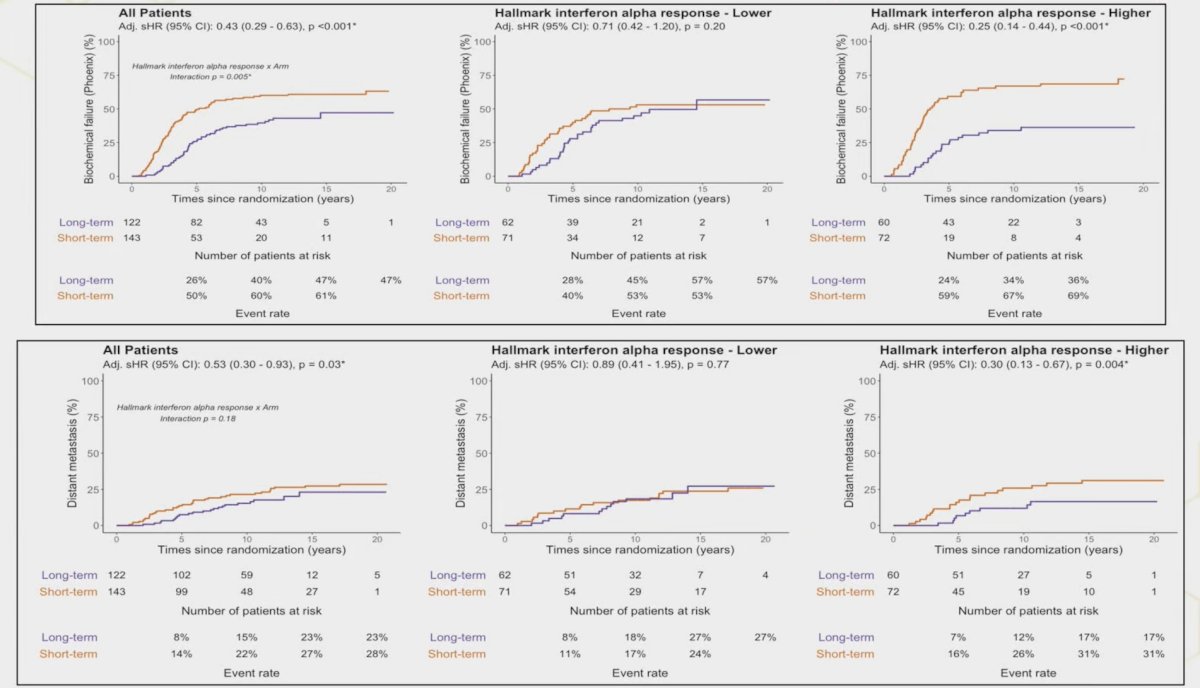
For RTOG 0521, there was no predictive value as a categorical or continuous variable. For RTOG 9202/9413/9902 assessing the utility of short versus long term ADT, patients with higher IFN-alpha response showed improved biochemical failure (sHR 0.25, 95% CI 0.14-0.44), distant metastasis (sHR 0.30, 95% CI 0.13-0.67), and prostate cancer specific mortality (sHR 0.19, 95% CI 0.08-0.46) with long-term ADT, whereas those with lower INF-alpha response did not:

Dr. Olson concluded his presentation discussing hallmark interferon-alpha response analysis in localized prostate cancer with the following take home points:
- IFN-alpha response signatures in prostate cancer are prognostic in multiple large phase III trials
- For patients with high IFN-alpha response signatures, predictive value was seen for benefit of long term ADT, but these results require further validation
- Future directions include a CIBERSORT analysis to profile tumor infiltrating immune cell subsets, as well as independent validation in Decipher GRID
Presented by: Adam Olson, MD, UPMC Hillman Cancer Center, Pittsburgh, PA
Written by: Zachary Klaassen, MD, MSc – Urologic Oncologist, Associate Professor of Urology, Georgia Cancer Center, Wellstar MCG Health, @zklaassen_md on Twitter during the 2025 American Society for Radiation Oncology (ASTRO) Annual Meeting, San Francisco, CA, September 28th – 30th, 2025
References:
- Snell LM, McGaha TL, Brooks DG. Type I Interferon in Chronic Virus Infection and Cancer. Trends Immunol. 2017 Aug;38(8):542-557.