

(UroToday.com) The 2025 American Society for Radiation Oncology (ASTRO) Annual Meeting held in San Francisco, CA between September 28th and 30th, 2025, was host to a bladder and post-prostatectomy radiation session. Dr. Xiaohui Li presented a bladder-specific 15-gene transcriptomic signature that predicts responses to chemotherapy or chemoradiation in patients with muscle-invasive bladder cancer (MIBC).
Dr. Li noted that trimodality therapy (TMT) with maximal TURBT + chemoradiation represents an alternative, standard-of-care option for select MIBC patients, but that local recurrences and distant metastases remain major challenges after TMT. Despite intensified treatments within the TMT framework, including stereotactic body radiation therapy (SBRT) to improve local control and immunotherapy, a subset of patients still experiences disease recurrence or metastases, highlighting the need to identify high-risk cases early on.
The objective of this study was to establish a transcriptomics-driven prognostic model for stratifying MIBC patients to optimize survival outcomes with bladder-preservation approaches. To this end, Dr. Li and colleagues identified 401 samples from the TCGA dataset, of which 52 were treated with (chemo)radiation therapy and bulk RNA-seq analyses were performed. Conversely, single-cell RNA-seq data were obtained using 13,353 cells from 5 MIBC samples. Functional analyses using Gene Ontology and Gene Set Enrichment Analysis were performed.
The MIBC cohort treated with (chemo)radiation showed distinct transcriptomic profiles. The study investigators identified 18 radiation-responsive genes associated with progression-free survival (PFS).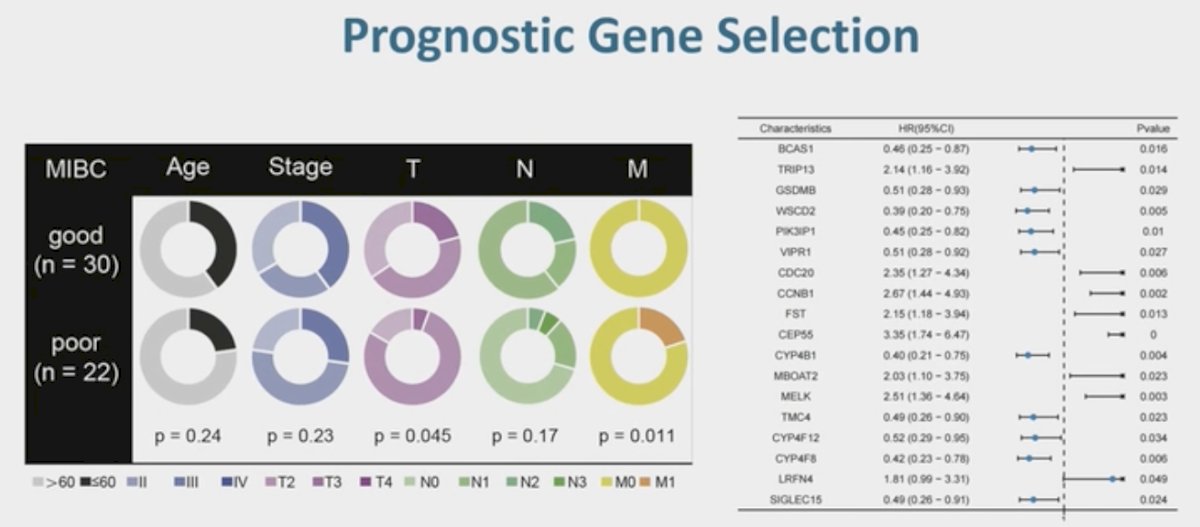
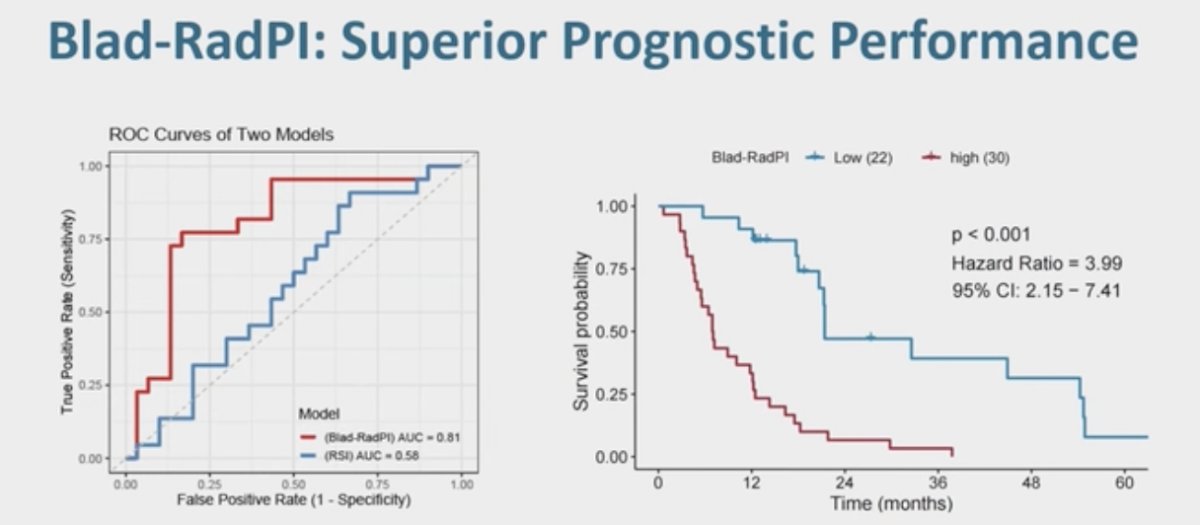
Blad-RadPI integrated the radiation-responsive genes and radiosensitivity index (RSI)-related biomarkers. Blad-RadPI achieves a higher predictive accuracy (C-index: 0.81 vs 0.58), compared with RSI.
The Blad-RadPI demonstrated superior prognostic performance:
- Higher predictive accuracy for 1-year progression-free survival (AUC: 0.81 vs 0.58)
- Prognostic stratification: High-score patients demonstrated significantly worse progression-free survival outcomes (HR: 4, p<0.001)
The high-score group was enriched in pro-tumorigenic pathways (e.g., epithelial cell proliferation), whereas the low-score group was enriched in immune-activating pathways (e.g., leukocyte migration).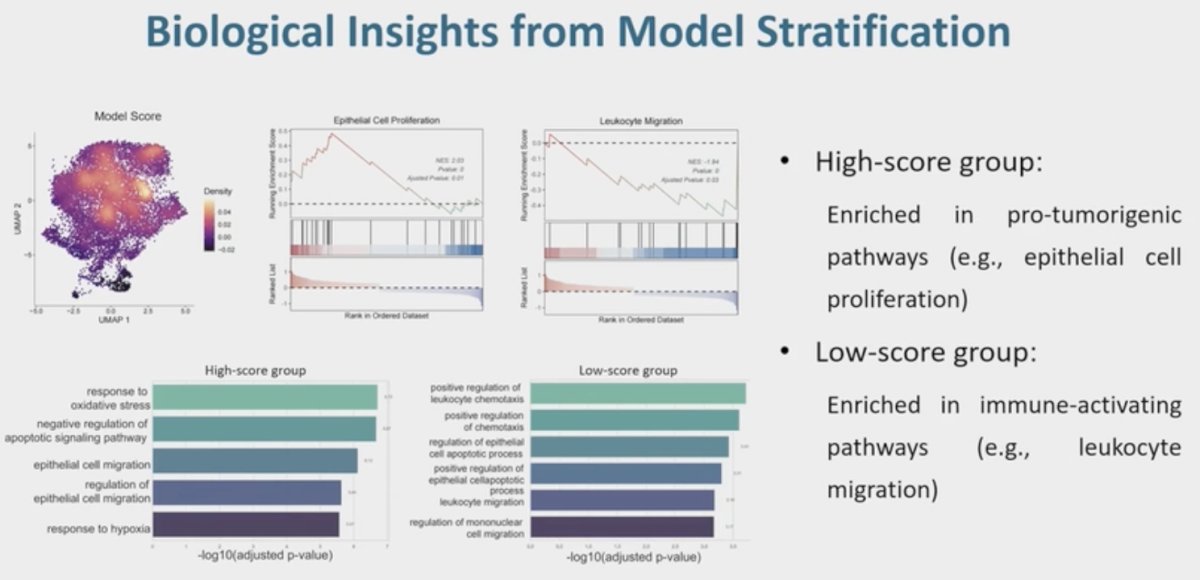
Validation in 401 bulk samples demonstrated that there were significant immune infiltration differences by the Blad-RadPI stratification with the high Blad-RadPI group demonstrating significantly lower immune cell infiltration.

Dr. Li concluded as follows:
- Blad-RadPI is a 15-gene bladder-specific signature that predicts (chemo)radiation response in MIBC
- The high-score group is enriched in pro-tumor pathways, whereas the low-score group shows stronger immune activity
- Validation in 401 bulk samples demonstrated consistent immune differences
- High Blad-RadPI patients face a higher risk of recurrence and metastasis following bladder-preservation therapy.
Presented by: Xiaohui Li, MD, Department of Medical Oncology, Peking University First Hospital, Beijing
Written by: Rashid K. Sayyid, MD, MSc, Urologic Oncologist, Department of Urology, The University of Arizona, @rksayyid on X during the 2025 American Society for Radiation Oncology (ASTRO) Annual Meeting, San Francisco, CA, September 28th – 30th, 2025