

(UroToday.com) The 2023 ASTRO annual meeting included a session on clinical trials in prostate cancer, featuring a presentation by Dr. Constanza Martinez discussing results of conventional versus hypo-fractionated radiotherapy for high-risk prostate cancer, a post-hoc analysis of IMRT versus 3D-conformal radiation therapy toxicity. The Prostate Cancer Study number 5 (PCS5), is a multi-centric non-inferiority, phase 3, randomized controlled trial of high-risk prostate cancer patients of treated with either conventionally fractionated radiotherapy or hypofractionated radiotherapy. The efficacy results were presented at ASTRO 2022 and the primary safety analysis was published in May 2023, establishing hypofractionated radiotherapy as a new standard of care.1 In this post-hoc analysis presented at ASTRO 2023, Dr. Martinez and colleagues aimed to report the genitourinary and gastrointestinal toxicities associated with radiation therapy techniques: intensity-modulated radiotherapy and 3D-conformal radiotherapy.
The PCS5 trial randomized patients in a 1:1 ratio to receive either conventionally fractionated radiotherapy or hypofractionated radiotherapy. All patients received long term neoadjuvant, concurrent, and adjuvant androgen suppression, with a median duration of 24 months. The toxicities were reported as per the Common Terminology Criteria for Adverse Events version 4. Acute toxicities were defined as presenting <= 180 days post-RT start and delayed > 180 days. The cumulative acute and delayed gastrointestinal and genitourinary toxicities were classified in grade groups: grade 1 or higher (G1+), G2+, and G3+. For each grade group, acute and delayed, we performed multivariable logistic regression analyses, adjusting for age, CTV volume, diabetes, fractionation (conventionally fractionated radiotherapy or hypofractionated radiotherapy), hypertension, and stage < T3b or >= T3b. The PCS 5 schema is as follows: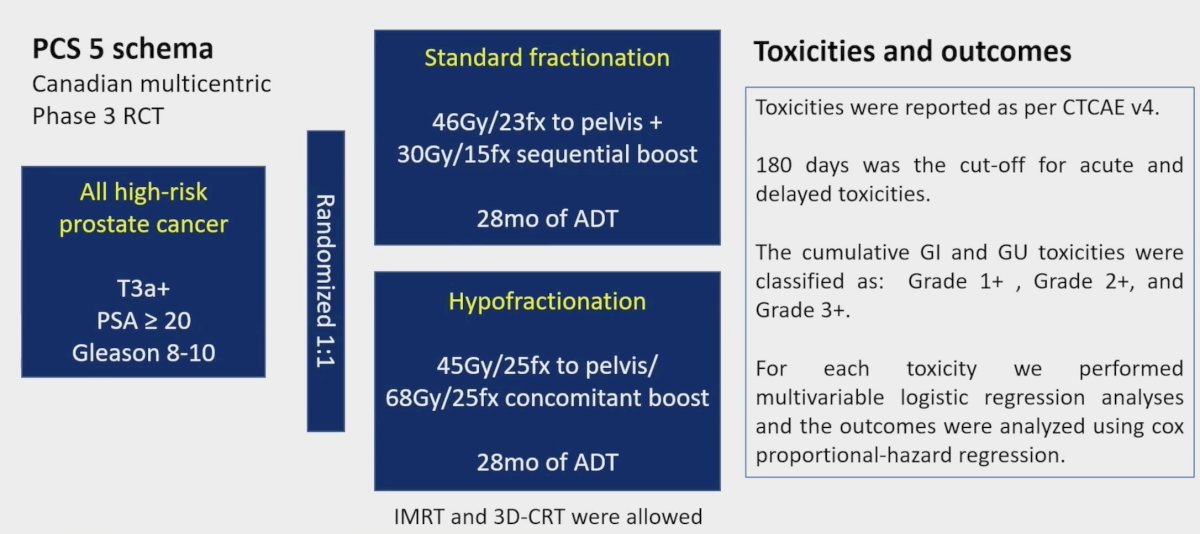
There were 320 of the 329 patients enrolled in the trial included in this post-hoc analyses, as seen in the following flow diagram: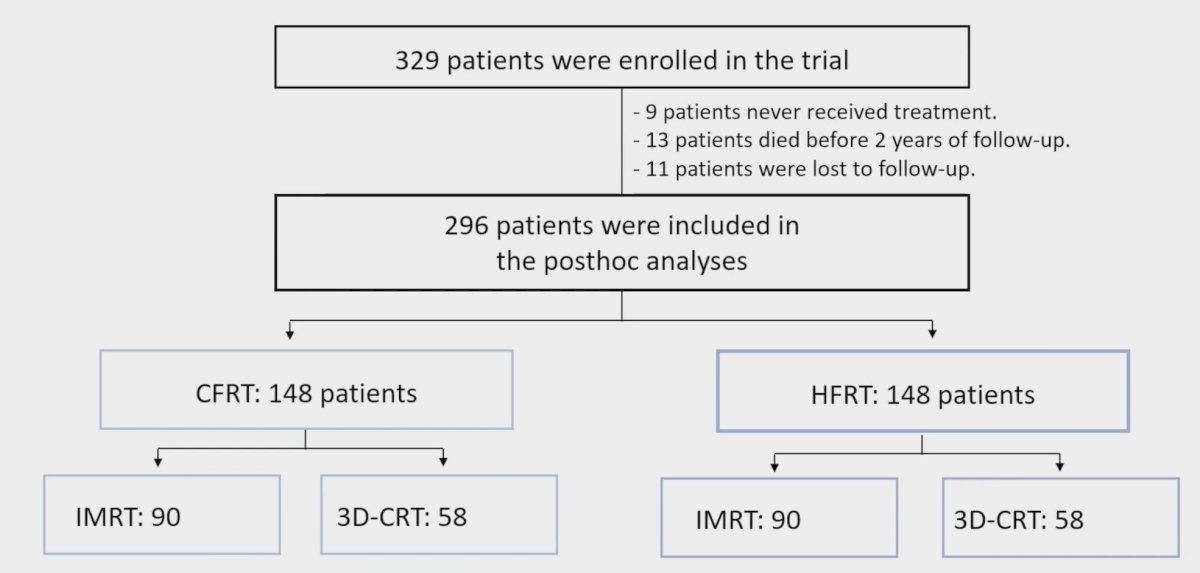
The mean age was 71.4 ± 6.1 years, and the mean CTV volume was 47.25 ± 19.9 cc. Intensity-modulated radiotherapy was used in 195 (60.6%) patients and 3D-conformal radiotherapy in 125 (39.1%) patients. The results of acute toxicities showed that 3D-conformal radiotherapy had higher acute gastrointestinal G2+ toxicity compared to intensity-modulated radiotherapy, whereas intensity-modulated radiotherapy had higher G1+ and G2+ acute genitourinary toxicity: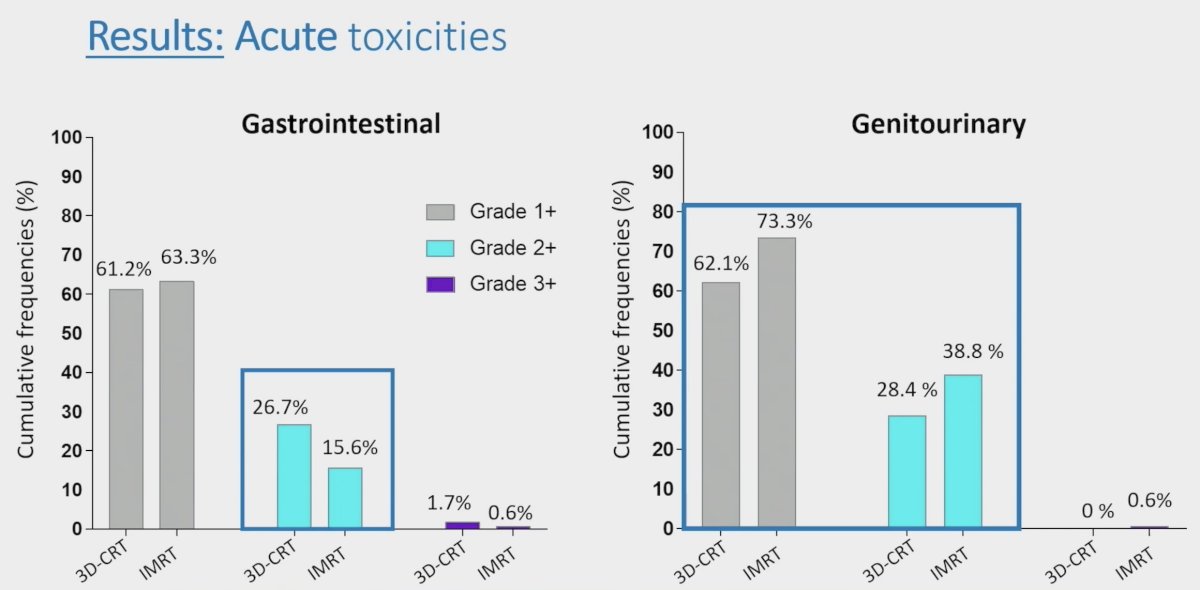
Multivariable logistic regression showed a significant difference in favor of intensity-modulated radiotherapy for gastrointestinal G2+ acute toxicity (OR 0.50, 95% CI 0.29-0.91), but favored 3D-conformal radiotherapy for acute genitourinary G1+ (OR 1.77, 95% CI 1.07-2.95) and G2+ (OR 1.59, 95% CI 0.96-2.64) toxicity. For delayed toxicities, gastrointestinal G1+ and G2+ were higher for 3D-conformal radiotherapy, with little difference in genitourinary toxicities: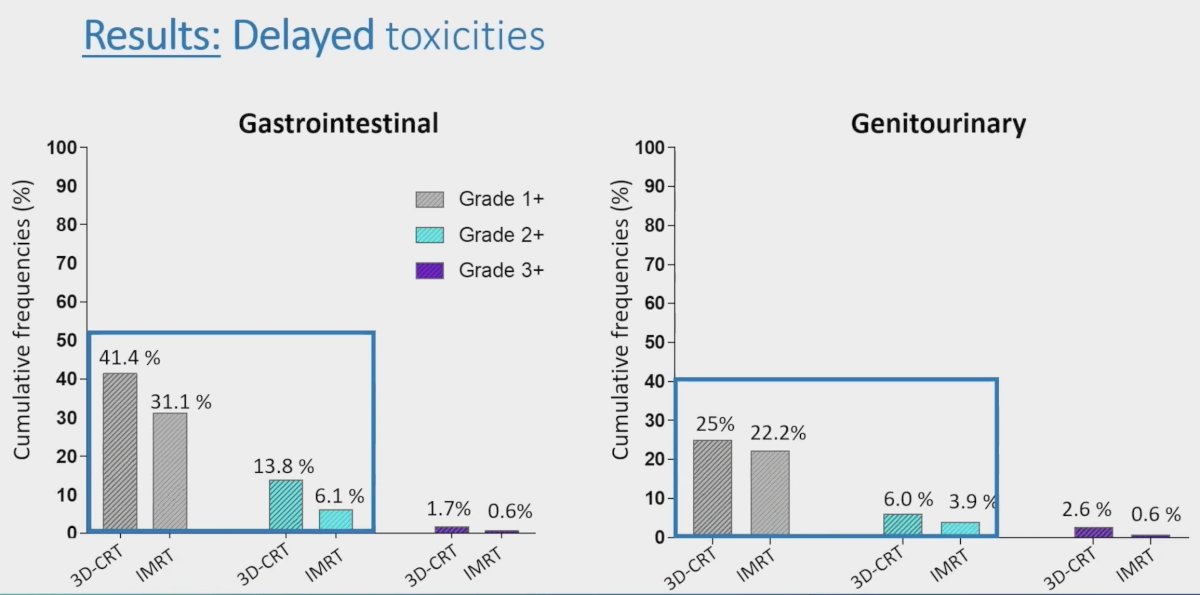
Multivariable logistic regression showed a significant difference in favor of intensity-modulated radiotherapy for gastrointestinal G2+ delayed toxicity (OR 0.36, 95% CI 0.16-0.82). There were no differences in G3+ gastrointestinal or genitourinary toxicities and there were no grade 4 toxicities. There were also no differences in efficacy at 7 years between the two treatment techniques. Outcomes for intensity-modulated radiotherapy vs. 3D-conformal radiotherapy respectively, were as follows: biochemical failure free survival (86.6% vs 91.3%; p = 0.35):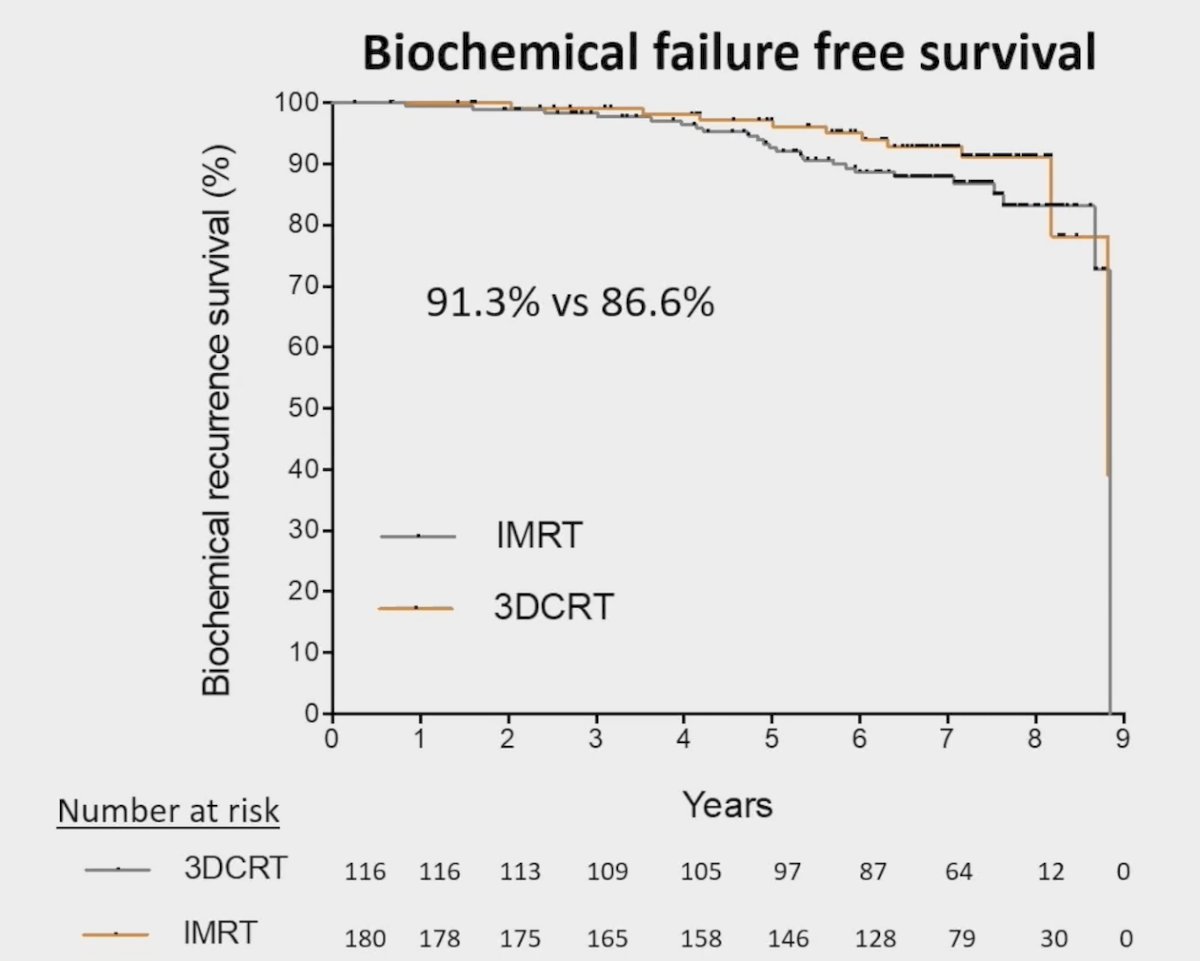
Distant metastasis free survival (94.4% vs 96.6%, p = 0.42)
and overall survival (86.2% vs 86.6%; p = 0.74):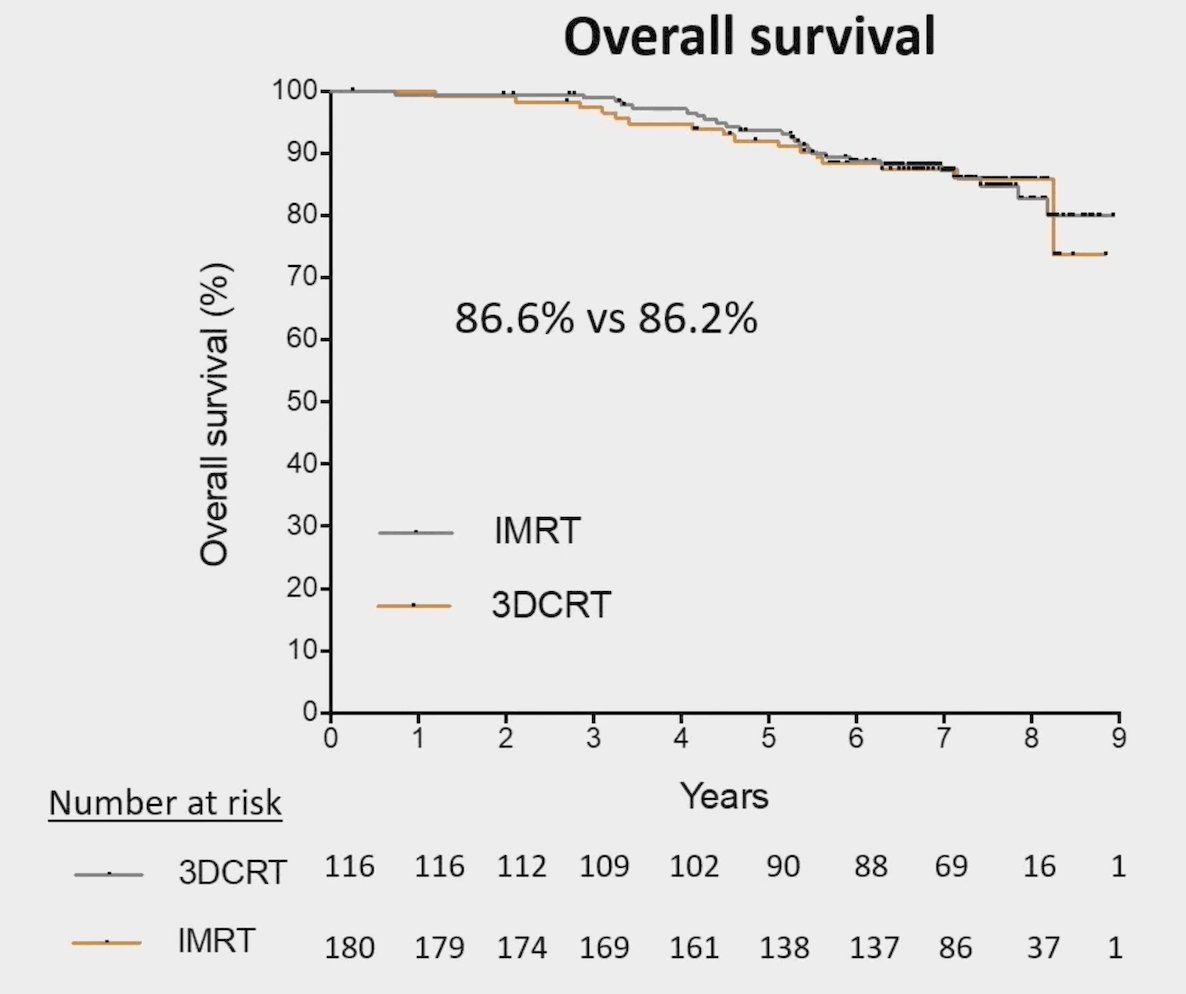
Dr. Martinez concluded her presentation discussing results of conventional versus hypo-fractionated radiotherapy for high-risk prostate cancer, a post-hoc analysis of intensity-modulated radiotherapy versus 3D-conformal radiation therapy toxicity with the following take-home points:
- The PCS5 trial is the first phase 3 randomized controlled trial assessing the use of hypofractionated radiotherapy versus conformal radiotherapy exclusively in patients with high-risk prostate cancer treated with contemporary radiotherapy and ADT duration
- Intensity-modulated radiotherapy had less acute and delayed grade 2+ gastrointestinal toxicities, and more acute grade 1+ genitourinary toxicity compared to 3D-conformal radiation therapy
- There were no significant differences in delayed genitourinary toxicities between 3D-conformal radiation therapy and intensity-modulated radiotherapy
- The efficacy data has already established hypofractionated radiotherapy as a new standard of care for high-risk prostate cancer patients requiring external beam radiotherapy
Presented by: Constanza Martinez, MD, PhD, McGill University Health Centre, Montreal, Quebec, Canada
Written by: Zachary Klaassen, MD, MSc – Urologic Oncologist, Associate Professor of Urology, Georgia Cancer Center, Wellstar MCG Health, @zklaassen_md on Twitter during the 2023 American Society of Radiation Oncology (ASTRO) Annual Meeting, San Diego, CA, Sun, Oct 1 – Wed, Oct 4, 2023.
References: