

(UroToday.com) The 2026 GU ASCO annual meeting featured a prostate cancer session and a presentation by Sophia Coraci discussing the impact of SUVmax on PSMA PET as a biomarker of genomic classifier risk in treatment naïve prostate cancer. Genomic classifiers are increasingly used at the initial staging of prostate cancer to refine prognosis and guide treatment planning.
The Decipher genomic classifier is a validated prognostic tool in prostate cancer, which predicts the risk of metastasis and prostate cancer-specific mortality. In parallel, PSMA PET/CT has emerged as a highly sensitive imaging modality for prostate cancer detection and staging, yet its relationship with genomic risk remains unclear. Establishing whether genomic classifier risk groups correspond with intraprostatic SUVmax on PSMA PET/CT could provide a non-invasive imaging biomarker and help identify SUV thresholds for discriminating high-risk disease.
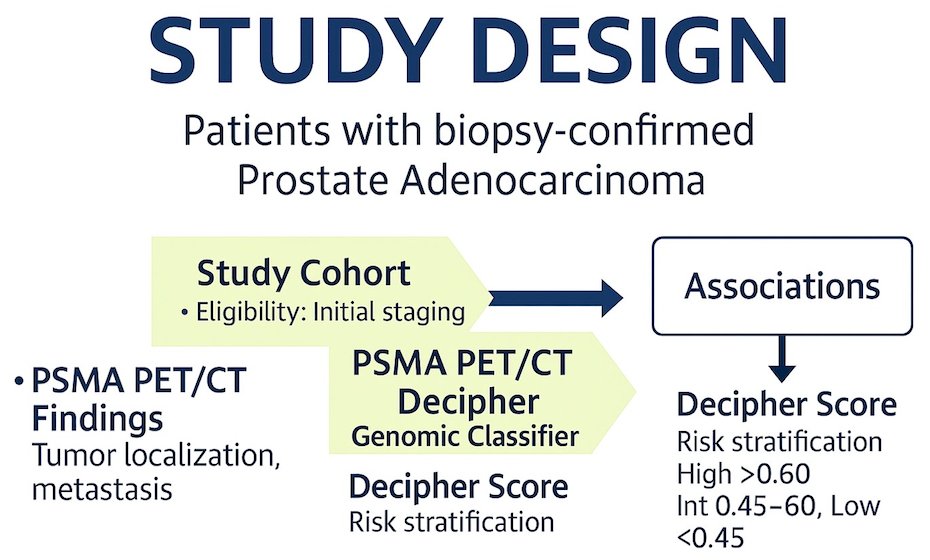
The investigators retrospectively analyzed treatment-naïve men with histologically confirmed prostate cancer who had available Decipher genomic classifier testing, multiparametric prostate MRI and PSMA PET/CT obtained prior to or within 35 days following biopsy:
Correlation between SUVmax and Decipher score was assessed using Spearman’s rho:
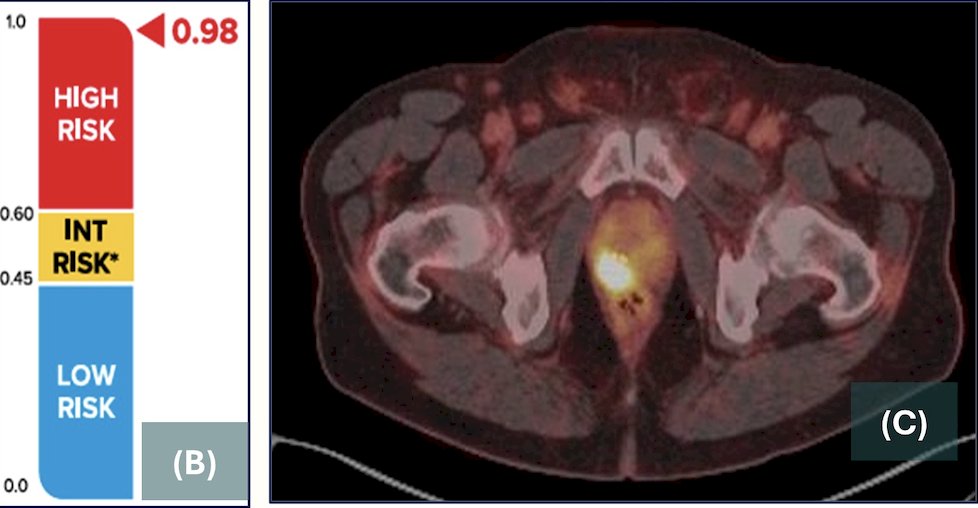
Group comparisons were tested with Kruskal-Wallis and Mann-Whitney U tests, including low/intermediate versus high-risk. Diagnostic performance of SUVmax thresholds was evaluated using ROC analysis and Youden’s J statistic.
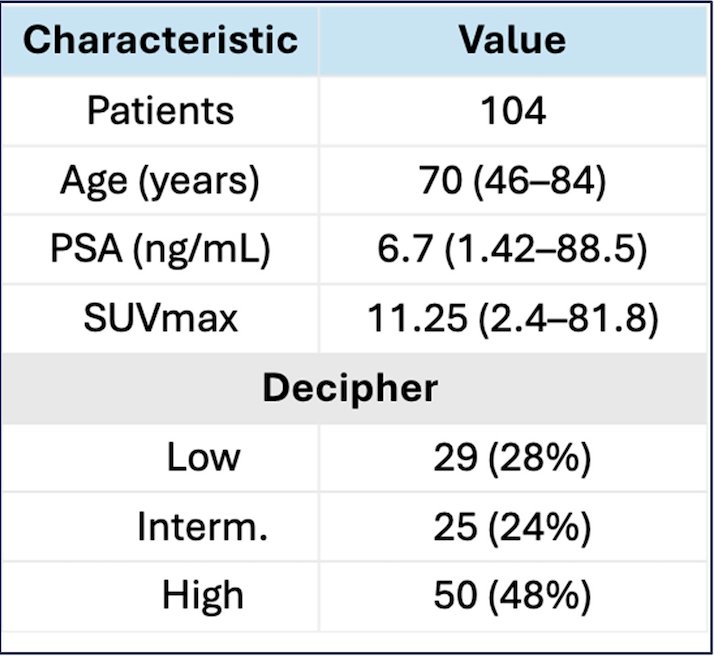
A total of 104 patients met eligibility criteria. The median age was 70 years (range, 46–84), median PSA was 6.7 ng/mL (range: 1.42–88.5), and median intraprostatic SUVmax was 11.25 (range: 2.4–81.8). Decipher risk groups were distributed as low (n = 29), intermediate (n = 25), and high (n = 50):
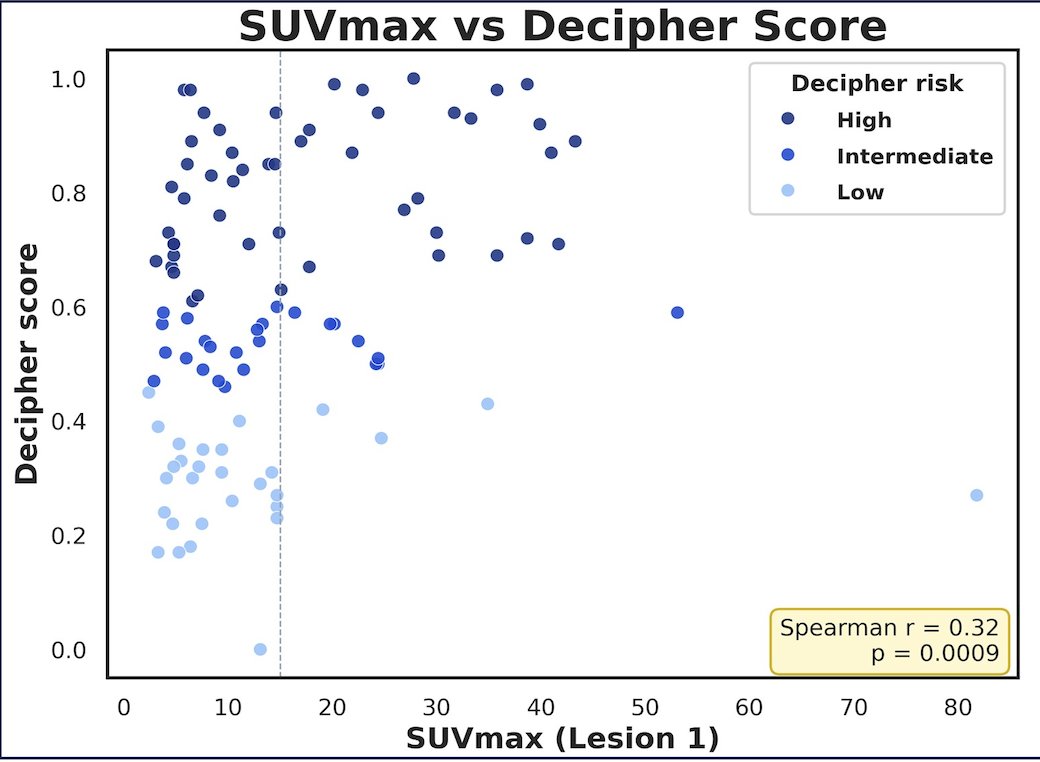
SUVmax was positively correlated with Decipher score (Spearman’s rho = 0.32, p = 0.0009), exceeding correlations with PSA (rho = 0.23, p = 0.018) and PI-RADS (rho = 0.12, p = 0.24):
Mann-Whitney analysis showed SUVmax differences between high versus intermediate (p = 0.2447) and low/intermediate versus high (p = 0.0288):
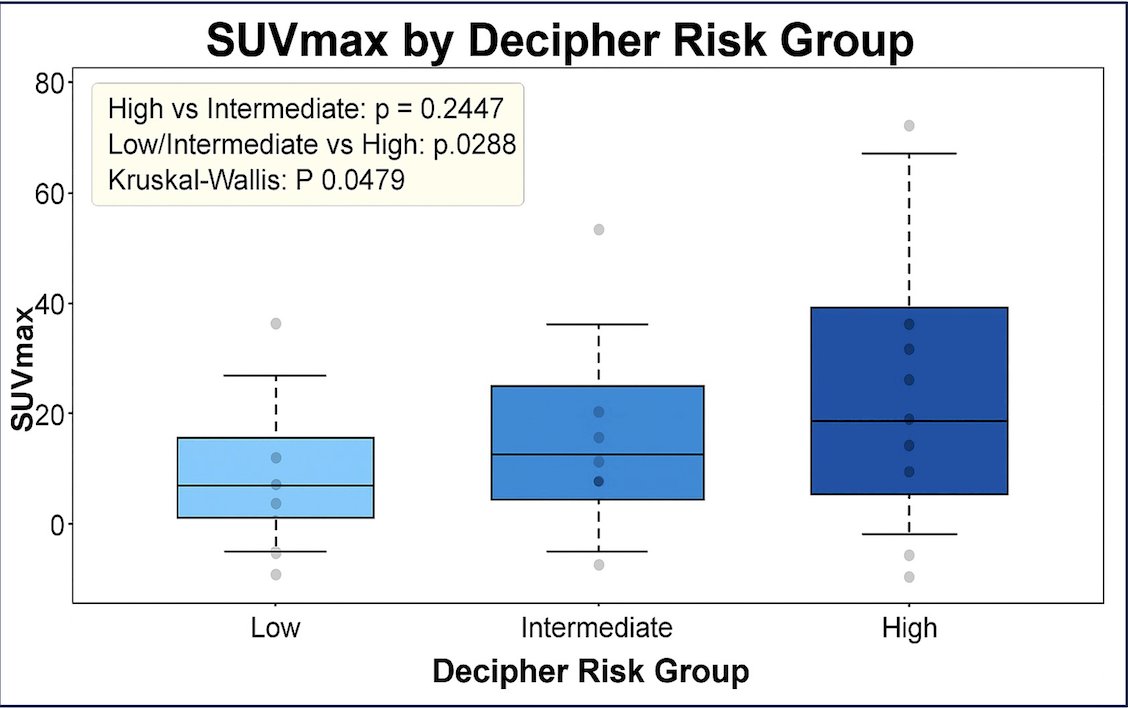
ROC analysis identified SUVmax ≥15 as the optimal cutoff for predicting high Decipher risk (sensitivity 0.45, specificity 0.76, Youden’s J = 0.206).
Sophia Coraci concluded her presentation discussing the impact of SUVmax on PSMA PET as a biomarker of genomic classifier risk in treatment naïve prostate cancer with the following take-home points:
- While differences across risk groups were modest, an SUVmax ≥15 emerged as the most discriminative threshold for identifying high-risk disease
- These findings suggest that PET-derived SUVmax may provide complementary, non-invasive information to genomic classifiers and support integrated risk stratification in prostate cancer
Presented by: Sophia Coraci, Weill Cornell Medicine, New York, NY
Written by: Zachary Klaassen, MD, MSc – Urologic Oncologist, Associate Professor of Urology, Georgia Cancer Center, Wellstar MCG Health, @zklaassen_md on Twitter during the 2026 Genitourinary (GU) American Society of Clinical Oncology (ASCO) Annual Meeting, San Francisco, CA, Thurs, Feb 26 – Sat, Feb 28, 2026.