

(UroToday.com) At the 2026 ASCO Genitourinary Cancers Symposium, Dr. Elizabeth Tran presented results from the IRONMAN registry evaluating the prognostic significance of depressive symptoms in men with advanced prostate cancer. This large, multinational real-world analysis provided important insight into how patient-reported depressive symptoms influence overall and prostate cancer–specific survival.
Prostate cancer (PC) is a leading cause of cancer-related mortality worldwide. Depression is common in patients with advanced malignancies and has been associated with adverse outcomes across multiple cancer types. However, whether depressive symptoms reflect underlying disease burden, treatment-related factors, or other clinical characteristics in advanced PC is not well understood.
The International Registry for Men with Advanced Prostate Cancer (IRONMAN; NCT03151629) is a prospective, multinational registry designed to evaluate real-world treatment patterns, patient-reported outcomes, and survival, providing an opportunity to examine these associations in a global cohort.
This study evaluated the association between patient-reported depressive symptoms at various time points and survival outcomes in men with advanced PC.
Men with newly diagnosed metastatic hormone-sensitive prostate cancer (mHSPC) or castration-resistant PC (mCRPC) or without metastases (nmCRPC) enrolled in IRONMAN (2017–2024; N=3,378) were included in the analysis.
Depressive symptoms were assessed at baseline and at 6 months using:
- EORTC QLQ-C30 (“Do you feel depressed?”)
- EPIC-26 (“How big a problem has feeling depressed been?”)
Depression was defined as a score ≥3 on both items; patients missing either response were excluded.
The study outcomes were as follows:
- Primary: Overall survival (OS)
- Secondary: Prostate cancer–specific survival (PCSS)
Analysis:
- Restricted mean survival time (RMST) for average OS
- Cox proportional hazards models
- Fine–Gray competing risk models to assess associations with survival
The models were adjusted for demographic and clinical variables.
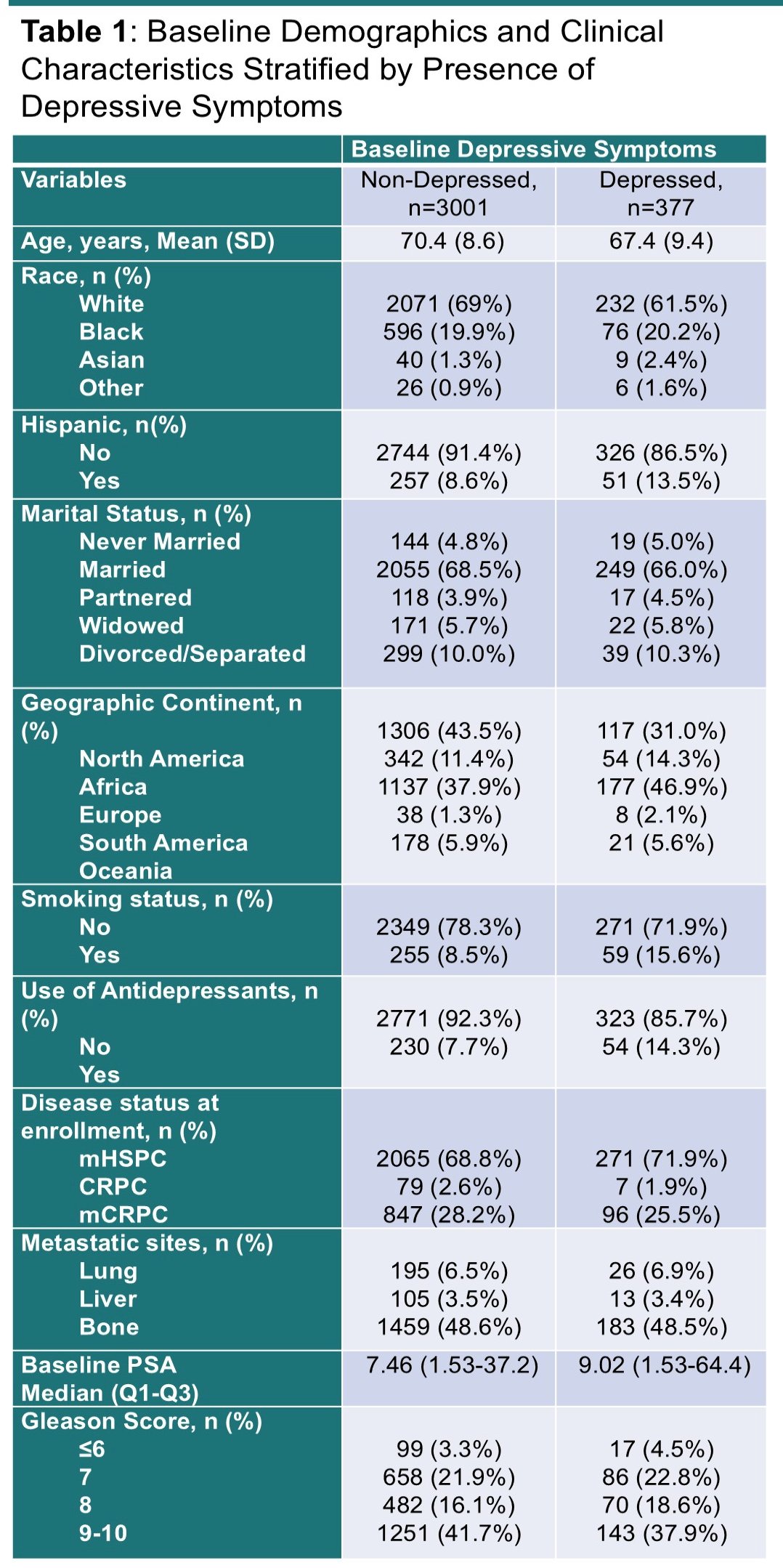
Baseline CharacteristicsTable 1 stratifies baseline demographic and clinical characteristics by the presence of baseline depressive symptoms.
Of 3,378 men:
- 377 (11%) met criteria for baseline depressive symptoms
- 3,001 were non-depressed at baseline
Notable differences:
- Depressed patients were younger (mean age 67.4 vs 70.4 years)
- Higher proportion of Black patients in the depressed group
- Greater prevalence of metastatic disease
- More likely to be current smokers
- Higher proportion with Gleason 9–10 disease
PSA values were similar between groups.
These differences suggest depressive symptoms may cluster with higher-risk disease characteristics and adverse health behaviors.
Overall Survival by 6-Month Depression Symptom Change
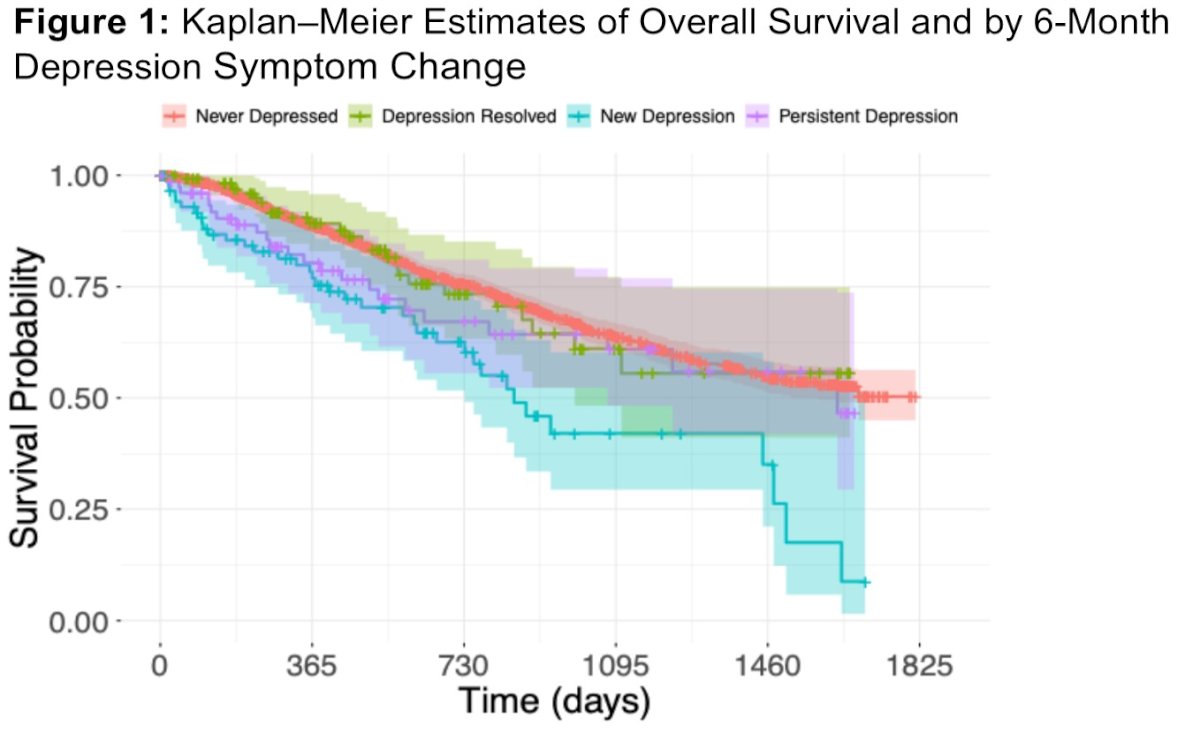
Figure 1 summarizes Kaplan–Meier estimates of overall survival stratified by 6-month depression symptom change:
Groups included:
- Never depressed
- Depression resolved
- New depression
- Persistent depression
The key findings were as follows:
- Patients with baseline depressive symptoms had worse survival compared to non-depressed patients.
- New-onset depression at 6 months was associated with particularly poor outcomes.
Adjusted hazard ratios:
- Baseline depression: HR 1.35 (95% CI 1.11–1.65)
- New depression: HR 2.13 (95% CI 1.52–2.97)
This demonstrates a 35% increased mortality risk with baseline depression and more than twofold increased risk with new-onset depressive symptoms during treatment.
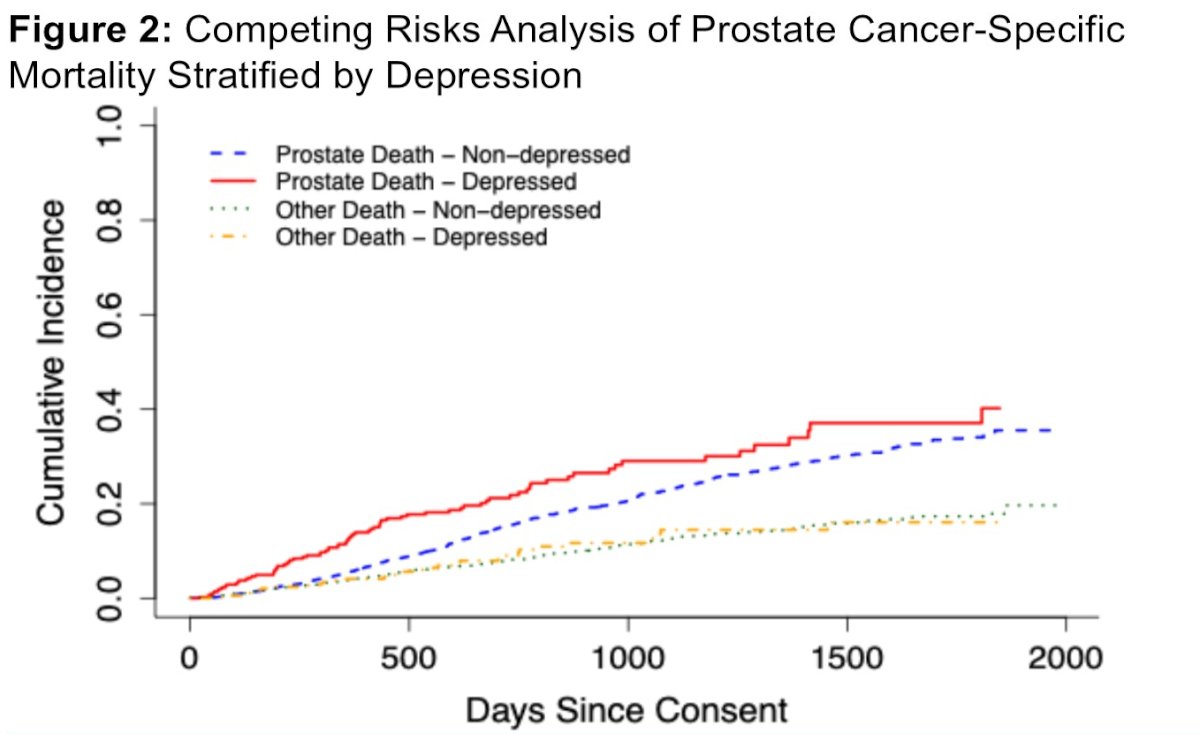
Competing Risk Analysis of Prostate Cancer-specific Mortality by Depression
Patients with depressive symptoms had a 1.45-fold higher risk of prostate cancer–specific death compared to those without symptoms. This indicates that depressive symptoms are associated not only with overall mortality but specifically with prostate cancer–related mortality.
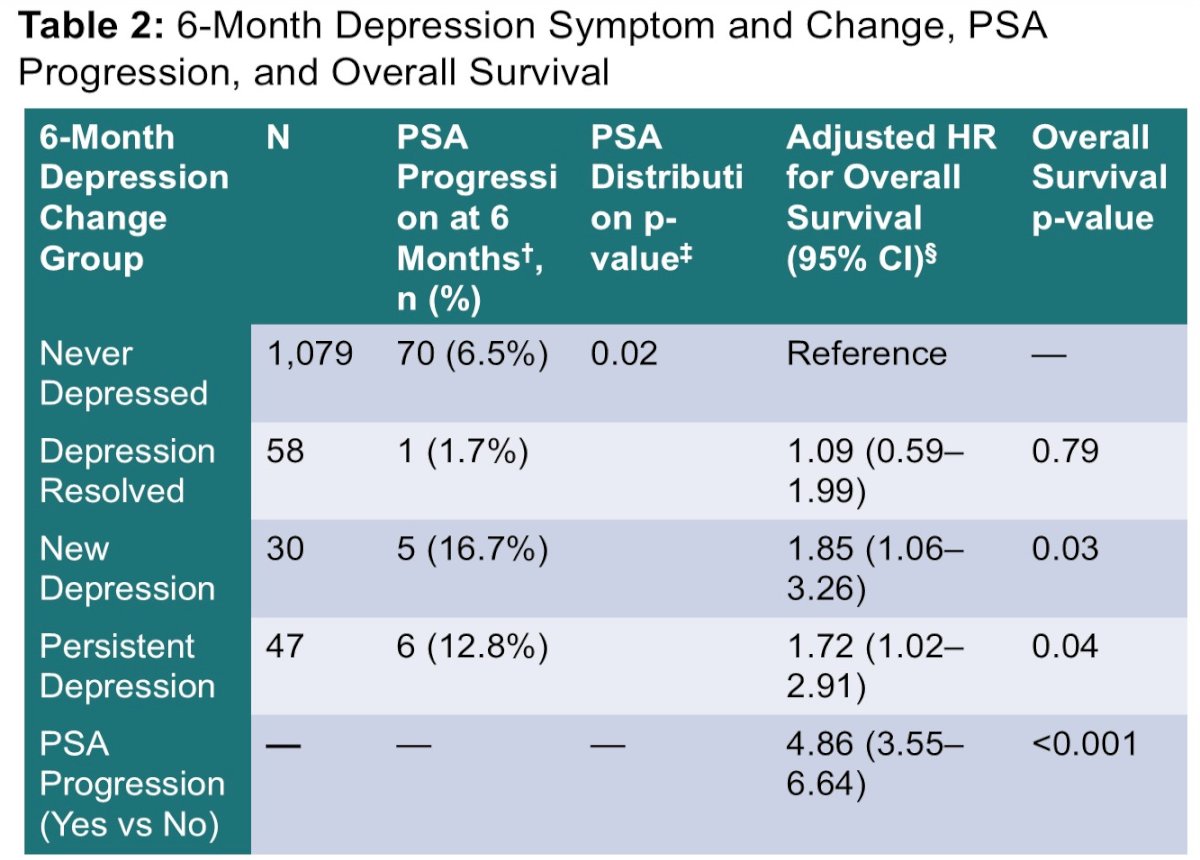
6-Month Depression Change and Survival Outcomes (PSA Progression and Overall Survival)
PSA Progression at 6 Months stratified by depressive symptoms was as follows:
- Never depressed: 6.5%
- Depression resolved: 1.7%
- New depression: 16.7%
- Persistent depression: 12.8%
This suggests that new or persistent depressive symptoms are associated with higher rates of biochemical progression.
Adjusted Hazard Ratios for Overall Survival:
- New depression: HR 1.85 (95% CI 1.06–3.26), p=0.03
- Persistent depression: HR 1.72 (95% CI 1.02–2.91), p=0.04
- PSA progression: HR 4.86 (95% CI 3.55–6.64), p<0.001
Importantly, new-onset depressive symptoms conferred a similar magnitude of risk as traditional clinical progression variables, reinforcing their prognostic importance.
Interpretation
This large real-world analysis demonstrated that:
- Depressive symptoms are independently associated with worse overall survival.
- New-onset depression during treatment identifies a particularly high-risk population.
- Depressive symptoms are associated with increased prostate cancer–specific mortality.
- Depression trajectory correlates with PSA progression patterns.
These findings persist after adjustment for clinical confounders, suggesting depressive symptoms are not simply a marker of disease burden but may independently influence outcomes.
Clinical ImplicationsThis study supports routine mental health screening as part of advanced prostate cancer care. Depressive symptoms may:
- Impact adherence
- Influence treatment decision-making
- Reflect systemic inflammatory or biologic stress pathways
- Alter health behaviors
Given the magnitude of effect observed, mental health assessment may be as important as traditional oncologic prognostic factors.
Dr. Elizabeth Tran concluded as follows:- Depressive symptoms were independently associated with worse survival outcomes, including overall and prostate cancer–specific survival.
- New-onset depression during treatment identified patients at particularly high risk.
- These findings strongly support integration of routine mental health screening into advanced prostate cancer care.
- Future directions include prospective studies evaluating whether early mental health interventions can improve prostate cancer outcomes.
Presented by: Elizabeth Tran, University of California, San Diego, La Jolla, CA, USA
Written by: Rashid K. Sayyid, MD, MSc, Assistant Professor, Urologic Oncologist, Department of Urology at The University of Arizona and Banner University Medical Center, Tucson, AZ – @rksayyid on X during the 2026 ASCO GU Annual Symposium, San Francisco, CA, February 26th–28th, 2026