

(UroToday.com) The 2026 ASCO GU Annual Symposium was host to a prostate cancer poster session. Dr. Albert Jang presented the results of EXTRA-PC, a phase II trial of masofaniten (EPI-7386) + enzalutamide with ADT for metastatic hormone-sensitive prostate cancer (mHSPC) patients.
This study explored a novel biologic concept: dual inhibition of the androgen receptor (AR) through simultaneous targeting of the N-terminal domain (NTD) and ligand-binding domain (LBD).
Masofaniten is a next-generation aniten that showed promising activity and safety in patients with metastatic castration-resistant prostate cancer (mCRPC).1 Anitens are a family of oral N-terminal domain (NTD) inhibitors of the androgen receptor (AR). Anitens may overcome AR resistance mechanisms at the ligand-binding domain (LBD), which is the binding site of enzalutamide, apalutamide, and darolutamide. Adding an aniten to enzalutamide and ADT may improve outcomes for mHSPC over the current standard of enzalutamide and ADT alone, leading to this investigator-initiated trial of EPI-7386 + XTANDI (enzalutamide) + Therapy with Rescue ADT – Prostate Cancer (EXTRA-PC).
This was an investigator-initiated, phase Il, single-institution trial for patients with treatment-naïve mHSPC with <10% small cell or neuroendocrine features enrolled in a Simon 2-stage study design to receive masofaniten 600 mg BID and enzalutamide 160 mg daily with ADT.
The primary endpoints were as follows:
- Undetectable PSA (PSA <0.2 ng/mL) at 6 months
- Progression-free survival (PFS), defined as PSA or radiographic progression per PCWG3
The secondary endpoints were:
- Treatment-related adverse events
- Pharmacokinetics
The trial planned to enroll 35 patients (13 in stage 1; expansion to stage 2 if ≥9 achieved undetectable PSA at 6 months).
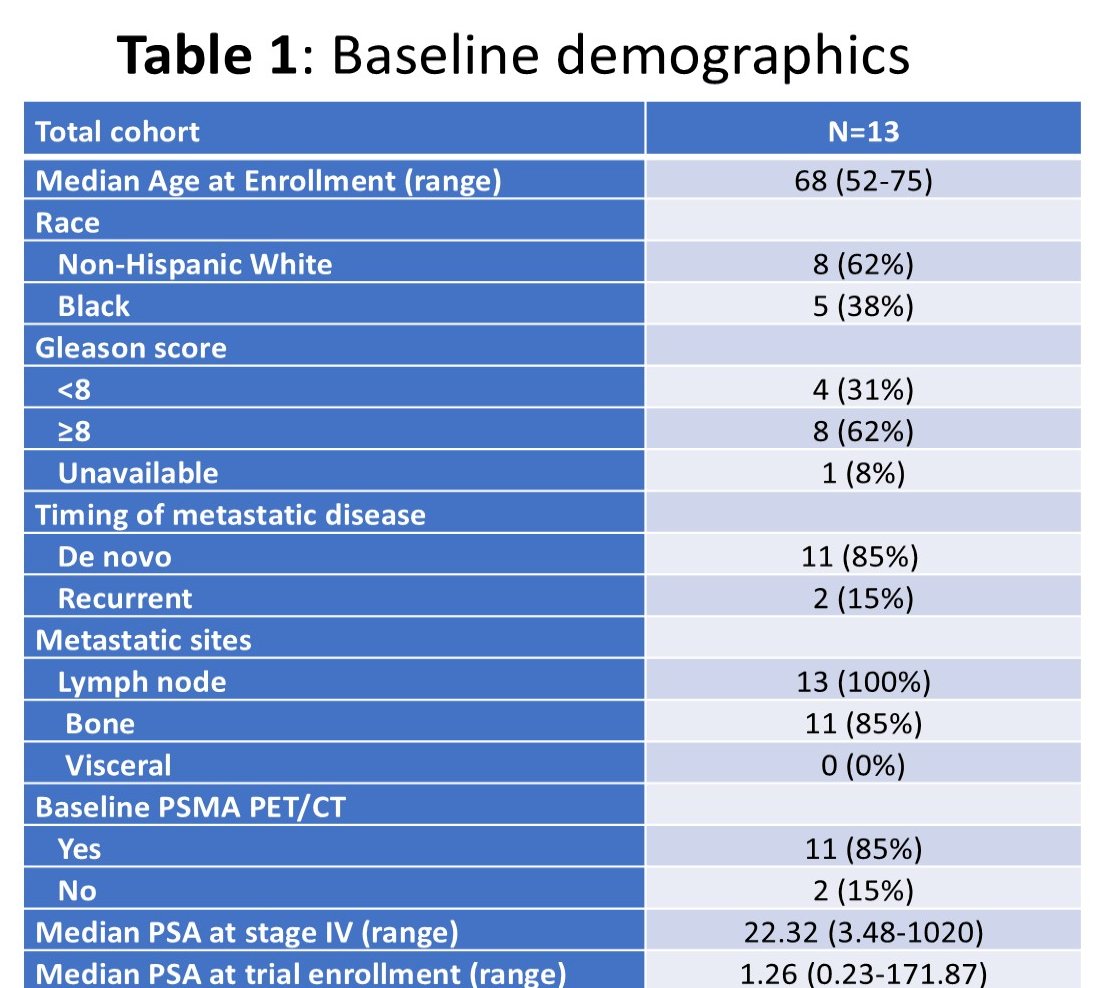
Baseline CharacteristicsA total of 13 patients were enrolled in stage 1. The key demographics were as follows:
- Median age: 68 years (range 52–75)
- 38% African American
- Gleason ≥8 in 62%
- 85% had visceral metastases
- 85% de novo metastatic disease
- Baseline median PSA: 22.32 ng/mL
- Median PSA at enrollment: 1.26 ng/mL
This cohort reflects a high-risk mHSPC population, enriched for visceral disease and high-grade pathology.
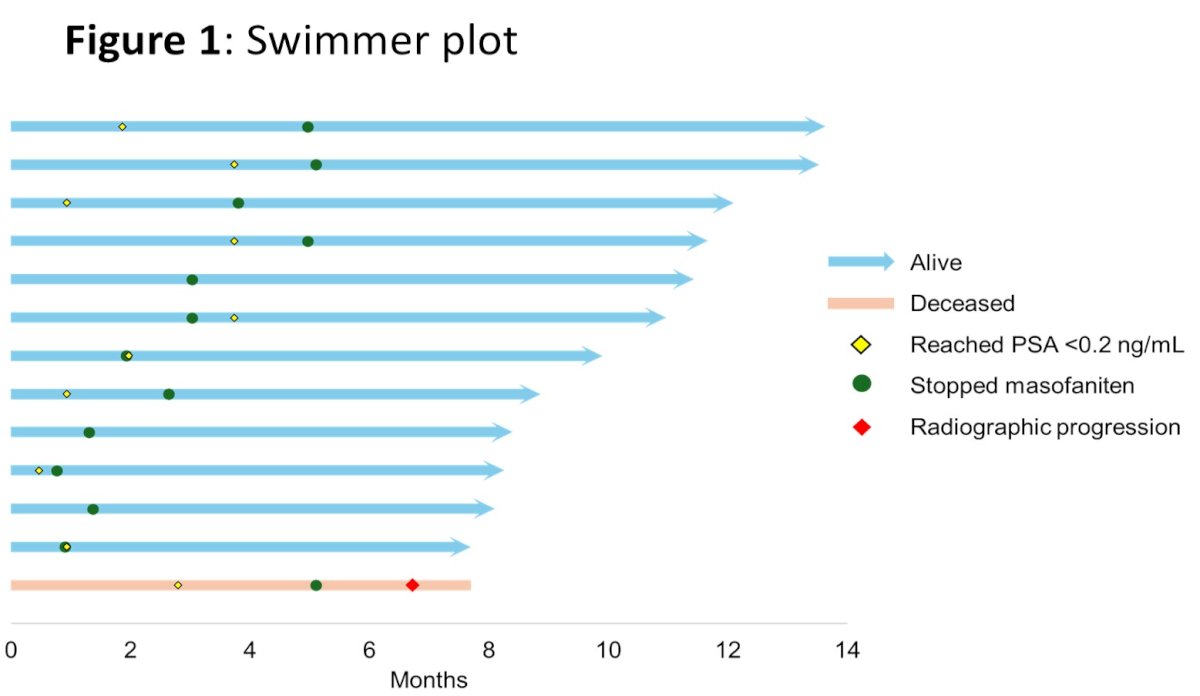
The median follow-up time was 9.9 months. At 6 months, the PSA response was as follows:
- 10 of 13 patients (77%; 95% CI 50–92%) achieved PSA <0.2 ng/mL
- Median time to PSA <0.2 ng/mL: 1.9 months (range 0.5–3.7)
This exceeded the prespecified threshold for proceeding to stage 2, demonstrating strong biochemical activity.
One patient progressed to mCRPC and died of disease. Notably, this patient had somatic pathogenic alterations in RET fusion, PIK3CA, RB1, and TP53 — a genomically aggressive phenotype.
The swimmer plot below provides a granular visualization of treatment exposure and PSA response:
- Most patients rapidly achieved undetectable PSA.
- Several patients remained progression-free beyond 10–12 months.
- One patient experienced radiographic progression.
- Most patients remained alive at data cutoff.
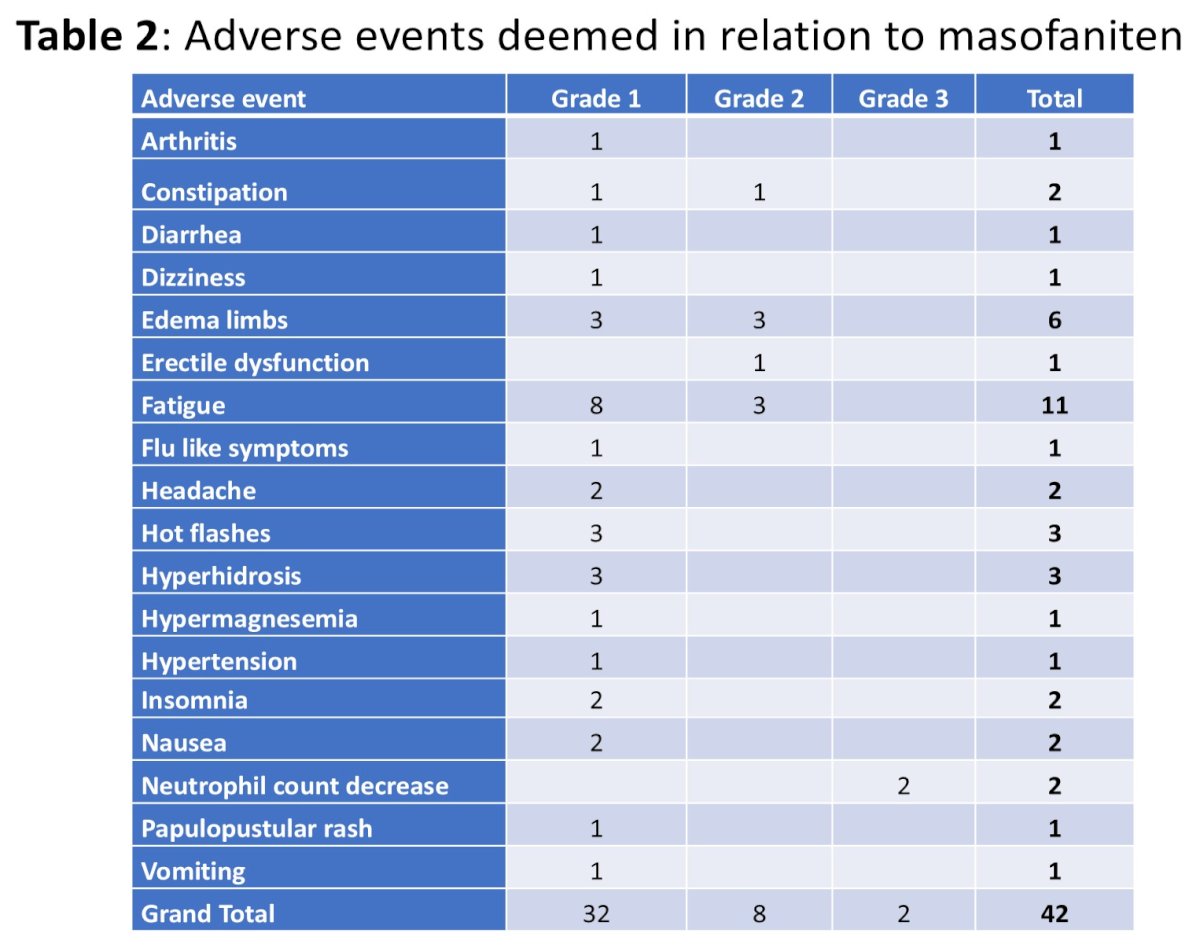
Adverse events were generally grade 1–2. The total number of events were as follows:
- Grade 1: 32
- Grade 2: 8
- Grade 3: 2
- Total AEs: 42
The most common toxicities were as follows:
- Fatigue (11 total; 8 grade 1, 3 grade 2)
- Edema of limbs (6)
- Hot flashes (3)
- Hyperhidrosis (3)
- Headache (2)
- Insomnia (2)
- Nausea (2)
Only two grade 3 events were reported (neutrophil count decrease).
Importantly:
- No unexpected safety signals.
- No apparent toxicity amplification from dual AR blockade.
This suggests dual NTD + LBD inhibition is feasible and tolerable.
Despite promising activity, the trial closed early in November 2025 due to discontinuation of masofaniten development by the sponsor (ESSA Pharma). Patients continued enzalutamide + ADT after masofaniten discontinuation. Pharmacokinetic analyses were not performed.
InterpretationThis small phase II trial provides proof-of-concept that:
- Dual AR inhibition (NTD + LBD) is biologically feasible.
- The triplet demonstrated strong early PSA responses (77% undetectable at 6 months).
- Safety was acceptable with predominantly grade 1–2 toxicities.
- Rapid PSA declines (median 1.9 months) suggest potent AR pathway suppression.
The early closure limits conclusions regarding long-term efficacy and survival impact. However, the biologic rationale remains compelling.
Dr. Jang concluded as follows:
- The triplet of masofaniten + enzalutamide + ADT showed promising biochemical efficacy in mHSPC.
- Dual inhibition of the AR NTD and LBD with oral agents is feasible.
- Safety was acceptable without major toxicity signals.
- The trial closed early due to drug discontinuation, not safety or futility.
- The strategy of targeting AR beyond the LBD remains an important avenue for future drug development.
Presented by: Albert Jang, MD, Advanced Genitourinary Oncology Fellow, Department of Medicine, Mayo Clinic, Rochester, MN
Written by: Rashid K. Sayyid, MD, MSc, Assistant Professor, Urologic Oncologist, Department of Urology at The University of Arizona and Banner University Medical Center, Tucson, AZ – @rksayyid on X during the 2026 American Society of Clinical Oncology Genitourinary (ASCO GU) cancers symposium held in San Francisco, CA, between February 26th and 28th, 2026.
Related content: Masofaniten Combined with Enzalutamide Investigated in Metastatic Hormone-Sensitive Prostate Cancer - Albert Jang