

(UroToday.com) The 2026 ASCO GU Annual Symposium was host to a trials-in-progress prostate cancer poster session. Dr. Johann De Bono presented IDeate-Prostate02, an ongoing phase I/II, open-label umbrella substudy of ifinatamab deruxtecan–based treatment combinations or as monotherapy in participants with previously-treated metastatic castrate-resistant prostate cancer (mCRPC).
There remains a high unmet need for novel effective therapies to improve outcomes for metastatic castration-resistant prostate cancer (mCRPC).¹ B7-H3 (CD276), a type I transmembrane protein, is overexpressed in various types of human cancers, including mCRPC.²,³ B7-H3 overexpression is associated with poor prognosis in certain types of cancers and unresponsiveness to conventional therapies, including immune checkpoint inhibitors.²-5
Ifinatamab deruxtecan (I-DXd; MK-2400/DS-7300a) is a B7-H3-directed antibody-drug conjugate with a plasma-stable, tetrapeptide-based, cleavable linker and the potent topoisomerase I inhibitor payload DXd.6 In a first-in-human phase 1/2 study of I-DXd demonstrated promising antitumor activity and encouraging duration of response in participants with heavily pretreated mCRPC, with a manageable safety profile.7,8 These results merit further clinical investigation of I-DXd–based investigational treatment combinations in mCRPC.
IDEate-Prostate02 is a phase 1/2, multicenter, open-label umbrella substudy of I-DXd–based treatments (clinical trial registry number: NCT06863227). This trial is designed to evaluate I-DXd in multiple therapeutic contexts—both as monotherapy and as part of rational combination strategies.
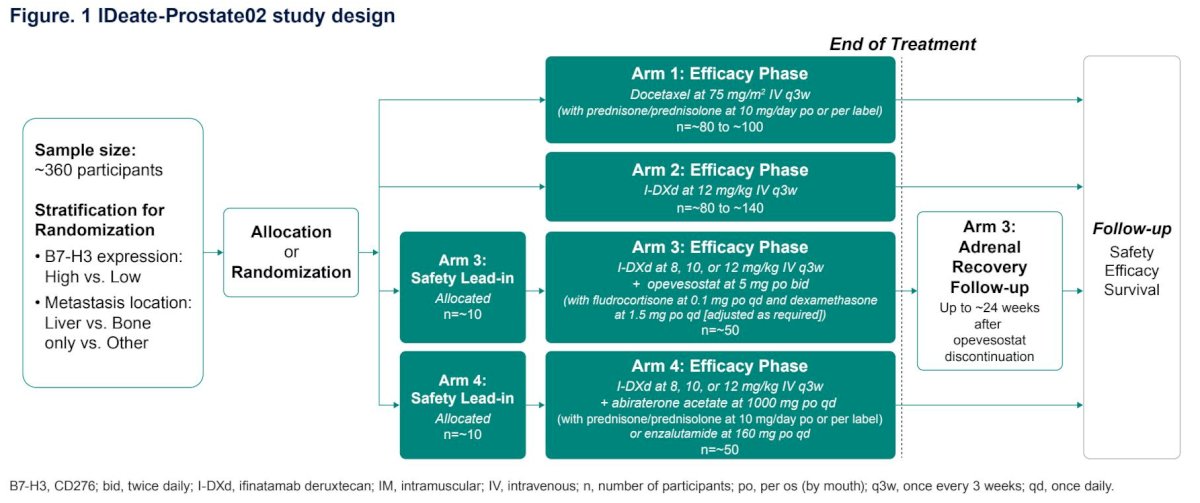
As depicted in Figure 1 below, IDeate-Prostate02 enrolls approximately 360 participants randomized or allocated into one of four arms:
- Arm 1: Docetaxel 75 mg/m² IV q3w (± steroid per label)
- Arm 2: I-DXd 12 mg/kg IV q3w (monotherapy)
- Arm 3: I-DXd (8/10/12 mg/kg q3w) + opevesostat 5 mg PO BID
- Arm 4: I-DXd (8/10/12 mg/kg q3w) + abiraterone 1000 mg qd (with prednisone) or enzalutamide 160 mg qd
Arms 3 and 4 include an initial safety lead-in (n≈10 each) before expansion into the main efficacy cohorts.
Randomization is stratified by:
- B7-H3 expression: high vs low
- Metastatic pattern: liver vs bone-only vs other sites
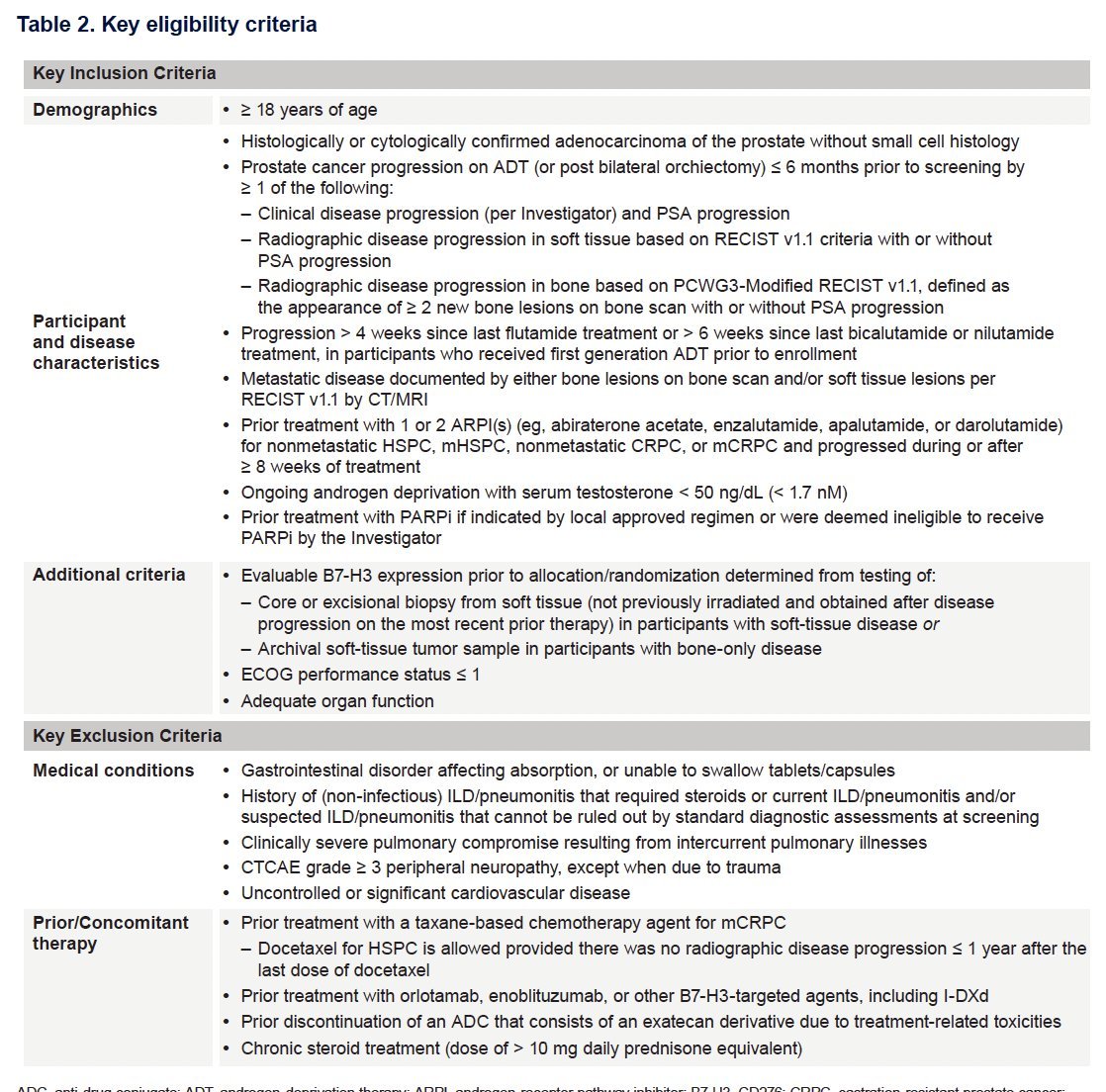
The key eligibility criteria are as follows:
- Histologically/cytologically confirmed adenocarcinoma of the prostate
- Documented metastatic disease by bone scan and/or CT/MRI
- Prior treatment with 1–2 ARPIs
- Disease progression ≤6 months prior to screening via:
- PSA progression
- Radiographic progression (RECIST v1.1 for soft tissue; PCWG3-modified for bone)
- Clinical progression
- Evaluable B7-H3 expression via soft-tissue biopsy or archival sample
- No prior taxane for mCRPC (docetaxel for mHSPC allowed if no progression ≤1 year after last dose)
- No prior B7-H3-targeted therapy
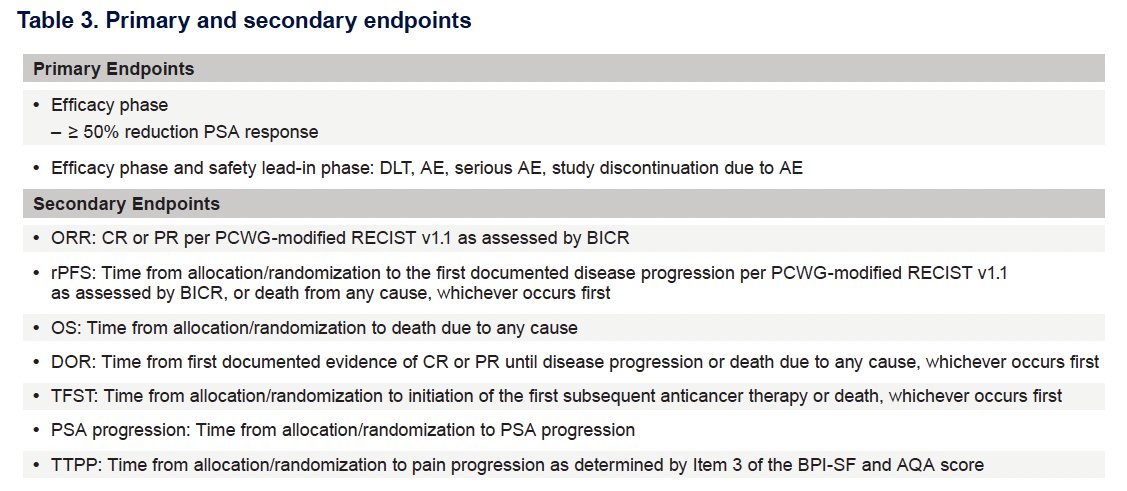
The primary and secondary objectives differ by phase and study arm:
- Phase 1 (Safety Lead-In, Arms 3–4)
- Primary: Evaluate safety/tolerability; establish RP2D for combination regimens.
- Secondary: Characterize duration of response (DOR).
- Phase 2 (Efficacy Phase, Arms 1–4)
- Primary: PSA50 response rate.
- Secondary: Objective response rate (ORR by PCWG-modified RECIST v1.1), rPFS, OS, DOR, TFST, time to PSA progression, time to pain progression (TTPP)
The study assessments are as follows:
- Tumor imaging: CT/MRI every 6 weeks until Week 48, then every 12 weeks
- Safety: AEs monitored through 14–40 days post-treatment, depending on agent
- Biomarkers: B7-H3 expression assessed using an analytically validated IHC assay
The intent-to-treat population will be used for the primary efficacy analyses in the efficacy phase; all randomized participants will be included in this population. The all-participants-as-treated population will be used for the safety data, consisting of all allocated participants in the safety lead-in phase who received ≥ 1 dose of study intervention and all randomized participants in the efficacy phase who received ≥ 1 dose of study intervention. Participants within the same investigational treatment arm at the same dose level/frequency in the safety lead-in phase and efficacy phase will be pooled in the safety analysis.
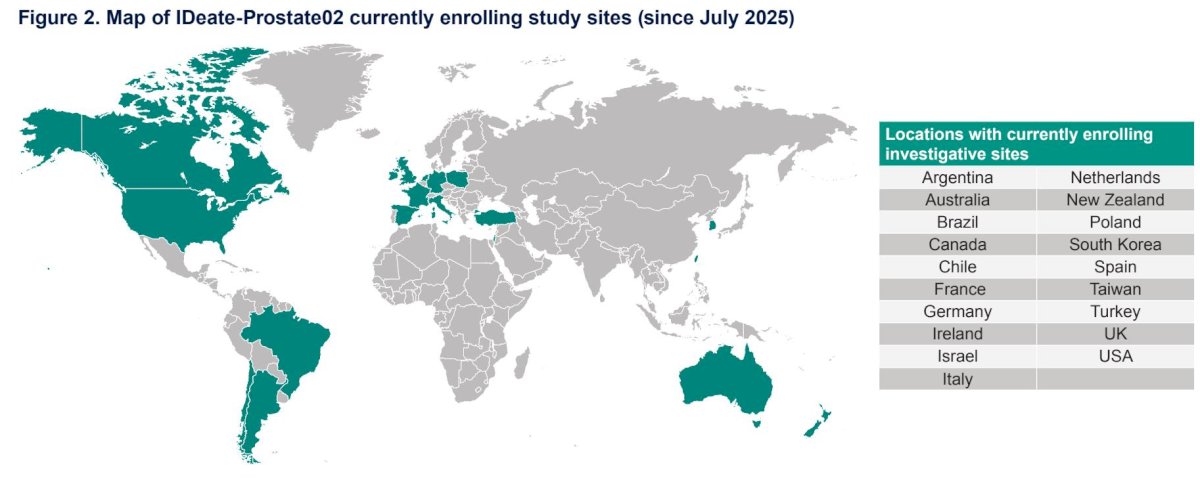
The IDeate-Prostate01 study began on July 03, 2025, and enrollment is currently ongoing globally (Figure 2).
Presented by: Johann S. De Bono, MD, MSc, PhD, FRCP, Regius Professor of Cancer Research and a Professor in Experimental Cancer Medicine at The Institute of Cancer Research and The Royal Marsden NHS Foundation Trust, London, UK
Written by: Rashid K. Sayyid, MD, MSc, Assistant Professor, Urologic Oncologist, Department of Urology at The University of Arizona and Banner University Medical Center, Tucson, AZ – @rksayyid on X during the 2026 American Society of Clinical Oncology Genitourinary (ASCO GU) cancers symposium held in San Francisco, CA, between February 26th and 28th, 2026.
References:
- European Association of Urology (EAU), European Association of Nuclear Medicine (EANM), European Society for Radiotherapy and Oncology (ESTRO), European Society of Urogenital Radiology (ESUR), International Society of Urological Pathology (ISUP), International Society of Geriatric Oncology (SIOG). EAU–EANM–ESTRO–ESUR–ISUP–SIOG guidelines on prostate cancer 2025. Arnhem (NL): EAU Guidelines Office; 2025. Available from: https://d56bochluxqnz.cloudfront.net/documents/full-guideline/EAU-EANM-ESTRO-ESUR-ISUP-SIOG-Guidelines-on-Prostate-Cancer-2025_2025-03-24-120144_irwn.pdf. Accessed 2026 Feb 27.
- Getu AA, Tadesse B, Mulugeta A, et al. B7-H3 (CD276) expression in solid tumors and its association with prognosis: a systematic review and meta-analysis. Mol Cancer. 2023;22:43.
- Shen Q, Zhang L, Liu Y, et al. B7-H3 as a novel immune checkpoint molecule and therapeutic target in cancer. J Immunother Cancer. 2024;15:822.
- Zhao B, Xu H, Ai X, et al. B7-H3 expression and its prognostic significance in hematologic malignancies. J Hematol Oncol. 2022;15:153.
- Lin W, Wang C, Liu G, et al. The role of B7-H3 in tumor immunity and its potential as an immunotherapy target. Front Immunol. 2021;12:757047.
- Yamato M, Kuroda H, Sato Y, et al. B7-H3 expression and its association with tumor progression in prostate cancer. Mol Cancer Ther. 2022;21:635-646.
- Patel MR, Bauer TM, Gainor JF, et al. Phase I study of ifinatamab deruxtecan (I-DXd; MK-2400/DS-7300a), a B7-H3–directed antibody-drug conjugate, in advanced solid tumors. Ann Oncol. 2023;34:S481-S482.
- Patel MR, Bauer TM, Gainor JF, et al. Ifinatamab deruxtecan (I-DXd; MK-2400/DS-7300a) in patients with advanced solid tumors: updated phase I results. J Clin Oncol. 2022;40(Suppl 6):Abstract 87.