

(UroToday.com) The 2026 GU ASCO annual meeting featured a prostate cancer session and a presentation by Dr. Michael Morris discussing health related quality of life, pain, and symptomatic skeletal events in the phase 3 PSMAddition study of 177Lu-PSMA-617 combined with ADT and androgen receptor pathway inhibitor in patients with PSMA-positive metastatic hormone-sensitive prostate cancer (mHSPC).
In PSMAddition (NCT04720157), combining 177Lu-PSMA-617 with ADT + androgen receptor pathway inhibitor significantly improved radiographic progression-free survival versus ADT + androgen receptor pathway inhibitor, in patients with PSMA+ mHSPC (HR 0.72, 95% CI 0.58 - 0.90; p = 0.002) at interim analysis 2. At ASCO GU 2026, Dr. Morris and colleagues presented health-related quality of life, pain, and symptomatic skeletal events results at radiographic progression-free survival interim analysis 2 (data cutoff: January 13, 2025).
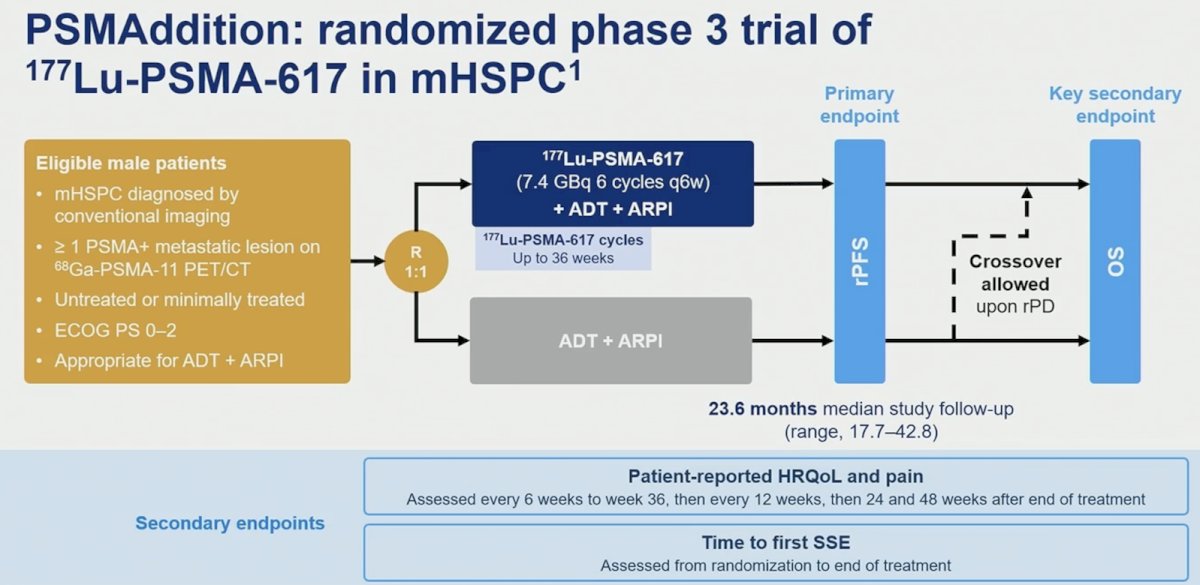
Eligible patients had treatment-naive/minimally treated (≤45 days pre-consent) mHSPC and ≥1 PSMA+ metastatic lesion on 68Ga-PSMA-11 PET/CT. Patients were randomized 1:1 to 177Lu-PSMA-617 (7.4 GBq ± 10% q6w, 6 cycles) + ADT + androgen receptor pathway inhibitor (177Lu-PSMA-617 arm) or to ADT + androgen receptor pathway inhibitor alone (control arm). The primary endpoint was radiographic progression-free survival (BIRC-confirmed radiographic progressive disease by PCWG3/RECIST v1.1 or death). Safety and tolerability were secondary endpoints:
Secondary endpoints also included time to worsening in patient-reported health-related quality of life (FACT-P, EQ-5D-5L) and pain (BPI-SF), defined as composites of score worsening by prespecified thresholds, clinical progression, or death, and composite time to symptomatic skeletal event or death:
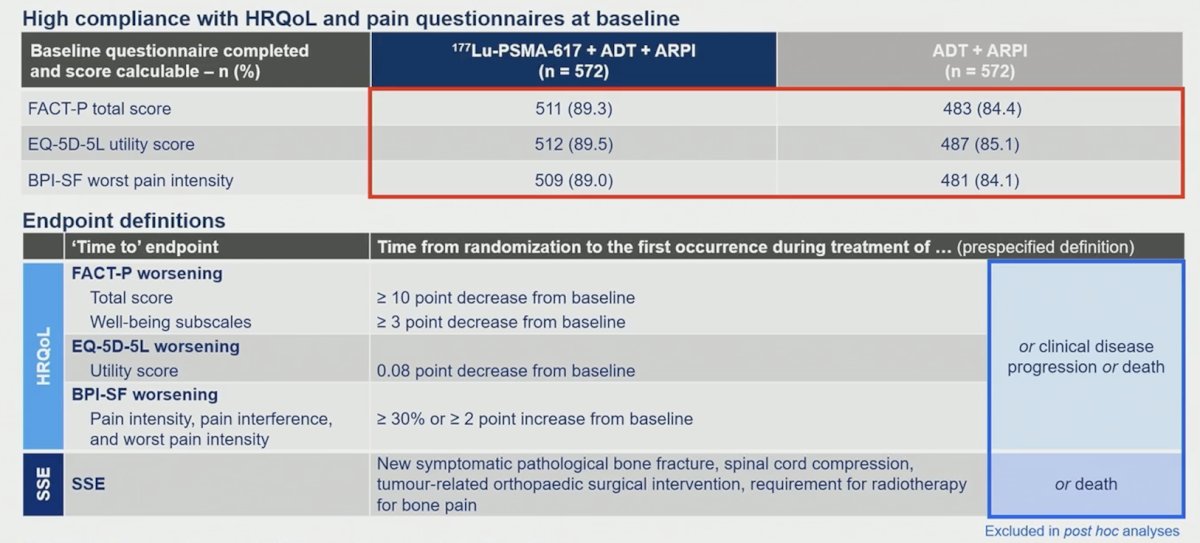
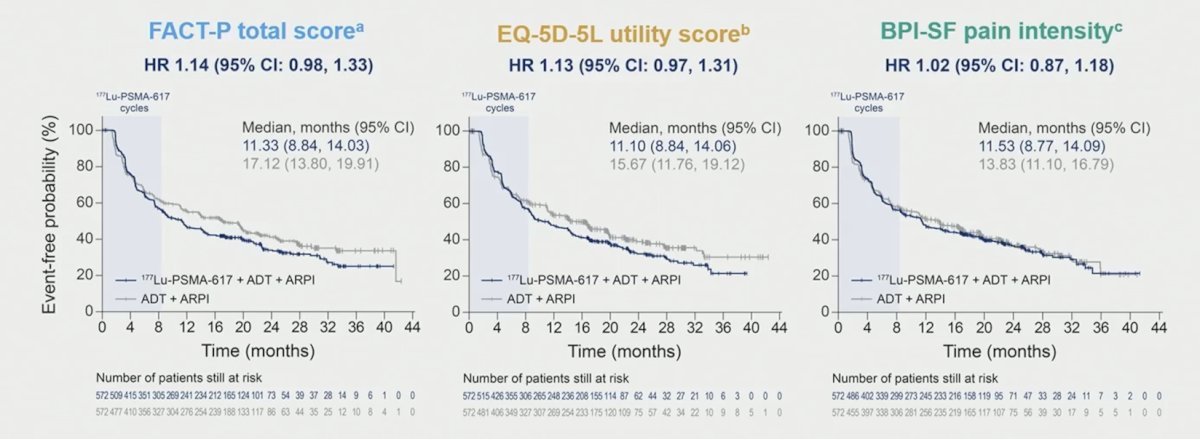
There were 1,144 patients randomized, with a median study treatment exposure of 20.6 months in the 177Lu-PSMA-617 arm and 19.94 months in the control arm. Overall incidences of grade ≥3 adverse events and serious adverse events were 50.7% and 26.6%, respectively, in the 177Lu-PSMA-617 arm and 43.0% and 22.8% in the control arm. Hazard ratios for time to worsening in all FACT-P, EQ-5D-5L, and BPI-SF scales/subscales were >1.0 but <1.2, and all 95% CIs included 1.0 (177Lu-PSMA-617 arm versus control arm):
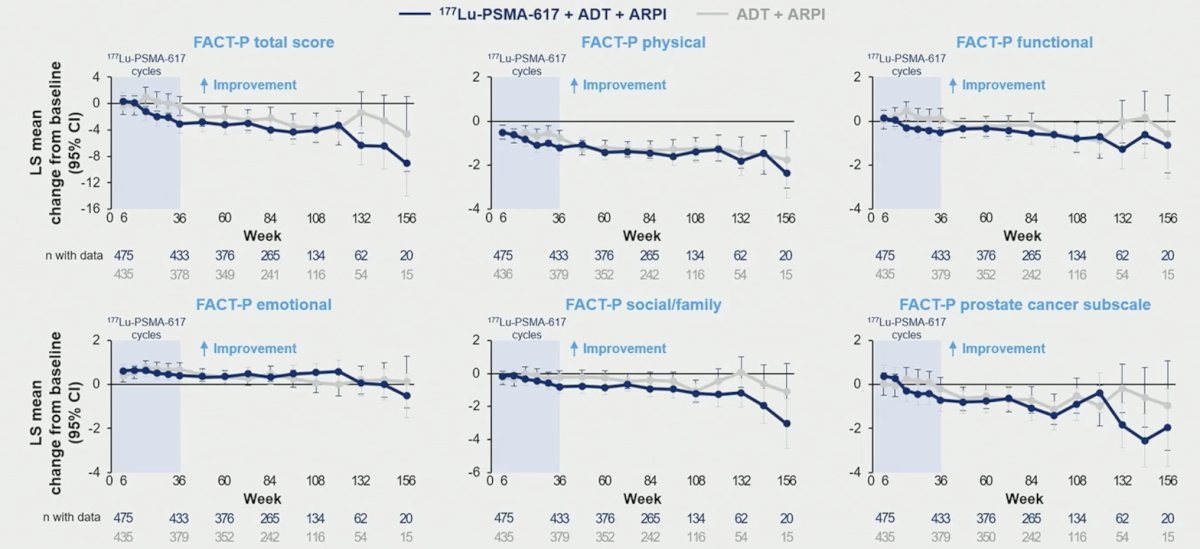
The longitudinal assessment of change from baseline for FACT-P total score and the sub-domains is highlighted in the following figure:
The hazard ratio for time to symptomatic skeletal event was 0.89 (95% CI 0.62, 1.26), which was comparable when excluding death (HR 0.87, 95%CI 0.58, 1.31):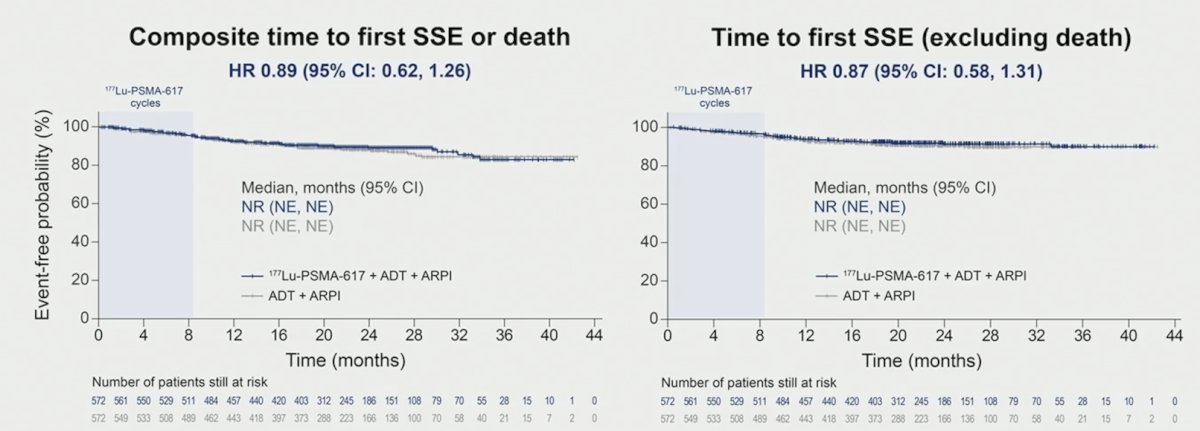
Dr. Morris concluded his presentation discussing health-related quality of life, pain, and symptomatic skeletal events in the phase 3 PSMAddition study with the following take-home points:
- With regards to longitudinal health-related quality of life, differences in FACT-P were observed between arms during 177Lu-PSMA-617 treatment cycles, and arms were similar thereafter
- EQ-5D-5L and BPI-SF were similar between the two arms; more data are needed at later time points
- Time to symptomatic skeletal event was similar between the 177Lu-PSMA-617 arm and the control arm at a median of 23.6 months of study follow-up
Presented by: Michael Morris, MD, Prostate Cancer Section Head, GU Oncology, Steven A. Greenberg Chair in Prostate Cancer Research, Memorial Sloan Kettering Cancer Center, New York, NY
Related content: Longitudinal Analysis of Patient-Reported Outcomes in the PSMAddition Trial - Michael Morris