

(UroToday.com) The 2026 GU ASCO annual meeting featured a prostate cancer trials in progress session and a presentation by Dr. Giuseppe Cardaci discussing ProTACT, a first-in-human, phase 1 dose escalation and expansion study evaluating the safety, tolerability, and anti-tumor activity of 225Ac-FL-020, an anti-PSMA radioconjugate, in patients with metastatic castration resistant prostate cancer (mCRPC).
PSMA-targeted radioligand therapy is an emerging treatment modality for mCRPC. However, many agents targeting PSMA have resulted in quality-of-life-limiting toxicities, such as xerostomia, due to expression of PSMA in salivary glands and other organs. 225Ac-FL-020 is a next-generation, PSMA alpha radioconjugate developed using the proprietary UniRDC linker-chelator technology designed to optimize biodistribution:
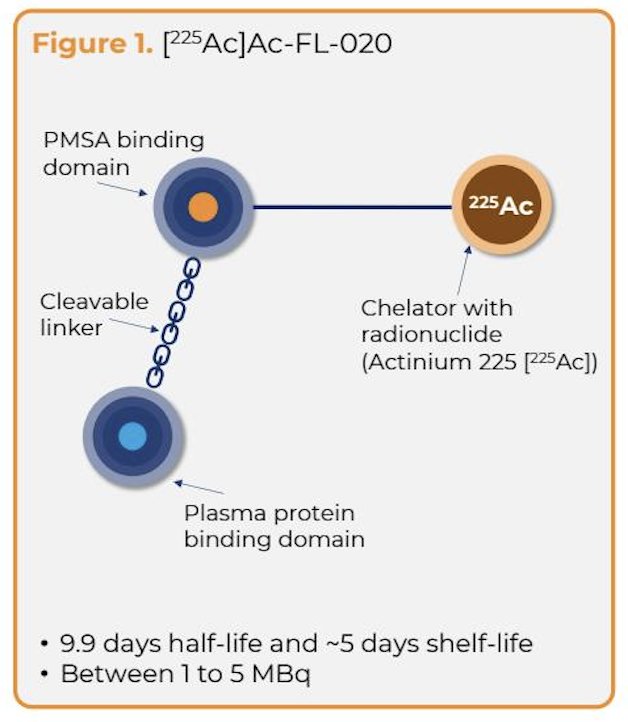
225Ac-FL-020 is intended for the treatment of patients with mCRPC and aims to enhance tumor uptake while sparing radiosensitive organs, such as salivary glands, thus potentially leading to an improved therapeutic window.
ProTACT (FL-020-001) is a first-in-human, open-label, multicenter phase 1 study investigating the safety, tolerability, and preliminary anti-tumor activity of 225Ac-FL-020 in patients with advanced PSMA-positive mCRPC. This study consists of 2 parts: dose escalation (Part 1) and dose expansion (Part 2). Patients eligible for enrollment must be aged ≥18 years and have:
- Histologically confirmed mCRPC
- Evidence of disease progression
- ≥1 PSMA-positive lesion (uptake higher than liver) on PSMA PET/CT imaging
- ECOG performance status of 0 to 1
- Adequate organ function
Prior treatment with androgen receptor signaling inhibitors or CYP17 inhibitors and ≥1 taxane-based chemotherapy is required, unless declined by the patient. Prior therapy with Lu-177 is allowed, however patients with extensive PSMA-negative disease are excluded. 225Ac-FL-020 will be administered intravenously at the assigned dose every 6 weeks for up to 6 cycles. In Part 1, 5 eligible patients will receive 185 ± 20 MBq of 111In-FL-020 for dosimetry evaluation ≥8 days prior to the first dose of 225Ac-FL-020. Part 1 will apply a Bayesian logistic regression model with overdose control to guide dose-escalation decisions. Dose cohorts of 1–3 patients (for Cohorts 1 and 2) and 3–6 patients (for Cohorts 3 and beyond) will evaluate ascending dose levels from 1–10 MBq to determine the maximum tolerated dose and/or recommended phase 2 dose. Once the recommended phase 2 dose is established, 18 additional patients will be enrolled in Part 2 to further assess safety and explore early signals of efficacy:
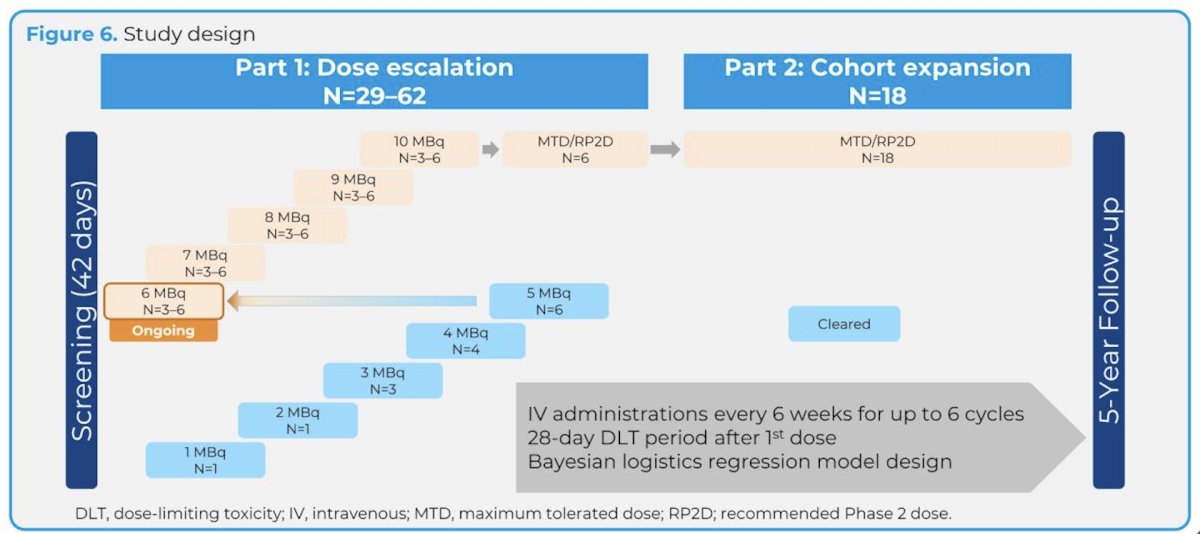
The primary endpoints include incidence of dose-limiting toxicities and type, frequency, and severity of adverse events/serious adverse events. Secondary endpoints include:
- Overall response rate
- Disease control rate
- Radiological progression-free survival
- Pharmacokinetic parameters (ie, maximum plasma concentration)
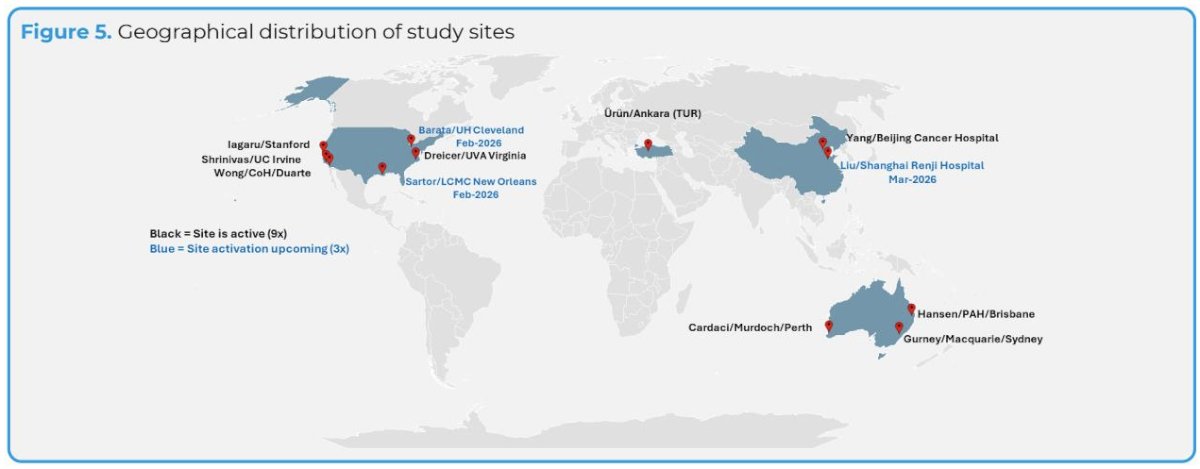
The study intends to enroll patients in Australia, Turkey, the United States, and China:
As of January 2, 2026, 15 patients have received 225Ac-FL-020 at up to 5 MBq per cycle. The study completion is expected by the end of 2026, and the FDA has granted Fast Track Designation for 225Ac-FL-020 in mCRPC.
Presented by: Giuseppe Cardaci, MD, GenesisCare, Murdoch, Australia
Related content: ProTACT Trial Investigates Next-Generation PSMA-Targeted Alpha Therapy for mCRPC - Aaron Hansen