

(UroToday.com) The 2026 GU ASCO annual meeting featured a prostate cancer trials in progress session and a presentation by Neeraj Agarwal, MD, FASCO, discussing MEVPRO-3, a phase III trial of mevrometostat + enzalutamide versus placebo + enzalutamide in mCSPC. Enhancer of zeste homolog 2 (EZH2) enzymatic activity plays a crucial role in prostate cancer progression. Mevrometostat, an oral potent and selective EZH2 inhibitor, may synergize with androgen receptor pathway inhibitors to delay androgen receptor pathway inhibitor resistance. In a phase I study (NCT03460977), mevrometostat combined with enzalutamide showed promising antitumor activity versus enzalutamide alone in heavily pre-treated patients with metastatic castration resistant prostate cancer (mCRPC) (median radiographic progression free survival 14.3 [95% CI 7.5, not estimable] versus 6.2 [95% CI 4.1, 13.9] months; HR 0.51, 90% CI 0.28, 0.95), and a manageable safety profile. The addition of mevrometostat to an androgen receptor pathway inhibitor in patients with mCSPC is hypothesized to prevent or delay progression to CRPC and improve survival. The ongoing phase III studies MEVPRO-1 (NCT06551324) and MEVPRO-2 (NCT06629779) are evaluating mevrometostat + enzalutamide in patients with mCRPC. MEVPRO-3 (NCT07028853) will evaluate mevrometostat + enzalutamide versus placebo + enzalutamide in androgen receptor pathway inhibitor-naïve patients with mCSPC.
MEVPRO-3 is a double-blind, randomized, global, phase III study enrolling patients aged ≥18 years with mCSPC and ECOG performance status 0–1. Prior systemic therapy use in the metastatic setting is not allowed except for ≤3 months of androgen deprivation therapy (with or without first-generation antiandrogens), with no evidence of disease progression prior to day 1. Prior palliative radiotherapy or surgery is allowed, but radical prostatectomy or prostate radiotherapy, or metastasis-directed therapy for mCSPC is prohibited. Approximately 1,000 patients will be randomized 1:1 to mevrometostat (875 mg BID with food) + enzalutamide (160 mg, QD) or placebo + enzalutamide. Randomization will be stratified by low versus high disease volume and de novo versus relapsed mCSPC:
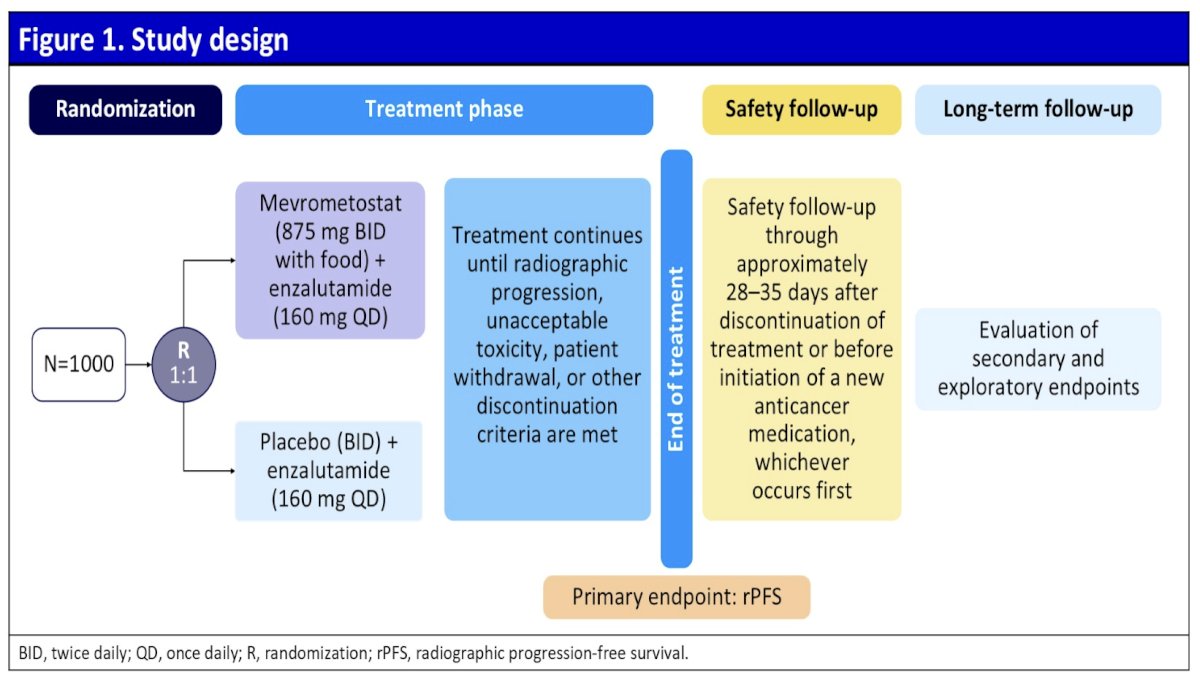
The primary endpoint is radiographic progression free survival per RECIST 1.1 (soft tissue) and PCWG3 criteria (bone), assessed by blinded independent central review. Secondary endpoints include overall survival, objective response rate, duration of response, time to PSA progression, initiation of new antineoplastic therapy, first symptomatic skeletal event, CRPC, and patient-reported outcomes. Alpha-protected efficacy analyses will include tests for radiographic progression free survival and overall survival. HRs and 95% CIs will be estimated via Cox proportional hazard model. Pharmacokinetics and safety will also be assessed.
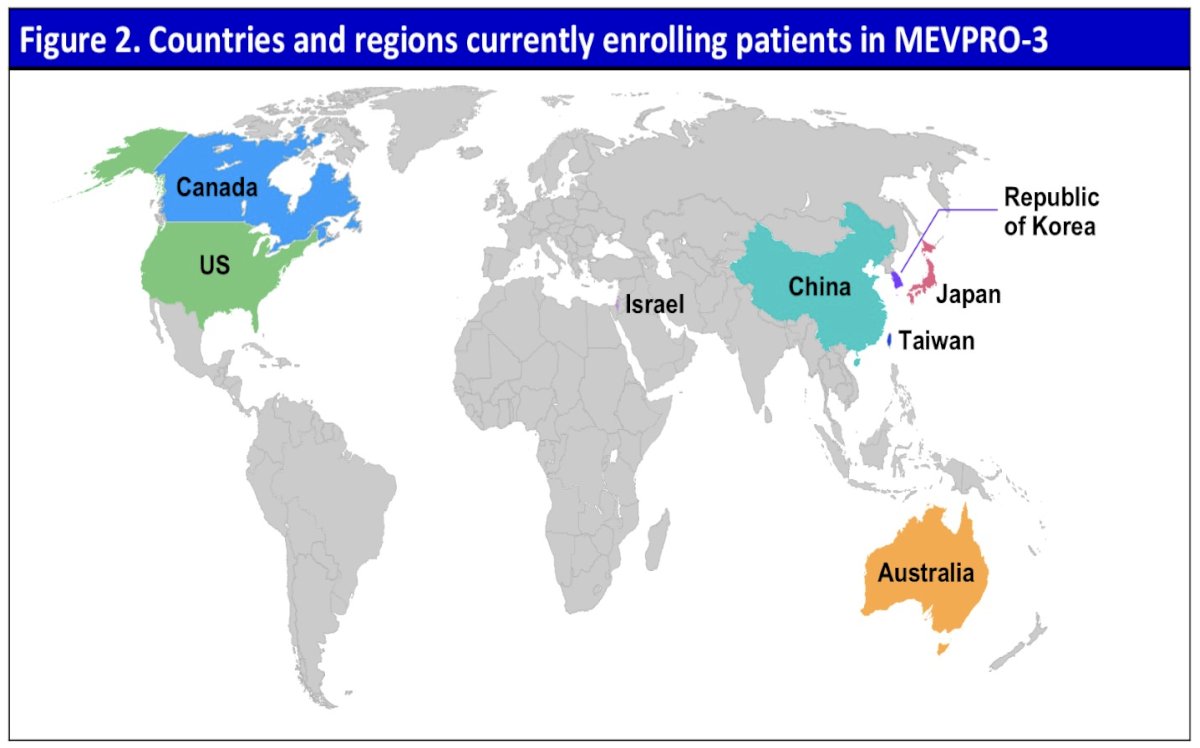
The first patient was enrolled in the study on September 28, 2025, with enrollment ongoing in North America and the Asia-Pacific, with sites planning to open in Europe and Latin America. The study is estimated to be completed in December 2034:
Presented by: Neeraj Agarwal, MD, FASCO, Huntsman Cancer Institute at the University of Utah, Salt Lake City, UT
Written by: Zachary Klaassen, MD, MSc – Urologic Oncologist, Associate Professor of Urology, Georgia Cancer Center, Wellstar MCG Health, @zklaassen_md on Twitter during the 2026 American Society of Clinical Oncology Genitourinary (ASCO GU) cancers symposium held in San Francisco, CA, between February 26th and 28th, 2026.