

(UroToday.com) The 2026 ASCO GU Annual Symposium was host to a prostate cancer poster session. Dr. Murilo De Almeida Luz presented a post-hoc analysis of DAROL evaluating the real-world safety and efficacy of darolutamide in non-metastatic castration-resistant prostate cancer (nmCRPC) patients by lipid-modifying agent use.
The DAROL study is an ongoing long-term, real-world investigation evaluating the safety and effectiveness of darolutamide in patients with nmCRPC. Interim analysis 4 (IA4) included a post hoc evaluation examining outcomes among patients receiving concomitant lipid-modifying agents (LMAs), including statins such as atorvastatin, simvastatin, and rosuvastatin, given the frequent coexistence of cardiovascular comorbidities in this population.
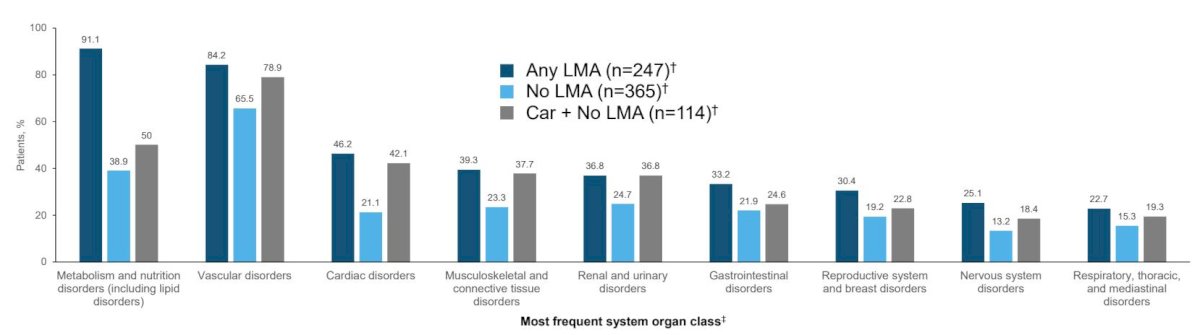
Approximately one-third of patients (32.3%) were receiving at least one LMA at study entry. Baseline prostate cancer characteristics were generally similar between patients receiving LMAs and those not receiving LMAs, although patients on LMAs tended to have a greater medical comorbidity burden and more concomitant medication use, as expected.
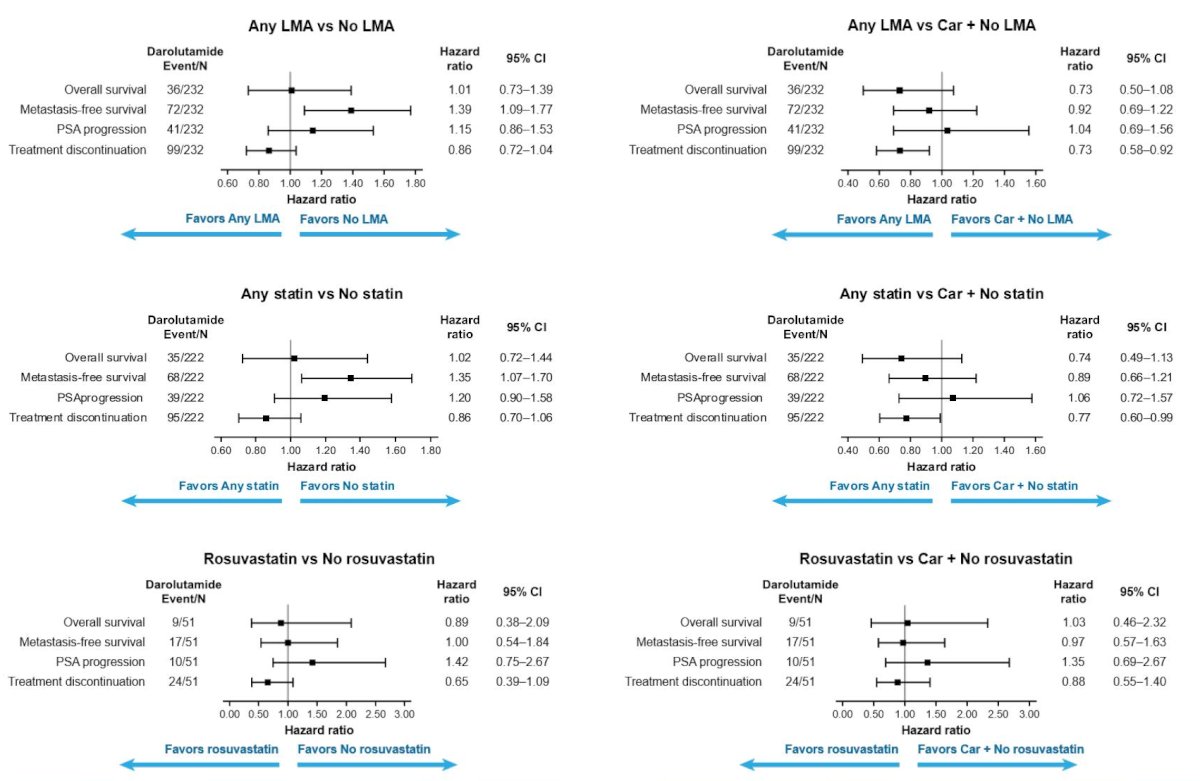
Effectiveness outcomes demonstrated that darolutamide maintained clinical efficacy regardless of LMA use. There were no meaningful differences in overall survival or PSA progression between the Any LMA and No LMA subgroups. Similarly, PSA response kinetics appeared comparable across groups, suggesting that concomitant lipid-lowering therapy does not diminish the antitumor activity of darolutamide in nmCRPC.
Metastasis-free survival analyses showed a numerical trend favoring the No LMA and No statin subgroups, although this pattern was not observed specifically for rosuvastatin exposure. These findings may reflect baseline comorbidity differences rather than a direct pharmacologic interaction.
Safety analyses demonstrated that darolutamide was generally well tolerated regardless of LMA exposure. The median follow-up duration was similar between subgroups (Any LMA approximately 22.8 months vs No LMA approximately 22.2 months). Rates of treatment-emergent adverse events (TEAEs) were somewhat higher among patients receiving LMAs, consistent with their greater underlying comorbidity burden; however, no grade 5 TEAEs were considered treatment related.
The safety profile of patients receiving darolutamide plus concomitant cardiovascular medications was broadly similar to the overall population, although slightly higher rates of grade 3/4 TEAEs were observed. Importantly, treatment discontinuations due to TEAEs were less frequent among patients receiving LMAs compared with those not receiving LMAs, suggesting that concomitant lipid-modifying therapy does not negatively affect treatment tolerability.
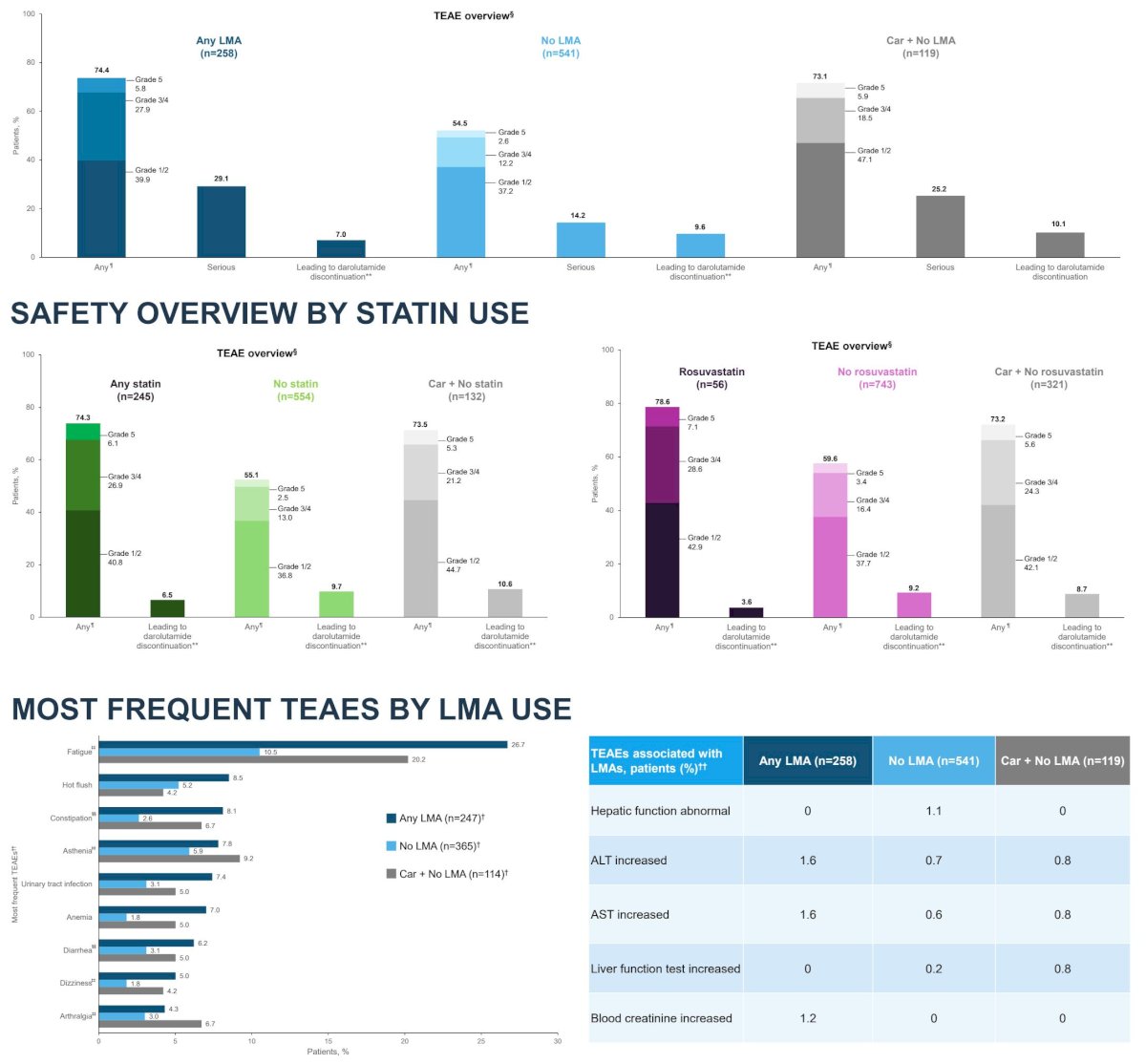
Analysis by statin subtype yielded similar findings. Darolutamide efficacy remained consistent among statin users versus non-users, including patients specifically receiving rosuvastatin. Adverse event patterns were comparable, without a clear signal of excess hepatic, renal, or cardiovascular toxicity attributable to combined therapy.
Common TEAEs associated with LMA use included expected metabolic and cardiovascular comorbidities rather than new safety signals attributable to darolutamide. Laboratory abnormalities such as ALT or AST elevation, hepatic function abnormalities, and creatinine increases occurred at low overall frequencies.
Collectively, these real-world findings from DAROL IA4 support darolutamide as an effective and well-tolerated standard-of-care treatment option for patients with nmCRPC, including those receiving concomitant lipid-modifying agents. The data suggest that concurrent statin or other LMA therapy does not compromise oncologic efficacy or introduce new safety concerns, an important consideration given the high prevalence of cardiovascular risk factors in this patient population.
Presented by: Murilo De Almeida Luz, MD, Department of Urology, Icahn School of Medicine at Mount Sinai, New York, NY, USA
Written by: Rashid K. Sayyid, MD, MSc, Assistant Professor, Urologic Oncologist, Department of Urology at The University of Arizona and Banner University Medical Center, Tucson, AZ – @rksayyid on X during the 2026 Genitourinary (GU) American Society of Clinical Oncology (ASCO) Annual Meeting, San Francisco, CA, Thurs, Feb 26 – Sat, Feb 28, 2026.