

(UroToday.com) The 2026 GU ASCO annual meeting featured a prostate cancer session and a presentation by Dr. Enrique Gallardo discussing the final overall survival results from the EORTC 1333/PEACE-3 trial assessing enzalutamide with or without radium-223 in metastatic castration resistant prostate cancer (mCRPC). Enzalutamide is a standard of care and the most frequently used treatment option for first line mCRPC, and radium-223 (an alpha particle emitting agent) conferred an overall survival benefit in mCRPC as demonstrated in the ALSYMPCA trial.1 In EORTC1333/PEACE-3, the combination of enzalutamide and radium-223 prolonged radiological progression free survival and overall survival (at the interim analysis) in patients with mCRPC with bone metastases, with a safety similar to that of each treatment alone, versus enzalutamide alone.2 At ASCO GU 2026, Dr. Gallardo and colleagues reported the final overall survival analysis and updated safety data.
EORTC1333/PEACE-3 is a randomized, open-label, multicenter phase III trial evaluating the addition of radium-223 to enzalutamide in mCRPC with bone metastases. In PEACE-3, a total of 446 asymptomatic or mildly symptomatic patients (Brief Pain Inventory <4) with mCRPC and ≥2 bone metastases were randomized 1:1 to enzalutamide 160 mg daily alone or combined with six intravenous injections of Ra-223 (55 kBq/kg every 4 weeks):
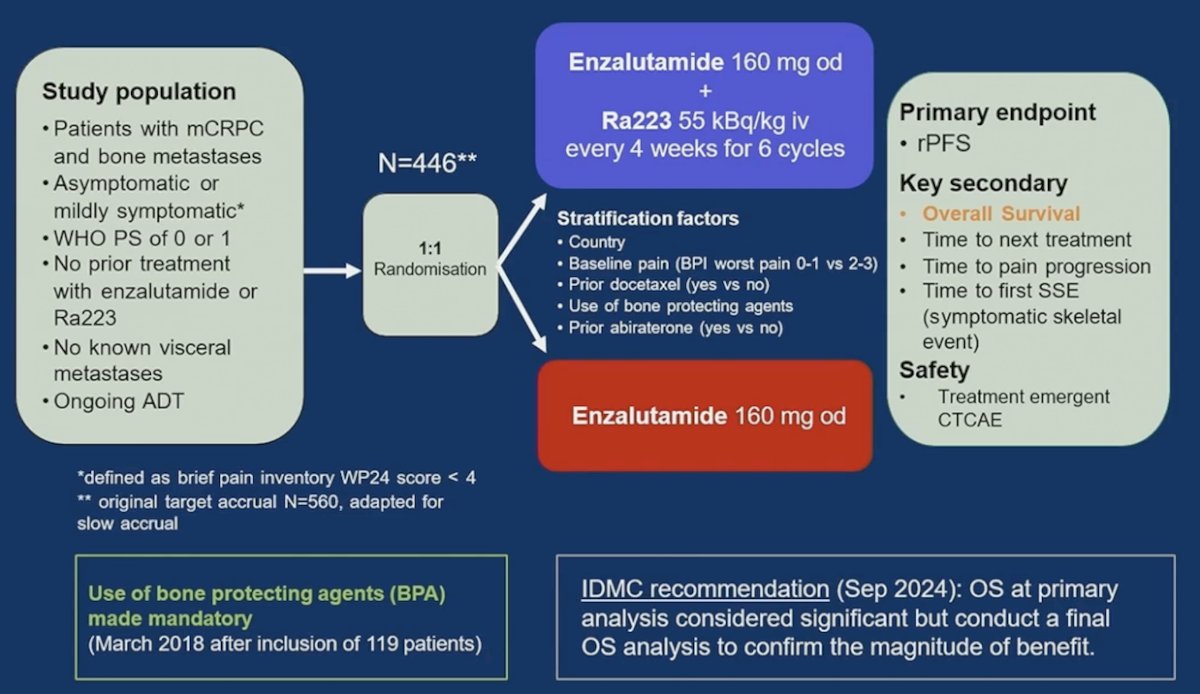
The study was conducted in collaboration with Clinical Trial Ireland (CTI), the Canadian Urological Oncology Group (CUOG), the Latin American Cooperative Oncology Group (LACOG), and the French group GETUG/UNICANCER. The primary endpoint was radiological progression free survival, and overall survival and safety were key secondary endpoints.
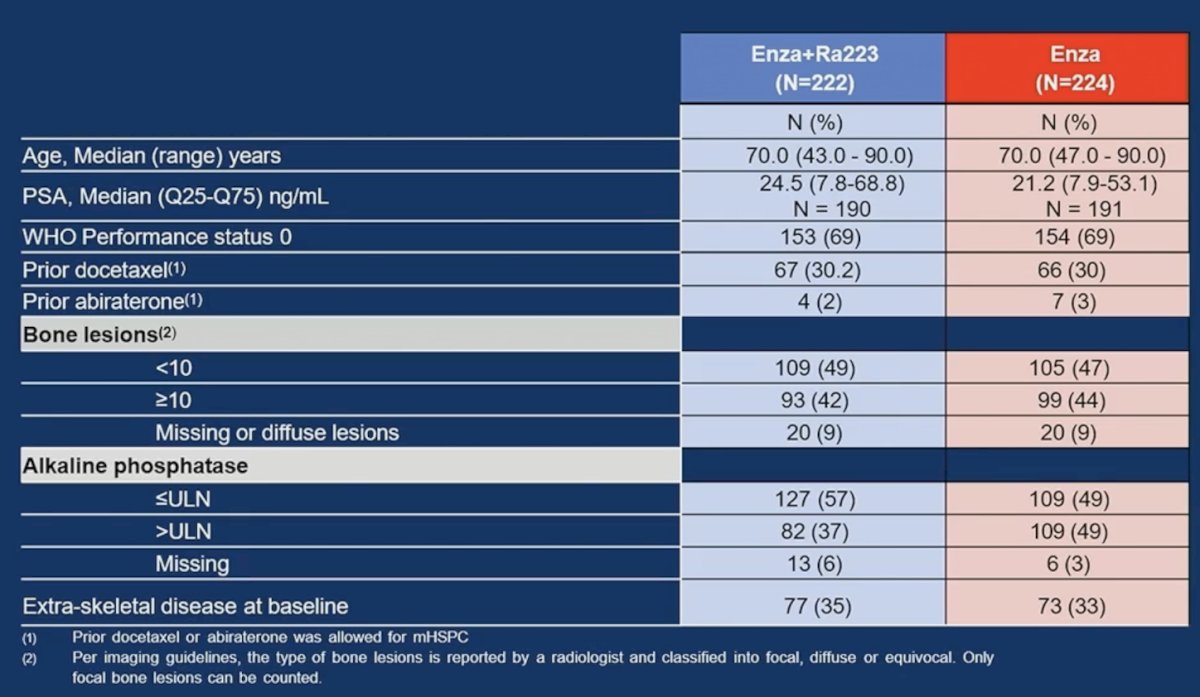
The baseline characteristics were well balanced between the two groups:
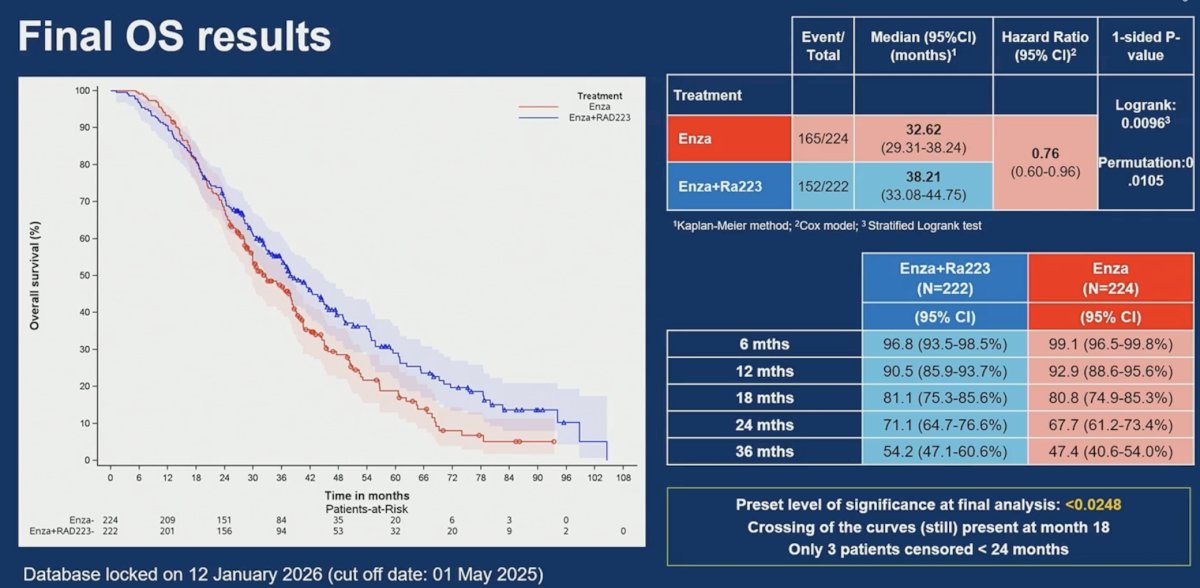
At the final database lock (January 12, 2026), 317 deaths were recorded (152/222 enzalutamide + radium 223; 165/224 enzalutamide), representing 106.4% of the 299 expected events. The median overall survival was 38.21 months for enzalutamide + radium 223 and 32.62 months for enzalutamide alone, corresponding to a hazard ratio of 0.76 (95% CI 0.60–0.96; one-sided stratified log rank p-value 0.0096, with a preset level of significance at final analysis of < 0.0248). Based on the permutation test, the statistical test on overall survival is significant (resulting in a 1-sided p-value of 0.0088 < 0.0248):
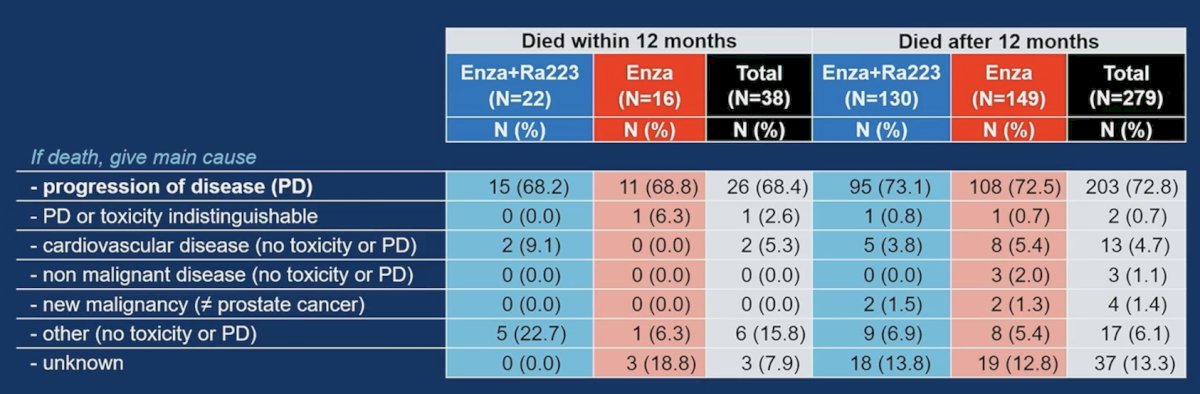
The survival status and reasons of death over 12 months are provided in the table below. Of note, before the overall survival curves cross, the overall survival difference is observed at 12 months and is only 6 patients. Regarding deaths due to progressive disease over 12 months, the difference is only 4 patients. After 12 months, more deaths were observed in the enzalutamide arm at any time point:
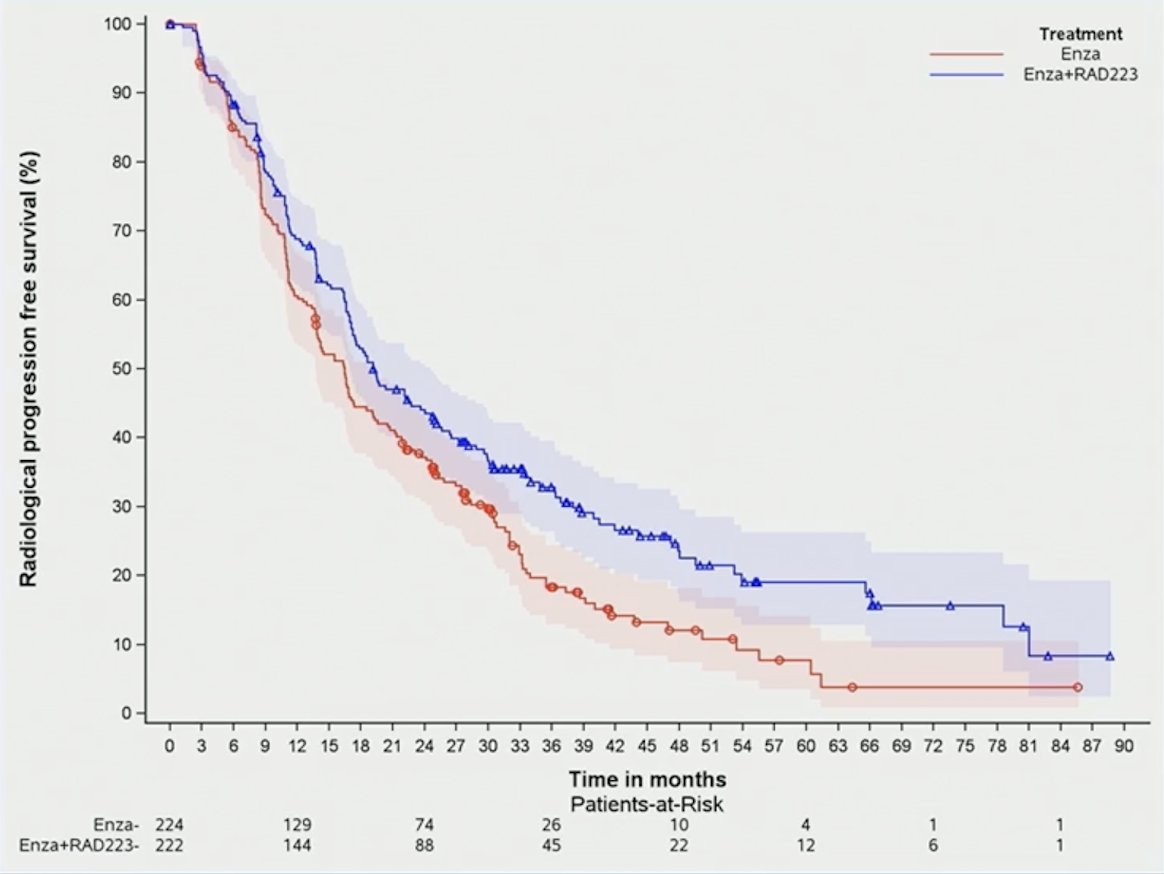
The overall survival benefit was consistent across most predefined subgroups, except for age >75, for which the interaction was significant at the 10% 2-sided level. The previously published primary analysis [2] demonstrated a significant improvement in radiological progression free survival (19.4 versus 16.4 months; HR 0.69, 95% CI 0.54 – 0.87; p = 0.0009). The final radiographic progression free survival analysis continued to show a benefit for enzalutamide + radium 223 (HR 0.71, 95% CI 0.57-0.89):
The updated safety analysis demonstrated no new signals, with 28.9% of patients receiving enzalutamide + radium 223 have a grade 3-5 drug related treatment emergent adverse event, compared to 18.8% for those receiving enzalutamide alone:

The summary of treatment emergent adverse events grade 3+ is as follows, most notably hypertension being the most common:
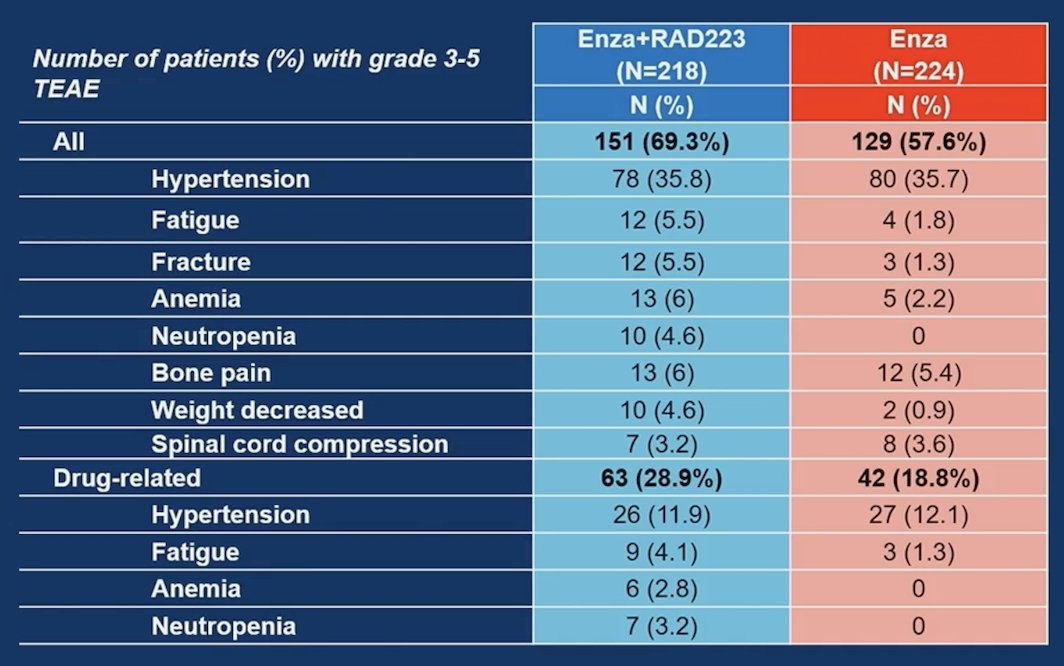
Side effects of special interest included one patient with myelodysplastic syndrome, one with AML, and one with CML, all of which were in the enzalutamide + radium 223 combination arm. Moreover, there were 17 patients with osteonecrosis of the jaw, including 14 patients in the enzalutamide + radium 223 group (five with grade 3), and 3 in the enzalutamide monotherapy arm.
Limitations of this study include (i) most of the study population includes mCRPC patients with bone metastases who progressed after therapy with ADT or ADT + chemotherapy in mHSPC, and (ii) since the current standard of care in mHSPC is the combination of ADT + an androgen receptor pathway inhibitor and/or docetaxel, most contemporary patients resistant to ADT will have also received an androgen receptor pathway inhibitor.
Dr. Gallardo concluded his presentation discussing the final overall survival results from the EORTC 1333/PEACE-3 trial with the following take-home points:
- The final overall and updated safety data is based on a database lock of January 12, 2026, corresponding to a median follow-up duration of 58 months
- Combination of enzalutamide and 6 cycles of radium 223 shows a significant improvement in overall survival:
- HR 0.76 (0.60-0.96), log-rank p-value = 0.0096
- The median overall survival increased from 32.6 → 38.2 months with the combination therapy
- Crossing of the overall survival curves around 18 months is still observed, with additional analyses planned to further characterize the hazard ratios over time
- The improvement in radiographic progression free survival is confirmed with longer follow-up (HR 0.71, 95% CI 0.57-0.89), with the median radiographic progression free survival improving from 16.4 → 19.2 months
- The observed safety profile of the combination is consistent with results at primary completion: a moderate increase in treatment emergent adverse events with the combination
Following Dr. Gallardo’s presentation, the final overall survival analysis of PEACE-3 was subsequently published in Annals of Oncology.
Presented by: Enrique Gallardo, MD, Parc Tauli University Hospital, Autonomous University of Barcelona, Sabadell, Spain
Written by: Zachary Klaassen, MD, MSc – Urologic Oncologist, Associate Professor of Urology, Georgia Cancer Center, Wellstar MCG Health, @zklaassen_md on Twitter during the 2026 Genitourinary (GU) American Society of Clinical Oncology (ASCO) Annual Meeting, San Francisco, CA, Thurs, Feb 26 – Sat, Feb 28, 2026.
References:
- Parker C, Nilsson S, Heinrich D, et al. Alpha emitter radium-223 and survival in metastatic prostate cancer. N Engl J Med 2013;369(3):213-223.
- Tombal B, Choudhury A, Saad F, et al. Enzalutamide plus radium-223 in metastatic castration-resistant prostate cancer: results of the EORTC 1333/PEACE-3 trial. Ann Oncol. 2025 Sep;36(9):1058-1067.