

(UroToday.com) The 2026 GU ASCO annual meeting featured a kidney cancer trials in progress session and a presentation by Dr. Laurence Albiges discussing REJOICE-PanTumor01, a phase 2 signal-seeking study of raludotatug deruxtecan in patients with advanced or metastatic gynecologic or genitourinary tumors.
Cadherin-6 (CDH6), a transmembrane protein involved in cell–cell adhesion and epithelial–mesenchymal transition, is overexpressed in many cancer types. Raludotatug deruxtecan is an anti-CDH6 antibody–drug conjugate composed of a humanized CDH6 antibody covalently linked to a potent topoisomerase I inhibitor payload (DXd) via a plasma-stable linker: 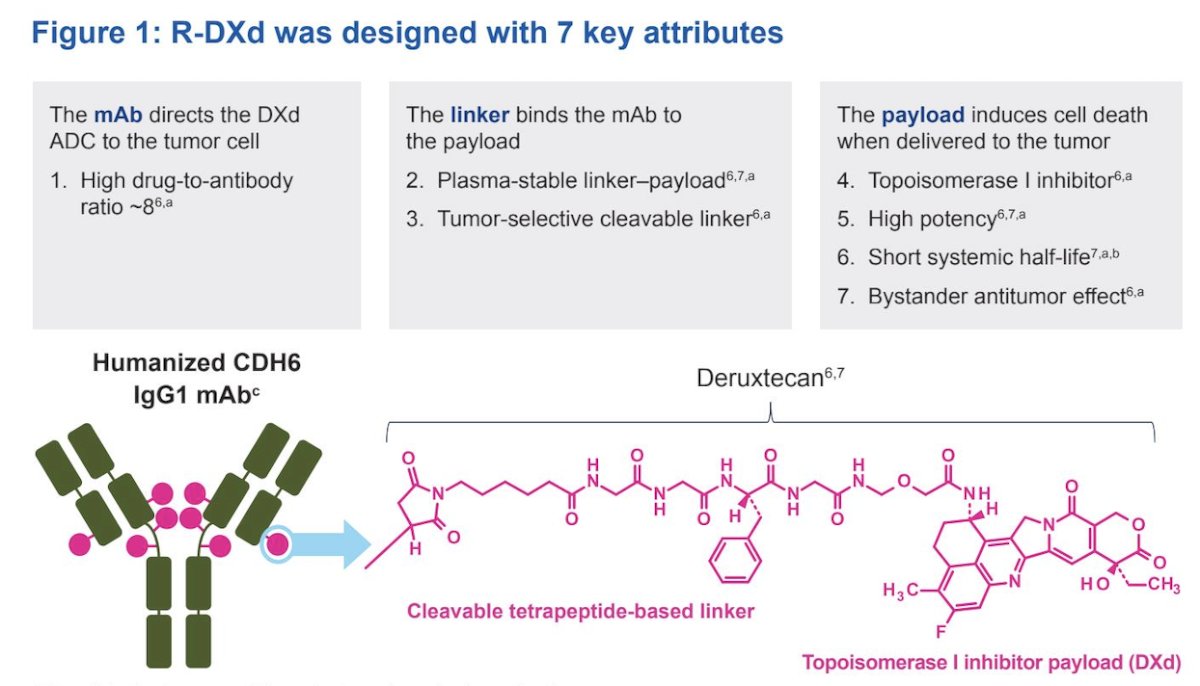
In an ongoing phase 1 study (NCT04707248), a subgroup of patients with heavily pretreated ovarian cancer who received raludotatug deruxtecan 4.8–6.4 mg/kg had an objective response rate of 48.6% (95% CI, 31.9–65.6). The median duration of response was 11.2 months (95% CI, 3.1–not estimable), and progression-free survival was 8.1 months (95% CI, 5.3–not estimable), irrespective of CDH6 expression level (data cut-off: July 14, 2023). The safety profile of raludotatug deruxtecan was also manageable. In total, 11.1% of patients discontinued raludotatug deruxtecan due to treatment-emergent adverse events. These promising data warranted further investigation of raludotatug deruxtecan in REJOICE-Ovarian01 (NCT06161025), a phase 2/3 study in patients with platinum-resistant high-grade serous ovarian cancer, and in the REJOICE-PanTumor01 Phase 2 study, which was described at ASCO GU 2026.
REJOICE-PanTumor01 (NCT06660654) is a global, open-label phase 2 study in patients with locally advanced or metastatic gynecologic (endometrial cancer, cervical cancer, or non-high-grade serous ovarian cancer) or genitourinary (urothelial cancer or clear cell RCC) tumors. Cohorts are tumor type–specific and patients in all cohorts must have relapsed or progressive disease after receiving ≥1 prior line (and ≤3 prior lines in the endometrial cancer, urothelial cancer, and clear cell RCC cohorts only) of standard treatment. Adult patients with ECOG performance status 0–1 are eligible, and there is no selection for tumor CDH6 expression.
Approximately 40 patients will be enrolled into each cohort to receive raludotatug deruxtecan 5.6 mg/kg IV every 3 weeks until disease progression per RECIST 1.1, unacceptable toxicity, death, or other reason per protocol. In each cohort, a nonbinding futility interim analysis will be conducted after 20 patients complete a minimum of 12 weeks of follow-up, the results of which may determine whether the remaining (~20) patients will be treated:
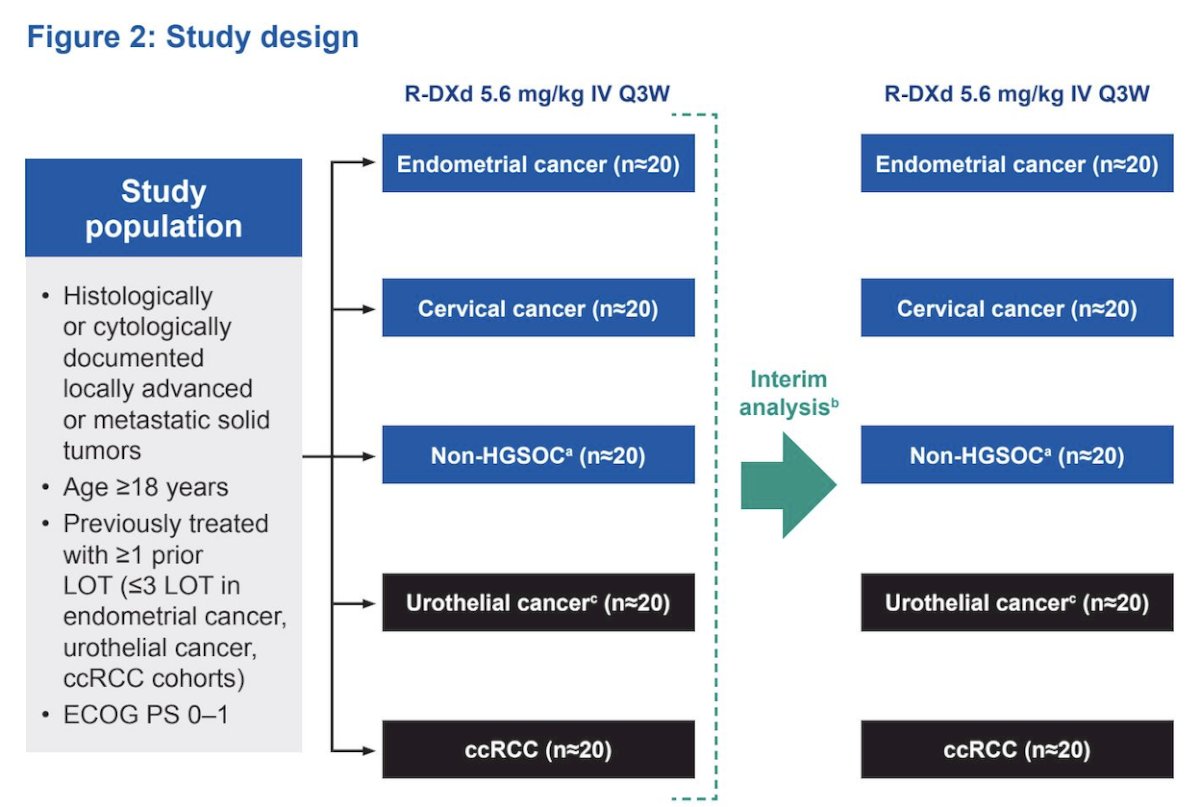
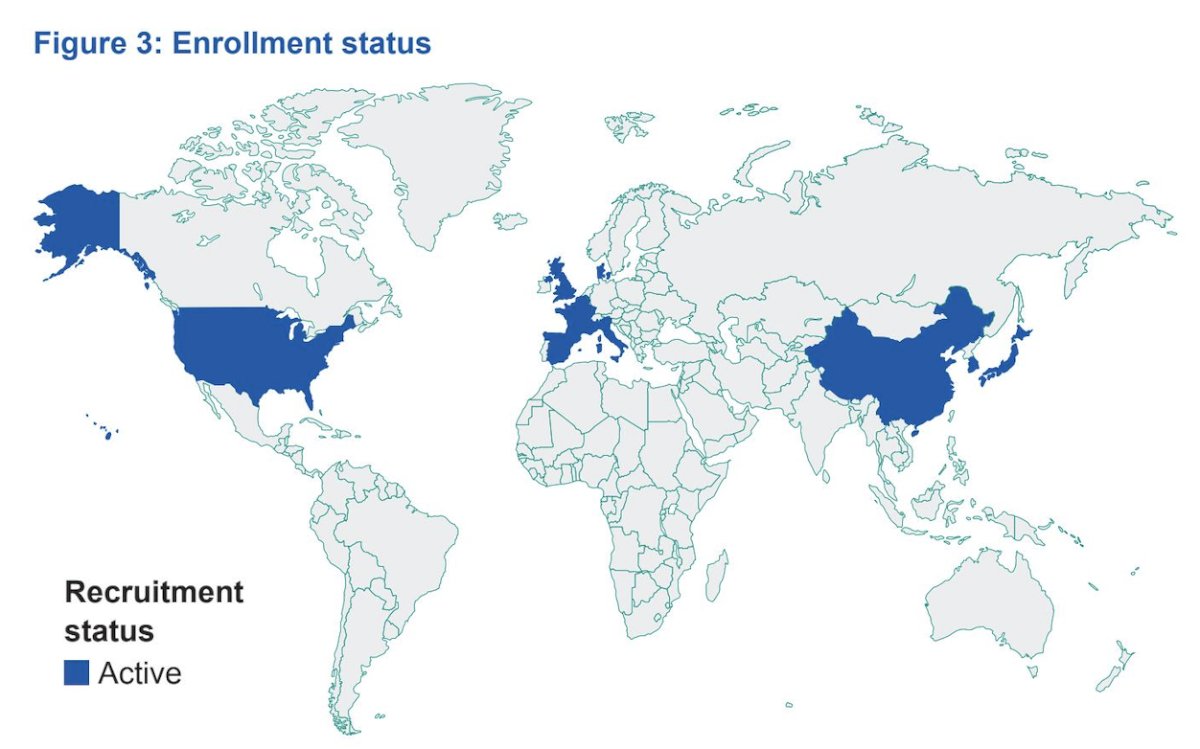
The primary endpoints are objective response rate for the gynecological and urothelial cancer cohorts, disease control rate for the clear cell RCC cohort (both investigator-assessed), and safety and tolerability for all cohorts. Secondary endpoints are objective response rate (clear cell RCC cohort only), disease control rate (except clear cell RCC cohort), progression-free survival, duration of response, time to response (all investigator-assessed per RECIST 1.1), pharmacokinetics, and immunogenicity. Enrollment began in January 2025 and is ongoing in Belgium, China, Denmark, France, Italy, Japan, the Republic of Korea, Spain, the United Kingdom, and the United States. The estimated study completion date is September 30, 2027:
Presented by: Laurence Albiges, MD, PhD, Medical Oncologist, Gustave Roussy Cancer Campus, University of Paris Sud, Paris, France