

(UroToday.com) The 2026 GU ASCO annual meeting featured an innovations in kidney cancer in 2026 session and a presentation by Dr. Michael Hofman discussing emerging tools in imaging in renal cell carcinoma (RCC). Dr. Hofman started his presentation by emphasizing that theranostics has revolutionized prostate cancer care with PSMA….and the next target is now “clear.”
Carbonic anhydrases are a superfamily of metalloenzymes that catalyze the conversion of CO2 to bicarbonate. CA-IX is overexpressed in clear cell RCC, and as a target is analogous to PSMA for prostate cancer:

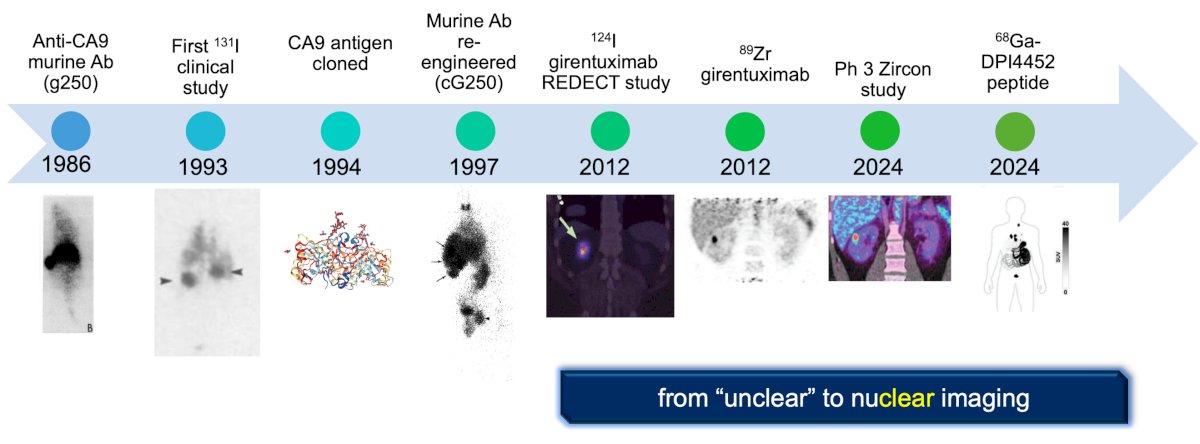
There is a long history of the development of CA-IX targeting, starting in 1986 with an anti-CA-IX murine antibody, all the way to 2024 with the presentation and publication of the phase 3 ZIRCON trial [1], in addition to the development of 68Ga-DPI4452 peptide:
The ZIRCON trial1 was an open-label, multicenter clinical trial including patients with an indeterminate renal mass (≤ 7 cm; tumor stage cT1) who were scheduled for partial nephrectomy within 90 days from planned 89Zr-DFO-girentuximab administration. Enrolled patients received a single dose of 89Zr-DFO-girentuximab IV (37 MBq ± 10%; 10 mg girentuximab) on Day 0 and underwent PET/CT imaging on Day 5 (± 2 days) prior to surgery. Of 284 evaluable patients included in primary analysis, the average across all 3 readers for sensitivity and specificity was 86% [95% CI 80%, 90%] and 87% [95% CI 79%, 92%], respectively:
![The ZIRCON trial1 was an open-label, multicenter clinical trial including patients with an indeterminate renal mass (≤ 7 cm; tumor stage cT1) who were scheduled for partial nephrectomy within 90 days from planned 89Zr-DFO-girentuximab administration. Enrolled patients received a single dose of 89Zr-DFO-girentuximab IV (37 MBq ± 10%; 10 mg girentuximab) on Day 0 and underwent PET/CT imaging on Day 5 (± 2 days) prior to surgery. Of 284 evaluable patients included in primary analysis, the average across all 3 readers for sensitivity and specificity was 86% [95% CI 80%, 90%] and 87% [95% CI 79%, 92%], respectively:](/images/com-doc-importer/249-asco-gu-2026/asco-gu-2026-emerging-tools-in-imaging-in-renal-cell-carcinoma/image-2.jpg)
68Ga-DPI-4452, a first-in-class CA-IX-binding radiolabeled peptide, is the imaging agent of a theranostic pair with 177Lu-DPI-4452, developed for selecting and treating patients with CA IX-expressing tumors. In 2024, Dr. Hofman and colleagues published the first-in-human assessment of 68Ga-DPI-4452 in patients with RCC.2 Across 36 lesions, the SUVmax at 1 hour after administration ranged from 6.8 to 211.6 (mean 64.6 [SD, 54.8]). The kidneys, liver, and bone marrow demonstrated low activity, and 68Ga-DPI-4452 was rapidly eliminated from the blood and urine. Based on this very early experience, there was clear targeting of the CA-IX peptide with PET/CT:
![68Ga-DPI-4452, a first-in-class CA-IX-binding radiolabeled peptide, is the imaging agent of a theranostic pair with 177Lu-DPI-4452, developed for selecting and treating patients with CA IX-expressing tumors. In 2024, Dr. Hofman and colleagues published the first-in-human assessment of 68Ga-DPI-4452 in patients with RCC.2 Across 36 lesions, the SUVmax at 1 hour after administration ranged from 6.8 to 211.6 (mean 64.6 [SD, 54.8]). The kidneys, liver, and bone marrow demonstrated low activity, and 68Ga-DPI-4452 was rapidly eliminated from the blood and urine. Based on this very early experience, there was clear targeting of the CA-IX peptide with PET/CT:](/images/com-doc-importer/249-asco-gu-2026/asco-gu-2026-emerging-tools-in-imaging-in-renal-cell-carcinoma/image-3.jpg)
Among the first 3 patients assessed with 68Ga-DPI-4452, there were 17 metastases detected on 68Ga-DPI-4452 that were not detectable on CT:

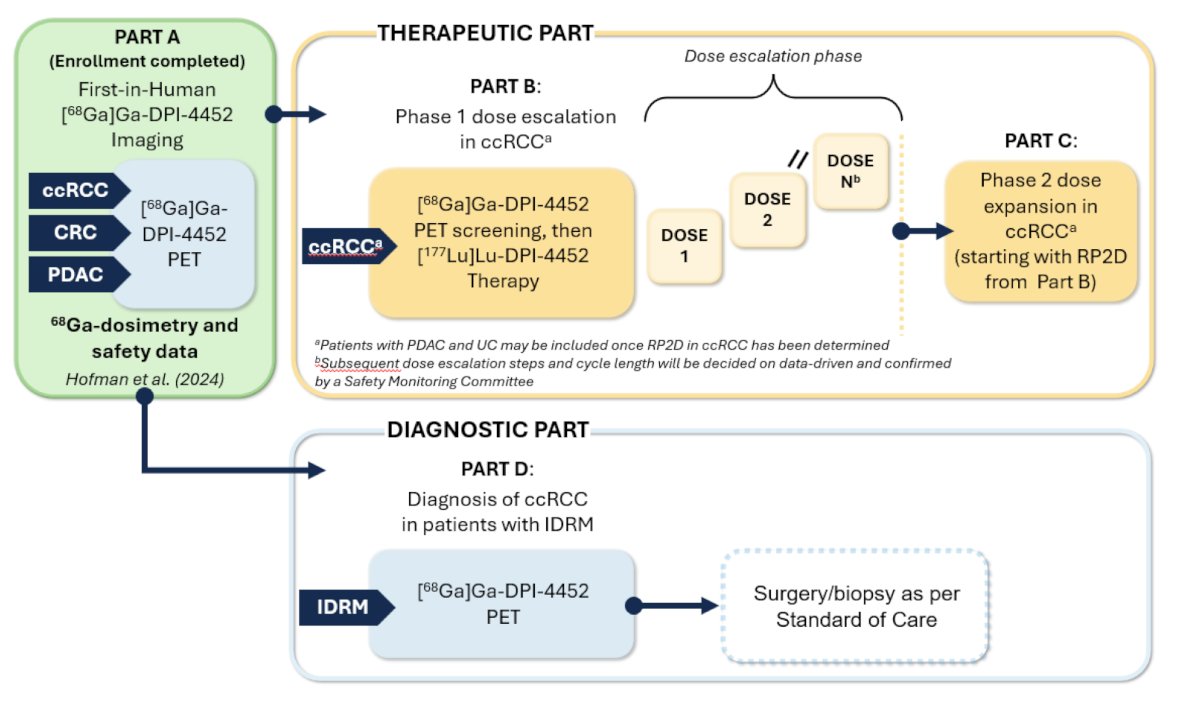
Theranostics is defined as diagnostics and therapy based on the same molecular target, and Dr. Hofman and his team are currently working on phase 1 assessments of 177Lu-CA-IX peptide in patients with metastatic RCC as part of the following clinical trial:
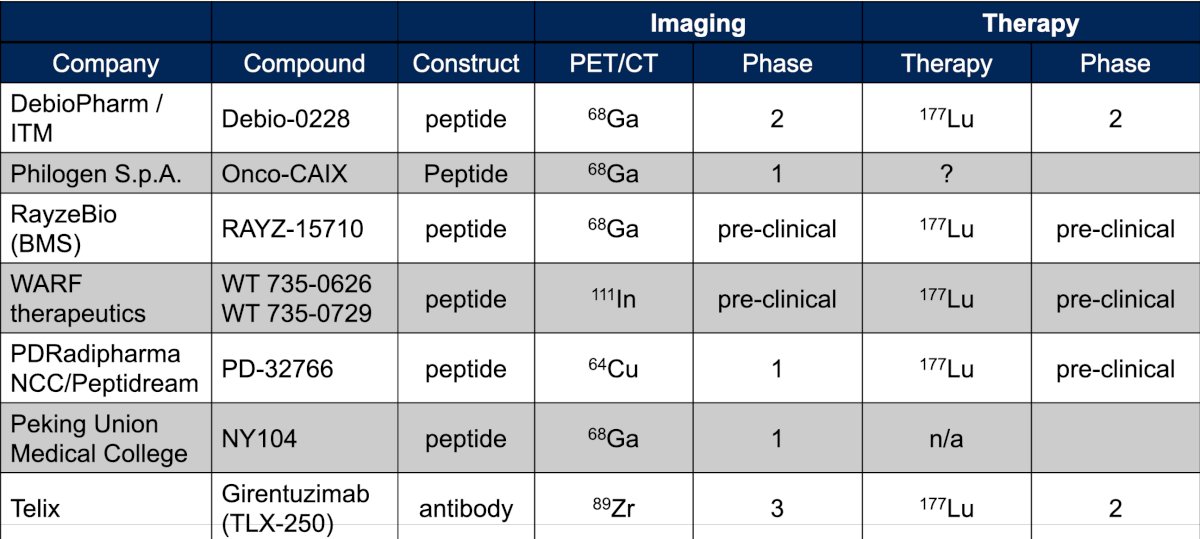
The CA-IX clear cell RCC theranostic field is rapidly evolving, but there is no radiolabeled CA-IX agent that has yet to be approved:
Dr. Hofman then discussed the role of PSMA PET/CT in the management of clear cell RCC. In 2022, Udovicich et al.3 retrospectively reviewed 61 patients who had a PSMA PET/CT, of whom 54 (89%) had clear cell RCC. PSMA-positive disease was detected in 51 patients (84%). For 30 patients (49%) there was a change in management due to PSMA PET/CT (a high-impact change in 29 patients, 48%), and in 15 patients (25%), more metastases were detected on PSMA PET/CT than on CT. The sensitivity of combined PSMA PET/CT and diagnostic CT was 91% (95% confidence interval 77-98%):

With regards to FDG PET/CT, a positive scan has been noted to be prognostic for survival, which is supported by numerous retrospective studies:
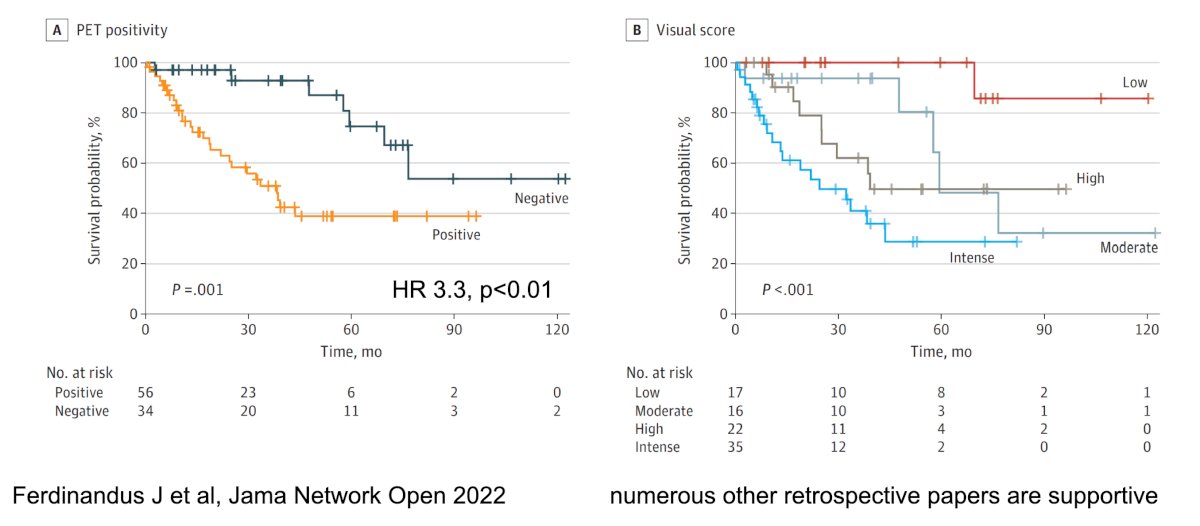
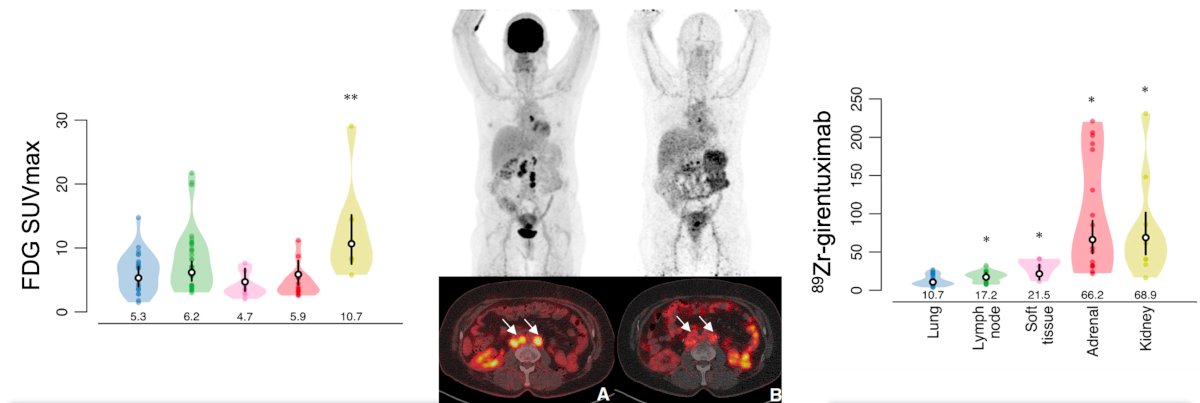
Dr. Hofman notes that for the prognostic value of FDG PET versus 89Zr-DFO-girentuximab, FDG PET may improve the decision for watchful waiting in good prognosis metastatic clear cell RCC, whereas the role of 89Zr-DFO-girentuximab is in confirming a clear cell RCC lesion in a minimally invasive fashion, considering the very high SUVmax findings seen in positive scans:
Dr. Hofman concluded his presentation discussing emerging tools in imaging in RCC with the following take-home points:
- PET is not yet the standard of care
- CA-IX PET/CT is poised to arrive
- Radionuclide therapy is promising
- Peptides may win over antibodies
- PSMA and FDG PET/CT are available now
Presented by: Michael Hofman, MBBS, FRACP, FAANMS, FICIS, GAICD, Leader of the Prostate Cancer Theranostics and Imaging Centre of Excellence (ProsTIC), Peter MacCallum Cancer Centre, Professor, University of Melbourne, Melbourne, Australia
Written by: Zachary Klaassen, MD, MSc – Urologic Oncologist, Associate Professor of Urology, Georgia Cancer Center, Wellstar MCG Health, @zklaassen_md on Twitter during the 2026 Genitourinary (GU) American Society of Clinical Oncology (ASCO) Annual Meeting, San Francisco, CA, Thurs, Feb 26 – Sat, Feb 28, 2026.
References:
- Shuch B, Pantuck AJ, Bernhard JC, et al. [89Zr]Zr-girentuximab for PET-CT imaging of clear-cell renal cell carcinoma: A prospective, open-label, multicentre, phase 3 trial. Lancet Oncol. 2024 Oct;25(10):1277-1287.
- Hofman MS, Tran B, Feldman DR, Pokorska-Bocci A, Pichereau S, Wessen J, Haskali MB, Sparks RB, Vlasyuk O, Galetic I. First-in-Human Safety, Imaging, and Dosimetry of a Carbonic Anhydrase IX-Targeting Peptide, [68Ga]Ga-DPI-4452, in Patients with Clear Cell Renal Cell Carcinoma. J Nucl Med. 2024 Feb 22;65(5):740–3. doi: 10.2967/jnumed.123.267175. Epub ahead of print. PMID: 38388517; PMCID: PMC11064824.
- Udovicich C, Callahan J, Bressel M, et al. Impact of Prostate-specific Membrane Antigen Positron Emission Tomography/Computed Tomography in the Management of Oligometastatic Renal Cell Carcinoma. Eur Urol Open Sci. 2022 Aug 29;44:60-68.