

(UroToday.com) The 2026 GU ASCO annual meeting featured a kidney cancer session and a presentation by Dr. Cristina Suarez discussing long-term follow-up and exploratory analysis of CheckMate 9ER. Cabozantinib + nivolumab is approved as first line treatment in advanced renal cell carcinoma (RCC) based on the CheckMate 9ER trial, which demonstrated superior progression-free survival and overall survival versus sunitinib in this patient population.1
In this exploratory, post hoc analysis, Dr. Suarez and collaborators characterized the depth and durability of response with long-term follow-up (based on the final analysis of CheckMate 9ER) in patients receiving cabozantinib + nivolumab.
Patients received cabozantinib (40 mg) once daily plus nivolumab (240 mg) every 2 weeks. Depth of response subgroups were based on best overall response (blinded independent central review per RECIST v1.1) and best tumor reduction threshold, as follows:
- Complete response
- Partial response subdivided by a tumor reduction of ≥80% (partial response 1), ≥60%–<80% (partial response 2), or ≥30%–<60% (partial response 3)
- Stable disease
- Progressive disease
Progression-free survival (per blinded independent central review) and overall survival were analyzed by depth of response subgroups after a 6-month post-randomization landmark.
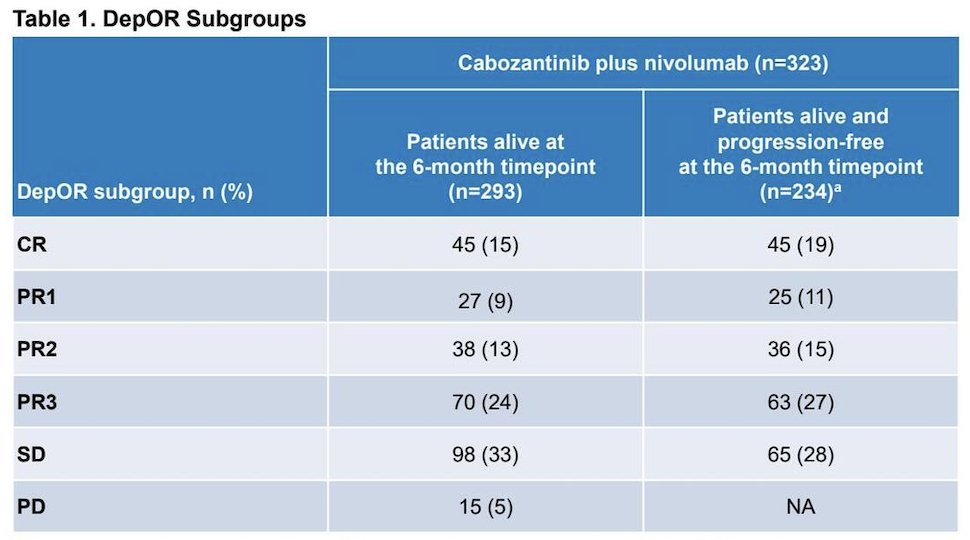
Of 323 patients randomized to cabozantinib + nivolumab, 293 patients were alive, and 234 patients were alive and progression-free at the 6-month landmark and were categorized by depth of response subgroup:
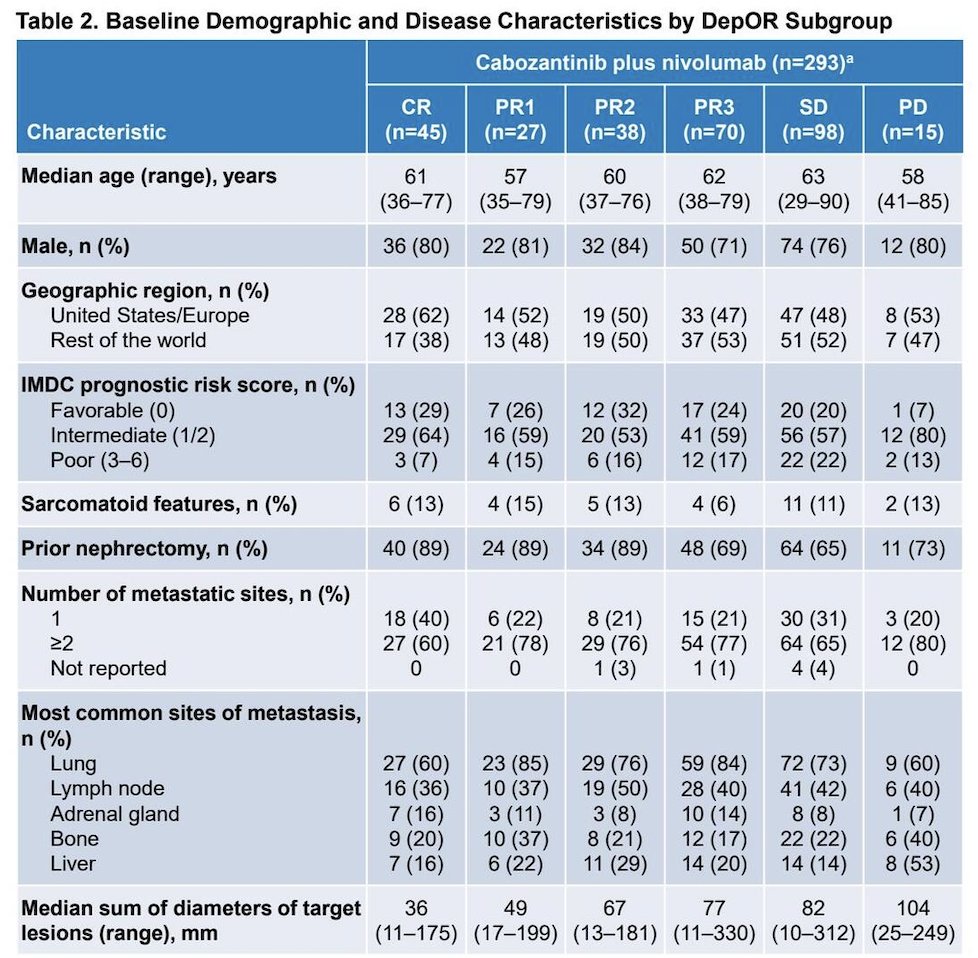
Baseline demographics and disease characteristics are highlighted in the following table:
At the data cutoff (May 17, 2024), the median follow-up was 67.6 months (range: 60.2–80.2), and across all depth of response subgroups, the median time to response was 2.8-2.9 months. Patients with a complete response exhibited a durable response, with the median duration not yet reached at the time of analysis:

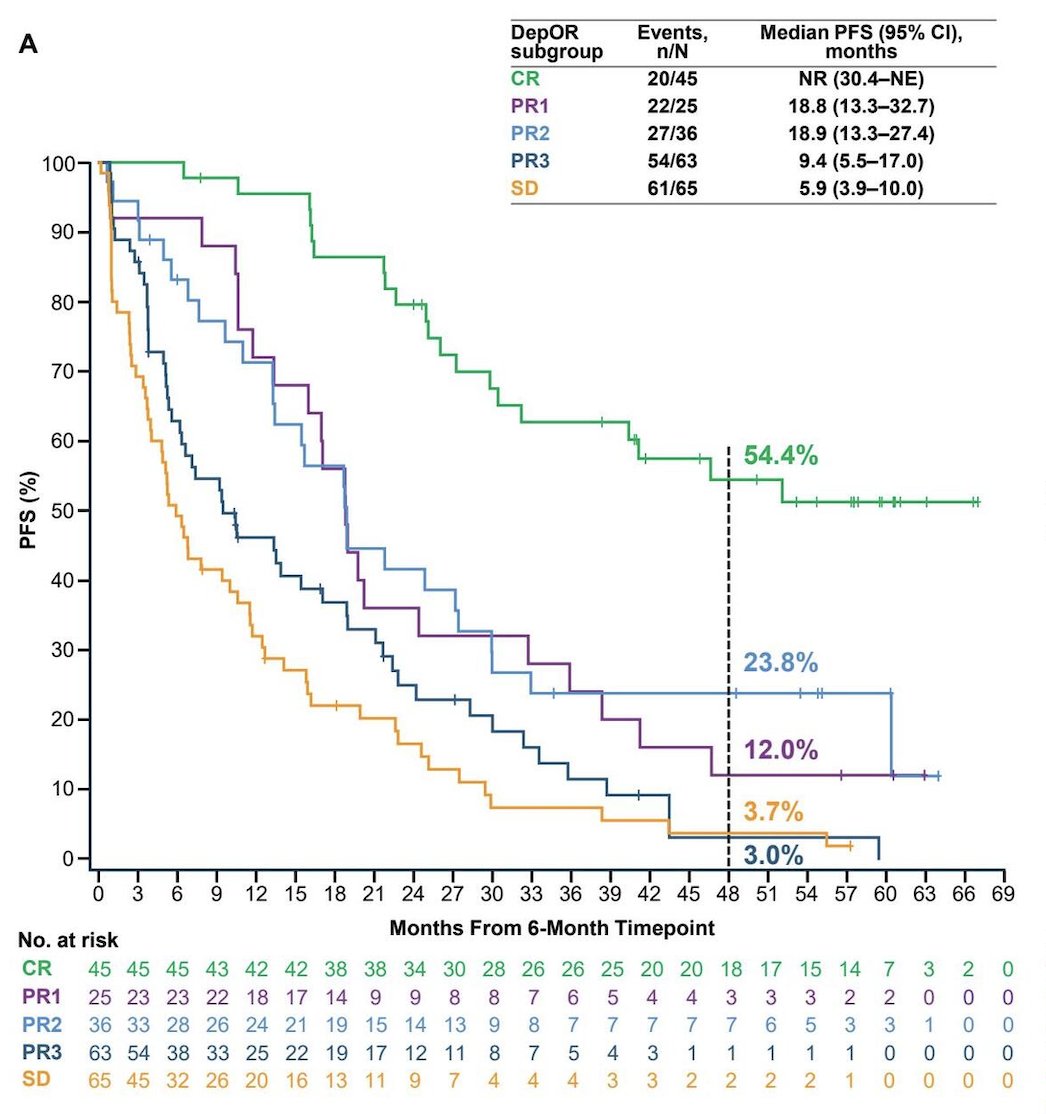
A greater depth of response was associated with prolonged progression-free survival, with a durable benefit observed among patients with a complete response:
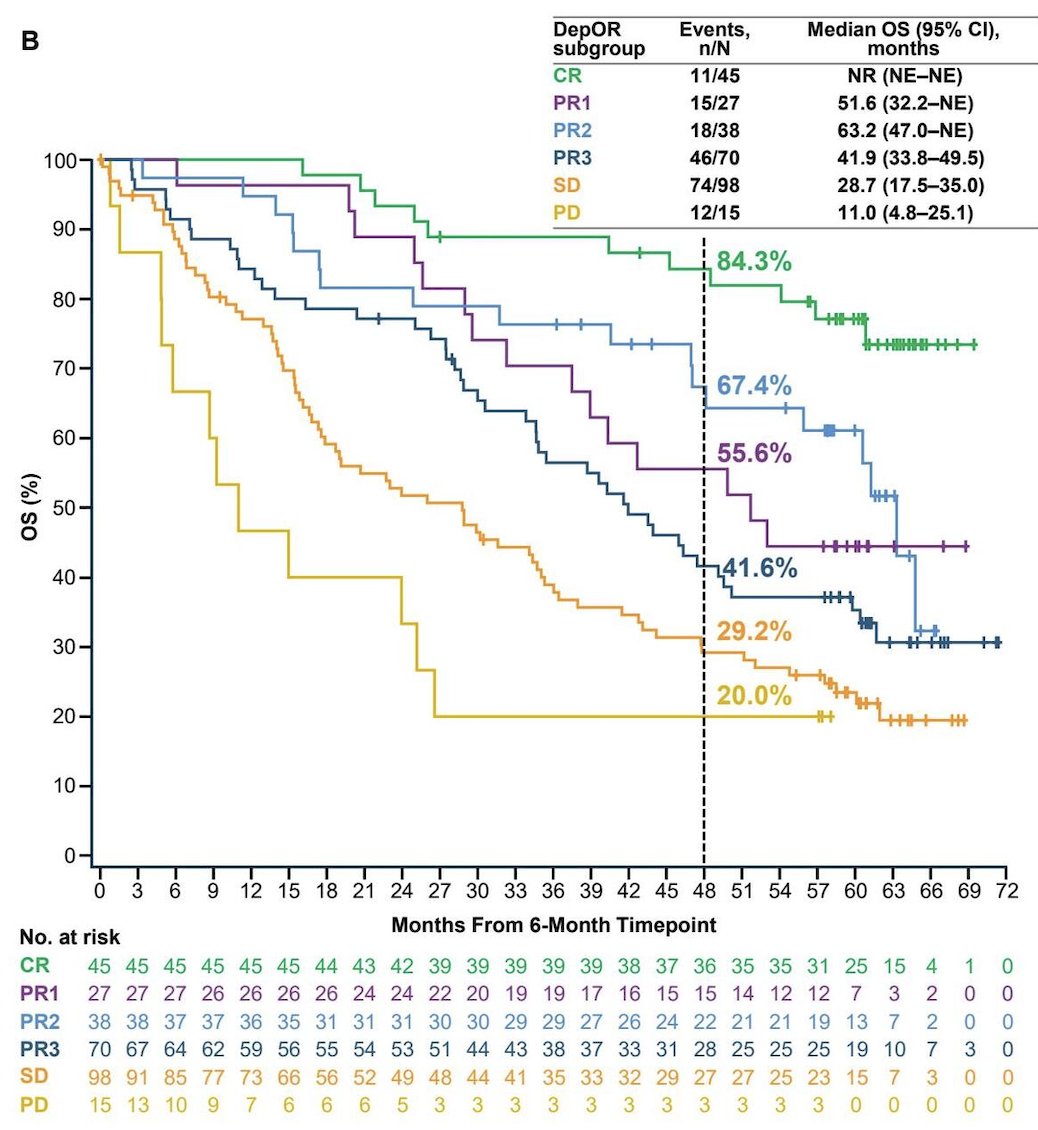
The median overall survival was also prolonged in patients with a complete response or partial response versus those with stable disease or progressive disease:
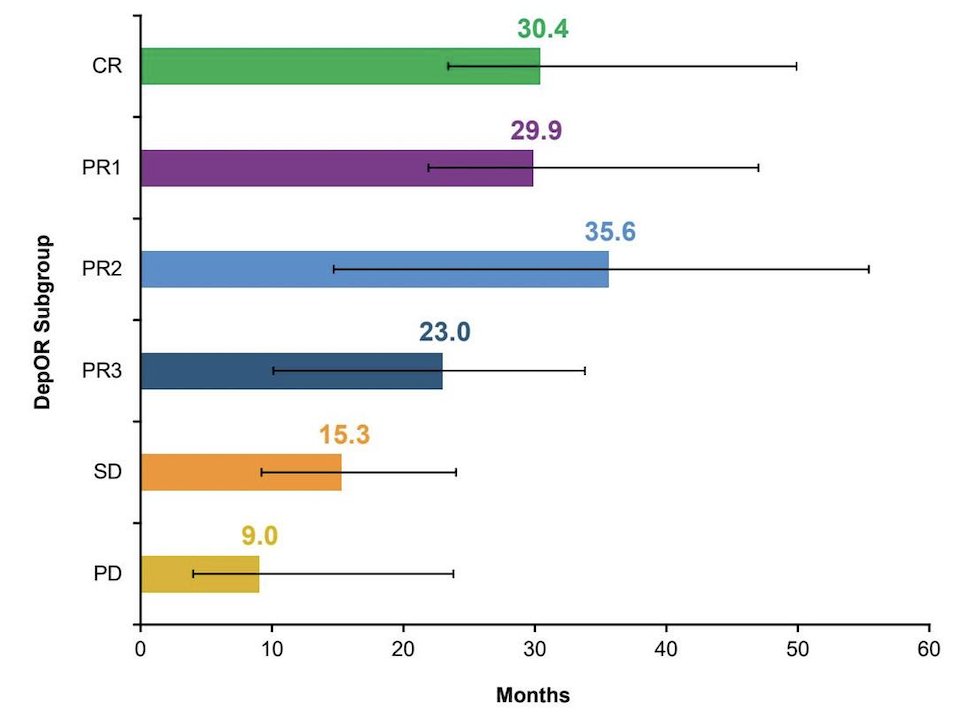
The median duration of cabozantinib + nivolumab treatment was longer among responders than non-responders:
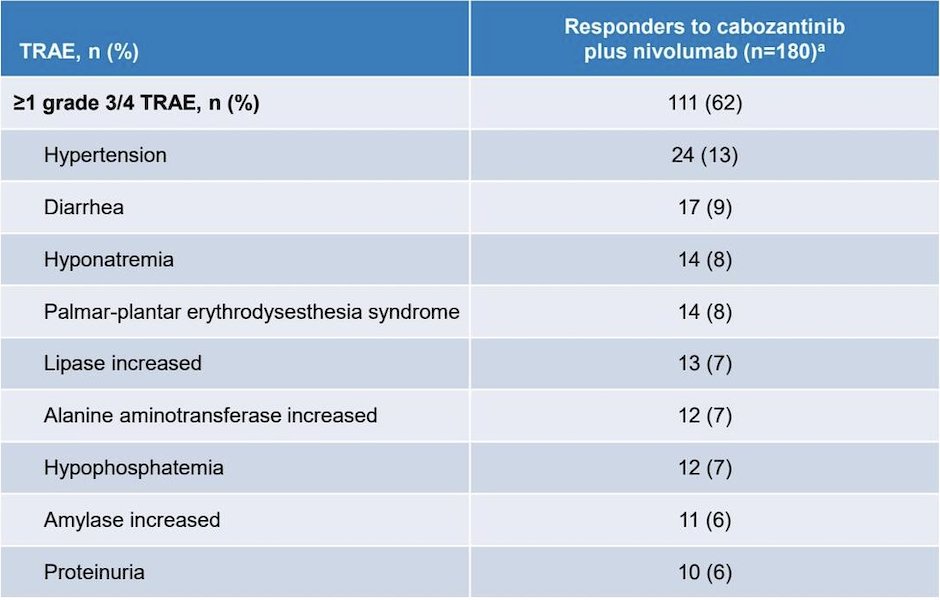
Despite longer treatment duration, responders did not experience substantially higher rates of treatment-related adverse events than non-responders (any grade 99% versus 100%; grade 3/4, 72% versus 67%). Among patients with an objective response, the most common grade 3/4 treatment-related adverse events were hypertension (13%), diarrhea (9%), hyponatremia (8%), and palmar-plantar erythrodysesthesia (8%):
Dr. Suarez concluded her presentation discussing long-term follow-up and exploratory analysis of CheckMate 9ER with the following take-home points:
- In patients with advanced RCC, early, deep, and durable responses continue to be seen with cabozantinib + nivolumab in long-term follow-up of the CheckMate 9ER trial
- Complete responses and partial responses with tumor reduction of >=60% led to the most durable responses and survival benefits
- Patients responding to treatment with cabozantinib + nivolumab included those with baseline disease characteristics associated with poor prognosis
- Despite longer treatment duration, there was no increase in the incidence of adverse events among responders versus non-responders
Presented by: Cristina Suárez, MD, PhD, Medical Oncologist, Vall d’Hebron University Hospital, Vall d’Hebron Institute of Oncology (VHIO), Barcelona, Spain
Reference: