

(UroToday.com) The 2026 GU ASCO annual meeting featured a kidney cancer trials in progress session and a presentation by Dr. Robert J. Motzer discussing the phase 1b/2 KEYMAKER-U03 substudy 03C of belzutifan + zanzalintinib or belzutifan monotherapy for recurrent clear cell renal cell carcinoma (RCC) during or after anti-PD-(L)1 therapy. Adjuvant pembrolizumab is a standard of care for patients with RCC at intermediate-high or high risk of recurrence post-surgery.1
However, novel treatment approaches for recurrence after adjuvant anti–PD-(L)1 therapy are needed. Substudy 03C of the open-label, phase 1b/2 KEYMAKER-U03 trial (NCT07049926) is designed to evaluate the safety and efficacy of belzutifan + zanzalintinib or belzutifan monotherapy for recurrent RCC during or after anti–PD-(L)1 adjuvant therapy.
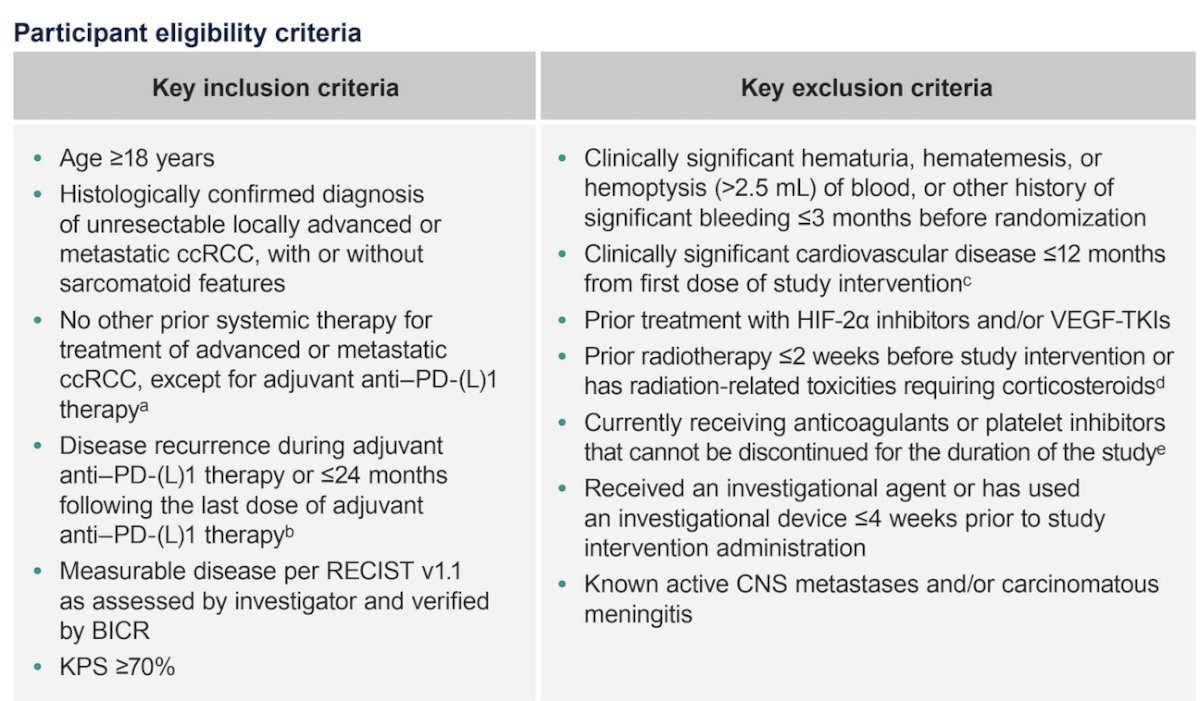
Eligible participants (≥18 years) must have histologically confirmed unresectable locally advanced or metastatic clear cell RCC, measurable disease per RECIST v1.1 as assessed by investigator and verified by blinded independent central review, and Karnofsky performance status of ≥70%. The study will comprise a safety lead-in phase followed by an efficacy phase. In the safety-lead-in, prior immunotherapy and a maximum of 1 prior vascular endothelial growth factor tyrosine kinase inhibitor for metastatic disease is permitted. Participants in the efficacy phase must not have received prior systemic treatment except for adjuvant anti–PD-(L)1 therapy and had recurrence during or ≤24 months after the last dose of adjuvant anti–PD-(L)1 therapy:
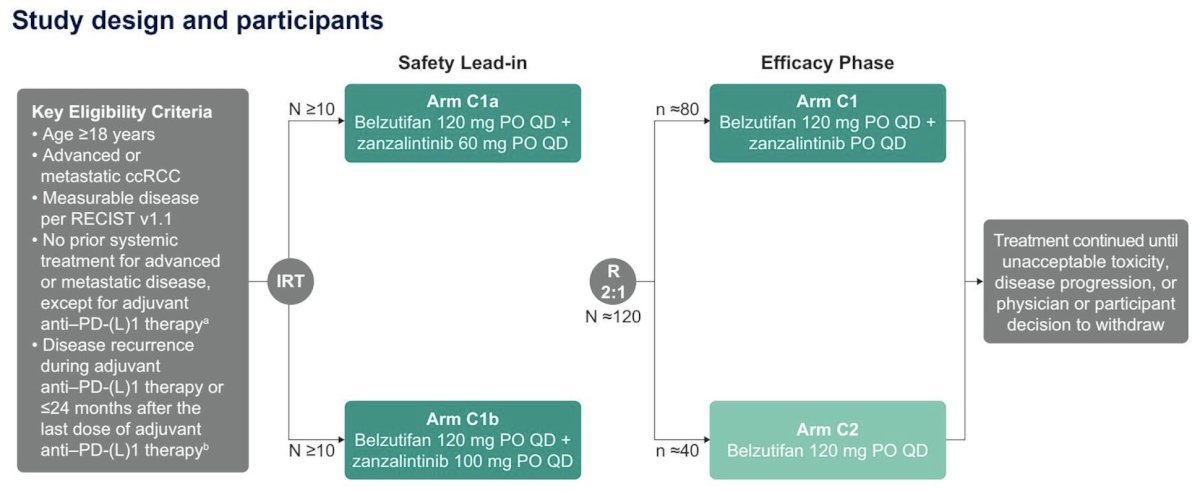
Treatment will consist of belzutifan plus zanzalintinib (arm C1) or belzutifan monotherapy (arm C2). Additional treatment arms may be added on a rolling basis. In the safety lead-in phase, at least 10 participants will receive belzutifan 120 mg orally once daily plus zanzalintinib 60 mg (arm C1a) or 100 mg (arm C1b) orally once daily. The primary objective of the safety lead-in phase is to establish the recommended phase 2 dose. In the efficacy phase, approximately 120 participants will be randomly assigned 2:1 to receive belzutifan plus zanzalintinib at the recommended phase 2 dose or belzutifan 120 mg orally once daily:
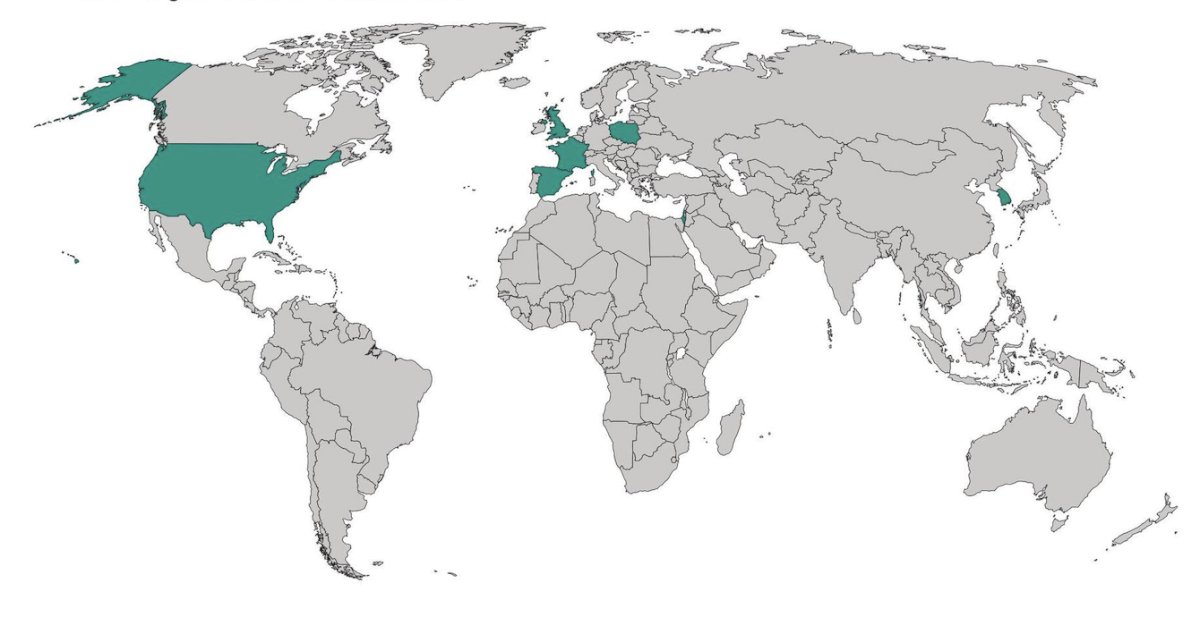
The primary endpoints of the efficacy phase are safety and objective response rate per RECIST v1.1 by blinded independent central review. Secondary end points are clinical benefit rate, duration of response, and progression-free survival per RECIST v1.1 by blinded independent central review, and overall survival. No hypothesis testing and no formal comparisons are planned. KEYMAKER-U03 substudy 03C is currently enrolling in France, Israel, Poland, South Korea, Spain, the United Kingdom, and the United States:
Presented by: Robert J. Motzer, MD, Memorial Sloan Kettering Cancer Center, New York, NY
Reference: