

(UroToday.com) The 2026 GU ASCO annual meeting featured a urothelial carcinoma session and a presentation by Dr. Matthew R. Zibelman discussing circulating tumor DNA analysis from the prospective pT0 study of systematic endoscopic evaluation (SEE) in patients undergoing radical cystectomy for bladder cancer. Accurately predicting the absence of residual tumor in the bladder after neoadjuvant treatment can facilitate bladder preservation options.
Dr. Zibelman and colleagues previously published a prospective trial of SEE prior to radical cystectomy as a predictor of pT0. The results demonstrated that 26% of patients with negative SEE harbored pT≥2 disease, and the negative predictive value of SEE to determine pT0 disease was 48.4%.1 At ASCO GU 2026, Dr. Zibelman presented a post-hoc analysis of plasma cell-free DNA collected the day of surgery to determine if ctDNA improves the negative predictive value for detecting pT0 disease to better identify patients for bladder preservation.
This was a prospective study of patients with muscle-invasive and non-muscle invasive bladder cancer planned to undergo radical cystectomy. Plasma collected on the day of surgery was processed, stored, and sent to GRAIL for the extraction of cfDNA and the calculation of a ctDNA-based cancer score using a proprietary tumor-naïve methylation platform. All patients underwent SEE during surgery to predict pT stage, and patients were followed for recurrence-free survival and overall survival. ctDNA status with and without SEE findings was evaluated as predictors of pT stage using Bayesian logistic regression with area under the receiver operating curve (AUROC) calculation. A grid search was used to identify a post-hoc cutoff on ctDNA score (either positive or negative) that maximized the AUROC for pT stage. Recurrence-free survival and overall survival were evaluated using Kaplan–Meier survival curves and Cox proportional hazards regression.
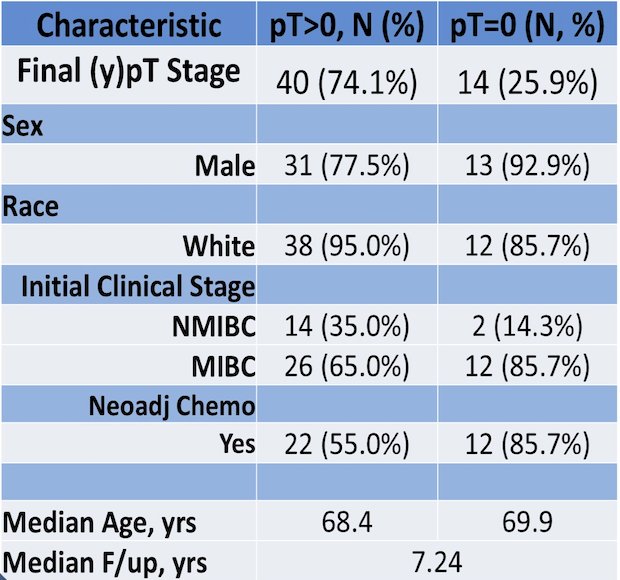
54 of 61 patients accrued to the trial had evaluable ctDNA and pT data, with the following demographics stratified by pT >0 and pT = 0:
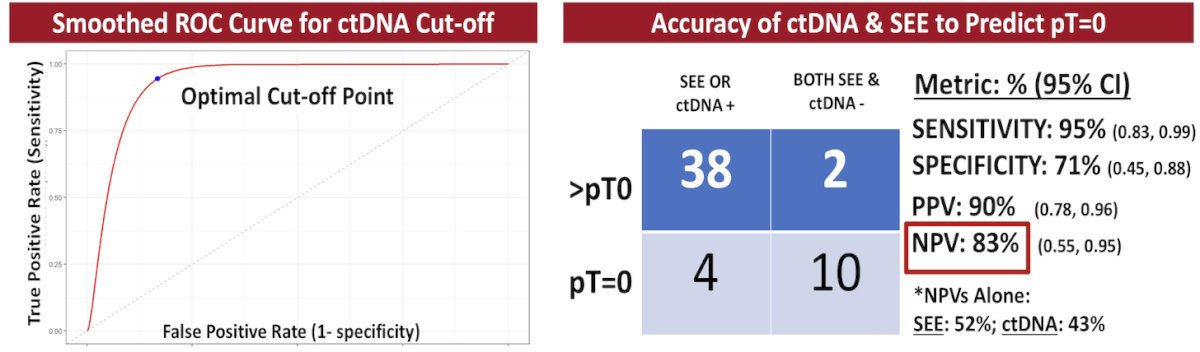
A model of pT stage including SEE and continuous ctDNA-based cancer score resulted in an AUROC of 0.94. Combining SEE and ctDNA, only 2 patients negative by SEE and ctDNA had pT>0 disease, correlating to a negative predictive value of 83%. One had pTis and never recurred, while the other had fatal pT2b disease:
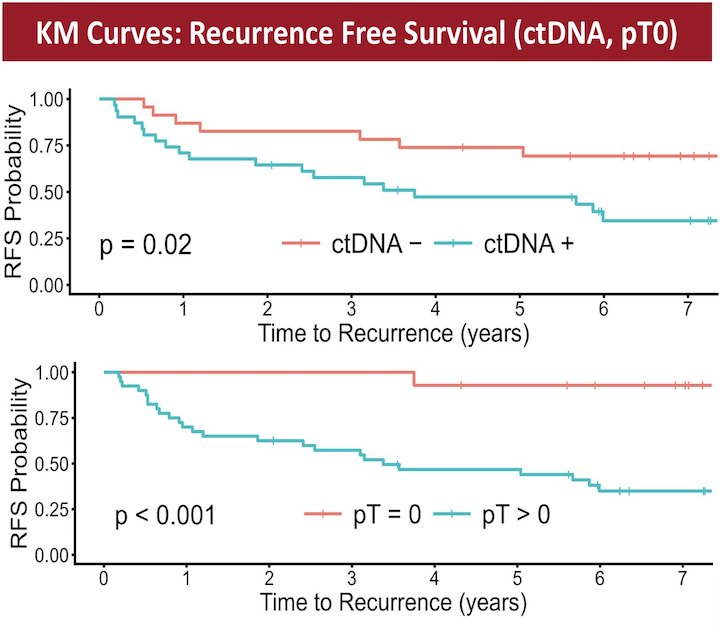
The median overall survival was not reached for ctDNA-negative patients versus 5.7 years for ctDNA-positive patients (p = 0.0096):

Median recurrence-free survival was not reached versus 4.7 years for ctDNA-negative versus positive patients, respectively (p = 0.02):
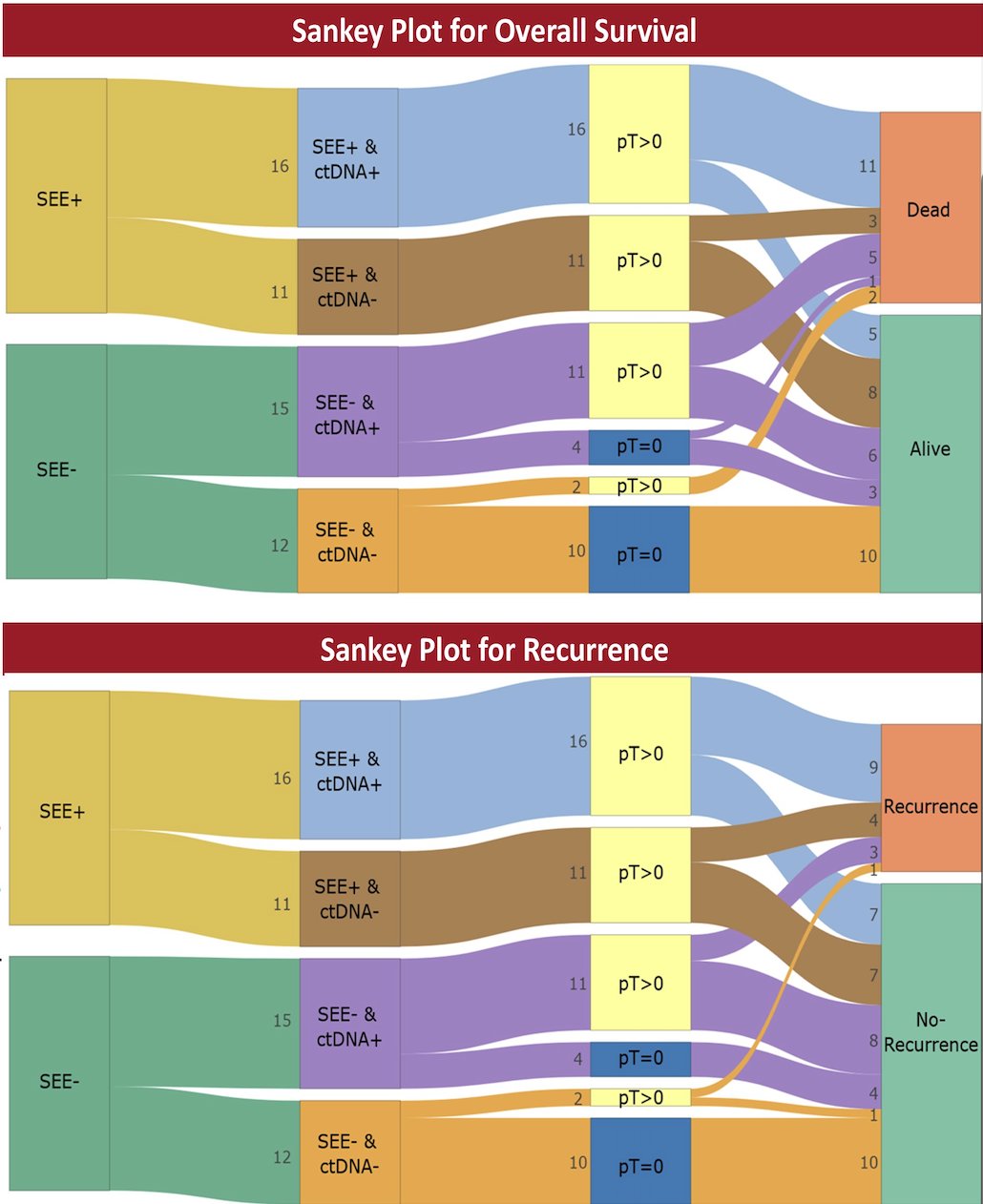
The following highlights the Sankey plot for overall survival and recurrence-free survival:
Dr. Ziberlman concluded his presentation discussing circulating tumor DNA analysis from the prospective pT0 study of SEE in patients undergoing radical cystectomy for bladder cancer with the following take-home points:
- Combining SEE with ctDNA improved the prediction of pathological complete response (pT0) at surgery
- The prognostic value of a negative ctDNA at cystectomy compares favorably to pathological complete response as a marker for overall survival and recurrence-free survival
- This analysis requires validation in additional datasets, but the high negative predictive value is encouraging and warrants further prospective study using ctDNA with SEE to identify patients who are able to forgo radical cystectomy
Presented by: Matthew R. Zibelman, MD, Fox Chase Cancer Center, Philadelphia, PA
Related content: Prospective Study Investigates ctDNA as an Adjunct to Endoscopic Evaluation Before Cystectomy - Matthew Zibelman
Reference: